HomeDiagramsDatabaseMapsForum About
     

Go Back   SkyscraperPage Forum > Discussion Forums > Transportation


Reply

 
Thread Tools Display Modes
     
     
  #901  
Old Posted Jan 14, 2010, 7:27 AM
fflint's Avatar
fflint fflint is offline
Triptastic Gen X Snoozer
 
Join Date: Jul 2001
Location: San Francisco
Posts: 22,150
FastPasses are now $60 for Muni only, or $70 for Muni plus in-town BART.
__________________
"You need both a public and a private position." --Hillary Clinton, speaking behind closed doors to the National Multi-Family Housing Council, 2013
Reply With Quote
     
     
  #902  
Old Posted Jan 14, 2010, 5:45 PM
Okstate's Avatar
Okstate Okstate is offline
Registered User
 
Join Date: May 2007
Location: SE PDX
Posts: 1,367
I don't know if this is apples to apples but Portland's TriMet charges around $100 for a monthly pass.
Reply With Quote
     
     
  #903  
Old Posted Jan 14, 2010, 5:53 PM
destroycreate's Avatar
destroycreate destroycreate is offline
Registered User
 
Join Date: May 2009
Location: Los Angeles, CA
Posts: 1,675
Wow those articles are depressing.
Reply With Quote
     
     
  #904  
Old Posted Jan 14, 2010, 6:11 PM
BTinSF BTinSF is offline
BANNED
 
Join Date: Jun 2006
Location: San Francisco & Tucson
Posts: 24,071
Quote:
Originally Posted by Okstate View Post
I don't know if this is apples to apples but Portland's TriMet charges around $100 for a monthly pass.
I have no experience of that system so I can't compare them directly either, but SF has an official "transit first policy" and does everything it can to discourage car use, mainly by narrowing streets to create bicycle lanes and forcing a lot of new construction not to have parking.

This effectively means that if transit itself isn't convenient, ubiquitous and CHEAP, the quality of life is degraded. As I said, at under $50 a month, I bought a monthly pass just for the convenience (no fishing for exact fare, the ability to hop on a bus even for fairly short trips, being able to use cable cars which have ridiculous single-trip fares) and many months probably didn't ride enough to make it a bargain since I live downtown in a 100% walk-score neighborhood.

I can't and won't buy a pass at over $50 and wouldn't even consider it at $100. Hence, Muni is losing money on me (because I don't actually ride $50 worth--figuring a trip downtown and back 4 days a week at $2 a ride, it's more like $30 or $40 worth). And I don't think I'm that unique.

Right now, the cheapest way for me to go would be tokens which give you a small discount and allow you to pay only for the rides you take.
Reply With Quote
     
     
  #905  
Old Posted Jan 14, 2010, 6:25 PM
fflint's Avatar
fflint fflint is offline
Triptastic Gen X Snoozer
 
Join Date: Jul 2001
Location: San Francisco
Posts: 22,150
Via Pedestrianist, a map using BART ridership data showing where BART's riders go.

BART ridership is clearly huge into and out of downtown SF, unsurprisingly:

__________________
"You need both a public and a private position." --Hillary Clinton, speaking behind closed doors to the National Multi-Family Housing Council, 2013
Reply With Quote
     
     
  #906  
Old Posted Jan 14, 2010, 6:43 PM
Gordo's Avatar
Gordo Gordo is offline
Registered User
 
Join Date: Jul 2007
Location: Seattle, WA/San Francisco, CA/Jackson Hole, WY
Posts: 4,256
Quote:
Originally Posted by Okstate View Post
I don't know if this is apples to apples but Portland's TriMet charges around $100 for a monthly pass.
Not really. TriMet covers a MUCH larger area than Muni does, in population, geography, and percentage of the metro. Even the $70 Muni/BART pass only covers travel within SF. If there was some type of pass that covered Muni, AC Transit, Golden Gate Transit, SamTrans, and at least some BART trips outside of SF, then we might be talking apples-to-apples. I certainly long for a day when transit in the Bay Area is even half as coordinated as it is in the Portland metro, but I'm not holding my breath.
Reply With Quote
     
     
  #907  
Old Posted Jan 14, 2010, 9:16 PM
fflint's Avatar
fflint fflint is offline
Triptastic Gen X Snoozer
 
Join Date: Jul 2001
Location: San Francisco
Posts: 22,150
^Agreed. Portland has only one transit agency, which covers the entire metropolitan area with rail and bus. That one unified transit system is itself a result of Portland's elected regional government, neither of which exists in the Bay Area.

TriMet's transit pass gets you anywhere in the Portland metro that has transit service, so it is worth a hell of a lot more than any one agency's pass within the greater Bay Area. Whether it is worth $100 I cannot say.
__________________
"You need both a public and a private position." --Hillary Clinton, speaking behind closed doors to the National Multi-Family Housing Council, 2013
Reply With Quote
     
     
  #908  
Old Posted Jan 14, 2010, 9:48 PM
sf_eddo's Avatar
sf_eddo sf_eddo is offline
Registered User
 
Join Date: Sep 2005
Location: Hayes Valley, San Francisco
Posts: 2,113
Quote:
Originally Posted by BTinSF View Post
Right now, the cheapest way for me to go would be tokens which give you a small discount and allow you to pay only for the rides you take.
I thought they discontinued tokens forever ago?

I use TransLink for 100% of my transit rides. Right now it's functional on Muni, BART, AC Transit, Golden Gate Transit, Golden Gate Ferry (at HUGE discounts I might add - like $4 on TransLink vs. $8 normal fare), and Caltrain. Other than a few broken readers and some grumpy Muni drivers, as well as a website and customer service call center that are clearly works in progress, I haven't had any huge problems. And no fishing for exact change, which is GREAT on AC Transit and Muni, since their buses are so credit card unfriendly.

Plus, Muni's doing away with their faregates and installing TransLink only gates this coming year (no cash accepted, no magstripe Fast Passes accepted), so it helps to get used to the system and become a typical impatient SF snob before every BTinSF has to spend 5 minutes in front of the gate figuring out how to hop on the Metro
Reply With Quote
     
     
  #909  
Old Posted Jan 14, 2010, 11:42 PM
BTinSF BTinSF is offline
BANNED
 
Join Date: Jun 2006
Location: San Francisco & Tucson
Posts: 24,071
As of September they were still selling tokens at City Hall and the booth at Powell St. but you have to ask for them--they haven't advertised their existence for many years.

I can't recall the details now but when they first started seeking local Muni riders to try out TransLink, I was enthusiastic and looked into it but concluded it would not be in any way a plus for me and I lost my enthusiasm. If things change (such as doing away with FastPass-accepting gates at metro stations), I'll reconsider, of course. I'm too old to do what so many Muni riders do and just jump the little railing and ride for free.
Reply With Quote
     
     
  #910  
Old Posted Jan 15, 2010, 4:49 AM
Okstate's Avatar
Okstate Okstate is offline
Registered User
 
Join Date: May 2007
Location: SE PDX
Posts: 1,367
The Portland fare is actually $86/month for all zones.
For 2 zones (which covers all of downtown & all inner city neighborhoods) it's $75/month.

The only mode of transportation that isn't covered under that fare is our aerial tram & even that is under the authority of TriMet.
Reply With Quote
     
     
  #911  
Old Posted Jan 15, 2010, 4:43 PM
Sekkle's Avatar
Sekkle Sekkle is offline
zzzzzzzz
 
Join Date: Aug 2006
Location: Portland area
Posts: 2,276
Quote:
Originally Posted by Okstate View Post
The Portland fare is actually $86/month for all zones.
For 2 zones (which covers all of downtown & all inner city neighborhoods) it's $75/month.

The only mode of transportation that isn't covered under that fare is our aerial tram & even that is under the authority of TriMet.
The aerial tram is covered in the monthly pass cost (link). But it's not a part of TriMet.

One thing that is not included in TriMet's monthly pass is Vancouver, WA's public transit system, C-Tran. But C-Tran does offer a pass for $105 that includes all of its buses plus all of TriMet (not sure if the aerial tram is included in that).

Anyway, back to San Francisco...
__________________
Some photo threads I've done... Portland (2021) | New York (2011) | Seattle (2011) | Phoenix (2010) | Los Angeles (2010)
flickr
Reply With Quote
     
     
  #912  
Old Posted Jan 15, 2010, 5:18 PM
dimondpark's Avatar
dimondpark dimondpark is offline
Pay it Forward
 
Join Date: Apr 2003
Location: Piedmont, California
Posts: 8,129
Construction started TODAY!

Quote:
Construction Set To Begin On Fourth Caldecott Bore

Posted: 12:38 pm PST January 8, 2010
OAKLAND -- Relief for East Bay commuters may finally be in sight as the long-awaited construction of a fourth bore for the Caldecott Tunnel is set to begin as soon as Jan. 15th, Caltrans announced Friday.

That date signals the end of the required 55-day waiting period after Caltrans awarded the construction contract to Sylmar-based construction firm Tutor-Saliba, project spokesman Jeff Weiss said.

The four-year project will add a fourth bore to the busy tunnel, which connects Oakland and Contra Costa County via state Highway 24.

The third bore was added to the Depression-era tunnel in 1964, and was the last state highway tunnel built in California until work began on the Devil's Slide tunnel project in September 2007.

Adding a two-lane, 3,390-foot bore will eliminate the need for the existing central bore to alternate between westbound and eastbound traffic for the morning and evening rush hour.

Motorists should notice changes almost immediately, according to Weiss, as crews start "clearing and grubbing" the brush in the construction areas surrounding the proposed portals.

Crews will then set up their staging areas and construct a temporary sound wall at the west portal, Weiss said.

The noise buffering is part of a settlement with a consortium of community groups known as the Caldecott Fourth Bore Coalition that sued Caltrans in 2007 over environmental concerns relating to the project. The agency agreed to a number of other measures, including using low-sulfur diesel fuel to power equipment.

The actual boring of the tunnel will cost about $215 million of the project's $420 million total cost, Weiss said.

http://www.ktvu.com/news/22186431/detail.html
Approx. 200,000 cars a day traverse the Caldecott Tunnel. This is long overdue.

Anyway, some pics.


__________________

"Two roads diverged in a wood, and I—I took the one less traveled by, And that has made all the difference."-Robert Frost
Reply With Quote
     
     
  #913  
Old Posted Jan 15, 2010, 5:30 PM
mwadswor's Avatar
mwadswor mwadswor is offline
The Man
 
Join Date: Apr 2009
Location: Tempe, AZ
Posts: 1,535
Quote:
That date signals the end of the required 55-day waiting period after Caltrans awarded the construction contract to Sylmar-based construction firm Tutor-Saliba, project spokesman Jeff Weiss said.
What's the logic for a mandatory waiting period after a contract is awarded? Why can't they get going immediately after a contract is awarded?

Does anyone know if a waiting period like this is the norm, or is it a California thing?
Reply With Quote
     
     
  #914  
Old Posted Jan 15, 2010, 5:35 PM
dimondpark's Avatar
dimondpark dimondpark is offline
Pay it Forward
 
Join Date: Apr 2003
Location: Piedmont, California
Posts: 8,129
Quote:

Public hearing for BART extension to Livermore

PLEASANTON — Residents can voice their opinion today on nine possible routes to extend BART service into Livermore.

A public hearing will be held at 6:30 p.m. today in the city council chambers, 200 Old Bernal Ave.

In a draft environmental report released in November by BART, there are nine possible routes being considered in this very early planning stage. Five of the routes would have tracks leave the median of Interstate 580 near El Charro Road and cut through the east side of Pleasanton on land that set to house the long-awaited Staples Ranch project.

Staples Ranch is a 124-acre site at the junction of I-580 and El Charro Road. Among the elements to be included in the development is a 45-acre senior continuing care facility, a 37-acre auto mall, 11 acres of retail, a 17-acre community park that would include a 141,679-square foot indoor ice skating facility and a 5-acre neighborhood park.

BART has held two previous public hearings in Livermore, but added the Pleasanton meeting at the request of City Manager Nelson Fialho. Fialho sent a e-mail to BART project manager Malcolm Quint in November after finding out about the routes that cut through Pleasanton.

Pleasanton city officials have said they support extending BART service to Livermore, but only with plans that keep it on the freeway median.

The five routes that cut through east Pleasanton all deviate from Interstate 580 just before El Charro Road and head through Pleasanton and then east at Stanley Boulevard and into downtown Livermore. Three of the routes go through downtown Livermore and end at a station near Greenville Road, while the two other alternatives end at stations at Isabel Avenue and Stanley Boulevard or in downtown Livermore.

The BART extension could take from 10 to 25 years and cost from $1.12 billion to $3.8 billion, depending on which route is chosen.

The deadline for written comments to be submitted on the plan was also extended at the request of Fialho and ends Jan. 21, the same date that BART will hold its final public hearing in Livermore.

Robert Jordan covers Dublin and Pleasanton, contact him at 925-847-2184.

http://www.insidebayarea.com/oaklandtribune/localnews/ci_14127976
Im gonna have to side with Pleasanton on this one. Keep BART along 580 just like it is along 24. Its probably cheaper, will cause far less of a construction headache for residents and you wont have to chop up neighborhoods-plus many of Pleasanton's ritziest neighborhoods would fight tooth and nail and this would delay or even nix the project altogether.

Especially if BART is going to go thru Ruby Hill, which is fast becoming NorCal's version of Westlake Village.
__________________

"Two roads diverged in a wood, and I—I took the one less traveled by, And that has made all the difference."-Robert Frost
Reply With Quote
     
     
  #915  
Old Posted Jan 15, 2010, 5:49 PM
dimondpark's Avatar
dimondpark dimondpark is offline
Pay it Forward
 
Join Date: Apr 2003
Location: Piedmont, California
Posts: 8,129
oops.
__________________

"Two roads diverged in a wood, and I—I took the one less traveled by, And that has made all the difference."-Robert Frost
Reply With Quote
     
     
  #916  
Old Posted Jan 15, 2010, 5:50 PM
dimondpark's Avatar
dimondpark dimondpark is offline
Pay it Forward
 
Join Date: Apr 2003
Location: Piedmont, California
Posts: 8,129
Here's a map of proposed BART lines to Livermore.


You can zoom closer here...
http://barttolivermore.org/files/files/BTL_Alignment_Alternatives.pdf
__________________

"Two roads diverged in a wood, and I—I took the one less traveled by, And that has made all the difference."-Robert Frost
Reply With Quote
     
     
  #917  
Old Posted Jan 15, 2010, 6:02 PM
dimondpark's Avatar
dimondpark dimondpark is offline
Pay it Forward
 
Join Date: Apr 2003
Location: Piedmont, California
Posts: 8,129
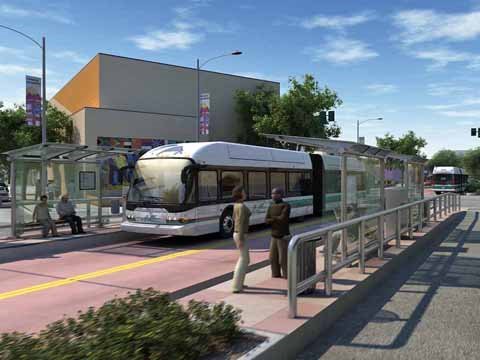
Well, this article is from a few days ago, so its not technically 'today'

Quote:
Oakland begins BRT meetings today

Tonight, the City of Oakland will kick off a series of community meetings about AC Transit's proposed BRT system.

Bus Rapid Transit, or BRT, is a often described as light rail without the rails. In BRT systems, buses run in a dedicated lane to ensure speed and reliability, so the bus does not risk getting delayed in traffic. Passengers board the buses from raised platforms level with the bus door, and purchase tickets in advance from fare machines at the station, allowing them to board and exit the bus on any door, without standing in line to pay.

AC Transit is proposing a BRT line that will run from downtown Telegraph Avenue from Berkeley, then through downtown Oakland, and then up East 14th to San Leandro. As part of the planning process, each City that will host part of the BRT line must identify their preferred street design, route, and station locations.

The meetings being held over the next few weeks give Oakland residents an opportunity to weigh in on these questions. And with seven meetings to choose from, everyone should be able to find at least one that fits into their schedule:

Monday, January 11th: 6-8 PM, Fruitvale Senior Center, 3301 E. 12th Street, Ste. 201

Tuesday, January 12th: 6-8 PM, Eastside Arts Alliance, 2277 International Boulevard

Thursday, January 21st: 6-8 PM, East Oakland Youth Development Center, 8200 International Boulevard

Tuesday, January 26th: 6-8 PM, Faith Presbyterian Church, 420 49th Street

Wednesday, January 27th: 11 AM - 1 PM, Oakland City Hall, Hearing Room 2, 1 Frank Ogawa Plaza

Wednesday, January 27th: 5-7 PM, Oakland City Hall, Hearing Room 4, 1 Frank Ogawa Plaza

Thursday, January 28th: 6-8 PM, St. Louis Bertrand Church, 1410 100th Avenue

More information on the BRT project can be found at Oakland's BRT website and from AC Transit.

Posted By: V Smoothe (Email) | January 11 2010 at 09:00 AM

Read more: http://www.sfgate.com/cgi-bin/blogs/inoakland/detail?&entry_id=54985#ixzz0chllSKKw
some pics.


__________________

"Two roads diverged in a wood, and I—I took the one less traveled by, And that has made all the difference."-Robert Frost
Reply With Quote
     
     
  #918  
Old Posted Jan 15, 2010, 7:06 PM
fflint's Avatar
fflint fflint is offline
Triptastic Gen X Snoozer
 
Join Date: Jul 2001
Location: San Francisco
Posts: 22,150
BART Ponders Raising Transbay Surcharge
Michael Cabanatuan, Chronicle Staff Writer
Friday, January 15, 2010

http://www.sfgate.com/cgi-bin/article.cgi?f=/c/a/2010/01/15/MNEF1BIDIJ.DTL


A BART train heads into the tunnel in West Oakland that leads to the Transbay Tube. That ride might cost more when bridge tolls go up in July, under a proposal to raise the surcharge to help close the transit district's budget gap. Photo: Michael Macor / The Chronicle


With the cost of crossing the Bay Bridge during peak commute hours likely to climb by $2 on July 1, some BART directors think the time is right to add a 10-cent surcharge to each trip through the Transbay Tube to help bail out the struggling transit agency.

BART directors Tom Blalock of Fremont and James Fang of San Francisco suggested tacking on the surcharge on trips beneath the bay during a three-hour discussion Thursday on how to close a $25 million gap for the current fiscal year.

BART fares for trips beneath the bay already include an 89-cent surcharge. The additional fee would generate about $4.7 million a year, said General Manager Dorothy Dugger.

"We know tolls are going up July 1," said Blalock, arguing that it would make sense to increase BART's transbay tariff simultaneously. "What if we made a pre-emptive strike? I don't want to see us start considering it after the toll increase takes place."

...
__________________
"You need both a public and a private position." --Hillary Clinton, speaking behind closed doors to the National Multi-Family Housing Council, 2013
Reply With Quote
     
     
  #919  
Old Posted Jan 15, 2010, 7:47 PM
sf_eddo's Avatar
sf_eddo sf_eddo is offline
Registered User
 
Join Date: Sep 2005
Location: Hayes Valley, San Francisco
Posts: 2,113
Those without cars hit hardest by Bay Area transit crisis

Part 4 of the series

Quote:
Those without cars hit hardest by Bay Area transit crisis

By Mike Rosenberg
Bay Area News Group
Posted: 01/13/2010 12:00:00 AM PST
Updated: 01/13/2010 10:22:30 AM PST

Special Section

* Running on Empty:
Bay Area Transportation in Trouble

Like many Bay Area residents who rely on public transit to get out around, Redwood City resident Trevor Irwin feels helpless when fares rise and service levels drop.

Irwin, who pays $750 monthly for rent and bills, has cut his grocery budget to $40 a week to cope with a 25-cent SamTrans bus fare hike in February 2009, while preparing for another one coming this February.

"What's more important, food or a bus pass?" said Irwin, 29. "(I) can't pay all that money."

Irwin is known as a transit-dependent rider, part of the estimated one in three Bay Area adults without access to a car, who are now being forced to pay more for less service. Because they can't simply hop in a car to cope, transit-dependent riders may be hit hardest by the trouble facing local transit.

San Jose resident Lupe Medrano, who is blind and does not work, relies on the Valley Transportation Authority's bus and paratransit service to get around. VTA raised daily paratransit fares from $3.50 to $4 recently and, like Irwin, Medrano has had to pull money from essentials or ride less often, leaving her unable to go out as often for social purposes, and she has stopped attending De Anza College in Cupertino.

"We're in a recession — a lot of people are hurting. We're on fixed income," said Medrano, 52. "It's just making it more and more difficult for people to get out there and do what they need to do for daily living."

The current service cuts and fare hikes are likely to produce significant lifestyle changes, as when AC Transit slashed service by 12 percent and upped fares 15 cents in 1996. At the time, 524 passengers surveyed by an independent research group said they took 35 percent fewer weekly bus trips for work, about half as many trips for shopping, health care and senior centers and two-thirds fewer recreation trips.

Some advocates have been critical of transit agencies for trimming off-peak service, because transit-dependent commuters often work low-income jobs during odd hours. Recently, Caltrain increased midday wait times from half-hourly to hourly, and BART reduced weeknight and weekend service from every 15 minutes to every 20 minutes, while keeping commute-time schedules intact.

Transit agencies say they have little choice because their commute-time trains attract more riders and are the most economically feasible.

Some low-income riders may have little recourse but to purchase cheap cars, keep them uninsured and hope they don't break down, said Guillermo Mayer, staff attorney for San Francisco-based civil rights law firm Public Advocates.

"It pushes people deeper into poverty," Mayer said. "People are becoming, I think, desperate. This is an immediate impact that they see every single day. They don't have the option of not sending their kids to school; they don't have the option of not showing up at work."

Some advocates have also criticized transit agencies for funding costly projects that benefit mostly affluent residents.

Cash-strapped BART, for instance, decided in December to spend $492 million on a people-mover for fliers headed to Oakland International Airport. The board that distributes San Mateo County transit sales tax money recently moved up $15 million for a new ferry line designed for South San Francisco biotech workers coming from Oakland's Jack London Square.

"I believe we should service more who are transit-dependent, those who have no other means to get to doctors, work, school, whatever," longtime South San Francisco Councilwoman Karyl Matsumoto said. "That should be the priority."

Vallejo resident Michael Ella, who works part-time in San Francisco as a guest services usher at AT&T and Candlestick parks, can't afford to buy a car and takes Vallejo Transit and BART. With reduced bus service, Ella, 32, often has to walk home, alongside Interstate 780, from the El Cerrito del Norte BART station.

The journey takes him 3½ hours, and with BART fare hikes it costs $18.20 round trip. He often stays overnight with a friend in San Francisco.

"About 40 percent of my expenses go to commuting," Ella said. "That sometimes drives me crazy."

For seniors, the disabled and others who have trouble walking or getting rides, the service cuts endanger their ability to do basic errands such as grocery shopping.

"Obviously, the concern that I have is that people will not get out of their house. They'll be isolated," said Metropolitan Transportation Commission Vice Chairwoman Adrienne Tissier, a San Mateo County supervisor.

Others will turn to friends and family members for rides, which may be quicker and cheaper but can chip away at their pride, independence and freedom, advocates and riders say.

Those at Community Gatepath, a Burlingame-based nonprofit that serves the disabled, including Irwin, said it looks like Irwin has lost weight since he cut back on grocery bills. Irwin, who works as a landscaper there, is worried the worst is yet to come.

"If we get cuts, then we can't come to work," said Irwin, who says the job makes him happy. "It takes your goals away from you."
Source: http://www.mercurynews.com/bay-area-transportation/ci_14167702?nclick_check=1
Reply With Quote
     
     
  #920  
Old Posted Jan 15, 2010, 7:48 PM
sf_eddo's Avatar
sf_eddo sf_eddo is offline
Registered User
 
Join Date: Sep 2005
Location: Hayes Valley, San Francisco
Posts: 2,113
What it will take to fix Bay Area transit crisis

Part 5

Quote:
What it will take to fix Bay Area transit crisis

By Mike Rosenberg
Bay Area News Group
Posted: 01/13/2010 01:01:56 PM PST
Updated: 01/13/2010 09:54:54 PM PST

For Bay Area transit agencies to emerge stronger from their plight, extensive changes will be required, most likely including new taxes and a shift in the way commuters travel and leaders plan cities.

Experts, politicians, commuters and others interviewed for this series offered many ideas that could spur ridership and help public transit providers crawl out of budget holes. But there is doubt that the region can muster the political will to make the solutions happen.

Several experts say land use and planning will play a key role.

Environmentalists, transit agencies and regional government bodies have lobbied for more homes, shops and amenities near train and bus centers, a concept known as transit-oriented development. The 257,000-square-foot Fruitvale Transit Village in Oakland is a shining example, but there are others in the works or standing in Pleasant Hill, Richmond and elsewhere.

The most recent government survey available, from 2000, shows those living within a half-mile of a Bay Area ferry or train station were four times more likely than others to take transit. Only 4 percent of those whose homes and jobs were more than a half-mile from a station used transit, compared with 42 percent for those with both within a half-mile.

"This is the way of the future," said Allison Brooks, chief of staff at Oakland-based Reconnecting America, which operates the Center for Transit-Oriented Development. "The trend is there, and a lot of cities want to make this happen. But the investment isn't there."

Ridership questions

There are questions, however, about whether these developments actually increase transit ridership. UC Transportation Center Director Robert Cervero, a leading transit-oriented development expert, said many transit village residents fulfill the "self-selection" process, meaning they are longtime transit riders who move near a transit hub.

There are also few opportunities left to build transit villages without cities either buying out or forcing out property owners. Of the 96,614 acres of land within a half-mile of Bay Area transit stations, only 5,488 acres are vacant or underutilized, according to a Reconnecting America land analysis.

Aside from building close to hubs, some have suggested more corporate shuttles, such as the one Genentech runs from some BART and Caltrain stations to its South San Francisco campus.

Not surprisingly, most agree land-use advances will do little to soothe Bay Area transit troubles if train and bus operators can't solve their financial problems and offer convenient, affordable rides. If middle-class commuters are to ditch their cars for transit, it may be up to local governments, transit agencies and taxpayers to help make that shift.

The federal government has in recent memory provided no operational support for transit agencies. The state had provided a key lift, long supplying Bay Area transit agencies with $100 million to $200 million a year until 2006. But in the past three years, the state has taken $532 million that would have gone to Bay Area transit budgets and another $189 million from the Metropolitan Transportation Commission.

Despite the California Transit Association's successful lawsuit against the practice, local transit agencies expect the state to find an accounting trick to satisfy the judge's demands and keep the money in state coffers for at least the next few years.

Local taxpayers take the hit?

That leaves local taxpayers to foot the bill.

Of the 12 transportation-related tax measures put on ballots in 2008 by local agencies in California, voters passed 11. The Bay Area is aiming for a November 2012 ballot measure that would provide regional revenue for transit.

A group of transit officials, regional planners and outside experts called the Transit Sustainability Project are tasked with figuring out what type of measure it would be, and a gas tax of up to 10 cents has been gaining steam among some leaders. MTC Executive Director Steve Heminger calls the gas tax a carbon tax by another name, and says $4-a-gallon gas is the best thing that ever happened to transit ridership.

But cash flow is only half the budget picture. The Transit Sustainability Project is also aiming to cut costs, possibly by merging some of the 28 transit agencies that run similar routes and pull profits away from one another.

Experts and transit agencies are mostly divided into two camps: Those believing in the "if you build it, they will ride it" mentality say taxpayers should invest in infrastructure, such as rail extensions and new stations, while others lobby instead for more efficient service. The latter may be more realistic given recent funding problems.

Because of the economic backdrop, turning around local transit troubles is likely to prove challenging and require support from both politicians and the public, said Susan Shaheen, co-director of UC-Berkeley's Transportation Sustainability Research Center.

Although the shift would be costly and time-consuming, it would be a significant one for commuters, the economy and the environment.

As U.S. Transportation Secretary Ray LaHood said in a recent blog post: "Our future rides on public transportation."
Source: http://www.mercurynews.com/search/ci_14181164
Reply With Quote
     
     
This discussion thread continues

Use the page links to the lower-right to go to the next page for additional posts
 
 
Reply

Go Back   SkyscraperPage Forum > Discussion Forums > Transportation
Forum Jump


Forum Jump


All times are GMT. The time now is 6:44 AM.

     
SkyscraperPage.com - Privacy Statement - Top

Powered by vBulletin® Version 3.8.7
Copyright ©2000 - 2026, vBulletin Solutions, Inc.