Sorry for responding to a 10 -day old thread, but I've been very busy RN, and I will continue to be. Did a ton of research though, and I've changed my mind a bit.
Sorry if I don't update to the other conversations I am in, but I will try to keep updated to this one.
Quote:
Originally Posted by roger1818

Today, yes, but most EV charging is done overnight, so as we do gradually transition to electric transport, most of the increased demand will be to the base load, which is easier to manage than an increase in peak load.
|
Yes and no. EV charging is done when people
don't use their cars. That's
often at night, but also when they're in parking lots (so midmorning, afternoon, etc.) And even then, you have people who are just using superchargers regardless of peak loads.
Quote:
Originally Posted by roger1818
Any energy infrastructure project, be it pipelines or electrical generation, will be met with opposition and protests. One has to ask which project is going to do the least harm for the most good.
|
Except Site C has been a shitshow that has been delayed time and time again (largely by protestors and natives, who then cause the costs to go up due to the delays, then use the increased costs to justify their opposition.)
https://www.sitecproject.com/sites/defau...0Review%20of%20Project%20Feasibility.pdf
I know. The reason BC Hydro even started Site C is because projected demand for 2025 in the
early 2000s well exceeded capacity, even beyond the capacity the IPP calls were generating (not to mention the IPP calls are expensive as well, and lock BC Hydro into long-term contracts with limited negotiating power on the site of BC Hydro- basically trading short-term risk for long-term costs.)
Quote:
|
Forecasted electricity demand for 2025 [per year] is between 73,000 and 83,000 GWh. Current electricity supply is 54,000 GWh.
|
BC Hydro made the very
optimistic assertion that 50% of that demand would be met by conservation. And shut down the Burrard Generating Station.
Now, BC is a massive net
importer of energy, due to entirely foreseen policy failures. Even Site C is a bit of a drop in the bucket, only increasing capacity to ~60,000 GWh. We should have been building both Site C and E, which would have at least gone us to at least having a chance to filling to lower +19,000GWh needed (the rest would be conservation, IPPs, and improvements at existing dams.)
We stopped building dams in the 80s when supply outstripped demand. Now demand is outstripping supply.
Quote:
Originally Posted by roger1818
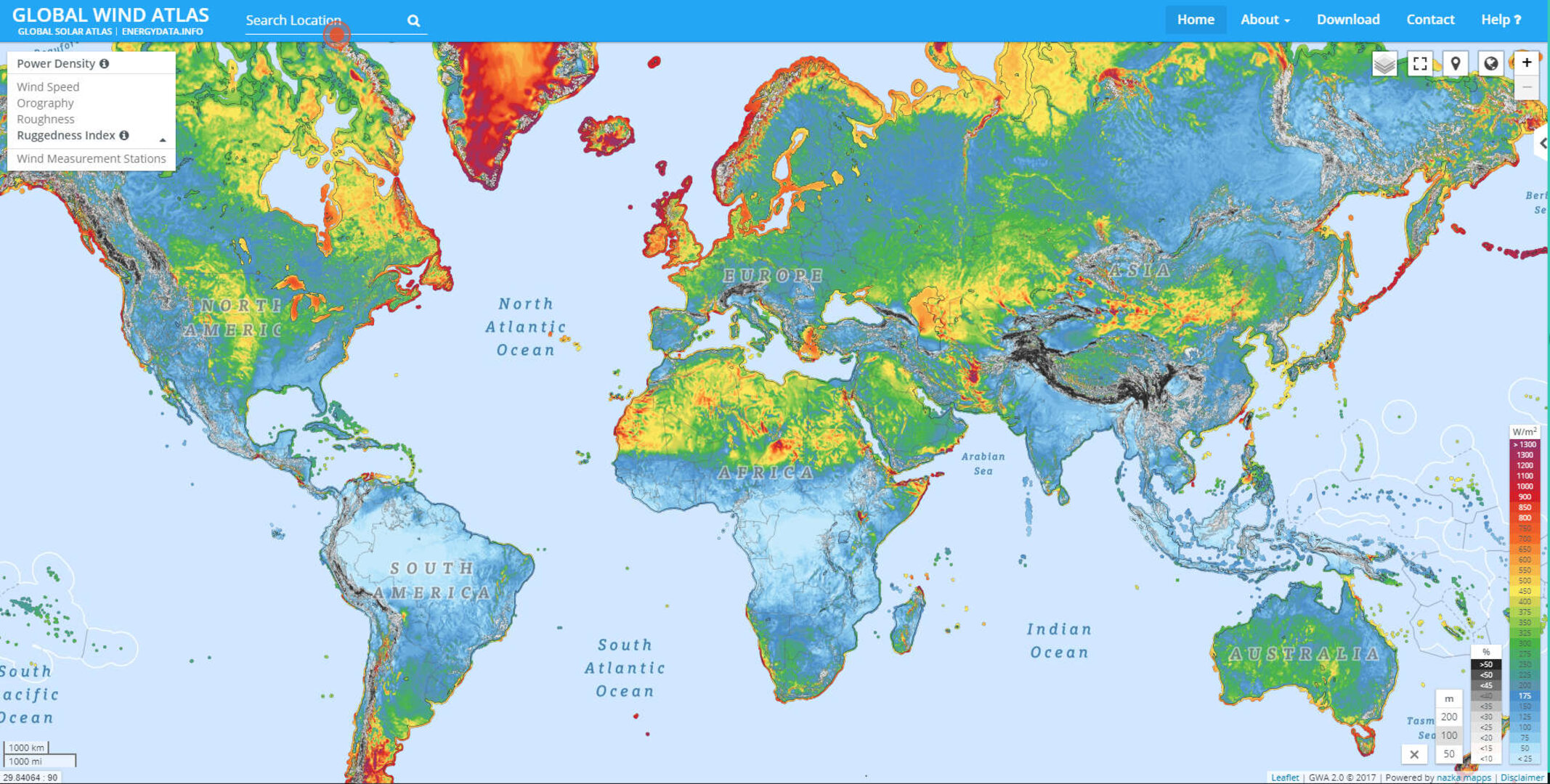
Here is a recreation of the second map, zoomed in on southern BC. While inland there are only a few pockets of yellow, orange and red, the coast is ripe for off-shore wind generation. Yes there will be objections and protests, but once built it would provide clean power for decades.

(click to enlarge) |
TBH, we probably need both wind and hydro at this rate.
https://docdro.id/TpK0Bm6
Quote:
|
5,250 MW economically feasible with costs less than $105/MW by 2025 (CanWEA) [for onshore wind].
|
So about 5 or so Site Cs.
I guess I have to concede the point here.
There's plenty offshore, but none is really cost-feasible. The closest to consumption centers is north of Vancouver Island, and it's far from transmission lines (as well as the costs of working with the sea in general.)
Quote:
A more recent planning study published in 2016 (Kerr Wood Leidal, GeothermEx) put the combined potential of 18 economically
‘favourable’ sites at just 400 MW.
|
That's a big
yikes for geothermal, and explains a
lot. Apparently the ground around the Pemberton Geothermal Belt is especially difficult to work with for geothermal power due to low permeability (so they need a ton of fracking.) Fracking near Whistler.
Great combination!
Quote:
Originally Posted by roger1818
Yes they do, but adding more wind generation to the mix means that when winds are strong during peak demand (high price) periods, they can export more electricity compensating for a possible reduction in profit when winds aren't as strong. When demand is low (low price) they can decide if it is cheaper to turn off the wind turbines and import more electricity or keep them on and import less.
Also, don't forget that as a Crown Corporation, BC Hydro's primary mandate is to provide affordable, reliable electricity to the people of BC while minimizing their need for taxpayer subsidies. If playing the electricity market can help them realize that goal, then great, but it isn't their primary objective.
Only about 6% ( in 2018) of Alberta's electricity generation came from wind. While they are phasing out coal, the vast majority of that will be replaced by natural gas. It will be a long time (if ever) before Alberta will be able to meet their own electrical needs with wind, let alone have spare renewable electricity to export (unless their own demand plummets due to a reduction in fossil fuel production).
I agree that EVs will have a significant impact on baseload, but that is much easier to deal with than an increase to peak load. |
Well, that's still 6480MWh to play with. That's not a small amount- it's the entire production of Site C.
I still think that we would want our own storage facilities independent of the normal dams.
Remember: we don't have any peaker plants anymore due to the retirement of Burrard Generating Station.
We've put extra turbines on our dams to compensate, but if you start importing during weak wind periods, now you're going to start having problems- and electricity is going to be sold by everyone else for a premium.
Or we have to fire up Burrard again.
Or build more pumped-hydro stations to compensate.
One other idea I've heard is to turn the Vancouver Watershed dams into hydro plants. Which is an interesting proposal.
Quote:
Originally Posted by VancouverOfTheFuture
I'm not ignoring them. as i said, everything has trade offs and always will. but i think the benefits of hydroelectric outweighs the negatives. plus many of the issues of the past, we can avoid today. fish ladders, not something done in the 60s, are standard practice now. i cant say the same about solar or wind. one HUGE negative to wind is, when it is too windy you have to turn off the turbines...  . |
Even Fish ladders have limits.
https://en.wikipedia.org/wiki/Moran_Dam
Quote:
|
Moran Dam's tremendous height would make artificial fish passage nearly impossible, and would thus cut off a large portion of the Fraser's prodigious runs of Pacific salmon and steelhead trout.[6]
|
Mind you, the Fraser Canyon is
not a normal canyon.
The guy who it's named after had half his canoe crew die trying to navigate it.
For those interested in the possible dam options, here's a good PDF from back in the day:
https://docdro.id/uf6PzrL
Site C/E is just mentioned in passing in this though, interestingly. It doesn't seem to have a big priority back then.
I find it hilarious that the impacts for the salmon runs for the Stikine River are kind of brushed aside because 'Americans are the ones fishing them'.






 Prev
Prev




 Linear Mode
