HomeDiagramsDatabaseMapsForum About
     

Go Back   SkyscraperPage Forum > Regional Sections > Canada > Alberta & British Columbia > Vancouver > Transportation & Infrastructure


Reply

 
Thread Tools Display Modes
     
     
  #2701  
Old Posted Feb 2, 2022, 1:13 PM
roger1818's Avatar
roger1818 roger1818 is offline
Registered User
 
Join Date: Feb 2016
Location: Stittsville, ON
Posts: 6,610
Quote:
Originally Posted by Migrant_Coconut View Post
Honest question: would ACs in a heat wave count as baseload or peak?
The baseload on a grid is defined as the minimum level of demand on an electrical grid over a span of time. Any AC power draw during the period of minimum demand would contribute to that period's base load.

Having said that, the period with minimum demand is usually during the middle of the night, and ACs tend to be very lightly used then (since it is likely cooler at night and there is no infrared radiation from the sun to heat the buildings), so their contribution to that time period's base load will be minimal and the vast majority of the extra load from ACs in a head wave would be considered peak.
Reply With Quote
     
     
  #2702  
Old Posted Feb 2, 2022, 2:37 PM
roger1818's Avatar
roger1818 roger1818 is offline
Registered User
 
Join Date: Feb 2016
Location: Stittsville, ON
Posts: 6,610
Quote:
Originally Posted by fredinno View Post
BC uses mostly oil cars and buses. Hence why % of total energy (not electricity) from oil is relevant.
Today, yes, but most EV charging is done overnight, so as we do gradually transition to electric transport, most of the increased demand will be to the base load, which is easier to manage than an increase in peak load.

Quote:
Originally Posted by fredinno View Post
Otherwise, BC Hydro wouldn't be bothering with large dams, and just make PPP Producer contracts like they did in the 2000s.The investment risk of large projects is high, and Site C is a focal point for protests.
Any energy infrastructure project, be it pipelines or electrical generation, will be met with opposition and protests. One has to ask which project is going to do the least harm for the most good.

Quote:
Originally Posted by fredinno View Post
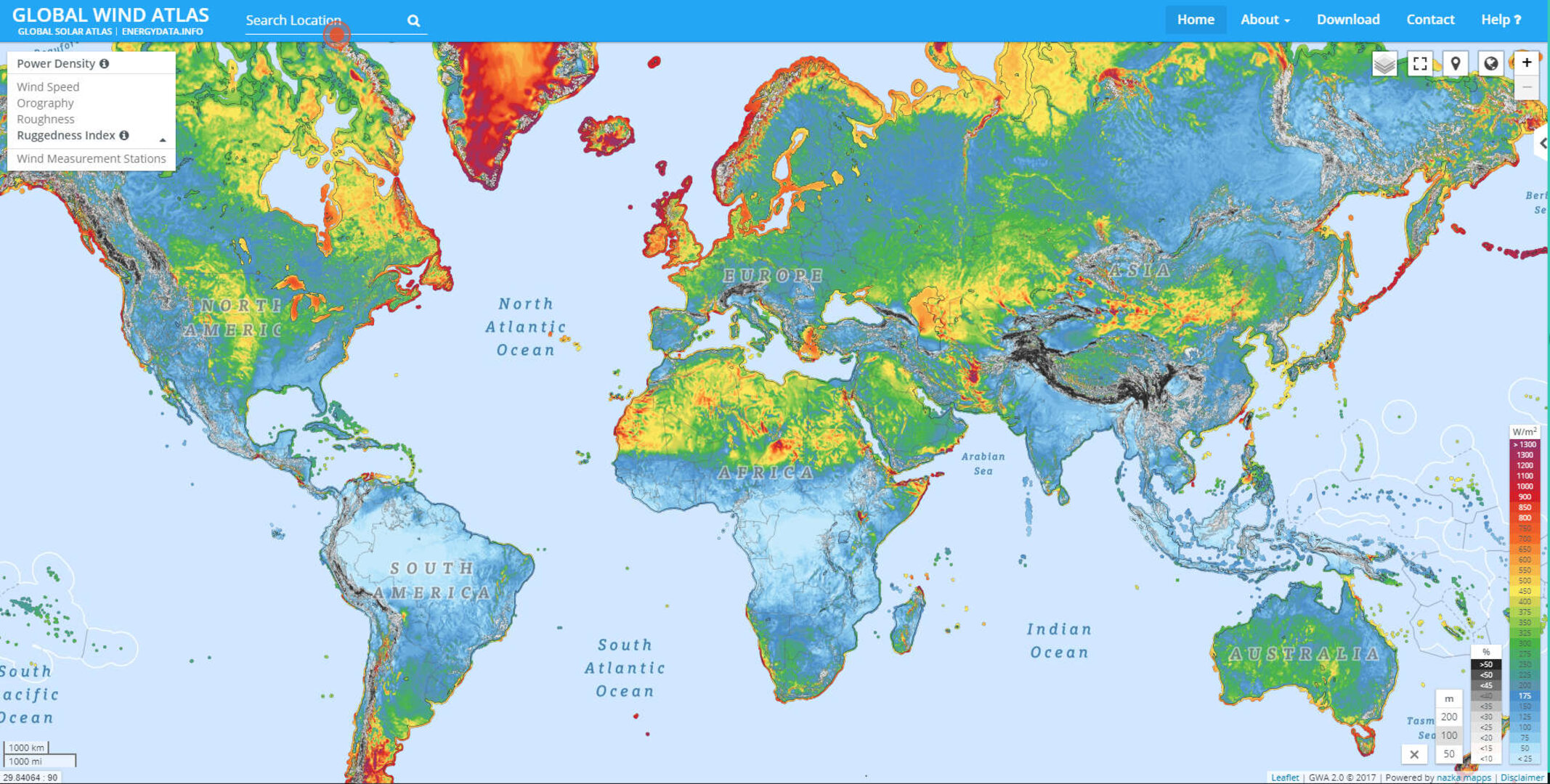
Also: global wind geography:

If you can't see the yellow in BC, it's because it's a small area directly bordering the Rockies, as the wind gets pushed down the mountains into the Prairies. This area tends to get exaggerated in most maps.
Here is a recreation of the second map, zoomed in on southern BC. While inland there are only a few pockets of yellow, orange and red, the coast is ripe for off-shore wind generation. Yes there will be objections and protests, but once built it would provide clean power for decades.


(click to enlarge)


Quote:
Originally Posted by fredinno View Post
BC already uses the storage of the dams for exporting their storage capacity (buying electricity when it's cheap and selling when expensive), this will net increase costs by reducing exports.
Yes they do, but adding more wind generation to the mix means that when winds are strong during peak demand (high price) periods, they can export more electricity compensating for a possible reduction in profit when winds aren't as strong. When demand is low (low price) they can decide if it is cheaper to turn off the wind turbines and import more electricity or keep them on and import less.

Also, don't forget that as a Crown Corporation, BC Hydro's primary mandate is to provide affordable, reliable electricity to the people of BC while minimizing their need for taxpayer subsidies. If playing the electricity market can help them realize that goal, then great, but it isn't their primary objective.

Quote:
Originally Posted by fredinno View Post
It has the issue of small hydro (it's distributed) but then you have to carry to South BC with newly built transmission- as well as being less predictable overall. Or you'd have to import the wind power from Alberta.
Only about 6% (in 2018) of Alberta's electricity generation came from wind. While they are phasing out coal, the vast majority of that will be replaced by natural gas. It will be a long time (if ever) before Alberta will be able to meet their own electrical needs with wind, let alone have spare renewable electricity to export (unless their own demand plummets due to a reduction in fossil fuel production).

Quote:
Originally Posted by Migrant_Coconut View Post
Come to think of it, I'd be worried about what EVs are doing to the baseload as well; we need large-scale plants for those, and we don't exactly have plans past Site C.
I agree that EVs will have a significant impact on baseload, but that is much easier to deal with than an increase to peak load.
Reply With Quote
     
     
  #2703  
Old Posted Feb 3, 2022, 12:54 AM
VancouverOfTheFuture's Avatar
VancouverOfTheFuture VancouverOfTheFuture is offline
Registered User
 
Join Date: Apr 2014
Posts: 3,481
BC should stick with hydroelectric. its been insanely reliable, green, and economical since the 1960s, and it will continue to be. we dont need to manufacture batteries and everything that goes with that process, the dam is the battery.
Reply With Quote
     
     
  #2704  
Old Posted Feb 3, 2022, 1:35 AM
swimmer_spe swimmer_spe is offline
BANNED
 
Join Date: Apr 2014
Posts: 10,743
Quote:
Originally Posted by VancouverOfTheFuture View Post
BC should stick with hydroelectric. its been insanely reliable, green, and economical since the 1960s, and it will continue to be. we dont need to manufacture batteries and everything that goes with that process, the dam is the battery.
The challenge is whether there are enough rivers to dam. The other question is whether the harm to fish ecology is worth it.
Reply With Quote
     
     
  #2705  
Old Posted Feb 3, 2022, 4:37 AM
VancouverOfTheFuture's Avatar
VancouverOfTheFuture VancouverOfTheFuture is offline
Registered User
 
Join Date: Apr 2014
Posts: 3,481
Quote:
Originally Posted by swimmer_spe View Post
The challenge is whether there are enough rivers to dam. The other question is whether the harm to fish ecology is worth it.
there are enough rivers. (in BC at least)

is wind worth killing all the birds? creating noise for the animals/humans around it and disrupting them? is solar worth creating an even hotter heat island effects? is it worth manufacturing huge industrial batteries on a continuous basis? everything has trade-offs and always will.


i am a firm believer hydroelectric is the best solution we have. wind/solar are not real, reliable options. they work in places because they have backup generally in the form of burning fuel. nuclear is arguably the best. but due to the waste it creates, i dont think it is something we should do; for now anyways. plus it is inherently dangerous.

you can literally turn a valve and turn on or off generation with hydro. the dam/water storage is the battery. it is reliable and can be counted on. BC has so much potential in this. we even knew this in the 1960s. i will be on team hydro for the near future baring anything unexpected being invented.
Reply With Quote
     
     
  #2706  
Old Posted Feb 3, 2022, 6:03 AM
swimmer_spe swimmer_spe is offline
BANNED
 
Join Date: Apr 2014
Posts: 10,743
Quote:
Originally Posted by VancouverOfTheFuture View Post
there are enough rivers. (in BC at least)

is wind worth killing all the birds? creating noise for the animals/humans around it and disrupting them? is solar worth creating an even hotter heat island effects? is it worth manufacturing huge industrial batteries on a continuous basis? everything has trade-offs and always will.


i am a firm believer hydroelectric is the best solution we have. wind/solar are not real, reliable options. they work in places because they have backup generally in the form of burning fuel. nuclear is arguably the best. but due to the waste it creates, i dont think it is something we should do; for now anyways. plus it is inherently dangerous.

you can literally turn a valve and turn on or off generation with hydro. the dam/water storage is the battery. it is reliable and can be counted on. BC has so much potential in this. we even knew this in the 1960s. i will be on team hydro for the near future baring anything unexpected being invented.
The rivers are finally recovering from various things that drove the salmon out of them, and drove marine life away. To say something is green and ignoring this means it is not green.
Reply With Quote
     
     
  #2707  
Old Posted Feb 3, 2022, 6:25 AM
aberdeen5698's Avatar
aberdeen5698 aberdeen5698 is offline
Registered User
 
Join Date: May 2010
Posts: 4,734
Quote:
Originally Posted by VancouverOfTheFuture View Post
i am a firm believer hydroelectric is the best solution we have. wind/solar are not real, reliable options. they work in places because they have backup generally in the form of burning fuel. nuclear is arguably the best.
Hydro makes an excellent base source of power to back up gaps in wind or solar power (although I'm pretty skeptical about the viability of solar in BC). One of the nice things about wind power is that it can be incrementally deployed in areas where it's needed without the massive investment and long term construction required for dams.
Reply With Quote
     
     
  #2708  
Old Posted Feb 3, 2022, 6:53 AM
VancouverOfTheFuture's Avatar
VancouverOfTheFuture VancouverOfTheFuture is offline
Registered User
 
Join Date: Apr 2014
Posts: 3,481
Quote:
Originally Posted by swimmer_spe View Post
The rivers are finally recovering from various things that drove the salmon out of them, and drove marine life away. To say something is green and ignoring this means it is not green.
I'm not ignoring them. as i said, everything has trade offs and always will. but i think the benefits of hydroelectric outweighs the negatives. plus many of the issues of the past, we can avoid today. fish ladders, not something done in the 60s, are standard practice now. i cant say the same about solar or wind. one HUGE negative to wind is, when it is too windy you have to turn off the turbines...

the key is to look at the total package. benefits + negatives and then evaluate what works best. solar in BC wont really work, even in the lower mainland the pay back period is normally longer than the useful lifespan of the panel. i believe the hydroelectric has serviced the province well for the last 1/2 century and it will continue to do so well into the future. are there issues? yes. can these issues be mitigated? yes. do the benefits outweigh the negatives? i think so, yes.

as with most things, including power generation. there is a lot of subjectivity in it. someone may value one benefit/drawback more than another, pushing a different option to the forefront.

and with anything government done, you can only please 50% of the people 50% of the time. social media has killed all kinds of objective reasoning; its all one big echo chamber now.

Quote:
Originally Posted by aberdeen5698 View Post
Hydro makes an excellent base source of power to back up gaps in wind or solar power (although I'm pretty skeptical about the viability of solar in BC). One of the nice things about wind power is that it can be incrementally deployed in areas where it's needed without the massive investment and long term construction required for dams.
personally, i would rather invest in a large, network like what has been done as of now, than do things piecemeal. that is a good way to create issues in the future. what if all of a sudden wind isn't viable in 20yrs when the turbine needs replacement? i am very surprised the life span of a wind turbine is only 20yrs... that is disappointing...

i would rather invest in a site C now, so that in 60yrs it will be remembered like the W.A.C. Bennet Dam. that was ambitious, a massive dam, in the middle of nowhere, without the technology to move the power to the lower mainland. but it was done, and it has been great for BC ever since. i think BC has done things right in the past 60yrs on this front, and we should continue doing it.
Reply With Quote
     
     
  #2709  
Old Posted Feb 3, 2022, 8:12 AM
Migrant_Coconut's Avatar
Migrant_Coconut Migrant_Coconut is offline
Registered User
 
Join Date: Oct 2015
Location: Kitsilano/Fairview
Posts: 9,899
Technically, the only safety issues from fission reactors usually stem from cut corners when designing and building them - and there's certain types of Gen 4 reactors that burn the waste from Gen 3, as well as fusion which doesn't have toxic waste at all. Wind turbines can also be redesigned to be bird-proof.

Not speaking out against hydro, just in favour of a diversified power grid.

Quote:
Originally Posted by swimmer_spe View Post
The rivers are finally recovering from various things that drove the salmon out of them, and drove marine life away. To say something is green and ignoring this means it is not green.
And that's part of why there are zero dams on the Fraser. All the current ones are in the middle of trout habitat.
Reply With Quote
     
     
  #2710  
Old Posted Feb 3, 2022, 8:20 AM
Tvisforme's Avatar
Tvisforme Tvisforme is online now
Registered User
 
Join Date: Sep 2014
Location: Metro Vancouver
Posts: 2,117
Keep in mind, that article indicates that wind towers currently kill an extremely small percentage of birds annually compared to cats, cars, farming, windows, and even the power lines that would be required for other sources such as hydroelectric.

As for your other points, yes, we have been and will continue to be well-served by hydroelectric power in BC, but that doesn't mean we should not have alternatives. Build more dams - where appropriate - in conjunction with wind, solar, tidal, whatever we can develop.
Reply With Quote
     
     
  #2711  
Old Posted Feb 3, 2022, 4:19 PM
FarmerHaight's Avatar
FarmerHaight FarmerHaight is offline
Peddling to progress
 
Join Date: Jul 2019
Location: Vancouver's West End
Posts: 1,631
Quote:
Originally Posted by VancouverOfTheFuture View Post
there are enough rivers. (in BC at least)

[URL="https://letstalkscience.ca/educational-resources/stem-in-context/are-wind-farms-a-threat-wildlife"]is wind worth killing all the birds?
Hydro electric is a great technology, and should be used where appropriate. But you cannot compare the impact of wind turbines on birds (which sometimes collide with turbines but have the option to avoid them) with the impact of dams on fish (which obstructs the entire river, sometimes disrupting entire ecological systems).

The U.S. is a complete mess when it comes to dams, since the Corps of Engineers built many dams that are essentially useless when it comes to power generation, because different administrations were searching for make-work projects. But Canada has its own issues with marine life, such as pollution in the Fraser River that prevents salmon from spawning, boat traffic in the Strait of Georgia that collides with and injures whales, and dams that block fish migration.

I just read an article in Maclean's this past week about how our last remaining pod of killer whales may stop visiting the Salish Sea all together because of a dwindling salmon supply. It would be a tragedy to lose this iconic B.C. icon.

That was all a lot of rambling that may only tangentially connect to your point about hydro electric power. But my point is this: we cannot make blanket statements like "everything has trade offs and always will. but I think the benefits of hydroelectric outweighs the negatives" because every proposal will have different costs and benefits. Some projects may not generate enough power to justify the impacts on fish and other wildlife.
__________________
“Nothing compares to the simple pleasure of riding a bike” – John F Kennedy
Reply With Quote
     
     
  #2712  
Old Posted Feb 3, 2022, 5:40 PM
aberdeen5698's Avatar
aberdeen5698 aberdeen5698 is offline
Registered User
 
Join Date: May 2010
Posts: 4,734
Quote:
Originally Posted by VancouverOfTheFuture View Post
i believe the hydroelectric has serviced the province well for the last 1/2 century...
It's been a lot longer than that.
Reply With Quote
     
     
  #2713  
Old Posted Feb 3, 2022, 6:59 PM
Tvisforme's Avatar
Tvisforme Tvisforme is online now
Registered User
 
Join Date: Sep 2014
Location: Metro Vancouver
Posts: 2,117
Quote:
Originally Posted by aberdeen5698 View Post
Ah, Sandon, cool, thanks for the link. If you look at 41 seconds into that video, there's a brief glimpse of one of the old Brill electric trolleys that used to run in Vancouver. You can see more of them here:

https://www.youtube.com/watch?v=Sxlq6G_hJII

There's information about the Canadian Brill Trolley National Collection project here:

http://www.sandoninthekootenays.ca/c...ollection.html
Reply With Quote
     
     
  #2714  
Old Posted Feb 13, 2022, 9:06 AM
fredinno's Avatar
fredinno fredinno is offline
Registered User
 
Join Date: Jan 2012
Posts: 2,317
Sorry for responding to a 10 -day old thread, but I've been very busy RN, and I will continue to be. Did a ton of research though, and I've changed my mind a bit.

Sorry if I don't update to the other conversations I am in, but I will try to keep updated to this one.

Quote:
Originally Posted by roger1818 View Post
Today, yes, but most EV charging is done overnight, so as we do gradually transition to electric transport, most of the increased demand will be to the base load, which is easier to manage than an increase in peak load.
Yes and no. EV charging is done when people don't use their cars. That's often at night, but also when they're in parking lots (so midmorning, afternoon, etc.) And even then, you have people who are just using superchargers regardless of peak loads.


Quote:
Originally Posted by roger1818 View Post
Any energy infrastructure project, be it pipelines or electrical generation, will be met with opposition and protests. One has to ask which project is going to do the least harm for the most good.
Except Site C has been a shitshow that has been delayed time and time again (largely by protestors and natives, who then cause the costs to go up due to the delays, then use the increased costs to justify their opposition.)


https://www.sitecproject.com/sites/d...easibility.pdf

I know. The reason BC Hydro even started Site C is because projected demand for 2025 in the early 2000s well exceeded capacity, even beyond the capacity the IPP calls were generating (not to mention the IPP calls are expensive as well, and lock BC Hydro into long-term contracts with limited negotiating power on the site of BC Hydro- basically trading short-term risk for long-term costs.)
Quote:
Forecasted electricity demand for 2025 [per year] is between 73,000 and 83,000 GWh. Current electricity supply is 54,000 GWh.
BC Hydro made the very optimistic assertion that 50% of that demand would be met by conservation. And shut down the Burrard Generating Station.
Now, BC is a massive net importer of energy, due to entirely foreseen policy failures. Even Site C is a bit of a drop in the bucket, only increasing capacity to ~60,000 GWh. We should have been building both Site C and E, which would have at least gone us to at least having a chance to filling to lower +19,000GWh needed (the rest would be conservation, IPPs, and improvements at existing dams.)

We stopped building dams in the 80s when supply outstripped demand. Now demand is outstripping supply.

Quote:
Originally Posted by roger1818 View Post
Here is a recreation of the second map, zoomed in on southern BC. While inland there are only a few pockets of yellow, orange and red, the coast is ripe for off-shore wind generation. Yes there will be objections and protests, but once built it would provide clean power for decades.


(click to enlarge)

TBH, we probably need both wind and hydro at this rate.
https://docdro.id/TpK0Bm6
Quote:
5,250 MW economically feasible with costs less than $105/MW by 2025 (CanWEA) [for onshore wind].
So about 5 or so Site Cs.
I guess I have to concede the point here.

There's plenty offshore, but none is really cost-feasible. The closest to consumption centers is north of Vancouver Island, and it's far from transmission lines (as well as the costs of working with the sea in general.)

Quote:
A more recent planning study published in 2016 (Kerr Wood Leidal, GeothermEx) put the combined potential of 18 economically
‘favourable’ sites at just 400 MW.
That's a big yikes for geothermal, and explains a lot. Apparently the ground around the Pemberton Geothermal Belt is especially difficult to work with for geothermal power due to low permeability (so they need a ton of fracking.) Fracking near Whistler. Great combination!


Quote:
Originally Posted by roger1818 View Post
Yes they do, but adding more wind generation to the mix means that when winds are strong during peak demand (high price) periods, they can export more electricity compensating for a possible reduction in profit when winds aren't as strong. When demand is low (low price) they can decide if it is cheaper to turn off the wind turbines and import more electricity or keep them on and import less.

Also, don't forget that as a Crown Corporation, BC Hydro's primary mandate is to provide affordable, reliable electricity to the people of BC while minimizing their need for taxpayer subsidies. If playing the electricity market can help them realize that goal, then great, but it isn't their primary objective.


Only about 6% (in 2018) of Alberta's electricity generation came from wind. While they are phasing out coal, the vast majority of that will be replaced by natural gas. It will be a long time (if ever) before Alberta will be able to meet their own electrical needs with wind, let alone have spare renewable electricity to export (unless their own demand plummets due to a reduction in fossil fuel production).

I agree that EVs will have a significant impact on baseload, but that is much easier to deal with than an increase to peak load.
Well, that's still 6480MWh to play with. That's not a small amount- it's the entire production of Site C.

I still think that we would want our own storage facilities independent of the normal dams.
Remember: we don't have any peaker plants anymore due to the retirement of Burrard Generating Station.
We've put extra turbines on our dams to compensate, but if you start importing during weak wind periods, now you're going to start having problems- and electricity is going to be sold by everyone else for a premium.
Or we have to fire up Burrard again.
Or build more pumped-hydro stations to compensate.


One other idea I've heard is to turn the Vancouver Watershed dams into hydro plants. Which is an interesting proposal.


Quote:
Originally Posted by VancouverOfTheFuture View Post
I'm not ignoring them. as i said, everything has trade offs and always will. but i think the benefits of hydroelectric outweighs the negatives. plus many of the issues of the past, we can avoid today. fish ladders, not something done in the 60s, are standard practice now. i cant say the same about solar or wind. one HUGE negative to wind is, when it is too windy you have to turn off the turbines... .
Even Fish ladders have limits. https://en.wikipedia.org/wiki/Moran_Dam
Quote:
Moran Dam's tremendous height would make artificial fish passage nearly impossible, and would thus cut off a large portion of the Fraser's prodigious runs of Pacific salmon and steelhead trout.[6]
Mind you, the Fraser Canyon is not a normal canyon.
The guy who it's named after had half his canoe crew die trying to navigate it.

For those interested in the possible dam options, here's a good PDF from back in the day: https://docdro.id/uf6PzrL

Site C/E is just mentioned in passing in this though, interestingly. It doesn't seem to have a big priority back then.

I find it hilarious that the impacts for the salmon runs for the Stikine River are kind of brushed aside because 'Americans are the ones fishing them'.
Reply With Quote
     
     
  #2715  
Old Posted Feb 14, 2022, 6:47 AM
MIPS's Avatar
MIPS MIPS is offline
SkyTrain Nut
 
Join Date: Mar 2013
Location: Kamloops
Posts: 2,003
[mumbles something about nuclear energy on the coast/Fraser/Columbia]
[sound of screeching hippies and protest encampments intensifies]

Quote:
nuclear is arguably the best. but due to the waste it creates, i dont think it is something we should do; for now anyways. plus it is inherently dangerous.
Don't let the anti-nuclear crowd force BC and civilization as a whole into alternate green energy projects which cannot handle even half of the peak demand that Nuclear can handle at any given time. Aside from Chalk River experimental reactor incidents, Canada has a nearly bulletproof atomic energy and waste storage portfolio. Just because a bunch of hippies and their brainwashed Gen X's and Millennial children still cling to incidents more than 50 years old is not a reason we should continue to just ignore its viability.

Last edited by MIPS; Feb 14, 2022 at 7:04 AM.
Reply With Quote
     
     
  #2716  
Old Posted Feb 14, 2022, 7:19 AM
Sheba Sheba is online now
Registered User
 
Join Date: Jan 2015
Location: BC
Posts: 4,538
We should probably get back to what this tread's about - Rail Transportation. In the meantime here's something to ponder.
Reply With Quote
     
     
  #2717  
Old Posted Feb 14, 2022, 7:41 PM
twoNeurons twoNeurons is offline
loafing in lotusland
 
Join Date: Aug 2002
Location: Lotusland
Posts: 6,090
Somewhat tangential, but the B1M did a piece on Seattle's apparently "$54 Billion Dollar" transit overhaul.

Does anyone here know much about this?

Video Link


I thought they were just building out a couple of LRT lines... apparently it's a bit more than that, but I wonder if the infrastructure bill means more attention to a potential Cascadia HSR.
Reply With Quote
     
     
  #2718  
Old Posted Feb 14, 2022, 8:44 PM
DirectionNorth's Avatar
DirectionNorth DirectionNorth is offline
Registered User
 
Join Date: Oct 2020
Posts: 236
Quote:
Originally Posted by twoNeurons View Post
Somewhat tangential, but the B1M did a piece on Seattle's apparently "$54 Billion Dollar" transit overhaul.

Does anyone here know much about this?

Video Link


I thought they were just building out a couple of LRT lines... apparently it's a bit more than that, but I wonder if the infrastructure bill means more attention to a potential Cascadia HSR.
It's a large sales tax (+ other taxes?) measure to fund more LRT and commuter rail in the Seattle Area.

We don't have equivalents in Canada - we don't vote on new taxes, and generally, there aren't specific taxes set aside for transit funding. In the States, they often have specific taxes that are used to fund transit, and those taxes have to be approved by voters. They're fairly common - off the top of my head, I can think of multiple active measures like this in the US: Austin's Project Connect, Los Angeles' Measure M, Sound Transit 3 (this project) in Seattle, and so on.
__________________
My YouTube Channel
Reply With Quote
     
     
  #2719  
Old Posted Feb 14, 2022, 8:50 PM
madog222 madog222 is online now
Moderator
 
Join Date: Jan 2014
Posts: 3,803
Quote:
Originally Posted by twoNeurons View Post
Somewhat tangential, but the B1M did a piece on Seattle's apparently "$54 Billion Dollar" transit overhaul.

Does anyone here know much about this?

I thought they were just building out a couple of LRT lines... apparently it's a bit more than that, but I wonder if the infrastructure bill means more attention to a potential Cascadia HSR.
It’s Sound Transits plan for the next 25 years, really just LRT expansion.
Reply With Quote
     
     
  #2720  
Old Posted Feb 14, 2022, 11:04 PM
teriyaki teriyaki is online now
Registered User
 
Join Date: Nov 2008
Posts: 580
Quote:
Originally Posted by DirectionNorth View Post
It's a large sales tax (+ other taxes?) measure to fund more LRT and commuter rail in the Seattle Area.

We don't have equivalents in Canada - we don't vote on new taxes, and generally, there aren't specific taxes set aside for transit funding. In the States, they often have specific taxes that are used to fund transit, and those taxes have to be approved by voters. They're fairly common - off the top of my head, I can think of multiple active measures like this in the US: Austin's Project Connect, Los Angeles' Measure M, Sound Transit 3 (this project) in Seattle, and so on.
Recall we had a referendum or vote something a little while back regarding transit expansion funding through some tax? I don't think it passed... ?
Reply With Quote
     
     
This discussion thread continues

Use the page links to the lower-right to go to the next page for additional posts
 
 
Reply

Go Back   SkyscraperPage Forum > Regional Sections > Canada > Alberta & British Columbia > Vancouver > Transportation & Infrastructure
Forum Jump


Forum Jump


All times are GMT. The time now is 6:33 AM.

     
SkyscraperPage.com - Privacy Statement - Top

Powered by vBulletin® Version 3.8.7
Copyright ©2000 - 2026, vBulletin Solutions, Inc.