1. So you think apartment and condo dwellers will have to seek out public charging stations and not charge when they're at home in the evenings?? That seems incredibly expensive to me. No, apartments and condos will provide either 120 (at old apartments/condos) or 240 (at new builds). This will be a demand from occupants. Yes there's some fannagling regarding costs. I only drive a Volt and I never charge publicly unless I'm on a road trip. I used to charge when I went places, just for the novelty, but its friggin' expensive and I don't usually need any extra electrons to get around town. If I owned a larger battery pack, I would never ever charge out in public due to cost.
A very small contingent of downtown dwellers may not have a parking space and use street parking. I did do this for quite some time, and I sought out plugs with free energy, legal and illegal, wherever I could. I feel for these people, because there will need to be an in-between solution, otherwise costs for public charging is going to 🞵🞵🞵🞵 for them.
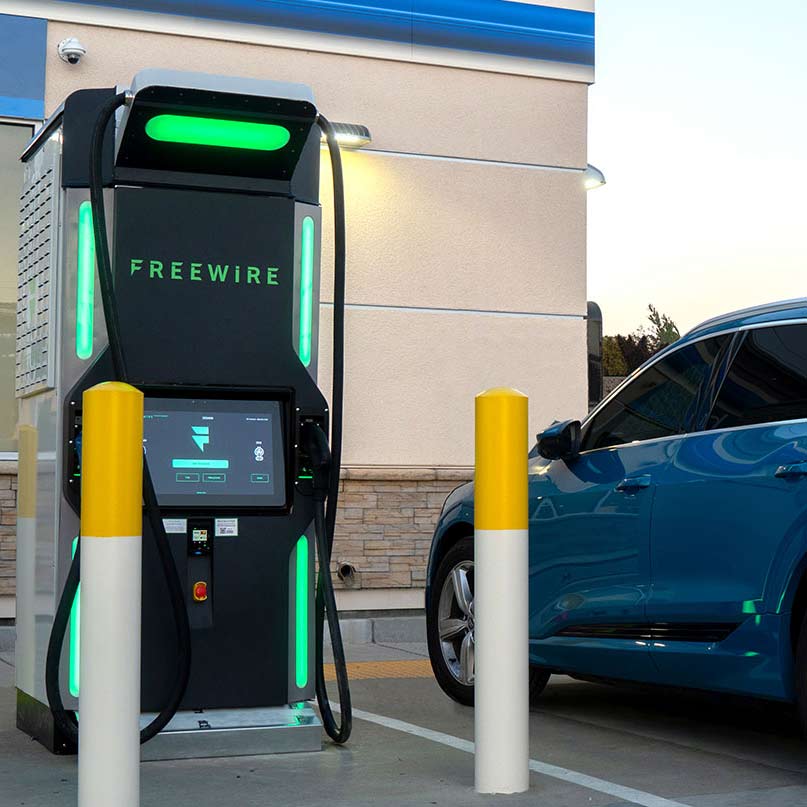
2. There's at least 4 gas stations in Deep River, with several nozzles at each. If Canadian Tire has the property available, they're going to install 50-100 chargers, as I said, also by your math. If those restaurants/fast food/tims also want in on the action, I would expect the majority of their parking lot to have at least a level 2 at each parking stall, with a large selection of Level 3 as well. Don't underestimate how lazy and hungry people are. Pretty much everybody will be running on fumes going thru Deep River, with a daunting gap to North Bay.
Edit: AADT for HWY17 is about 4000-8000 vehicles per hour. So... lets say 80% is in the daytime? 6400 during 12 hours or so is 530 per hour (on the high side, yes)
If we're doing 30 minutes per charge, we need 250++ chargers in a 500km segment of highway on HWY17. This requirement is less from Sudbury to Thunder Bay, but more from Sudbury to Ottawa.
This doesn't take into account my consumer habit, that I want to find a charger with no problem. What if there's huge demand and it's frustratingly full everywhere? This will spur additional rollout of stations. I predict north of 300-400 individual stations between here and North Bay. I think if you compare the count of gas pump nozzles, it's probably something like 1/4 of that total, but who knows. This will ALSO accelerate the rollout of ultra-high mileage vehicles, way more than people need day-to-day. Similar to those VW commercials in the 2000's of car owners driving past the lonely gas station attendant.
It's going to be interesting to see if gas stations become 'service centers' with chargers, or if service centers that offer food like restaurants and curiosity shops become the prime source of charging infrastructure and gas stations go the way of the dodo bird.
I don't think it matters anymore whether the government helps out. Change is inevitable, we've passed the tipping point.
Quote:
Originally Posted by Truenorth00

Do apartment and condo dwellers not exist in your world?
I think you might be overestimating how many chargers will be needed. It's not like there are thousands of gas pumps between Deep River and North Bay.
If you want some rough math. A typical gas pump services about 6-8 cars per hour. A charging station can do about 1-2 cars per hour. So a typical service location would need to replace one gas pump with about 4 chargers to fuel the same number of cars. So this would mean that a typical OnRoute service with the Canadian Tire pump that has 16 nozzles, should eventually have 64 chargers put in by say 2040 when we expect the vast majority of cars on the road to be electric.
I wish that the federal and provincial governments would actually come up with a charging strategy to figure out how we are going to build all these chargers over the next two decades. So that we can figure out where public investment is necessary. And where it can be used to activate private sector investment in the buildout.
Several charging networks are publicly listed (Blink, Chargepoint, etc.) or owned by publicly listed companies (PetroCanada, Electrify Canada, etc.). Though, some of the largest ones are also owned by utilities. Hydro Quebec's massive Electric Circuit network and Ontario's fledgling Ivy Charging come to mind.
|





 Prev
Prev



 Linear Mode
