Quote:
Originally Posted by TakeFive

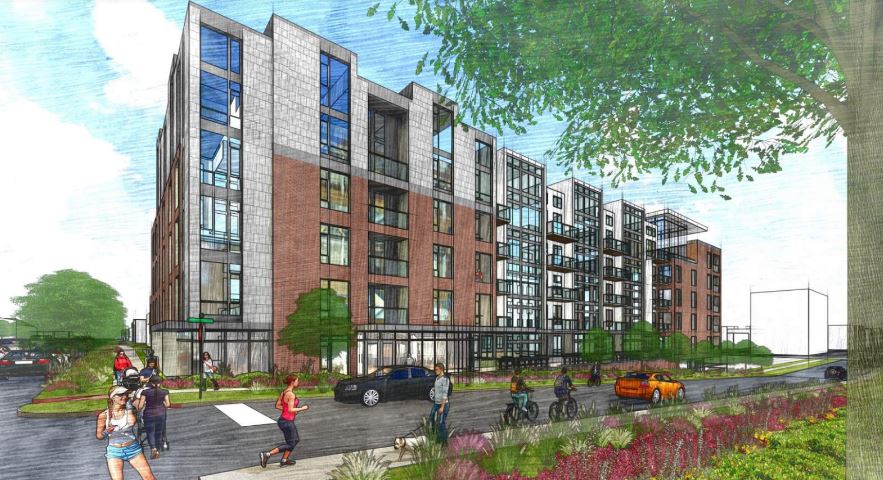
The BusinessDen piece did mention that the rendering was done by Shears Adkins Rockmore but Mill Creek has since shifted to OZ Architecture. You know what that means.
I suspect Mill Creek must have confidence and patience for the planning-permitting approval process.
They must have gotten legal advise that believes differently.
After consulting with Wikipedia, aside from unincorporated areas virtually everything else is 'Home Rule.' |
They may or may not have gotten legal advice. They don't have to - there's nothing improper about the proposed measure on its face, the only question is whether home rule cities have the power to overrule it. If a city chooses not to, then there's no issue, everyone's happy, and the statute applies. If they exercise their home rule powers and override the statue on the basis that city "growth limits" are a local matter for which the city has superior constitutional authority over the state, and they don't want to abide by the statute, then the court fight follows.
Aside from the legal issue, there's the practical issue: Would the governing bodies of a home rule city vote to overrule a statute that their own voters approved? That seems doubtful to me.
Where it would get challenged is if the statute passed generally, but it failed in a home rule city and the home rule city adopted provisions inconsistent with the statute. The argument to the state courts (which I think is a winner), would be why do Golden/Boulder/Lakewood (or other cities) have the right to tell Denver what its growth policies should be? The state constitution gives home rule cities the right to overrule state law, when the law pertains to a purely local matter.
There's another truly remarkable feature of this initiative that, to my knowledge, has little precedent: Although it's a statewide initiative, in fact its restrictions
apply only to the Front Range counties. Thus, remarkably, voters in Grand Junction and rural Colorado get to decide whether Front Range cities will be subject to restrictions that their own towns and cities will not be subject to. Imagine this: the measure barely fails in the Front Range counties, but the vote in the rest of the state carries the measure to victory. Thus, at least in theory you could have a situation where all of the counties that voted against restriction, are subject to it, while all of the counties that voted for the restriction, are not subject to the restriction. Imagine the precedent - it could cut both ways with future initiatives originated on the Front Range but only restricting rural and western counties in how they operate. I suspect there could be constitutional challenges based on this feature of the proposal.
Of course, if it passes everywhere then its easy to see a scenario where local governments simply go along with it, given the voter preferences.





 Prev
Prev








 Linear Mode
