Quote:
Originally Posted by Joseph K.

I respectfully disagree with you. To quote the Getty Conservation Institute, part of the architect's role is to "create the heritage of tomorrow." I can appreciate projects like Vancouver's Trump Tower, but not every building have to suscribe to this style. For the Exchange, the architect could have chosen a more historical style while nevertheless utilizing modern materials and technologies. You could call this historicism, but that'd be shortchanging it.
Walking around West Hastings and Granville, one can appreciate the rich textures and materials used for so many buildings, as well as their intricate design. An architect who would raise to the challenge of creating a modern building in the greater context of maintaining the architectural integrity of our historical financial district would deserve much more credit than 'faking history.' There is more to modern architecture than slapping glass onto concrete slabs.
But this conversation about architecture is off subject, and I personally can think of several ways the Exchange could have turned terribly wrong. Now it will merely be another missed opportunity. |
Two things:
1) when they say "create the heritage of tomorrow," they mean the best of architecture today . . . modern architecture, not building to follow the architecture of the past. What your kind of argument never acknowledges is that you are proffering nothing more than your own taste. The architects who designed the buildings you put forth had the same pressures to build those in an even earlier style. And so with those before them. Heritage is not a rationally defendable term, otherwise one could argue for anything that came before in our history. You are just expressing your taste.
2) none of you address the actual items I put forth . . . I am an architect and I know how a design is generated, and what aspects of the complex influence and dictate other aspects. Why don't you discuss the architectural issues I have raised?
THE EXCHANGE
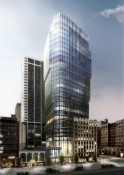
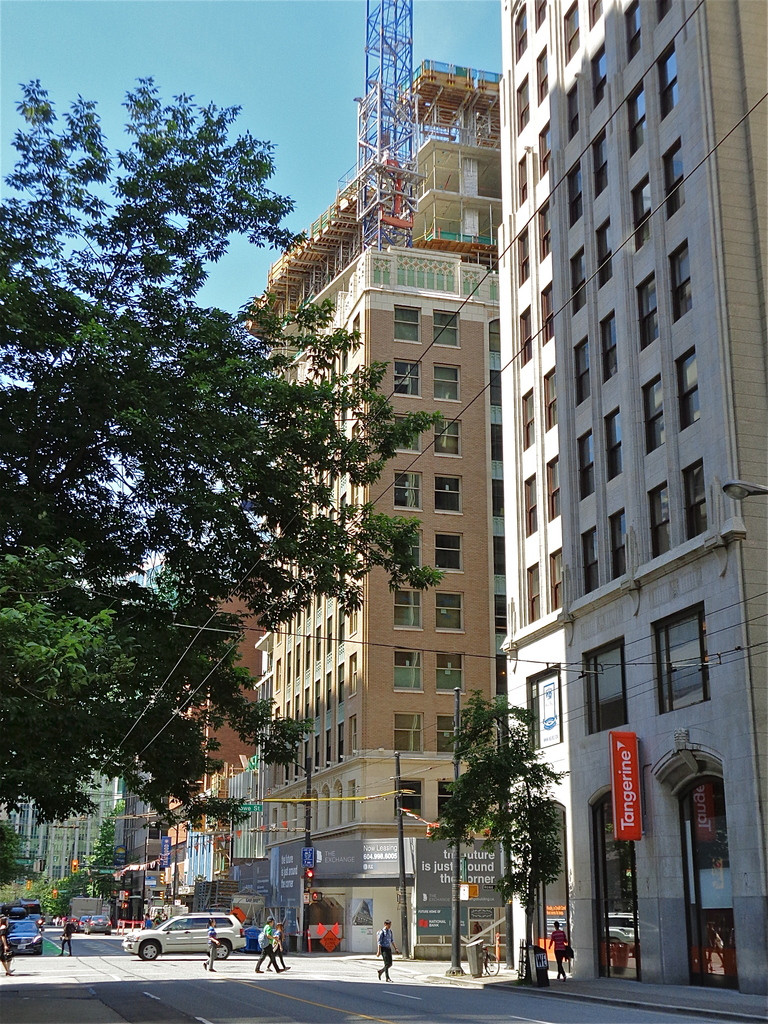
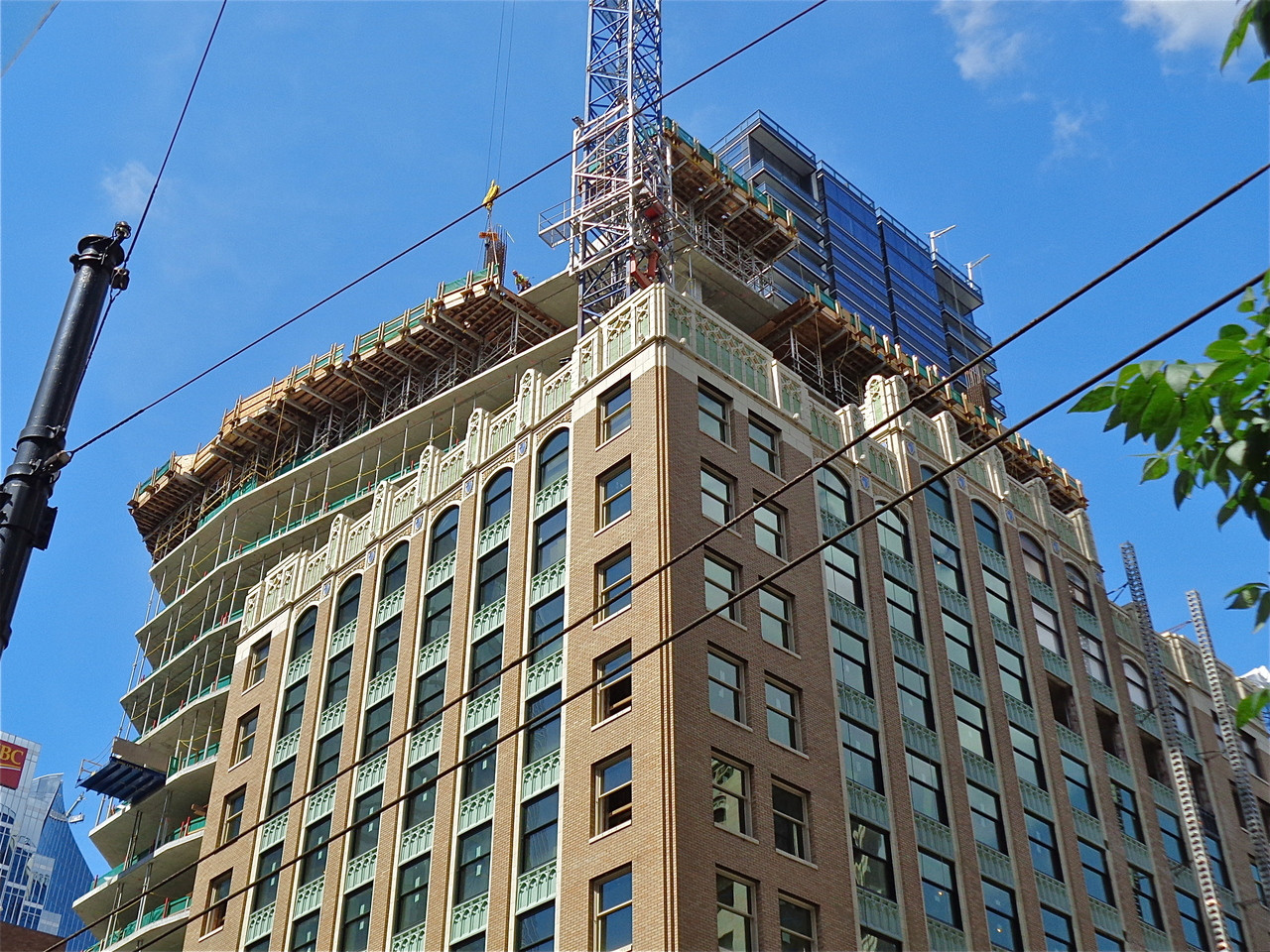
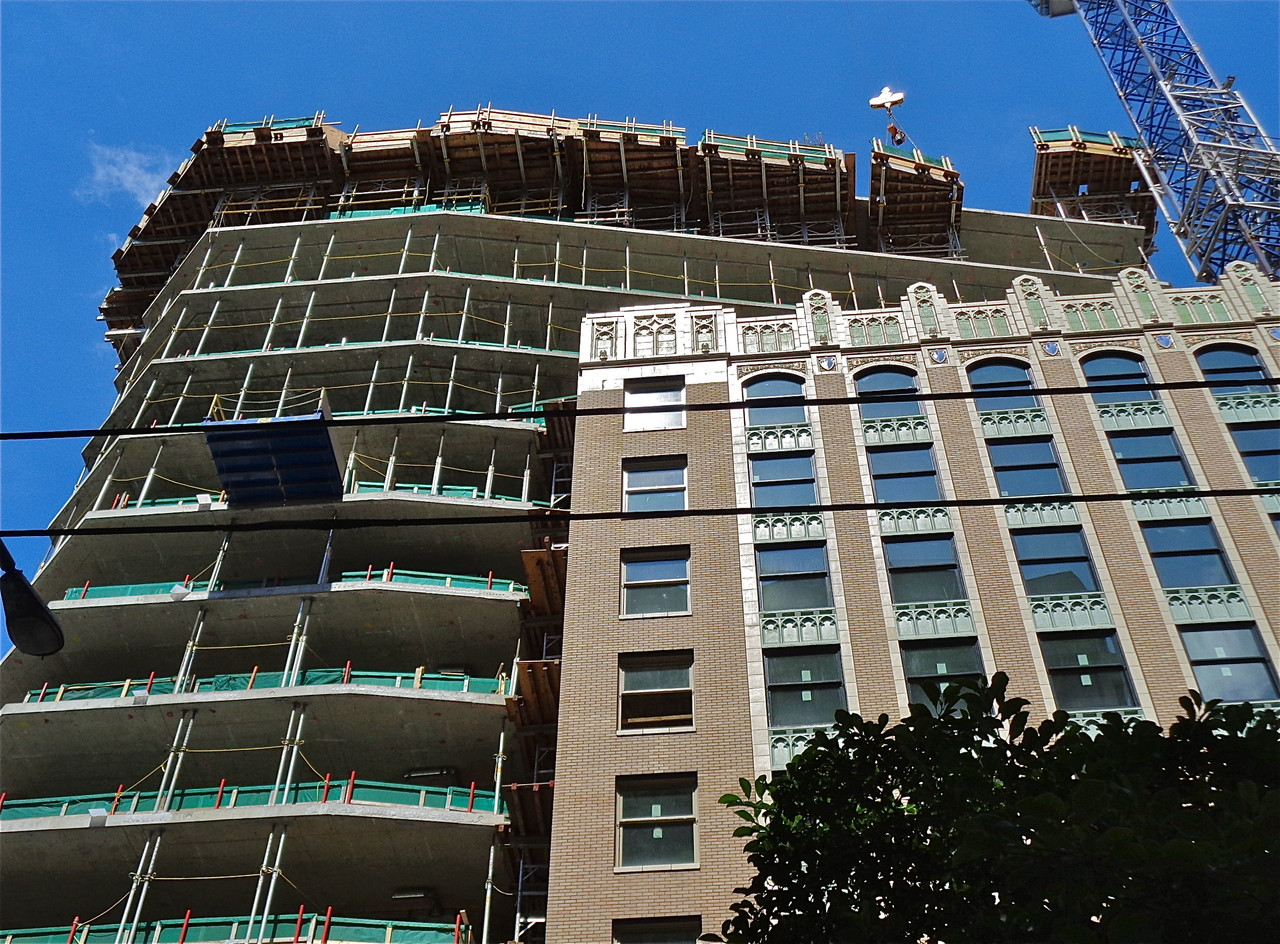
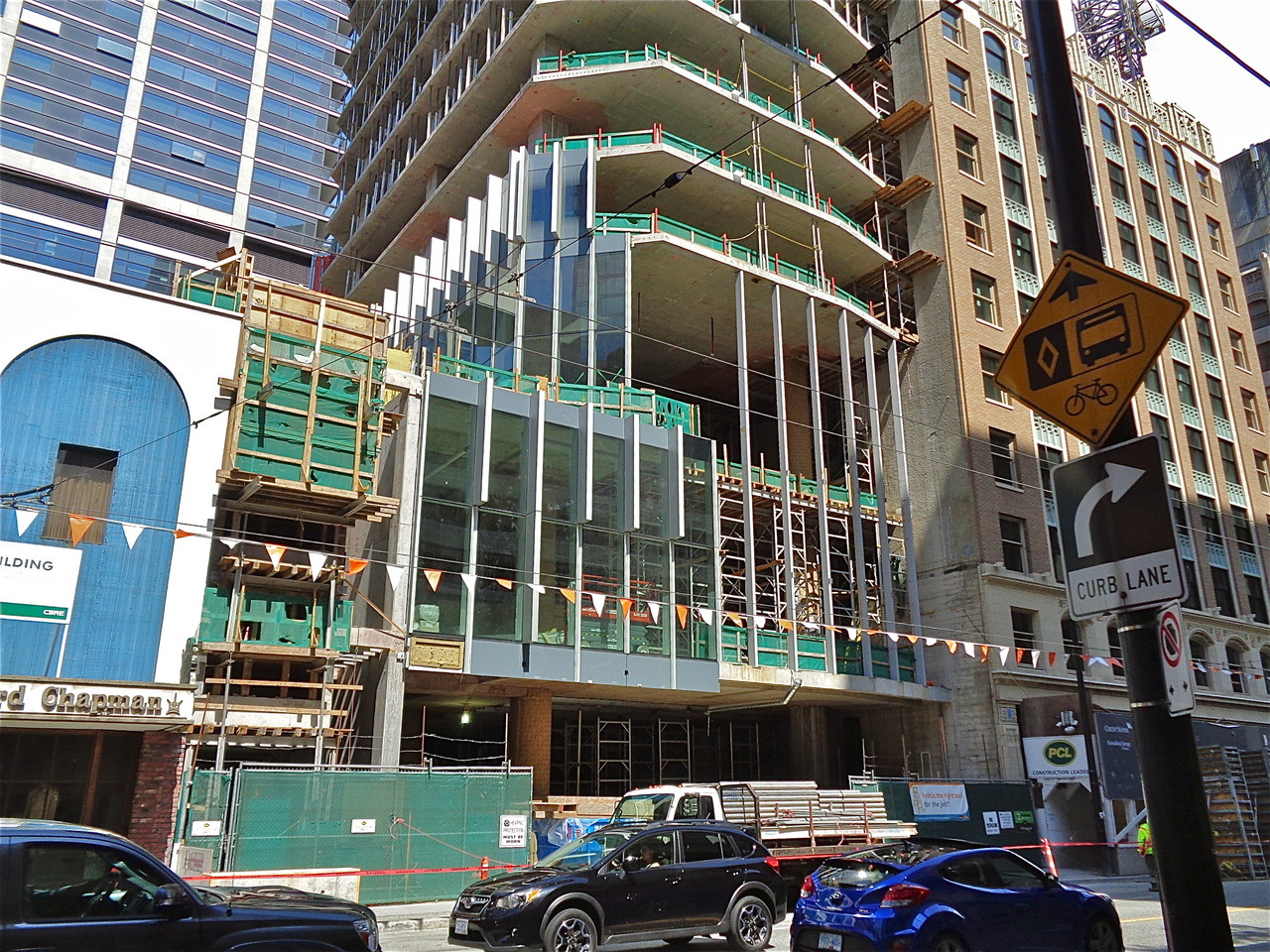
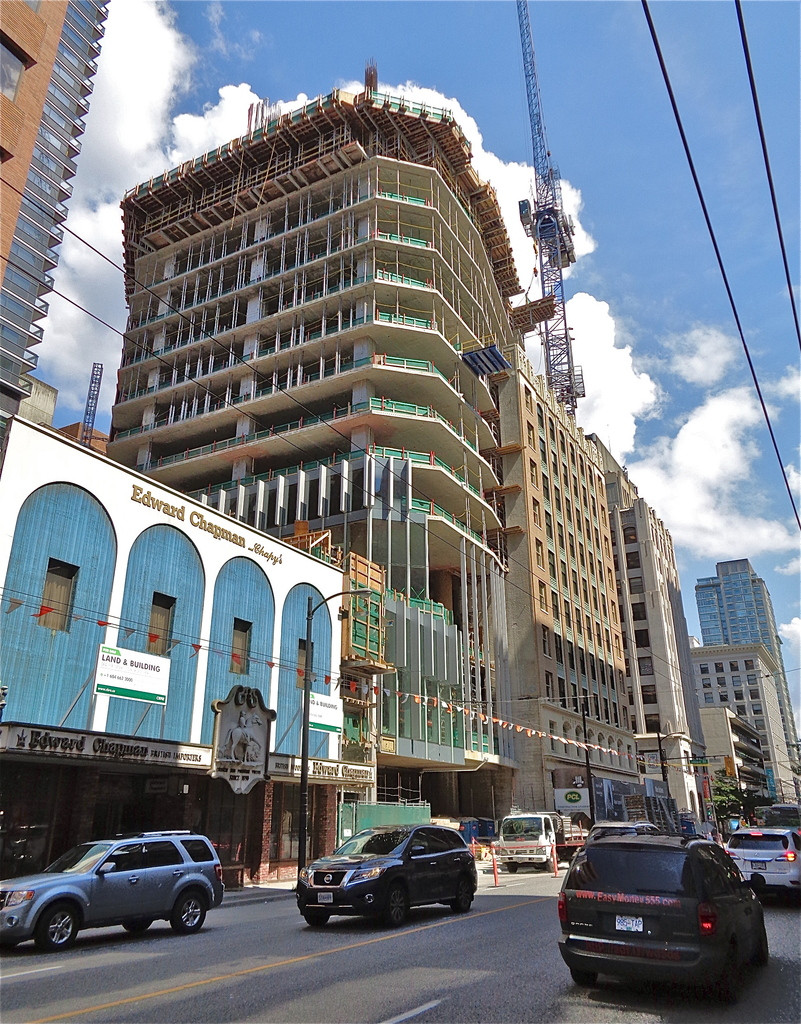
I didn't like this thing when I first saw it, but its been growing on me. The fins and their spacing are 'muscular' and give mass to what would otherwise be a faceted glass surface. The fins and the faceting (I only mean that the floor plate is not square but has a number of bends that allow it to relate to the old building in a more complex manner) make it work with the old portion while also contrasting in their modern aspect (material and reduced geometry). There is less contrast between old and new because of this. A purer shape would challenge the old rectangular building mass, while a typical all glass curtain wall would have ignored the heavier construction of the old.
Also, the new is a pretty massive and potentially overpowering composition. I am not sure they will pull this off, but there is at least an integrity in it. This whole project seems to try to take care of the old building through letting its size and material temperment have physical impacts on the form of the new tower, but it also does not try to hide what is going on: namely that a much larger construction is being imposed, one that reduces the original to a relatively small role (and in all of this I mean experientially).
Will it work? Well, the location helps: close up experience will favour the older building, while the new rises beyond at some remove. Also, this is the area of the downtown that can best incorporate a chunky massive tower block. I'm still not convinced, but the odds are better than the Telus condo tower, which uses 200+ different elements to mediate its massiveness, resulting in a mess which still looks incredibly massive and heavy anyway.





 Prev
Prev














 Linear Mode
