HomeDiagramsDatabaseMapsForum About
     

Go Back   SkyscraperPage Forum > Regional Sections > Canada > Alberta & British Columbia > Vancouver > Transportation & Infrastructure


Reply

 
Thread Tools Display Modes
     
     
  #3461  
Old Posted Aug 18, 2024, 8:58 PM
Migrant_Coconut's Avatar
Migrant_Coconut Migrant_Coconut is offline
Registered User
 
Join Date: Oct 2015
Location: Kitsilano/Fairview
Posts: 10,144
Same problem: Waterfront and City Centre need all the trains they can get.

If we're talking about a loop including Waterfront, that's not possible because the Canada Line was value-engineered to be right next to the Expo - dig any further thataway and you end on the Expo's platform. Not a good idea.

Take two.
Quote:
Reply With Quote
     
     
  #3462  
Old Posted Aug 18, 2024, 10:29 PM
Migrant_Coconut's Avatar
Migrant_Coconut Migrant_Coconut is offline
Registered User
 
Join Date: Oct 2015
Location: Kitsilano/Fairview
Posts: 10,144
Quote:
Originally Posted by BaddieB View Post
- snip -
You're serving the whole metro - that includes people who don't live near those stations. Residents will take a bus to elsewhere in the West End, and visitors from the rest of the city will frequent Denman, Davie, Robson, Stanley Park and the beaches; your placement is a Master of None situation where getting to all of those is a lot more inconvenient than it has to be. As seen with the Canada Line, Broadway and UBCx, TransLink doesn't mind curves if the end product works.

What about Stanley Park and the First Narrows? False Creek's already covered by the Canada Line and the dozen buses that go across the bridges. Again, gotta think about the whole metro here.

We need frequencies to be that high because A) Waterfront in itself is a destination, having Canada Place, the convention centre, the seawall and a large part of the financial district, and B) by the time a West End extension comes in, we'll already have a Hastings extension; you're also cutting frequency to Gastown, the PNE, Burnaby, and SFU. Either make Waterfront-Hastings a different line, or a branch is a no-go.
Reply With Quote
     
     
  #3463  
Old Posted Aug 18, 2024, 11:04 PM
BaddieB BaddieB is offline
Registered User
 
Join Date: Sep 2021
Posts: 652
1. If the goal of the station is to maximize ridership, building it in the centre is simply more rational that building it at the beach. The corner of Cardero and Davie is and will be surrounded by 20 stories on all corners with much more density in all directions. English Bay being only two blocks away is not a deal breaker. Keep in mind I'm trying to be realistic, and doing cut and cover under Cardero is much most cost friendly than the likely boring under Denman.

2. The Canada Line is crazy busy already and once the Broadway Plan kicks in will need another line. More people will be living in Kits alone than West Vancouver. I think we're overplaying the demand for transit from West Van to Downtown. If we are thinking about the whole metro here, it makes sense to serve the denser areas than the areas with very low density and that don't want transit in the first place

3. Fair. But I imagine the Expo Line will get to a point where it had 90 second frequencies almost all day. A 3 minute wait at most for Waterfront is still extremely frequent. At any rate, if the reduced frequencies to Waterfront are a deal breaker, I guess extending the Burrard platform westward and having this extension be its own shuttle line, that can later extend to Kits and Arbutus, would still work. Two independent lines that don't affect each other's frequencies.
Reply With Quote
     
     
  #3464  
Old Posted Aug 18, 2024, 11:47 PM
Migrant_Coconut's Avatar
Migrant_Coconut Migrant_Coconut is offline
Registered User
 
Join Date: Oct 2015
Location: Kitsilano/Fairview
Posts: 10,144
1) Take the 5 or 6, and you’ll see that most passengers get on/off at Robson, Denman, Davie Village and/or English Bay (likely including some Cardero residents); between Denman and Jervis, you can often count the disembarking passengers on one hand, despite all the existing density. Gotta have destinations too - not just residences. Just look at Edmonds.

It’s also a little too optimistic to think the West End won’t get City Hall to bore Cardero anyway; it goes under a bikeway, after all.

2) West Van in general, sure, but Park Royal/Ambleside (the one pro-transit part of the district) and Horseshoe Bay are used by the whole metro. And I know firsthand that Kitsilano’s already pretty well-served by transit; the only real flaws are a lack of frequency and not having a bus down South Burrard. As for the Canada Line, it’s only at 6-7k pphpd out of 15k, and it’s supplemented by the Granville busway, so a relief line’s way down the list.

3) Dunno, by the time the Expo needs 75-90s, it likely really needs 75-90s. I’d be the first one to say Waterfront’s not critical to the downtown network, but between local usage and people trying to get between the CBD and Lonsdale (and will still do that because Gold/Purple doesn’t save any time), it’s still busier than the entire Richmond segment or Coquitlam segment put together.

4) Perhaps your best bet is to have Gold built, then later branch it off into its own line with sub-branches to Park Royal and Arbutus. It’d need its own depot somewhere along Hastings, but otherwise you’ve got fairly good coverage without going overboard.


Quote:

Last edited by Migrant_Coconut; Aug 19, 2024 at 12:22 AM. Reason: Redrew the map. Again.
Reply With Quote
     
     
  #3465  
Old Posted Aug 19, 2024, 4:55 PM
chowhou's Avatar
chowhou chowhou is offline
Registered User
 
Join Date: Sep 2019
Location: East Vancouver (No longer across the ocean!)
Posts: 3,782
Quote:
Originally Posted by scryer View Post
Hiking up the fare in tough economic times would also not go over well.
I love transit, I love trains, I think rapid transit is almost always an economic driver both during and long after construction, but for god's sake transit users are some of the most entitled people (perhaps after drivers). Translink is already unsustainable because they choose (or does the governmen choose?) to keep fares below cost recovery, and to increase fares below inflation each year. We have some of the lowest transit fares in North America (bar the free systems), yet people just want things to be cheaper and cheaper since no one wants to pay for the things they use.

For an area which doesn't have a train already, is it really such a big ask to tack on a 75c new service surcharge? I mean fuck, for someone who might choose to take this line daily for work, that's just asking for $30 bucks a month for a service they don't even have to use (busses exist and will continue to exist.)
Reply With Quote
     
     
  #3466  
Old Posted Aug 19, 2024, 5:37 PM
MalcolmTucker MalcolmTucker is offline
Registered User
 
Join Date: May 2007
Posts: 11,599
Quote:
Originally Posted by chowhou View Post
I love transit, I love trains, I think rapid transit is almost always an economic driver both during and long after construction, but for god's sake transit users are some of the most entitled people (perhaps after drivers). Translink is already unsustainable because they choose (or does the governmen choose?) to keep fares below cost recovery, and to increase fares below inflation each year. We have some of the lowest transit fares in North America (bar the free systems), yet people just want things to be cheaper and cheaper since no one wants to pay for the things they use.

For an area which doesn't have a train already, is it really such a big ask to tack on a 75c new service surcharge? I mean fuck, for someone who might choose to take this line daily for work, that's just asking for $30 bucks a month for a service they don't even have to use (busses exist and will continue to exist.)
The government chooses.

Translink having both transit and non-transit assets obscures things a bit.

Right now, translink raises approximately:
Code:
Taxation                        $978.4 million
     Property Tax                          $463.1 million
     Fuel Tax                              $390.5 million
     Parking Tax                            $83.7 million
     Hydro Tax                              $23.1 million
     Replacement Tax                        $17.9 million
Transit (Fares, Advertising)    $671.6 million
From fares and tax. You can easily see that to eliminate Taxation's contribution to the budget, would require fares to go up by a lot.

Translink is unsustainable because the Mayors' Council doesn't want Translink to raise property taxes, because the Mayors' council, both as Metro and as Translink, cares more about keeping property taxes lower than they otherwise would be than anything else.

Calgary just funded a big service increase 100% with property taxes. Translink's Mayors refuse to do so.
Reply With Quote
     
     
  #3467  
Old Posted Aug 19, 2024, 5:54 PM
AlessioSBT AlessioSBT is offline
Registered User
 
Join Date: May 2024
Posts: 111
Quote:
Originally Posted by MalcolmTucker View Post
The government chooses.

Translink having both transit and non-transit assets obscures things a bit.

Right now, translink raises approximately:
Code:
Taxation                        $978.4 million
     Property Tax                          $463.1 million
     Fuel Tax                              $390.5 million
     Parking Tax                            $83.7 million
     Hydro Tax                              $23.1 million
     Replacement Tax                        $17.9 million
Transit (Fares, Advertising)    $671.6 million
From fares and tax. You can easily see that to eliminate Taxation's contribution to the budget, would require fares to go up by a lot.

Translink is unsustainable because the Mayors' Council doesn't want Translink to raise property taxes, because the Mayors' council, both as Metro and as Translink, cares more about keeping property taxes lower than they otherwise would be than anything else.

Calgary just funded a big service increase 100% with property taxes. Translink's Mayors refuse to do so.
Something that i don't understand i why exactly propriety taxes.
In any other country that i know (beside US) public transportation is just a random city-expense.
Obviously is founded with taxes but not with a specific tax. The city just pays like any other expense. And for big projects usually the region or even country contribute when necessary.

Transportation seems a very big and generic service that a city has, i don't understand why it has to be connected to 1 specific tax.
Reply With Quote
     
     
  #3468  
Old Posted Aug 19, 2024, 5:57 PM
chowhou's Avatar
chowhou chowhou is offline
Registered User
 
Join Date: Sep 2019
Location: East Vancouver (No longer across the ocean!)
Posts: 3,782
Quote:
Originally Posted by AlessioSBT View Post
Something that i don't understand i why exactly propriety taxes.
In any other country that i know (beside US) public transportation is just a random city-expense.
Obviously is founded with taxes but not with a specific tax. The city just pays like any other expense. And for big projects usually the region or even country contribute when necessary.

Transportation seems a very big and generic service that a city has, i don't understand why it has to be connected to 1 specific tax.
I mean, Translink is funded with fuel taxes, hydro taxes, and parking taxes too. But as a city fee, I pay the full amount for my garbage pickup. Why shouldn't I pay the full amount for my transit cost?
Reply With Quote
     
     
  #3469  
Old Posted Aug 19, 2024, 6:25 PM
MalcolmTucker MalcolmTucker is offline
Registered User
 
Join Date: May 2007
Posts: 11,599
Quote:
Originally Posted by chowhou View Post
I mean, Translink is funded with fuel taxes, hydro taxes, and parking taxes too. But as a city fee, I pay the full amount for my garbage pickup. Why shouldn't I pay the full amount for my transit cost?
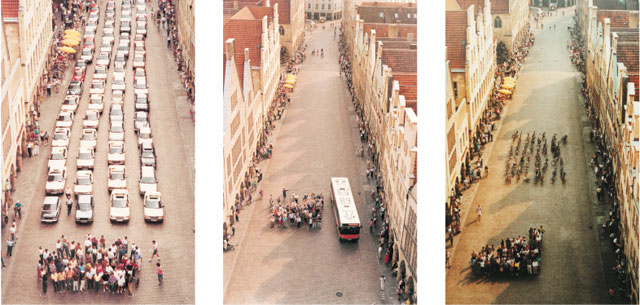
Because transit use generates positive externalities, mostly to auto users.

Let's look at between 4 pm and 5pm on the expo line crossing the Fraser.

20 trains each way. Perfect mix of mark I, II and II.2s. About 10,200 people per direction per hour. Let's posit 75% utilization outbound and 40% utilization inbound. About 11,791 people.

Sure we could build a bridge for that many people, just another 8 lanes crossing the Fraser. But much of the congestion isn't on the bridges themselves, it is the local streets. Can we effectively add the local capacity? Not really. So instead, we would have more congestion. Adding extra demand to a congested street causes capacity to drop, not grow, and you descend into full failure.

That congestion costs time and money, and we're not willing to price it with bridge tolls or other road pricing.

So instead we provide an alternative, transit, that enables people to make decisions in their best interest, which benefits both them, and the people who decide to continue to drive. Everyone wins.
Reply With Quote
     
     
  #3470  
Old Posted Aug 19, 2024, 7:16 PM
chowhou's Avatar
chowhou chowhou is offline
Registered User
 
Join Date: Sep 2019
Location: East Vancouver (No longer across the ocean!)
Posts: 3,782
Quote:
Originally Posted by MalcolmTucker View Post
Because transit use generates positive externalities, mostly to auto users.

Let's look at between 4 pm and 5pm on the expo line crossing the Fraser.

20 trains each way. Perfect mix of mark I, II and II.2s. About 10,200 people per direction per hour. Let's posit 75% utilization outbound and 40% utilization inbound. About 11,791 people.

Sure we could build a bridge for that many people, just another 8 lanes crossing the Fraser. But much of the congestion isn't on the bridges themselves, it is the local streets. Can we effectively add the local capacity? Not really. So instead, we would have more congestion. Adding extra demand to a congested street causes capacity to drop, not grow, and you descend into full failure.

That congestion costs time and money, and we're not willing to price it with bridge tolls or other road pricing.

So instead we provide an alternative, transit, that enables people to make decisions in their best interest, which benefits both them, and the people who decide to continue to drive. Everyone wins.
If Translink was allowed to increase fares in response to operating costs, do you really think all the current transit users would suddenly buy cars and start driving to work every day?

If transit operating costs were fully covered by fares, the average one-zone user would pay around $273 a month in transit fares compared to around $110 currently.

I pay $250 a month in car insurance + $120 a month in parking + around $20 a month to charge my car (a comparable gas car would spend around $100 a month in gas commuting), and that's not including the cost of car ownership (purchase + maintenance).

We can subsidize transit somewhat, but even unsubsidized, transit is still the cheaper option.
Reply With Quote
     
     
  #3471  
Old Posted Aug 19, 2024, 7:24 PM
MalcolmTucker MalcolmTucker is offline
Registered User
 
Join Date: May 2007
Posts: 11,599
Quote:
Originally Posted by chowhou View Post
If Translink was allowed to increase fares in response to operating costs, do you really think all the current transit users would suddenly buy cars and start driving to work every day?

If transit operating costs were fully covered by fares, the average one-zone user would pay $273 a month in transit fares.

I pay $250 a month in car insurance + $120 a month in parking + around $20 a month to charge my car (a comparable gas car would spend around $100 a month in gas commuting), and that's not including the cost of car ownership (purchase + maintenance).

We can subsidize transit somewhat, but even unsubsidized, transit is still the cheaper option.
Your math assumes people are either car free or with car. There are plenty of 'car light' transit commuters.

The above also doesn't amortize the cost of capital for transit either.

And yeah, transit use would plummet, and then you end up in a cycle of 'adverse selection', where usage drops, then fares rise, then usage drops, etc.

Meanwhile, only 5% more cars will cause the highways and bridges to gridlock. Thank you congestion u-shaped demand/supply curve.
Reply With Quote
     
     
  #3472  
Old Posted Aug 19, 2024, 7:28 PM
Changing City's Avatar
Changing City Changing City is offline
Registered User
 
Join Date: Nov 2016
Posts: 8,251
Quote:
Originally Posted by AlessioSBT View Post
Something that i don't understand i why exactly propriety taxes.
In any other country that i know (beside US) public transportation is just a random city-expense.
Obviously is founded with taxes but not with a specific tax. The city just pays like any other expense. And for big projects usually the region or even country contribute when necessary.

Transportation seems a very big and generic service that a city has, i don't understand why it has to be connected to 1 specific tax.
In Canada the only source of general revenue available to municipalities to fund every service they provide (including transit) is from property taxes. They also are not allowed to operate at a deficit. Some revenue comes from fees (for permits, for example), and some capital items like childcare or community centre replacement can be funded by Development Cost Levies, or CACs, but those are also not available for funding operating costs.

Provincial and Federal funding is often available for capital costs for new transit infrastructure, but not (usually) for operating expenses.
__________________
Contemporary Vancouver development blog, https://changingcitybook.wordpress.com/ Then and now Vancouver blog https://changingvancouver.wordpress.com/
Reply With Quote
     
     
  #3473  
Old Posted Aug 19, 2024, 7:37 PM
Changing City's Avatar
Changing City Changing City is offline
Registered User
 
Join Date: Nov 2016
Posts: 8,251
Quote:
Originally Posted by MalcolmTucker View Post
Your math assumes people are either car free or with car. There are plenty of 'car light' transit commuters.

The above also doesn't amortize the cost of capital for transit either.

And yeah, transit use would plummet, and then you end up in a cycle of 'adverse selection', where usage drops, then fares rise, then usage drops, etc.

Meanwhile, only 5% more cars will cause the highways and bridges to gridlock. Thank you congestion u-shaped demand/supply curve.


thehippy.net
__________________
Contemporary Vancouver development blog, https://changingcitybook.wordpress.com/ Then and now Vancouver blog https://changingvancouver.wordpress.com/
Reply With Quote
     
     
  #3474  
Old Posted Aug 19, 2024, 7:43 PM
chowhou's Avatar
chowhou chowhou is offline
Registered User
 
Join Date: Sep 2019
Location: East Vancouver (No longer across the ocean!)
Posts: 3,782
Quote:
Originally Posted by MalcolmTucker View Post
Your math assumes people are either car free or with car. There are plenty of 'car light' transit commuters.

The above also doesn't amortize the cost of capital for transit either.

And yeah, transit use would plummet, and then you end up in a cycle of 'adverse selection', where usage drops, then fares rise, then usage drops, etc.

Meanwhile, only 5% more cars will cause the highways and bridges to gridlock. Thank you congestion u-shaped demand/supply curve.
The math is effectively the same for "car light" transit commuters.

You have to change your car insurance from leisure use to commuter insurance, you still likely have to pay for parking at your destination, you still have to pay for the fuel to commute, and you're still increasing the maintenance requirements for your vehicle.

For what it's worth, I'm not actually in favour of full cost recovery, but it's a little asinine to say that we can't have new service surcharges or increase fares, even to keep up with inflation.

Last edited by chowhou; Aug 19, 2024 at 7:53 PM.
Reply With Quote
     
     
  #3475  
Old Posted Aug 19, 2024, 8:12 PM
MalcolmTucker MalcolmTucker is offline
Registered User
 
Join Date: May 2007
Posts: 11,599
Quote:
Originally Posted by chowhou View Post
The math is effectively the same for "car light" transit commuters.

You have to change your car insurance from leisure use to commuter insurance, you still likely have to pay for parking at your destination, and you still have to pay for the fuel to commute.

For what it's worth, I'm not actually in favour of full cost recovery, but it's a little asinine to say that we can't increase fares, even to keep up with inflation.
Oh I think fares should increase to keep up with inflation. Translink should seek to return its cost recovery ration into the high 50s from the mid 40s.

Property tax should also increase to comparable levels, at least increasing with inflation and population growth. Keeping property tax revenues at comparable to 2019 levels would have 2023 property tax revenues be $475 million instead of $463 million in reality (14.9% inflation, 9.4% population growth).

In reality, the budget crunch is coming from both revenue sides, and looming on the horizon is interest rate changes.
Reply With Quote
     
     
  #3476  
Old Posted Aug 19, 2024, 8:28 PM
AlessioSBT AlessioSBT is offline
Registered User
 
Join Date: May 2024
Posts: 111
Cars don't make sense in any case in Canada.

The insurance costs are too high. When i was in europe i was paying 200 euro a year. And i'm talking about big cities like Milan/Paris/etc.
Here you are lucky if you pay 200/month.

Cars are supposed to be just an expense, here i see people talking about financing cars the same way they talk about financing houses. But with houses if you rent you end up spending the same money. If you just rent a car when you need it and use public transports for commute you pay probably under 25% of the cost of ownership.

It doesn't make any sense.
Reply With Quote
     
     
  #3477  
Old Posted Aug 19, 2024, 8:36 PM
Migrant_Coconut's Avatar
Migrant_Coconut Migrant_Coconut is offline
Registered User
 
Join Date: Oct 2015
Location: Kitsilano/Fairview
Posts: 10,144
Devil's advocate: Canada's too big and too empty to access with buses and trains alone. Want to go to Prince Rupert (I don't know why you would, but humour the question)? Not by public transportation you won't.

Re: revenue, we could solve this by the end of the year by swapping the gas tax out for a congestion charge, but that's untouchable as well. We can't even keep bridge tolls.

Quote:
Originally Posted by AlessioSBT View Post
... Obviously is founded with taxes but not with a specific tax. The city just pays like any other expense. And for big projects usually the region or even country contribute when necessary.

Transportation seems a very big and generic service that a city has, i don't understand why it has to be connected to 1 specific tax.
Socialism bad. That's why.
Reply With Quote
     
     
  #3478  
Old Posted Aug 19, 2024, 8:46 PM
CanSpice's Avatar
CanSpice CanSpice is offline
Registered User
 
Join Date: Dec 2014
Location: New Westminster, BC
Posts: 2,717
Quote:
Originally Posted by Migrant_Coconut View Post
Devil's advocate: Canada's too big and too empty to access with buses and trains alone. Want to go to Prince Rupert (I don't know why you would, but humour the question)? Not by public transportation you won't.
VIA Rail goes to Prince Rupert, so you can access it from Vancouver by train alone. It doesn't look like the greatest trip, as you have to go via Jasper, but you can still do it.
Reply With Quote
     
     
  #3479  
Old Posted Aug 19, 2024, 8:56 PM
seamusmcduff seamusmcduff is offline
Registered User
 
Join Date: Dec 2015
Location: Vancouver
Posts: 650
I don't know why transit is treated differently than any other municipal or provincial expense, where many believe that only users should cover the cost of the service. We are OK with paying for roads, highways, sewer service, recreational centre's, parks etc., regardless of how much we use them. Why is it transit seen differently than these services?

I hardly drive and do not use many of the roads in the region, but I understand and accept my taxes going towards them because I know that they allow the region as a whole to function, and provide external benefits to me and the collective population as a whole. Same goes for transit. I don't use most of the system, but I am OK with my taxes going towards it because it facilitates movement around the region for a large portion of the population, and movement of people and goods would break down without it.

Transit should be seen as any public infrastructure. We don't expect roads and sewers to make money why should we expect that from transit?
Reply With Quote
     
     
  #3480  
Old Posted Aug 19, 2024, 9:25 PM
chowhou's Avatar
chowhou chowhou is offline
Registered User
 
Join Date: Sep 2019
Location: East Vancouver (No longer across the ocean!)
Posts: 3,782
Quote:
Originally Posted by seamusmcduff View Post
I don't know why transit is treated differently than any other municipal or provincial expense, where many believe that only users should cover the cost of the service. We are OK with paying for roads, highways, sewer service, recreational centre's, parks etc., regardless of how much we use them. Why is it transit seen differently than these services?

I hardly drive and do not use many of the roads in the region, but I understand and accept my taxes going towards them because I know that they allow the region as a whole to function, and provide external benefits to me and the collective population as a whole. Same goes for transit. I don't use most of the system, but I am OK with my taxes going towards it because it facilitates movement around the region for a large portion of the population, and movement of people and goods would break down without it.

Transit should be seen as any public infrastructure. We don't expect roads and sewers to make money why should we expect that from transit?
Respectfully, my property taxes have a specific line for my sewer fees. Water, sewer, and garbage are all pay-for-use.

Rec centres are also pay-for-use. Pool entrance fees are close to $8 a visit in Vancouver, and community fitness centres charge fees around $5 to $8 for facilities I've found.

It's pretty much impossible to charge entrance fees for parks, though parks do have attractions that are pay-for-use (such as the Stanley Park Train).

Roads and highways are also hard to charge pay-for-use, but the gas tax is supposed to be a form of taxation in that way. We used to have tolls on certain bridges to pay for their use, but a certain government got rid of them unfortunately.

In my humble but honest opinion, for things that you use that are relatively trivially costing and easy to charge for (food, clothing, transportation), it's perfectly reasonable to expect pay-for-use as a funding scheme.

Quote:
Originally Posted by CanSpice View Post
VIA Rail goes to Prince Rupert, so you can access it from Vancouver by train alone. It doesn't look like the greatest trip, as you have to go via Jasper, but you can still do it.
Migrant_Coconut chose a bad example because PR is literally a national rail terminus. Better examples might be Pemberton or Princeton. Far closer, but good luck taking public transport there (even private public transport such as Greyhound RIP).
Reply With Quote
     
     
This discussion thread continues

Use the page links to the lower-right to go to the next page for additional posts
 
 
Reply

Go Back   SkyscraperPage Forum > Regional Sections > Canada > Alberta & British Columbia > Vancouver > Transportation & Infrastructure
Forum Jump


Forum Jump


All times are GMT. The time now is 10:51 PM.


Powered by vBulletin® Version 3.8.7
Copyright ©2000 - 2026, vBulletin Solutions, Inc.