HomeDiagramsDatabaseMapsForum About
     

Go Back   SkyscraperPage Forum > Regional Sections > Canada > Atlantic Provinces > Halifax > Halifax Peninsula & Downtown Dartmouth


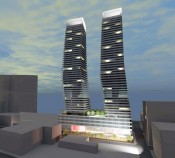
    Skye Halifax I in the SkyscraperPage Database

Building Data Page   • Comparison Diagram   • Halifax Skyscraper Diagram

Map Location

Reply

 
Thread Tools Display Modes
     
     
  #1481  
Old Posted Dec 19, 2023, 9:37 PM
Empire's Avatar
Empire Empire is offline
Salty Town
 
Join Date: Sep 2003
Location: Halifax
Posts: 2,204
Quote:
Originally Posted by Keith P. View Post
The reasons for the committee rejection are a good illustration of the dysfunction in the HRM Planning approval process and how it delays and discourages development. The site is difficult, on a steep grade, yet the pointy-heads are complaining about street wall heights and the pedestrians passageway between the buildings, which really should be considered an unexpected bonus. I wonder if the Province might give the committee a kick in the seat of the pants and declare this one approved.
I thought the pedestrian passageway was the best feature of the development.
__________________
Salty Town
Reply With Quote
     
     
  #1482  
Old Posted Dec 19, 2023, 10:48 PM
HarbingerDe HarbingerDe is offline
Registered User
 
Join Date: Aug 2023
Posts: 62
Quote:
Originally Posted by Empire View Post
I thought the pedestrian passageway was the best feature of the development.
Every time I think council is starting to wake up to the reality of the housing crisis and what needs to be done to prevent it further deteriorating, they pull some nonsense like this...

Do they want two more decades of proposals and rejections? It's not like we desperately need housing or anything... They've already cut 20 stories off of the two towers originally proposed for this site (representing a loss of about 300 residential units).

In what world is the pedway a downside? I suspect their concern is wind, because for some reason whenever the council doesn't like a development they suddenly become experts in computational fluid dynamics and turbulent flow solutions.
Reply With Quote
     
     
  #1483  
Old Posted Dec 20, 2023, 2:07 AM
Drybrain Drybrain is offline
Registered User
 
Join Date: Sep 2012
Posts: 4,557
Quote:
Originally Posted by HarbingerDe View Post
Every time I think council is starting to wake up to the reality of the housing crisis and what needs to be done to prevent it further deteriorating, they pull some nonsense like this...

Do they want two more decades of proposals and rejections? It's not like we desperately need housing or anything... They've already cut 20 stories off of the two towers originally proposed for this site (representing a loss of about 300 residential units).

In what world is the pedway a downside? I suspect their concern is wind, because for some reason whenever the council doesn't like a development they suddenly become experts in computational fluid dynamics and turbulent flow solutions.
To very minimally defend council, this was the design review committee. The developer is now able to appeal to council (or apparently build the approved 2019 proposal). Apparently the problem raised with the pedway was that it wasn’t actually far enough from the cross-street, and so may not actually function as a cut-through. Even if true, they’re really nitpicking here, given how far this design has come.
Reply With Quote
     
     
  #1484  
Old Posted Dec 20, 2023, 4:49 AM
someone123's Avatar
someone123 someone123 is offline
hähnchenbrüstfiletstüc
 
Join Date: Nov 2001
Location: Vancouver
Posts: 35,910
I'm hopeful that since they began tearing down the office building they want to start soon, and I could see council overruling this decision. I wonder how much it will hold up construction, if at all.
Reply With Quote
     
     
  #1485  
Old Posted Dec 20, 2023, 9:31 AM
Jonovision's Avatar
Jonovision Jonovision is offline
Registered User
 
Join Date: Sep 2003
Posts: 5,052
I didn't think the Design Review Committee still existed?! I thought it got shut down with the Design Advisory Committee when the province overstepped to try to "solve" planning issues.
Reply With Quote
     
     
  #1486  
Old Posted Dec 20, 2023, 11:31 AM
Hali87 Hali87 is offline
Registered User
 
Join Date: Dec 2011
Location: Calgary
Posts: 4,465
Quote:
Originally Posted by Nouvellecosse View Post
Yeah I've often been frustrated by rhetoric opposing new developments on the basic of them not being sufficiently affordable. Drawing away the big bucks of affluent buyers from existing units means they aren't out competing people for them. It's pretty common for older and less desirable housing to be the most affordable so I'm not sure why we'd expect brand new units to be the cheapest.

In a capitalist society, new stuff tends to be built where there's the highest demand resulting in the highest prices and therefore greatest profit potential. Affluent people driving an increase in the total housing stock is par for the course. One could argue that it's unfair that it's only the affluent who get to enjoy all the newest and nicest units but redesigning the underlying political and economic system is mostly beyond the scope of the city, province, and even the country to an extent given the global nature of the modern economy.
It's not just that it's unfair that the affluent get nicer units (that seems generally reasonable or at least "to be expected"). I would say the biggest problem is that on one hand most (nearly all?) of the new developments lately have been geared towards higher-income/wealth people, while at the same time a very large proportion of lower-end ("affordable") buildings have been renovated to make them higher-end than they previously were, so that the owners can charge higher rent. In a free-market economy that is logical, but in practice it is problematic, because increasingly there is nowhere for lower-income, non-property-owning people to live.

I have no inherent problem with developments that are "not affordable" as long as there are also enough developments that are affordable being built (or at least preserved) to balance that out. Right now it's pretty clear that there aren't.

There is of course the (valid) argument that the overall scarcity of units drives prices up for everyone, but that is not really all that is happening here.

Things can continue the way they are with the likely result being that the people who could only afford lower-end apartments will simply leave (as I effectively had to) or become homeless (as many obviously have already) to be replaced by people who have more money and can afford higher rents, or are willing to cram more people into each unit. To some people I guess that is perfectly fine and just how cities work in a global economy (or even actually pretty great when you just look at the numbers), but it really stings when you are the one who can't afford to live there anymore.

Last edited by Hali87; Dec 20, 2023 at 11:43 AM.
Reply With Quote
     
     
  #1487  
Old Posted Dec 20, 2023, 12:29 PM
Keith P.'s Avatar
Keith P. Keith P. is offline
Registered User
 
Join Date: Mar 2006
Posts: 8,863
Quote:
Originally Posted by Jonovision View Post
I didn't think the Design Review Committee still existed?! I thought it got shut down with the Design Advisory Committee when the province overstepped to try to "solve" planning issues.
Given the result we see here, perhaps it isn't such an overstep.

The thing I do not quite understand is the reduced scale of this proposal. If I read it correctly, each of the two towers is 20 stories. That is half the height of what was originally proposed here IIRC, and given what has been built in recent times, hardly noteworthy. One of the two proposed towers at present is to accommodate a 69-room hotel. Who builds such a small hotel DT? How can it possibly make money at that tiny scale? If it was a re-do of an old small heritage building perhaps it would be understandable, but I fail to see how such a small thing could compete otherwise.
Reply With Quote
     
     
  #1488  
Old Posted Dec 20, 2023, 1:29 PM
Drybrain Drybrain is offline
Registered User
 
Join Date: Sep 2012
Posts: 4,557
Quote:
Originally Posted by Hali87 View Post
It's not just that it's unfair that the affluent get nicer units (that seems generally reasonable or at least "to be expected"). I would say the biggest problem is that on one hand most (nearly all?) of the new developments lately have been geared towards higher-income/wealth people, while at the same time a very large proportion of lower-end ("affordable") buildings have been renovated to make them higher-end than they previously were, so that the owners can charge higher rent. In a free-market economy that is logical, but in practice it is problematic, because increasingly there is nowhere for lower-income, non-property-owning people to live.

I have no inherent problem with developments that are "not affordable" as long as there are also enough developments that are affordable being built (or at least preserved) to balance that out. Right now it's pretty clear that there aren't.

There is of course the (valid) argument that the overall scarcity of units drives prices up for everyone, but that is not really all that is happening here.

Things can continue the way they are with the likely result being that the people who could only afford lower-end apartments will simply leave (as I effectively had to) or become homeless (as many obviously have already) to be replaced by people who have more money and can afford higher rents, or are willing to cram more people into each unit. To some people I guess that is perfectly fine and just how cities work in a global economy (or even actually pretty great when you just look at the numbers), but it really stings when you are the one who can't afford to live there anymore.
I'm very much in a build-build-build mindset right now, because we need housing across the affordability spectrum, and of course there are only so many expensive units constructed before the market is saturated and filtering (or trickle-down, as it's often derided) takes effect. The problem at the moment seems to be that with such a serious shortage of housing, and so much population growth, we need to build a lot more to reach the saturation point--like, maybe more than we have the ability to build at any one time, given the limits of tradespeople, supply chains, etc.

So in the meantime, yes, the lack of purpose-built affordable housing is becoming more glaring by the day.
Reply With Quote
     
     
  #1489  
Old Posted Dec 20, 2023, 1:51 PM
IanWatson IanWatson is offline
Registered User
 
Join Date: Feb 2013
Posts: 1,419
Quote:
Originally Posted by Jonovision View Post
I didn't think the Design Review Committee still existed?! I thought it got shut down with the Design Advisory Committee when the province overstepped to try to "solve" planning issues.
Bill 137 got rid of advisory committees, but the DRC is a decision-making body so didn't fall under that legislation.

That being said, most of the Downtown Halifax Plan has been repealed, excepting the Barrington Street Heritage Conservation District and a few transition properties outside this area (Skye included). As a result, the DRC has very little to do - they hadn't met in a year before Monday's meeting.
Reply With Quote
     
     
  #1490  
Old Posted Dec 20, 2023, 4:45 PM
MastClimberPro MastClimberPro is offline
Registered User
 
Join Date: Jan 2021
Posts: 77
Quote:
Originally Posted by Keith P. View Post
Given the result we see here, perhaps it isn't such an overstep.

The thing I do not quite understand is the reduced scale of this proposal. If I read it correctly, each of the two towers is 20 stories. That is half the height of what was originally proposed here IIRC, and given what has been built in recent times, hardly noteworthy. One of the two proposed towers at present is to accommodate a 69-room hotel. Who builds such a small hotel DT? How can it possibly make money at that tiny scale? If it was a re-do of an old small heritage building perhaps it would be understandable, but I fail to see how such a small thing could compete otherwise.
69 units would only comprise a portion of one of the towers. And there is a trend (trendlette?) of small boutique hotels right now, which tyipically don't carry the burden of brand standards and licensing/franchise costs, and can typically charge 1.25-2.5x the rate of high end branded hotels so the economies appear to be there. The Muir's base rate is redonkulous as far as I understand.
Reply With Quote
     
     
  #1491  
Old Posted Dec 20, 2023, 6:27 PM
Keith P.'s Avatar
Keith P. Keith P. is offline
Registered User
 
Join Date: Mar 2006
Posts: 8,863
I understand that the Muir is a Marriott property.
Reply With Quote
     
     
  #1492  
Old Posted Dec 20, 2023, 6:50 PM
someone123's Avatar
someone123 someone123 is offline
hähnchenbrüstfiletstüc
 
Join Date: Nov 2001
Location: Vancouver
Posts: 35,910
Quote:
Originally Posted by Hali87 View Post
To some people I guess that is perfectly fine and just how cities work in a global economy (or even actually pretty great when you just look at the numbers), but it really stings when you are the one who can't afford to live there anymore.
It's unfair for a bunch of reasons but one aspect is that it's asymmetric. Canada has much lower barriers to entry than many other countries now, and if you're priced out of Canada it's hard to move somewhere else. The theory that Canada is a kind of avant-garde post-national place for the world disadvantages some Canadians and isn't generally reciprocated internationally (with some countries we are open to being openly belligerent at times). I could see this disconnect basically flipping the federal government in Canada as in other Western countries, but I digress.

I think it's well understood that there's too much nonpermanent migration to Canada right now, it was massively expanded on the timeframe of a couple years, and there's no way for the housing industry to cope in the medium term. Halifax has one of the healthier and more middle class oriented construction industries in Canada, with a lot of purpose-built rental. But around 5k housing units per year are being built while the population grows by around 20k. I do think HRM decisions might put the construction level at 7k or 3k, it's always good to make the situation 5% better if you can even if you cannot fully solve the problem, and HRM has not been doing that consistently. This winding story about planning changes and some committee holding up a residential building for debatable subjective reasons sounds like a symptom of bureaucratic bloat, and there is NIMBYism to go along with that (not just anti-height but also councillors trying to limit their areas to larger houses or keep out tenants).

Last edited by someone123; Dec 20, 2023 at 7:05 PM.
Reply With Quote
     
     
  #1493  
Old Posted Dec 21, 2023, 4:27 AM
OldDartmouthMark OldDartmouthMark is offline
Registered User
 
Join Date: May 2010
Posts: 10,455
Quote:
Originally Posted by Hali87 View Post
Things can continue the way they are with the likely result being that the people who could only afford lower-end apartments will simply leave (as I effectively had to) or become homeless (as many obviously have already) to be replaced by people who have more money and can afford higher rents, or are willing to cram more people into each unit. To some people I guess that is perfectly fine and just how cities work in a global economy (or even actually pretty great when you just look at the numbers), but it really stings when you are the one who can't afford to live there anymore.
Sorry to hear you had to leave Halifax because you were effectively forced out of the rental market! I suspect that there are many more stories like yours out there, though I can only imagine how many

This is exactly the reason I was musing a few weeks ago about lost opportunities to put more units on the market due to the city artificially limiting building heights. I get that perhaps they couldn't predict the population growth 10 years ago, but even buildings being approved today are being held back. Hard to know how many, but there sure are a lot of 7 storey buildings going up!

Anyhow... don't mean to turn your situation into a rant. I'm very sorry that you had to move from Halifax, especially if you didn't really want to. Hopefully it won't be long for things to turn around and you can make your way back here.

All the best to you.
Reply With Quote
     
     
  #1494  
Old Posted Dec 21, 2023, 5:42 AM
Hali87 Hali87 is offline
Registered User
 
Join Date: Dec 2011
Location: Calgary
Posts: 4,465
Quote:
Originally Posted by OldDartmouthMark View Post
Anyhow... don't mean to turn your situation into a rant. I'm very sorry that you had to move from Halifax, especially if you didn't really want to. Hopefully it won't be long for things to turn around and you can make your way back here.

All the best to you.
Thanks, and it's ok. I felt like I was the one ranting tbh.
Reply With Quote
     
     
  #1495  
Old Posted Dec 21, 2023, 5:49 AM
Hali87 Hali87 is offline
Registered User
 
Join Date: Dec 2011
Location: Calgary
Posts: 4,465
Quote:
Originally Posted by Drybrain View Post
...we need housing across the affordability spectrum, and of course there are only so many expensive units constructed before the market is saturated and filtering (or trickle-down, as it's often derided) takes effect.
Conventional wisdom says that is what will happen but I'm not sure that things necessarily work that way anymore.

The idea is that only so many people in Halifax can afford to pay X for housing. But that kind of falls apart when a basically unlimited number of people who can afford X can just move to Halifax. And that seems to be a driving factor now. So the saturation point isn't so much "when we run out of people in Halifax who can pay X", it's that PLUS "when we run out of people who want to (or can be convinced to) move to Halifax who can afford to pay X". And given that it is an increasingly nice city, I think we are a long way off from reaching that second part.
Reply With Quote
     
     
  #1496  
Old Posted Dec 21, 2023, 6:58 AM
Nouvellecosse's Avatar
Nouvellecosse Nouvellecosse is offline
Volatile Pacivist
 
Join Date: Aug 2005
Location: Nova Scotia
Posts: 11,315
Quote:
Originally Posted by Hali87 View Post
It's not just that it's unfair that the affluent get nicer units (that seems generally reasonable or at least "to be expected"). I would say the biggest problem is that on one hand most (nearly all?) of the new developments lately have been geared towards higher-income/wealth people, while at the same time a very large proportion of lower-end ("affordable") buildings have been renovated to make them higher-end than they previously were, so that the owners can charge higher rent. In a free-market economy that is logical, but in practice it is problematic, because increasingly there is nowhere for lower-income, non-property-owning people to live.

I have no inherent problem with developments that are "not affordable" as long as there are also enough developments that are affordable being built (or at least preserved) to balance that out. Right now it's pretty clear that there aren't.

There is of course the (valid) argument that the overall scarcity of units drives prices up for everyone, but that is not really all that is happening here.

Things can continue the way they are with the likely result being that the people who could only afford lower-end apartments will simply leave (as I effectively had to) or become homeless (as many obviously have already) to be replaced by people who have more money and can afford higher rents, or are willing to cram more people into each unit. To some people I guess that is perfectly fine and just how cities work in a global economy (or even actually pretty great when you just look at the numbers), but it really stings when you are the one who can't afford to live there anymore.
I know it can be pretty upsetting to hear people talk dispassionately about an issue you're personally dealing with and I am sorry about that. I didn't mean to be insensitive and I definitely want housing affordability to be addressed because the situation is hurting a lot of people. And I definitely don't think the flaws of capitalism are "perfectly fine" as I'm a major critic of it. I just think we need to critique people (and governments, etc.) for things they're responsible for and are capable of changing. Under the current system, as long as builders' full development capacity is absorbed by high profit upscale projects, the only options for affordable housing beyond trickle down are for governments to develop public housing directly, for it to subsidize some units in private sector developments, or to directly assist people financially who are being priced out.

The first two options which would be referred to as supply side policies would both have problems. With developing public housing, in addition to the funding it takes time to build up the administrative infrastructure and it would be extremely difficult to find workers and equipment to do the building. During a building boom the government would have to compete for labour, equipment, materials, etc. with the private sector. In other words, the capacity of the construction industry is likely quite saturated. There isn't separate spare capacity sitting on the sidelines waiting for the government to activate it.

With the option of subsidizing new unit construction, that can work to a degree but the government would either need to pay very large sums of money to lower the cost of units in premium developments. And unfortunately sudden, large new expenditures are always a tough sell politically. Or they could force developers to cede some of their profits by eating the cost of lower prices units as a condition of development approval. The second option isn't scalable since if you did it with enough units to really make a dent in the housing shortage the lower profits would greatly reduce the incentive for developers to build and the rate of construction would slow. Which would be quite counter-productive. A major fact that we can't really escape is that the money paid by affluent buyers and renters is driving the construction. And if the affluent don't get most or all of the new units they aren't going to pay, so that money would have to come from somewhere else. And new construction is expensive, so having them pay to expand the housing stock is money not being drained from general revenue which is needed for many other things.

I personally prefer demand-side solutions which tend to involve giving lower income people the money to enable them to compete in the market. Yes that would further increase prices overall but the government could adjust the assistance accordingly. And more money in the market would mean even more units would be built. Anyone who's seen a supply curve understands that supply increases as the price increases. Demand side solutions would also give people more freedom to choose where to live compared to people being restricted to certain "affordable" units whose availability may (would) be limited forcing them to live where an available unit happened to be rather than where they wanted. Plus, people are smart and would find the most affordable options knowing that the less they paid the more they'd have left over.

Not that there wouldn't also be drawbacks, of course. Landlords often require people to show proof of income and may discriminate against people receiving assistance. Also, the means testing to determine who needs the assistance can be invasive and infringe upon people's privacy which is an issue with current welfare programs. Or if it was done as a totally new program it would be expensive and cumbersome to set up the administration. And if it was done through an existing program such as a negative income tax it may not cover everyone. So there really aren't any perfect or even particularly great options under the current system since that would mean addressing inequality. But obviously we need to do something. Perhaps a mix of approaches is appropriate.

__________________
"The reasonable man adapts himself to the world; the unreasonable one persists in trying to adapt the world to himself. Therefore all progress depends on the unreasonable man." - George Bernard Shaw
Don't ask people not to debate a topic. Just stop making debatable assertions. Problem solved.
Reply With Quote
     
     
  #1497  
Old Posted Dec 21, 2023, 10:00 AM
Drybrain Drybrain is offline
Registered User
 
Join Date: Sep 2012
Posts: 4,557
Quote:
Originally Posted by Hali87 View Post
Conventional wisdom says that is what will happen but I'm not sure that things necessarily work that way anymore.

The idea is that only so many people in Halifax can afford to pay X for housing. But that kind of falls apart when a basically unlimited number of people who can afford X can just move to Halifax. And that seems to be a driving factor now. So the saturation point isn't so much "when we run out of people in Halifax who can pay X", it's that PLUS "when we run out of people who want to (or can be convinced to) move to Halifax who can afford to pay X". And given that it is an increasingly nice city, I think we are a long way off from reaching that second part.

Well yeah, exactly—we’re building half or less of what would meet population growth, so we’re not catching up, let alone keeping pace. Rent growth seems to have slowed somewhat lately, but a plateau at an elevated level is little help
Reply With Quote
     
     
  #1498  
Old Posted Dec 21, 2023, 12:06 PM
Keith P.'s Avatar
Keith P. Keith P. is offline
Registered User
 
Join Date: Mar 2006
Posts: 8,863
I find it remarkable that all of the discussion here including the rather delusional idea of "giving lower income people money to compete in the housing market", ignores the core problem that is simply excess demand created by govt., not due to any sort of organic increase in population but due to govt policies encouraging in-migration either from elsewhere in Canada or from foreign countries. Restrict that flow and things will soon stabilize, and low-end prices will eventually fall. While we can debate whether govt should be building or buying more traditional subsidized housing units, those should not be going to those new arrivals but rather to taxpaying people (i.e. "the working poor") who have qualified for social assistance.
Reply With Quote
     
     
  #1499  
Old Posted Dec 21, 2023, 2:13 PM
Drybrain Drybrain is offline
Registered User
 
Join Date: Sep 2012
Posts: 4,557
Quote:
Originally Posted by Keith P. View Post
I find it remarkable that all of the discussion here including the rather delusional idea of "giving lower income people money to compete in the housing market", ignores the core problem that is simply excess demand created by govt., not due to any sort of organic increase in population but due to govt policies encouraging in-migration either from elsewhere in Canada or from foreign countries. Restrict that flow and things will soon stabilize, and low-end prices will eventually fall. While we can debate whether govt should be building or buying more traditional subsidized housing units, those should not be going to those new arrivals but rather to taxpaying people (i.e. "the working poor") who have qualified for social assistance.
I'm honestly doubtful that provincial governments have a lot of short-term control over interprovincial migration flows. People move around based on lifestyle, employment, and family and friends. And, in a country like Canada, with so many high-cost cities, they moved based on housing expenses and the overall cost of living. Nova Scotia became a destination in the past decade and especially the past few years because it had lower housing costs than most of the country, paired with a decent labour market and a desirable location. If cost-of-living refugees from large cities were looking at Nova Scotia/Halifax and comparing it to, say, Sudbury or Regina or most other low-cost options, the east coast was a clear winner for most people. That's why people have been pouring in, not because the provincial government advertised to them.

Interprovincial growth looks like it may now be slipping somewhat, which reinforces that idea, given that housing here is less affordable than it was. Though my hope, and my suspicion, is that we've turned some kind of corner in terms of perception and the scale of the local economy, and given that and the fact that housing here is still cheaper than the highest-cost cities, we'll continue for at least the near term to see overall positive inflows most quarters, if not the huge numbers of the past three years.)

Immigration is obviously a different story. I think the big burst of international newcomers has been overall extremely positive for the city, thouugh the explosion of non-permanent residents is a problem nationwide, straining our infrastructure while at the same time being arguably exploitative of many of the newcomers themselves. It's gotten a little out of hand.
Reply With Quote
     
     
  #1500  
Old Posted Dec 22, 2023, 6:28 AM
Hali87 Hali87 is offline
Registered User
 
Join Date: Dec 2011
Location: Calgary
Posts: 4,465
Quote:
Originally Posted by Keith P. View Post
I find it remarkable that all of the discussion here including the rather delusional idea of "giving lower income people money to compete in the housing market", ignores the core problem that is simply excess demand created by govt., not due to any sort of organic increase in population but due to govt policies encouraging in-migration either from elsewhere in Canada or from foreign countries. Restrict that flow and things will soon stabilize, and low-end prices will eventually fall. While we can debate whether govt should be building or buying more traditional subsidized housing units, those should not be going to those new arrivals but rather to taxpaying people (i.e. "the working poor") who have qualified for social assistance.
I think this is the elephant in the room and absolutely the biggest factor. And it is also playing out in most other parts of the country, which makes it hard for those who are priced out to easily find somewhere else to live.

Calgary is experiencing the same issues right now. Edmonton is not, but as more and more people who are priced out of Calgary decide to move there (anecdotally I have heard a lot of people considering this move) it probably will be experiencing the same issues before too long. Halifax's "Edmonton" will likely be New Brunswick and Cape Breton.
Reply With Quote
     
     
This discussion thread continues

Use the page links to the lower-right to go to the next page for additional posts
 
 
Reply

Go Back   SkyscraperPage Forum > Regional Sections > Canada > Atlantic Provinces > Halifax > Halifax Peninsula & Downtown Dartmouth
Forum Jump


Forum Jump


All times are GMT. The time now is 7:20 AM.


Powered by vBulletin® Version 3.8.7
Copyright ©2000 - 2026, vBulletin Solutions, Inc.