HomeDiagramsDatabaseMapsForum About
     

Go Back   SkyscraperPage Forum > Regional Sections > United States > Mountain West


Reply

 
Thread Tools Display Modes
     
     
  #14361  
Old Posted May 15, 2023, 11:25 PM
laniroj laniroj is offline
[sub]urbanite
 
Join Date: Jun 2015
Posts: 809
Quote:
Originally Posted by mr1138 View Post
...There is absolutely a lot of demand for townhomes, apartments, and all other kinds of housing in the suburbs today. But this is largely driven by the reality that developers are looking to put housing pretty much anywhere that cities will let them, because there are so few places they can build today. Oftentimes this means shoe-horning auto-oriented apartments and townhomes into locations that were slated for commercial (reducing the city’s projected tax base), or simply aren't very desirable places to live...
I've heard this argument, mainly made by city/county officials in zoning hearings, more times I care to recite. It's fundamentally untrue and it's one of the AWFUL side effects of our Tabor/Gallagher extravaganza. They see the higher assessment rate and lower emergency response burden for commercial properties and assume that equates to higher sales tax base. It's one of the reasons retail is SPREAD SO THIN in our state. We have a self cannibalizing's retail market here. The new overtakes the old which becomes unusable and obsolete. Instead, if we had much higher residential densities, our retail would become much more valuable and sustainable and lead to much higher retail lease rates due to higher per square foot sales. Get more tax revenue out of the same retail infrastructure that's already in place. Think NYC with per square foot sales of $2,000-$3,000/sf vs Denver at maybe $600/sf.
Reply With Quote
     
     
  #14362  
Old Posted May 15, 2023, 11:52 PM
TakeFive's Avatar
TakeFive TakeFive is offline
Registered User
 
Join Date: Jun 2010
Posts: 8,436


https://milehighcre.com/national-coaliti...trengthen-affordable-housing-tax-credit/
Quote:
The Affordable Housing Tax Credit Coalition (AHTCC) is applauding the introduction of legislation in the U.S. House and Senate today that would expand and strengthen the Low-Income Housing Tax Credit (Housing Credit) — the nation’s primary tool for financing the development and preservation of affordable rental housing — and finance nearly 2 million affordable rental homes in the next decade than otherwise possible.
The article reminds that the "Affordable Housing Credit Improvement Act was first introduced in 2016."
Quote:
“The housing credit is a proven tool that has leveraged public resources and private sector investment and oversight to finance nearly all new affordable housing produced and preserved in our country – over 3.7 million affordable homes since inception,”
This has helped with adaptive reuse projects as well as new contruction.

-----------------------------

The Wolcott - 1410 N Marion St. & 1321 E 14th Ave.


The Wolcott, courtesy of NorthPeak Commercial Advisors.

https://milehighcre.com/historic-40-unit-multifamily-property-in-denver-sells-for-10m/
Quote:
The buyer, an unnamed investment group, consisting of a local investor and a Southern California investor, is planning extensive renovations for the 40 apartments within the turn-of-the-century former school buildings. Greg Johnson and Conner Piretti of NorthPeak Commercial Advisors represented the buyer and seller in this transaction.

“The seller had owned the property for over 40 years and was excited to find a new owner ready to care for this property that is a significant piece of the neighborhood’s colorful history,” stated Johnson.
__________________
Cool... Denver has reached puberty.
Reply With Quote
     
     
  #14363  
Old Posted May 15, 2023, 11:52 PM
bunt_q's Avatar
bunt_q bunt_q is offline
Provincial Bumpkin
 
Join Date: Aug 2002
Location: Denver, CO
Posts: 13,203
Quote:
Originally Posted by mr1138 View Post
But the fact remains that bedroom communities are just that - bedroom communities. They are not responsible for the majority of the job growth. I'm mostly suggesting that an approach focused on our core cities may get more buy-in from senators like the one from District 19.
Aren't bedrooms where most white collar work occurs these days? Certainly not downtown or in any office district. Might be time we reconsider where our "economic growth" is generated.

Anyways, what I am saying is I do not want to buy the support of District 19 by focusing on core cities, excusing Arvada from responsibility. I would rather have no bill than the one you are advocating for.

Or perhaps more likely, start with a "every community must bear their fair share" bill - harder to oppose, if it still allows Arvada to stick it where Arvada thinks it makes sense. Rather than the very-Polis-esque I-know-best heavy-handed micromanagement.
Reply With Quote
     
     
  #14364  
Old Posted May 16, 2023, 12:05 AM
TakeFive's Avatar
TakeFive TakeFive is offline
Registered User
 
Join Date: Jun 2010
Posts: 8,436
Double your pleasure, double your fun

More Good News


Market Station exterior, courtesy of Continuum Partners

https://milehighcre.com/market-station-announces-new-interior-solutions-office-and-retail-tenant/
Quote:
Continuum Partners LLC, ... and Clarion Partners LLC ... announced today that Workplace Resource, Colorado’s leading innovator of creative interior solutions, will be joining Market Station as an office and retail tenant. Workplace Resource will lease approximately 15,741 square feet of office space on the second level, which they plan to use as a multi-purpose engagement space, and 2,918 square feet on the ground floor for a retail-level showroom.
Noteworthy
Quote:
For over 30 years, Workplace Resource has worked with clients to create inspirational spaces specific to their company’s values and culture. ⁠The company was also honored as one of Denver’s 2023 Best Places to Work in the Large Companies category by the Denver Business Journal.
-----------------------------

I wouldn't disagree with this
Quote:
Originally Posted by bunt_q View Post
Aren't bedrooms where most white collar work occurs these days? Certainly not downtown or in any office district. Might be time we reconsider where our "economic growth" is generated.

Anyways, what I am saying is I do not want to buy the support of District 19 by focusing on core cities, excusing Arvada from responsibility. I would rather have no bill than the one you are advocating for.

Or perhaps more likely, start with a "every community must bear their fair share" bill - harder to oppose, if it still allows Arvada to stick it where Arvada thinks it makes sense. Rather than the very-Polis-esque I-know-best heavy-handed micromanagement.
__________________
Cool... Denver has reached puberty.
Reply With Quote
     
     
  #14365  
Old Posted May 16, 2023, 2:41 PM
TakeFive's Avatar
TakeFive TakeFive is offline
Registered User
 
Join Date: Jun 2010
Posts: 8,436
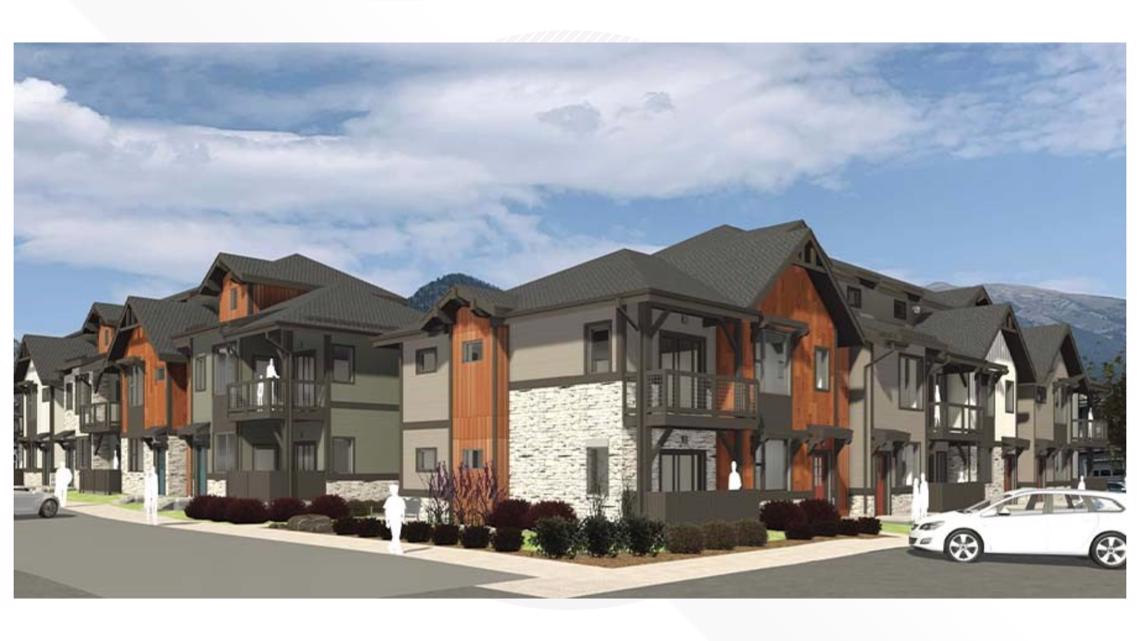
Affordable Housing - Frisco Style

Granite Park - 619 Granite Street


Courtesy CDOT

Frisco and CDOT to break ground on affordable housing complex for employees, residents
May 15, 2023 By Kirin Pandit 9News
Quote:
"It's really critical for us to find affordable housing units that folks can actually stay in," CDOT spokesperson Stacia Sellers said. "The cost of living is quite high within mountain communities, and it can make it difficult for families to stay within areas and communities that they love."

The project, called Granite Park.... It will have 22 units. Half will be for CDOT employees and the other half will be for qualified Frisco residents.
__________________
Cool... Denver has reached puberty.
Reply With Quote
     
     
  #14366  
Old Posted May 17, 2023, 4:39 PM
Cirrus's Avatar
Cirrus Cirrus is offline
cities|transit|croissants
 
Join Date: Jul 2001
Location: Washington, DC
Posts: 18,718
Quote:
Originally Posted by bunt_q View Post
I do not want to buy the support of District 19 by focusing on core cities, excusing Arvada from responsibility. I would rather have no bill than the one you are advocating for.

Or perhaps more likely, start with a "every community must bear their fair share" bill - harder to oppose
"Fair share" housing targets are a set-up for constant litigation, as every community does its best to get around the rules every year, as we see in California. It's a step above nothing, but I'm skeptical of it as a true solution. OTOH, aren't you a lawyer?

How about a transect-based rule that defines a dozen or so levels of density, and requires the next higher one to be legal by right on all properties statewide, at all times?
__________________
writing | twitter | bluesky | flickr | instagram | ssp photo threads
Reply With Quote
     
     
  #14367  
Old Posted May 17, 2023, 8:59 PM
TakeFive's Avatar
TakeFive TakeFive is offline
Registered User
 
Join Date: Jun 2010
Posts: 8,436
It may not be the density you were hoping for...
But that's Okay; we start here and we go from there.

The Bird Lot - 2532 Larimer St


Credit: EDENS

https://milehighcre.com/edens-opens-the-bird-lot-at-2532-larimer-st/
Quote:
EDENS, a leading national retail real estate owner, operator and developer, recently launched The Bird Lot, a temporary activation at 2532 Larimer St. featuring clothing boutiques, artisanal food trucks and other pop-up retailers, adding another vibrant shopping and dining destination to Denver’s RiNo Art District. The Bird Lot will host a series of events and programs throughout the summer, including live music, art installations, and workshops.
----------------------------


Quote:
Originally Posted by Cirrus View Post
"Fair share" housing targets are a set-up for constant litigation, as every community does its best to get around the rules every year, as we see in California. It's a step above nothing, but I'm skeptical of it as a true solution. OTOH, aren't you a lawyer?

How about a transect-based rule that defines a dozen or so levels of density, and requires the next higher one to be legal by right on all properties statewide, at all times?
__________________
Cool... Denver has reached puberty.
Reply With Quote
     
     
  #14368  
Old Posted May 17, 2023, 9:05 PM
bunt_q's Avatar
bunt_q bunt_q is offline
Provincial Bumpkin
 
Join Date: Aug 2002
Location: Denver, CO
Posts: 13,203
Quote:
Originally Posted by Cirrus View Post
"Fair share" housing targets are a set-up for constant litigation, as every community does its best to get around the rules every year, as we see in California. It's a step above nothing, but I'm skeptical of it as a true solution. OTOH, aren't you a lawyer?

How about a transect-based rule that defines a dozen or so levels of density, and requires the next higher one to be legal by right on all properties statewide, at all times?
I could definitely write an ordinance to downzone entire cities by one transect the day after that law passes.
Reply With Quote
     
     
  #14369  
Old Posted May 17, 2023, 9:38 PM
TakeFive's Avatar
TakeFive TakeFive is offline
Registered User
 
Join Date: Jun 2010
Posts: 8,436
Before you build, you first have to buy the site

Greystar purchases Golden Triangle property for Parq II apartments
May 17, 2023 By Kate Tracy – Reporter , Denver Business Journal
Quote:
Greystar appears to be getting close to breaking ground on its next project in the Golden Triangle.

Property records show that an LLC affiliated with Greystar purchased the addresses of 973 and 956 N. Bannock St., 970 N. Cherokee St. and 224 W. 10th Ave. for $500,000 on May 15. They were previously owned by the Sarkisian family, fifth-generation family operators of Sarkisian’s Rugs & Fine Art at 693 E. Speer Blvd.
__________________
Cool... Denver has reached puberty.
Reply With Quote
     
     
  #14370  
Old Posted May 17, 2023, 11:46 PM
mhays mhays is offline
Never Dell
 
Join Date: Jul 2001
Posts: 21,237
Quote:
Originally Posted by Cirrus View Post
"Fair share" housing targets are a set-up for constant litigation, as every community does its best to get around the rules every year, as we see in California. It's a step above nothing, but I'm skeptical of it as a true solution. OTOH, aren't you a lawyer?

How about a transect-based rule that defines a dozen or so levels of density, and requires the next higher one to be legal by right on all properties statewide, at all times?
It works pretty well in Washington state. The state sets population targets every five years for all the urban counties. Cities above a certain size are required to take their share, and zone for it. Most do it by upzoning commercial areas to protect SFRs (before we liberalized those). Every significant municipality has urban infill at least in certain nodes.
Reply With Quote
     
     
  #14371  
Old Posted May 18, 2023, 5:51 PM
mr1138 mr1138 is offline
Registered User
 
Join Date: Nov 2004
Posts: 1,166
Quote:
Originally Posted by laniroj View Post
Ralston/Wads has plenty of duplex, fourplex, class C apartments in the general area - in fact too many to count and interwoven with 1950's ranch homes everywhere. They've all since been zoned over with SFR but at one time (prior to 1990) the zoning allowed for those diverse uses there! It really did change in 1990, really moreso late 1980's but we'll round up. 1990 assertion holds!

https://www.google.com/maps/@39.8028636,...itch%3D0%26thumbfov%3D100!7i16384!8i8192

https://www.google.com/maps/@39.8052915,...piw_gu8t5mKUtxzdnLpcA!2e0!7i16384!8i8192

https://www.google.com/maps/@39.80714,-1...itch%3D0%26thumbfov%3D100!7i16384!8i8192


https://www.google.com/maps/@39.8038947,...itch%3D0%26thumbfov%3D100!7i16384!8i8192

https://www.google.com/maps/@39.8055698,...itch%3D0%26thumbfov%3D100!7i16384!8i8192
I sort of see what you're saying, but I guess I just wouldn't consider any of these examples to be "interwoven" with the ranch homes in any way. If you look at these properties on a zoning map, you can clearly see that the properties you cited are clustered around the edges of the ranch home neighborhoods, or along collector streets like Pierce or Olde Wadsworth.

I'd also point out that the structures shown in the links you provided are generally from the 1970s or earlier, and are in locations that were earlier country roads that already had a mix of uses. I think I'm starting to see what you're saying about 90s era rezonings that essentially spot-zoned individual parcels to lock in the use that was already happening there (an inappropriate use of zoning if you ask me). But these areas have pre-war land use patterns that are different from the acres and acres of tract homes that started going up in the 1950s. For the record, Denver zones this way too, most recently in the 2010 form-based update that carved out lot-specific MS or MX zones for existing commercial structures in residential neighborhoods - essentially locking in a 1930s land use pattern without acknowledging the flexibility in zoning (i.e. no zoning at all) that allowed these patterns to emerge in the first place.

When I mentioned 1950s ranch homes, I was talking about streets like this one, which were platted and zoned exclusively for single family homes ever since the subdivision was originally approved (in the 1950s). In my mind, streets and neighborhoods where higher-density structures are truly "interwoven" in with single-family homes are more like this one.

Quote:
Originally Posted by laniroj View Post
I've heard this argument, mainly made by city/county officials in zoning hearings, more times I care to recite. It's fundamentally untrue and it's one of the AWFUL side effects of our Tabor/Gallagher extravaganza. They see the higher assessment rate and lower emergency response burden for commercial properties and assume that equates to higher sales tax base. It's one of the reasons retail is SPREAD SO THIN in our state. We have a self cannibalizing's retail market here. The new overtakes the old which becomes unusable and obsolete. Instead, if we had much higher residential densities, our retail would become much more valuable and sustainable and lead to much higher retail lease rates due to higher per square foot sales. Get more tax revenue out of the same retail infrastructure that's already in place. Think NYC with per square foot sales of $2,000-$3,000/sf vs Denver at maybe $600/sf.
You are definitely correct this is a side effect of Tabor/Gallagher, and it is extremely unfortunate. It leads to suburbs thinking that they need to discourage population growth unless they get new retail (which you correctly observe they will never get without higher population densities). As unfortunate as it is, economic development departments convey this message to potential developers all the time to discourage applications for rezoning.

Quote:
Originally Posted by bunt_q View Post
Anyways, what I am saying is I do not want to buy the support of District 19 by focusing on core cities, excusing Arvada from responsibility. I would rather have no bill than the one you are advocating for.
I think "advocating for" might be a bit of a strong statement. I was posing the question for discussion. The bill that was actually on the table already carved up Colorado into 4 different categories (Tier 1, Tier 2, Resort Community, and everywhere else) with different rules for different contexts. I'm just not sure that they categorized everyone correctly.

I'm also not completely convinced that outer-ring suburbs need this upzoning right now as much as neighborhoods that are closer-in to transit or already have good walkability do. So maybe the last version of the house bill was essentially correct - just base it on proximity to transit and don't try to pick winners and losers at all. Those who live far away from transit would have nothing to fear - and mandating middle-housing near transit would upzone pretty much all of a community like Boulder.

But I'm all for a solution that applies equally to everyone.

Quote:
Originally Posted by Cirrus View Post
How about a transect-based rule that defines a dozen or so levels of density, and requires the next higher one to be legal by right on all properties statewide, at all times?
Now this is something I could definitely get on board with. The more time passes, the more that I think zoning should always allow for this "next level" of density so we don't constantly have to fight this battle. Zoning should protect health and safety, not prevent cities from growing incrementally the way they always have grown. Nobody's health or safety is legitimately threatened by a duplex going up next door.

Last edited by mr1138; May 18, 2023 at 6:13 PM. Reason: Grammar
Reply With Quote
     
     
  #14372  
Old Posted May 18, 2023, 8:34 PM
TakeFive's Avatar
TakeFive TakeFive is offline
Registered User
 
Join Date: Jun 2010
Posts: 8,436
I'm declaring 1995 the year Denver became legitimate

To understand a place is to know it's history; that's its DNA.

BTW, the 1st iteration of single-family neighborhoods were simply the new and improved version of Pop-up shanties I read about in Strong Towns.

Of course the automobile changed the world we live in

whether you love or hate it really doesn't matter.

For the longest time Denver was in flyover country. It was a 'cow town' and I say that with great affection.

Economically, Denver benefited from being the center of the West. Thanks partly to Boulder/CU and politicos, many national labs were located in the area. It fostered the very important Aerospace industry as well as other good stuff.

With lots of cheap land the suburbs flourished
Quote:
Originally Posted by mr1138 View Post
You are definitely correct this is a side effect of Tabor/Gallagher, and it is extremely unfortunate. It leads to suburbs thinking that they need to discourage population growth unless they get new retail (which you correctly observe they will never get without higher population densities).
The Axiom has always been that "retail follows rooftops."

Moving into the 1970's the 'shopping center' became the retail downtown for the suburbs. Neighborhood centers were popular as that's where we bought our groceries. Strip centers had there place (and still do). All this was before Mr. Big Box came along and the Big Box crowd was before Amazon came along.

The outsized impact of Oil & Gas

Always a boom and bust business it left lots of footprints in Denver. No question that 'roughnecks' were a rough and tumble crowd. But Ohh they loved the city. Downtown Denver really came alive when the business boomed.

I never payed any attention to zoning although I did become aware of PUD zoning. That allowed for 'efficient' density. It sure helped to create tons of 'missing middle' housing in the suburbs.
__________________
Cool... Denver has reached puberty.
Reply With Quote
     
     
  #14373  
Old Posted May 18, 2023, 9:25 PM
TakeFive's Avatar
TakeFive TakeFive is offline
Registered User
 
Join Date: Jun 2010
Posts: 8,436
What was special about 1995?

Toy Store was the most popular film and Forrest Gump won an Oscar for Best Picture. ER, Seinfeld, and Friends were the most popular TV shows.

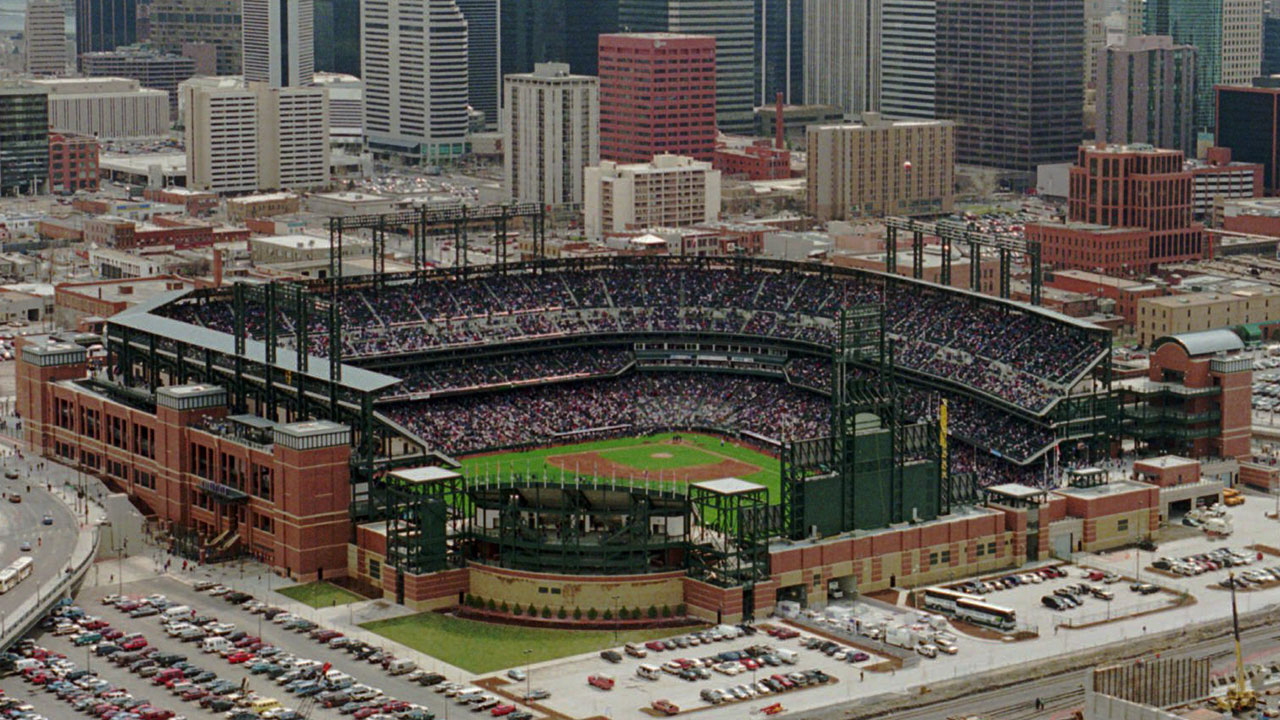
April 26, 1995 changed Denver

Coors Field - 2001 Blake St


Credit Creator: MARK REIS

If you were there... If you're aware of the record breaking attendance at Mile High Stadium and then at Coors Field then you can appreciate why this was such a catalyst. Blake Street became famous for its Blake Street Bombers.

When MLB decided Denver deserved to be a major league city it helped immensely with Denver's stature in various ways. And the timing couldn't have been better. After flirting with the suburbs MLB went Retro and city-centered.

Makes sense to me
Quote:
Originally Posted by mr1138 View Post
I'm also not completely convinced that outer-ring suburbs need this upzoning right now as much as neighborhoods that are closer-in to transit or already have good walkability...
__________________
Cool... Denver has reached puberty.
Reply With Quote
     
     
  #14374  
Old Posted May 19, 2023, 12:30 AM
laniroj laniroj is offline
[sub]urbanite
 
Join Date: Jun 2015
Posts: 809
Quote:
Originally Posted by mr1138 View Post


Now this is something I could definitely get on board with. The more time passes, the more that I think zoning should always allow for this "next level" of density so we don't constantly have to fight this battle. Zoning should protect health and safety, not prevent cities from growing incrementally the way they always have grown. Nobody's health or safety is legitimately threatened by a duplex going up next door.
My favorite approach would be statewide spot incremental zoning. It goes like this:

1. Any adjacent parcel to any particular land use would be available for the next dense use/height allowed - for example a single family block with two story homes would allow for a side by side or tonwhome/duplex/row home or over/under duplex.

2. Once 25% of a block transitions to the denser use, the next level of density and height are allowed...and so on.

3. On top of site specific incremental zoning, broad zoning overlays (not parcel by parcel but say 200 feet on either side of a road) would allow for much denser structures with much taller height on arterial roads and at transit stations and obviously in downtown or commercial center areas.

4. State would pass a statute allowing residential in all zone districts except for the industrial A category (heavy industrial). Why we separate retail from office from heavy industrial from flex is beyond me. I rather like seeing the old company homes mixed amongst the warehouses...

^State law would mandate not lot line setbacks, build to requirements, second+ story setbacks, etc....total flexibility. There would be a 15 year sunset on the initial law to give it time to work. If a cycle is generally 7 years, that gives the market one cycle to learn an another to really produce.
Reply With Quote
     
     
  #14375  
Old Posted May 19, 2023, 3:36 AM
mr1138 mr1138 is offline
Registered User
 
Join Date: Nov 2004
Posts: 1,166
Quote:
Originally Posted by laniroj View Post
Who thinks it makes the most sense here or there? Are the suburbs the right spot with good schools or is the center city the right spot with coffee shops? How about an existing office park with ample open space or 2,641 feet from a transit stop? The only true answer to this question is that EVERY SINGLE PLACE makes sense for someone. Planners have been dictating (with their best foot forward in most cases) where growth goes and it doesn't work. The market is efficient, people doing studies and making plans are not efficient.
Personally, I would like to see planning departments spend a whole lot less time worrying about where growth goes, and a whole lot more time worrying about how it gets built.

Rather than endlessly worrying about things like density, parking, or trying to decide if sidewalks should count toward or against minimum open area requirements (yes, this is a real discussion) - sometimes I wish planning would spend a whole lot more time scrutinizing the urban design fundamentals of minor subdivision plats. It may sound boring but it is extremely important and is an area where I feel like modern urban planning is being entirely neglectful.

I have to give credit where credit is due - about 15 years ago, Boulder approved the Transit Village Subarea Plan (TVAP - kind of ironic since the transit is still decades off). This plan included one of the only legally enforceable "connections plans" that I am aware of in Colorado. It basically gave the plan reviewers the legal backing to request public ROW in specific locations. After almost 2 decades in effect, the city has now exacted about 75% of the planned connections and the neighborhood is looking fantastic. I'd provide streetview examples, but it is mostly all too new and the best parts of it still haven't been photographed - I'd encourage anyone in the area to go check it out. My favorite example is this alley, where the city exacted ROW from two different landowners almost a decade apart. The Google streetview image is actually outdated and only shows half of the current alley - check out the aerial view for the current state of things. This kind of effort takes some serious long-term follow through, but this is the kind of subdivision approach (each half of the street comes from a different original landowner) that used to be common and gave us neighborhoods like the Highlands over 100 years ago. There is nothing wrong with a half-completed street or alley. But instead we end up with crap like this (honestly - why did we need two over-wide private alleys separated by a fence?).

I reached out to a planner in Arvada once to ask why we couldn't plan for new connections east-west between Balsam and Allison. I received a response that "unfortunately, current and future land use patterns do not allow for new connections" (I'm paraphrasing a bit). And let that second part sink in for a second - we can't plan for "future land use patterns" - really? They would prefer a "developer driven approach" that "encourages" new connections rather than mandating where they go. As if urban design outcomes like this one are desirable.

These poor urban design outcomes are a part of why we have things like "DenverFugly" - it's not just the cheap stucco. What are planners actually "planning" if all they are doing is reviewing applications in a piecemeal fashion as they come in, wasting staff time on things that may not actually matter? Why not actually come up with a real plan for how we are subdividing our land as we get denser? With a little advice from the real estate development community, we could probably easily determine which neighborhoods are about to "pop" and come up with a community-supported plan. If a neighborhood like Sloan's Lake had adopted a "connections plan" 15 years ago, the outcome today would be very different.

Last edited by mr1138; May 19, 2023 at 4:05 AM.
Reply With Quote
     
     
  #14376  
Old Posted May 19, 2023, 4:12 AM
rds70 rds70 is offline
Registered User
 
Join Date: Jul 2001
Location: Denver, CO
Posts: 2,811
A little development news:

3300 Blake - a 7 and 12 story project with 484 units and 6,000 square feet of retail. 140 feet in height. The developer is Carmel Partners and the architect is the Davis Partnership. Construction should begin in late summer.

Reply With Quote
     
     
  #14377  
Old Posted May 19, 2023, 4:27 AM
rds70 rds70 is offline
Registered User
 
Join Date: Jul 2001
Location: Denver, CO
Posts: 2,811
Quote:
Originally Posted by mr1138 View Post

I reached out to a planner in Arvada once to ask why we couldn't plan for new connections east-west between Balsam and Allison. I received a response that "unfortunately, current and future land use patterns do not allow for new connections" (I'm paraphrasing a bit). And let that second part sink in for a second - we can't plan for "future land use patterns" - really? They would prefer a "developer driven approach" that "encourages" new connections rather than mandating where they go.
Like this? - https://arvadapermits.org/eTRAKiT3/viewA...tyNo=PA2023-0029&key=EPR%3a2303090458342
Reply With Quote
     
     
  #14378  
Old Posted May 19, 2023, 3:21 PM
laniroj laniroj is offline
[sub]urbanite
 
Join Date: Jun 2015
Posts: 809
Quote:
Originally Posted by mr1138 View Post
Personally, I would like to see planning departments spend a whole lot less time worrying about where growth goes, and a whole lot more time worrying about how it gets built.

Rather than endlessly worrying about things like density, parking, or trying to decide if sidewalks should count toward or against minimum open area requirements (yes, this is a real discussion) - sometimes I wish planning would spend a whole lot more time scrutinizing the urban design fundamentals of minor subdivision plats. It may sound boring but it is extremely important and is an area where I feel like modern urban planning is being entirely neglectful.
^Part 1 above is insanely terrifying to me. A dozen planners behind closed doors will never be as creative or market serving as hundreds or thousands of professional and would be developers.

Part 2 - The City of Denver is proactively engaged in right of way discussions (I call them takings) on just about every single developed parcel in the spirit of planning for future development patterns. Most municipalities are. To what extent varies but the double alley example you provided is generally not how things play out and what I'd consider an exception to the rule. The ENORMOUS issue is that the planners get the right of way and then it's up to DOTI (Department of Transportation & Infrastructure for those not familiar) to program that space. What does DOTI do....they plan out 11-12' travel lanes with center, left, and right turn lanes for residential streets based on 1960's highway road standards. They rely on 'standards' vs just getting something that is good, this is the crux of it all. We want perfection and it ends up pushing out everything that isn't a car or 18-wheeler. I wish I could convey in adequate terms how un-creative the development process is allowed to be due to regulations - which you seem to be wanting more of. The 15-minute village concept is one the market WILL deliver because it's economics are sound. Planners and engineers should stop trying to dictate what that looks like.
Reply With Quote
     
     
  #14379  
Old Posted May 19, 2023, 7:06 PM
mr1138 mr1138 is offline
Registered User
 
Join Date: Nov 2004
Posts: 1,166
Interesting - thanks for sharing this. I usually use this webmap to find out what is going on in Arvada, so it is interesting that this project doesn't appear here. I won't go into a full critique of that site plan here, but I still think this leaves something to be desired (especially that stub-end alley that doesn't connect through to Balsam).

I'm happy to see that a new connection may finally be formed, though this doesn't exactly speak to my point because this appears to be an assembly of land by a single developer that would allow for such a connection to be made. What I am suggesting is that connections be exacted in partial stages, like what Boulder did. They could be so much more creative with that site plan if they integrated the plan with the future of the neighboring properties, rather than simply ignoring them and walling off the community with a privacy fence.

Quote:
Originally Posted by laniroj View Post
^Part 1 above is insanely terrifying to me. A dozen planners behind closed doors will never be as creative or market serving as hundreds or thousands of professional and would be developers.

Part 2 - The City of Denver is proactively engaged in right of way discussions (I call them takings) on just about every single developed parcel in the spirit of planning for future development patterns. Most municipalities are. To what extent varies but the double alley example you provided is generally not how things play out and what I'd consider an exception to the rule. The ENORMOUS issue is that the planners get the right of way and then it's up to DOTI (Department of Transportation & Infrastructure for those not familiar) to program that space. What does DOTI do....they plan out 11-12' travel lanes with center, left, and right turn lanes for residential streets based on 1960's highway road standards. They rely on 'standards' vs just getting something that is good, this is the crux of it all. We want perfection and it ends up pushing out everything that isn't a car or 18-wheeler. I wish I could convey in adequate terms how un-creative the development process is allowed to be due to regulations - which you seem to be wanting more of. The 15-minute village concept is one the market WILL deliver because it's economics are sound. Planners and engineers should stop trying to dictate what that looks like.
I guess I don't see what is so terrifying. I never said anything about this being done behind closed doors - a connections plan can be an open process that involves the community. By looking at an entire neighborhood as a single composition, it should be possible to come up with a design that is more efficient, wastes less space, and is more aesthetically attractive. Based on what I have seen, the double-alley example IS the norm and most cities' current approach tends to continue giving crappy results like this block near Sloan's Lake. There is nothing creative or desirable about this outcome - just look at all those stub-end alleys that don't connect to each other. There is no way anybody can convince me this is the most efficient layout of this block. I am certain they could have gotten more units in, hidden the alleys in back, and created more attractive street frontages with a coordinated plan. I have yet to see a single example of a block coming together in a coherent kind of way with a piecemeal approach.

I'm also not sure why new connections necessarily need to be streets designed to 1960s standards. The city is more than capable of creating pedestrian "paseos" and alleyways designed to modern standards if that is more appropriate. I would take this kind of outcome any day over what I see happening in Denver.

Last edited by mr1138; May 19, 2023 at 7:36 PM.
Reply With Quote
     
     
  #14380  
Old Posted May 20, 2023, 2:41 AM
TakeFive's Avatar
TakeFive TakeFive is offline
Registered User
 
Join Date: Jun 2010
Posts: 8,436
Side Pocket - Transit Topic
Quote:
Originally Posted by Cirrus View Post
"Fair share" housing targets are a set-up for constant litigation, as every community does its best to get around the rules every year, as we see in California. It's a step above nothing, but I'm skeptical of it as a true solution. OTOH, aren't you a lawyer?

How about a transect-based rule that defines a dozen or so levels of density, and requires the next higher one to be legal by right on all properties statewide, at all times?
Just read a piece by Eric Levitz in the "Intelligencer" section of the New York Mag. It's a bit of a copycat piece of David Zipper at VOX in March. Fortunately it's abbreviated from that long-winded piece.

In any case he states:
Quote:
WMATA rail ridership is currently stuck at 50 percent of pre-pandemic levels...

To this point, COVID-era federal funds have masked the financial implications of collapsing ridership. ... But now that money is running out. In 2024, D.C.’s WMATA is staring down a $738 million shortfall.
The proposed answer for these problems is always to find more money from taxpayers, from the state and/or Federal governments.

Any insights from a NoVA perspective?
__________________
Cool... Denver has reached puberty.
Reply With Quote
     
     
This discussion thread continues

Use the page links to the lower-right to go to the next page for additional posts
 
 
Reply

Go Back   SkyscraperPage Forum > Regional Sections > United States > Mountain West
Forum Jump


Forum Jump


All times are GMT. The time now is 5:18 PM.


Powered by vBulletin® Version 3.8.7
Copyright ©2000 - 2026, vBulletin Solutions, Inc.