Hmmm, for a barrier in the street, it doesn't have the usual traffic signage for an obstacle (and are those reflectors painted over?).
(but generally agree that if you are attentive, you shouldn't be riding up on these,.
They may be hard to see at night, but the pics show daytime incidents.
The other aspect is that the vehicle shown has a high hood.
If a driver is sitting back, he/she may not be able to see past the hood for such a short barrier (that's also why kids can get run over if playing around an SUV).
There should be signs on all 4 corners of the barriers for visibility.
Likewise, for someone reversing near one (don't assume there's a back-up camera).
Maybe signs like these would help.
"Slow Street" requires the driver to know what the program is about and is not intuitive regarding the presence of barriers/obstacles.
i.e. "School Zone" signs indicate slower speeds without physical barriers in the street.
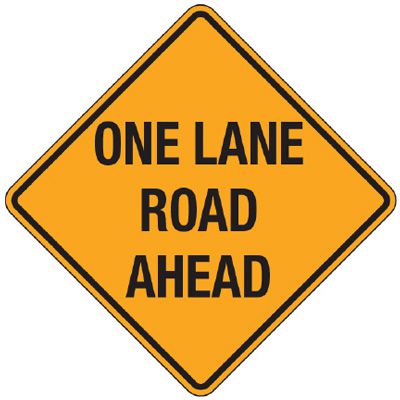 https://www.seton.ca/reflective-warning-...AucUEALw_wcB&gclsrc=aw.ds#W4394S55TEDRAH
 https://www.google.com/url?sa=i&url=http...CBEQjhxqFwoTCJiM1ozw-v0CFQAAAAAdAAAAABAI
Another example of poor signage is at Burrard and Pacific.
You can see the original hazard sign in the middle of the island was inadequate to prevent drivers from hitting the island, so an additional post has been added to the right.
I expect that drivers were hitting it at night.
That's what happens when lanes are planned out on paper with precise dimensions.
You can see the pick-up truck only has a foot on either side, so a cargo truck or a bus would have less clearance.
October 2022:
 https://www.google.com/maps/@49.2769398,...itch%3D0%26thumbfov%3D100!7i16384!8i8192
January 2022:
 https://www.google.com/maps/@49.2769467,...7xA!2e0!5s20220101T000000!7i16384!8i8192





 Prev
Prev


 Linear Mode
