 Posted Oct 31, 2022, 5:11 AM
|
|
Registered User
|
|
Join Date: Dec 2015
Posts: 15,639
|
|
Quote:
Originally Posted by Jimbo604

Cool! Thanks, Zep!
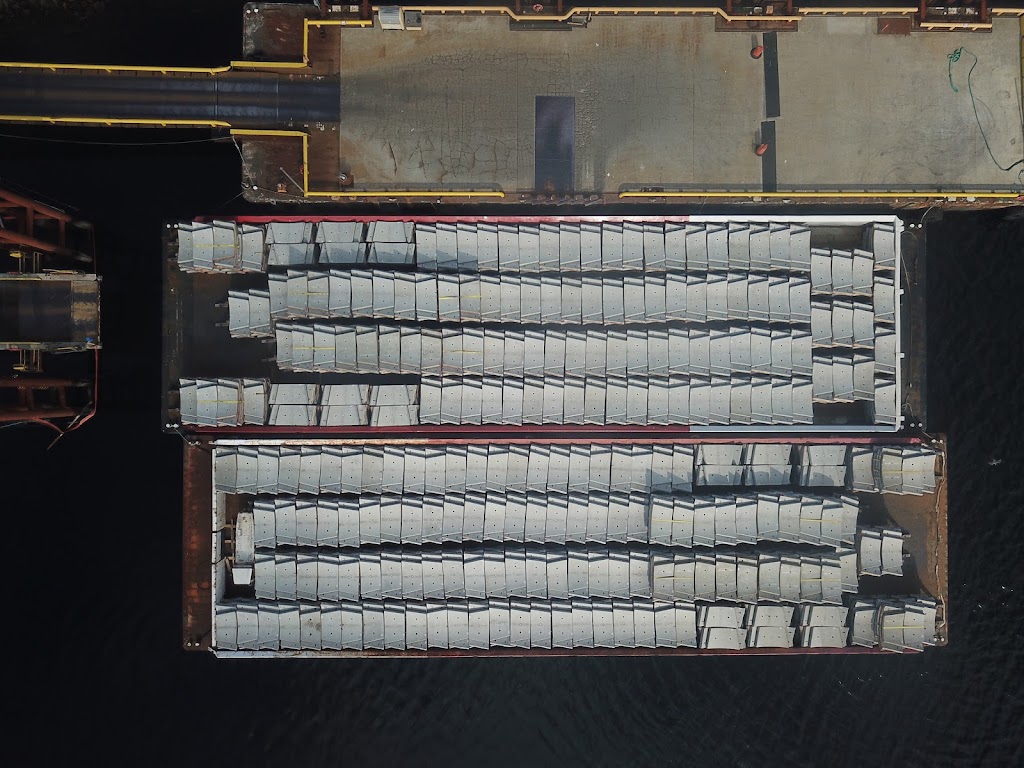
Anyone know where they take the spoils?
|
Quote:
5.1.3.1 Tunnel Boring Machine Spoil
The reference design of the Project assumes twin 6 m diameter bored tunnels from Great Northern Way
Station (the portal) to the east end of the Project at Arbutus Street. Construction of the reference design
assumes a tunnel boring machine (TBM) will be delivered, assembled and launched from the portal at the
eastern terminus. During construction, the TBM cuttings (spoil) will likely be transported by conveyor or
‘muck cars’ for management and disposal. The volume of solids generated by the TBM has been
estimated to be approximately 324,000 m3.
Bedrock through which the Project tunnel(s) will be bored is not expected to contain contamination from
surface activities. Man-made contamination has been assumed to be contained within the overburden
and because of hydrostatic pressures within the bedrock, contamination will not have penetrated bedrock.
The physical characteristics of the TBM spoil depends on a variety of factors. There are several TBM
equipment options available and the selection of the appropriate TBM will be made by the Contractor
based on their evaluation of bedrock conditions from geotechnical investigations.
The construction of the reference concept assumes that an Earth Pressure Balance (EPB) TBM machine
is likely to be selected by the Contractor for the soft sedimentary bedrock being encountered on the
alignment. Other TBMs include Main Beam (Gripper or Thrust TBMs), typically used for hard rock
applications; slurry TBMs, used primarily in sands and gravels; or pressurized slurry TBMs that utilize
slurry at the cutting face to establish and balance pressure. Physical characteristics associated with the
use of an EPB-type of TBM is discussed below.
An EPB TBM can be operated in ‘open’ or ‘closed’ mode. In open mode, the cutting face is not
pressurized, and higher production rates can be achieved. Spoil from the TBM operating in open mode is
likely to have a gradation of 6” minus (most material less than 6 inches diameter). In closed mode,
used for softer materials, a pressurized cutting face is generated which applies support pressure through
highly viscous, conditioned spoil which is formed from mixing the excavated material with conditioners.
CONTAMINATED SITES AND EXCAVATED MATERIALS TECHNICAL DATA REPORT
Material Management
October 30, 2019
15
This mixture is commonly referred to as “muck”. For optimum performance, EPB machines require the
muck to have good plastic deformation characteristics, low internal friction and low permeability.
These characteristics are produced through the selection of the conditioners and additives.
Muck is mixed with conditioners to reduce wear of the cutting tools and create a homogeneous material
inside the excavation chamber which helps to maintain a pressurized excavation face. Typically, the
conditioners include a polymer to maintain the consistency of the mixture through a variety of material
conditions. The conditioner and polymers are often proprietary to the TBM operators making it difficult to
determine the potential environmental impacts associated with disposal of the muck. As such, where
conditioners are used, regulatory agencies may consider the muck to be contaminated, which will
influence the management options available to the Contractor.
The muck generated by a TBM operated in “closed” mode will most likely be a high moisture content,
sloppy paste, which is unlikely to be suitable for re-use as a construction material. In a high moisture
state, muck may be difficult to transport, and require a dewatering process to separate the water from the
solids. The characteristics of the dewatering system will depend on the TBM selection, methodology, and
moisture content of the muck. The most basic treatment consists of settling ponds, sized to allow
sufficient time for the solids to separate from the water.
Construction of the reference design for the Project assumes a muck dewatering system will be
necessary. Both the dewatered muck and the water produced by tunneling will require appropriate
management and disposal.
|
Quote:
Some other options for disposal of excavation spoil include intermediate cover or final cover at a
permitted landfill site, or infill and reclamation of gravel pit, quarry and mine sites. Several of these
options exist within or near Metro Vancouver. As noted above, the beneficial reuse of Project materials for
such applications will be determined by project-specific requirements associated with potential destination
locations.
|
https://www.broadwaysubway.ca/app/upload...s-Technical-Data-Report-October-2019.pdf

|





 Prev
Prev



 to find what I had trimmed or cropped out from the video, found a little over a minute of footages.




 Linear Mode
