HomeDiagramsDatabaseMapsForum About
     

Go Back   SkyscraperPage Forum > Discussion Forums > City Discussions


Reply

 
Thread Tools Display Modes
     
     
  #761  
Old Posted Sep 9, 2022, 3:44 AM
Wigs's Avatar
Wigs Wigs is online now
Great White North
 
Join Date: Nov 2003
Location: Niagara Region
Posts: 16,363
Buckeye Native, what's your opinion on Cincinnati in 2022 vs when you were a kid growing up? Have you visited the core recently?
Reply With Quote
     
     
  #762  
Old Posted Sep 9, 2022, 4:23 AM
TWAK's Avatar
TWAK TWAK is online now
Resu Deretsiger
 
Join Date: Feb 2004
Location: Clearlake, CA Micropolitan Statistical Area
Posts: 17,162
I'm still wondering about 100 people leaving California vs millions in the rust belt cities. I get that Rust Belters will want to torment Californians and I'm ok with that, but are y'all really concerned or is this an aha! moment? The houses or apartments in CA are immediately filled, with competition.
__________________
#ruralurbanist
Reply With Quote
     
     
  #763  
Old Posted Sep 9, 2022, 4:32 AM
Klippenstein's Avatar
Klippenstein Klippenstein is offline
Rust Belt Motherland
 
Join Date: Apr 2021
Location: Chicago, IL
Posts: 878
Quote:
Originally Posted by Klippenstein View Post
I understand the hesitancy to include Chicago since its economy is and was pretty diversified, but the SE Side of Chicago and NW Indiana were one of the largest steel producing regions in the world for a long time. And if there's another city that could be compared to Detroit (on 1/10th the scale and not experiencing its current renaissance), it would be Gary, IN. Gary is quintessentially rust belt and so is the SE Side of Chicago.

Gary Population Decline
1960 | 178,320
2020 | 69,093

-61.3%
I forgot to mention that Gary Works was the largest steel mill in the world for many years, was the largest integrated mill in North America as late as 1999 (not sure anymore) and is still US Steel's largest manufacturing plant according to their website. If you've ever driven into Chicago on I-90 (the skyway) then you've gotten a glimpse of the massive footprint that Steel had in the region as well as the devastating impact of deindustrialization.

Last edited by Klippenstein; Sep 9, 2022 at 5:20 AM.
Reply With Quote
     
     
  #764  
Old Posted Sep 9, 2022, 4:40 AM
Steely Dan's Avatar
Steely Dan Steely Dan is online now
devout Pizzatarian
 
Join Date: Jul 2001
Location: Lincoln Square, Chicago
Posts: 30,420
^ and it's not just US steel's Gary works either.

NW indiana is also home to two other giant integrated steel mills, cleveland cliffs' nearby indiana harbor and burns harbor facilities.

they are the 3 largest integrated steel mills left in the US and they produce more than half of the nation's raw steel produced from mineral ore.

they still make A LOT of steel at the south end of lake michigan, but it doesn't take nearly as many people to do so as it once did back in the day. gary works once employed 30,000 men with solid union-backed family-supporting jobs back in 1970 (enough jobs to single-handedly prop up an entire city of 175,000 people). today the mill's employment is down to around 3,000 workers thanks to heavy amounts of automation. how is any one-company town ever supposed to survive something like that?


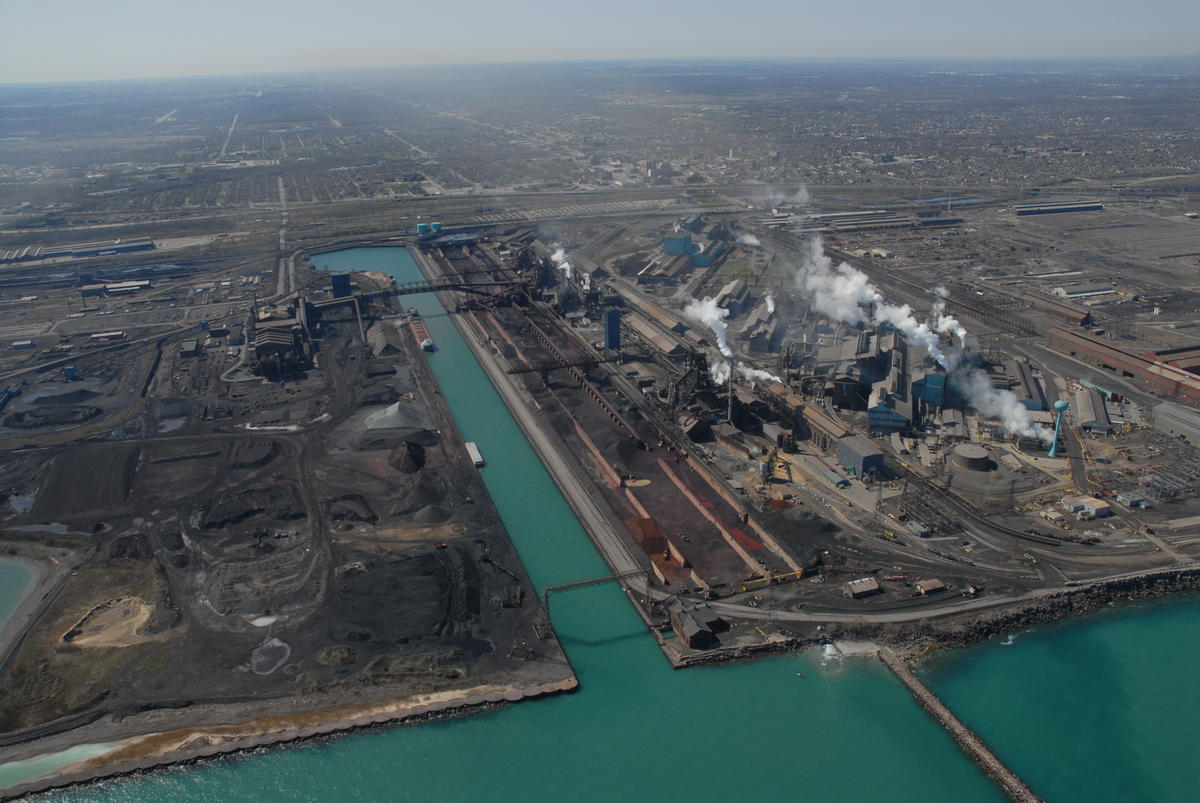
the 3 biggest integrated steel mills in the US, all located within several miles of each other in NW indiana:

Indiana Harbor (Cleveland Cliffs):


source: wikipedia


Gary Works (US Steel):


source: https://www.wbaa.org/post/steelworker-death-us-steels-gary-works-prompts-outcry#stream/0


Burns Harbor (Cleveland Cliffs):


source: wikipedia
__________________
"Missing middle" housing can be a marvelous middle ground for many middle class families.

Last edited by Steely Dan; Sep 14, 2022 at 2:08 PM.
Reply With Quote
     
     
  #765  
Old Posted Sep 9, 2022, 2:31 PM
Buckeye Native 001 Buckeye Native 001 is offline
E pluribus unum
 
Join Date: Aug 2003
Location: Arizona
Posts: 30,127
Quote:
Originally Posted by Wigs View Post
Buckeye Native, what's your opinion on Cincinnati in 2022 vs when you were a kid growing up? Have you visited the core recently?
It's a completely different core today than when I grew up (left in 1996) and even compared to 15 years ago.

For example, when I was in 4th grade (1993) my class took a field trip to Music Hall to see The Nutcracker. The teachers made it very clear that when we got off the bus across the street near Washington Park we were not to talk to or make eye contact with anyone.

In retrospect, that was insanely racist and/or classist but today Washington Park is arguably one of the crown jewels of the city's park system. Before The Banks, the joke used to be that all the fun stuff along the riverfront was over in Newport. The sports teams are on the Ohio side of the river, but considering their historic awfulness, going to Reds and Bengals games is usually an exercise in masochism.

At least from what I've seen and observed, there's a definite improvement in both built environment and mentality about the city and region's future. I'm not surprised it finally grew after the 2020 census.

I'm sure what I'm describing is applicable to Detroit, Cleveland, Buffalo, Pittsburgh and other cities that fell on hard times during the last 50-60 years.

Then again, probably because of the proximity to Appalachia, the region continues to get hit hard by the opioid crisis.


Last edited by Buckeye Native 001; Sep 9, 2022 at 2:59 PM.
Reply With Quote
     
     
  #766  
Old Posted Sep 9, 2022, 3:49 PM
Steely Dan's Avatar
Steely Dan Steely Dan is online now
devout Pizzatarian
 
Join Date: Jul 2001
Location: Lincoln Square, Chicago
Posts: 30,420
Quote:
Originally Posted by eschaton View Post
Honestly on the ground here in Pittsburgh, the 26% decline in household sizes gets across the "feel" of the level of decline a lot better than the 55% population loss.
yeah, i think that's probably true for most of these cities.

the higher the household percentage loss, the more "empty" a city is going to feel from an overall structural perspective vs. what the straight population stats might indicate (though the two are obviously correlated).

in a theoretical sense, a city could have had a completely static number of households over the past seven decades (nothing built/nothing torn down) and still lost roughly a quarter of its population from decreasing household size alone.

that said, there's obviously still internal movements within a city where households added in a rejuvenating core/gentrifying neighborhoods might mask some of the household loss out in some of the more forlorn and declining neighborhoods.

in chicago, the # of households is actually up 6% since 1950, but a lot of those were added in new construction midrises/highrises downtown and along the lakefront and other gentrifying areas, such that there are still neighborhoods that display the empty lot pockmarks of classic "rustbelt-itis", like washington park for example.
__________________
"Missing middle" housing can be a marvelous middle ground for many middle class families.

Last edited by Steely Dan; Sep 9, 2022 at 5:20 PM.
Reply With Quote
     
     
  #767  
Old Posted Sep 9, 2022, 4:00 PM
iheartthed iheartthed is offline
Registered User
 
Join Date: Oct 2009
Location: New York
Posts: 12,020
Some metro growth rates 1950-2020:
  • Cincinnati - 9%
  • St. Louis - 8%
  • New York - 6%

If Rust Belt means terrible regional planning then yeah Cincinnati is probably Rust Belt along with Detroit and St. Louis. But Cincinnati is not a region that has had the same type of industry collapse that Buffalo and Pittsburgh went through.
Reply With Quote
     
     
  #768  
Old Posted Sep 9, 2022, 4:51 PM
Yuri's Avatar
Yuri Yuri is offline
Registered User
 
Join Date: Sep 2008
Posts: 6,202
Quote:
Originally Posted by Steely Dan View Post
^ and it's not just US steel's Gary works either.

NW indiana is also home to two other giant integrated steel mills, cleveland cliffs' nearby indiana harbor and burns harbor facilities.

together they are the 3 largest integrated steel mills left in the US and they produce more than half of the nation's steel produced from mineral ore.

they still make A LOT of steel at the south end of lake michigan, but it doesn't take nearly as many people to do so as it once did back in the day. gary works once employed 30,000 men with solid union-backed family-supporting jobs back in 1970 (enough jobs to single-handedly prop up an entire city of 175,000 people). today the mill's employment is down to around 3,000 workers thanks to heavy amounts of automation. how is any one-company town ever supposed to survive something like that?


the 3 biggest integrated steel mills in the US, all located within several miles of each other in NW indiana:

Indiana Harbor (Cleveland Cliffs):


(...)
We're supposed to find those mills very ugly, but I admit I like them.They have a historical quality now.
__________________
London - São Paulo - Rio de Janeiro - Londrina - Frankfurt
Reply With Quote
     
     
  #769  
Old Posted Sep 9, 2022, 4:52 PM
eschaton eschaton is online now
Registered User
 
Join Date: Dec 2013
Posts: 5,608
Quote:
Originally Posted by Steely Dan View Post
yeah, i think that's probably true for most of these cities.

the higher the household percentage loss, the more "empty" a city is going to feel from an overall structural perspective vs. what the straight population stats might indicate (though the two are obviously correlated).

in a theoretical sense, a city could have had a completely static number of households over the past seven decades (nothing built/nothing torn down) and still lost roughly a quarter of its population from decreasing household size alone.

that said, there's obviously still internal movements within a city where households added in a rejuvenating core/gentrifying neighborhoods might mask some of the household loss out in some of the more forlorn and declining neighborhoods.

in chicago, the # of households is actually up 6% since 1950, but a lot of those were added in new construction midrises/highrises downtown and along the lakefront and other gentrifying areas, such that there are still neighborhoods that display the empty lot pockmarks of classic "rustbelt-itis", like washington park for example.
Another thing is gentrifying neighborhoods tend to shrink over time not only due to declining household size, but often due to conversion of chopped-up houses back to SFH.

A good example here in Pittsburgh is the north side neighborhood of Allegheny Westhttps://en.wikipedia.org/wiki/Allegheny_West_(Pittsburgh). It's a tiny neighborhood, basically comprising 7-8 city blocks and the community college campus. I believe it did grow by a small amount from 2010-2020, but the population has declined by 90% since 1950. You'd never know it looking at the built environment though. There's some scattered surface lots in the southern portions of the neighborhood, but really no vacancy or abandonment (not surprising given it's been desirable for like 40 years).

What happened is the big late-19th century mansions were chopped up and turned into boarding houses in the early 20th century. The smaller ones were restored to single-family use, and the community college turned the biggest surviving ones into part of its campus.

Last edited by Steely Dan; Sep 9, 2022 at 5:20 PM.
Reply With Quote
     
     
  #770  
Old Posted Sep 9, 2022, 5:26 PM
Innsertnamehere's Avatar
Innsertnamehere Innsertnamehere is offline
Registered User
 
Join Date: Jan 2010
Location: Hamilton
Posts: 12,857
Hamilton is similar with it's Steel Mill history. Historically employed a huge portion of the city, and the city has a lot of underutilized infrastructure today designed to get thousands of workers to the Stelco and Dofasco plants on Burlington Bay. Today Stelco no longer operates other than ancillary operations to support their other operation on the north shore of Lake Erie, and is in the early stages of being redeveloped, and Dofasco continues operations at a fraction of the employment level historically. Dofasco is early in the process of a $1 billion redevelopment for electric steel production, which is expected to cut the Hamilton's annual GHG emissions by about 30% from the single project alone.

Tim Horton's first location was located close to Stelco and got it's start serving coffee and donuts to the thousands of steel workers.

Dofasco:


https://www.thespec.com/news/hamilton-re...o-fined-290k-for-workplace-injuries.html

Stelco, which has since been largely demolished. The last of the Coke blast furnaces were imploded a few weeks ago:


https://www.thespec.com/news/hamilton-re...-purchase-industrial-bayfront-lands.html

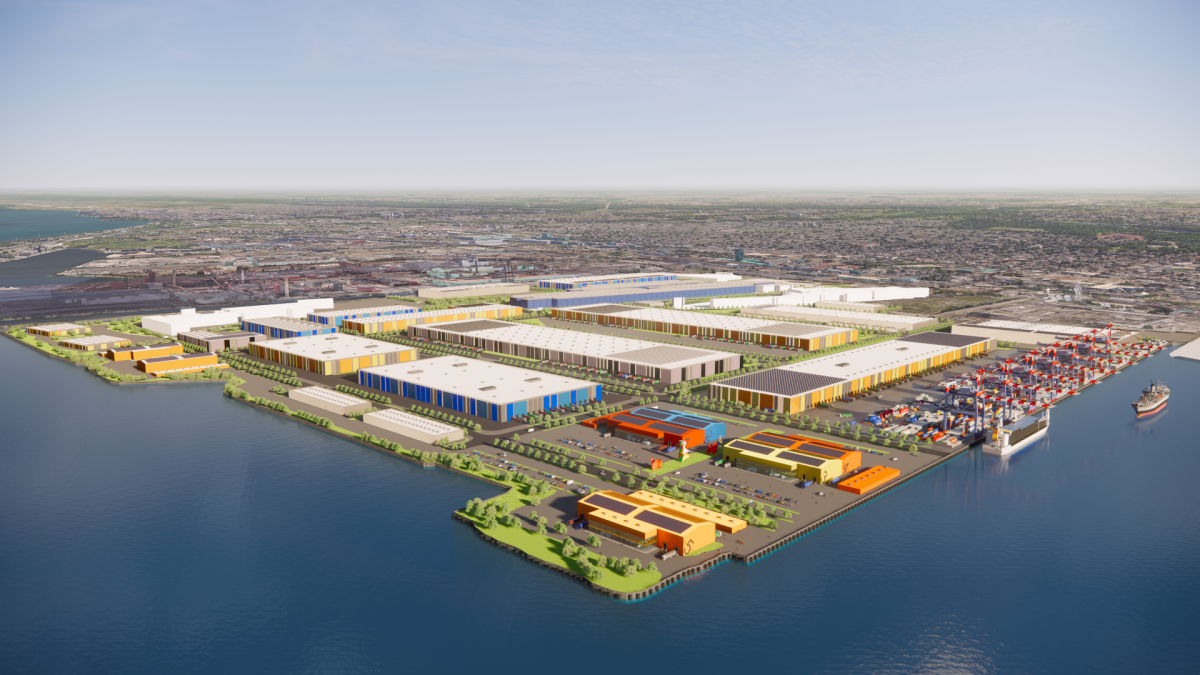
Proposed redevelopment of Stelco:


Hamilton is the closest thing to a rustbelt there is in Ontario, and Niagara isn't far behind. The old city of Hamilton never saw large-scale demolition like in the US, but lost a significant amount of population before finally starting to increase again over the last 5 years. The municipality is amalgamated with the suburbs and never lost population as a whole as a result, but experienced well below average growth compared to the rest of the province for decades.
Reply With Quote
     
     
  #771  
Old Posted Sep 11, 2022, 8:13 PM
Wigs's Avatar
Wigs Wigs is online now
Great White North
 
Join Date: Nov 2003
Location: Niagara Region
Posts: 16,363
Buffalo's Albright Knox art gallery is now transforming into AKG--Albright Knox Gundlach art museum with a huge ~$170M expansion designed by architect Shohei Shigematsu of renowned firm OMA.

The expansion was possible due to a huge fundraising effort, with the largest individual contribution of $60M+ from ex-pat Buffalonian and "bond king Billionaire" Jeffrey Gundlach, who now lives in LA.

Video Link


https://www.oma.com/projects/buffalo-albright-knox-gundlach-art-museum

AKG has a huge public art initiative with many murals having been commissioned and created in the past decade. Helping revitalize Buffalo with public art and engaging the youth of Western NY to be creative.
Video Link


For anyone interested in art, here's a link to the highlights of their permanent collection
AKG collection
Reply With Quote
     
     
  #772  
Old Posted Sep 11, 2022, 8:17 PM
dc_denizen's Avatar
dc_denizen dc_denizen is offline
Selfie-stick vendor
 
Join Date: Oct 2005
Location: New York Suburbs
Posts: 10,990
isnt the canadian rustbelt basically the maritimes provinces
__________________
Joined the bus on the 33rd seat
By the doo-doo room with the reek replete
Reply With Quote
     
     
  #773  
Old Posted Sep 11, 2022, 8:50 PM
Wigs's Avatar
Wigs Wigs is online now
Great White North
 
Join Date: Nov 2003
Location: Niagara Region
Posts: 16,363
Quote:
Originally Posted by dc_denizen View Post
isnt the canadian rustbelt basically the maritimes provinces
Newfoundland has offshore oil and Nova Scotia has Halifax booming so no longer.
New Brunswick and PEI both appear to be doing fine.

Hamilton and Niagara are two of some of the only regions in Canada to suffer from American style thousands upon thousands of manufacturing jobs lost.

Hamilton lost almost 35,000 manufacturing jobs in the 2000s
https://www.cbc.ca/news/canada/hamilton/...ne-of-hamilton-s-manufacturing-1.2350633

In Niagara, Welland aka mini Hamilton (for it's once industrial prowess) lost 6,000 manufacturing jobs between 1991-2001 alone when it's population was only 48,000. Now Welland is about 57k, and a retiree and bedroom community for elsewhere in Niagara and increasingly the Greater Toronto Hamilton Area.
St Catharines, Thorold, and Niagara Falls also lost thousands of manufacturing jobs. GM had 2 plants in St. Catharines and used to employ 10,000 plus now reduced to 1 facility employing less than 2,000.

Last edited by Wigs; Sep 11, 2022 at 9:16 PM.
Reply With Quote
     
     
  #774  
Old Posted Sep 11, 2022, 9:08 PM
llamaorama llamaorama is offline
Unicorn Wizard!
 
Join Date: Oct 2008
Posts: 4,415
If you took an expansive definition of rust belt, wouldn't most of the deep south that is not experiencing sunbelt type growth also qualify?

In the mid-20th century a lot of industries like textiles, shoes, appliances, and furniture went to the South first before offshoring. I think much of this industry was rural or in towns or smaller cities therefore there are few good examples of struggling urban cities fitting the same category as Detroit or Cleveland.

I think here in Texas that around Waco and Bryan it's kind of post-industrial but this is not obvious and those cities are doing well for other reasons.

Like, the Brazos Valley was a civil war era cotton belt and tons of poor folk who were descendants of those farm workers, they would work for low wages. In the 20th century they had clothing and a shoe factory in Bryan and in Waco they had a big tire factory and railroad yard. Hearne had a porcelain toilet factory and steel fabrication and Marlin had a variety of things. All that stuff is mostly gone now. Marlin is a ghost town, Hearne is a run down speed trap of a town, etc.

Waco is pretty rough, especially north of the Brazos in Bellmead. It has modern industry and jobs now in industrial parks along I-35 but I still think culturally it's like the rust belt in the sense that a very large portion of the city is a street grid of little decaying houses in neighborhoods that are majority black or latino, and the local schools are terrible, there is crime issues, and the local government is meh.

Considering how commonly repeated this is around the US, I wonder if the term Rust Belt is even useful anymore. Genuine heavy industry like steel and automotive bottomed out and has come back. There are massive entirely modern steel mills all over the US, there are new auto plants, there are semiconductor fabs and pharmaceutical plants that are just as sprawling and complicated as an old fashioned industrial complex in Pittsburgh was. The people who work in these industries are an entirely different breed, they have associate's degrees or training certificates and make $60k, not like the temp labor that glued boots together for $2/hr in Macon or Florence or something back in 1970. What hasn't come back is the less 'exciting' industry that used to be absolutely everywhere producing consumer goods you'd have in your house.
Reply With Quote
     
     
  #775  
Old Posted Sep 11, 2022, 9:28 PM
Wigs's Avatar
Wigs Wigs is online now
Great White North
 
Join Date: Nov 2003
Location: Niagara Region
Posts: 16,363
Damn, the South really screwed people over working manufacturing jobs for low, almost slave wages.

In Ontario by comparison, I had friends whose Dads with HS education made great hourly wages and would work double and triple overtime shifts to afford a cottage, boat, pool, nice vacations or a combination of "nice things". Real estate values were low and home ownership rates were high. Aside from working in a dirty plant they were Living the Canadian Dream if you will.
Reply With Quote
     
     
  #776  
Old Posted Sep 11, 2022, 9:31 PM
DCReid DCReid is online now
Registered User
 
Join Date: Jun 2012
Posts: 1,527
Quote:
Originally Posted by llamaorama View Post
If you took an expansive definition of rust belt, wouldn't most of the deep south that is not experiencing sunbelt type growth also qualify?

In the mid-20th century a lot of industries like textiles, shoes, appliances, and furniture went to the South first before offshoring. I think much of this industry was rural or in towns or smaller cities therefore there are few good examples of struggling urban cities fitting the same category as Detroit or Cleveland.

I think here in Texas that around Waco and Bryan it's kind of post-industrial but this is not obvious and those cities are doing well for other reasons.

Like, the Brazos Valley was a civil war era cotton belt and tons of poor folk who were descendants of those farm workers, they would work for low wages. In the 20th century they had clothing and a shoe factory in Bryan and in Waco they had a big tire factory and railroad yard. Hearne had a porcelain toilet factory and steel fabrication and Marlin had a variety of things. All that stuff is mostly gone now. Marlin is a ghost town, Hearne is a run down speed trap of a town, etc.

Waco is pretty rough, especially north of the Brazos in Bellmead. It has modern industry and jobs now in industrial parks along I-35 but I still think culturally it's like the rust belt in the sense that a very large portion of the city is a street grid of little decaying houses in neighborhoods that are majority black or latino, and the local schools are terrible, there is crime issues, and the local government is meh.

Considering how commonly repeated this is around the US, I wonder if the term Rust Belt is even useful anymore. Genuine heavy industry like steel and automotive bottomed out and has come back. There are massive entirely modern steel mills all over the US, there are new auto plants, there are semiconductor fabs and pharmaceutical plants that are just as sprawling and complicated as an old fashioned industrial complex in Pittsburgh was. The people who work in these industries are an entirely different breed, they have associate's degrees or training certificates and make $60k, not like the temp labor that glued boots together for $2/hr in Macon or Florence or something back in 1970. What hasn't come back is the less 'exciting' industry that used to be absolutely everywhere producing consumer goods you'd have in your house.
The only southern 'Rust belt' city I can think of would be Birmingham, which had steel plants like Pittsburgh, and experienced a stagnation due to steel mills closing. But the southern cities did not really attract immigrants like the northern rust belt cities and African-Americans left many of the states because of Jim Crow.
Reply With Quote
     
     
  #777  
Old Posted Sep 11, 2022, 9:36 PM
chris08876's Avatar
chris08876 chris08876 is offline
NYC/NJ/Miami-Dade
 
Join Date: Jul 2013
Location: Great State of NJ
Posts: 49,381
Quote:
Originally Posted by Wigs View Post
Damn, the South really screwed people over working manufacturing jobs for low, almost slave wages.

In Ontario by comparison, I had friends whose Dads with HS education made great hourly wages and would work double and triple overtime shifts to afford a cottage, boat, pool, nice vacations or a combination of "nice things". Real estate values were low and home ownership rates were high. Aside from working in a dirty plant they were Living the Canadian Dream if you will.
Hopefully the last three years will ignite the return of manufacturing jobs which in turn may help many areas. A matter of long term stability.
Reply With Quote
     
     
  #778  
Old Posted Sep 11, 2022, 9:57 PM
benp's Avatar
benp benp is offline
Registered User
 
Join Date: Mar 2006
Location: Buffalo, NY
Posts: 795
Quote:
Originally Posted by DCReid View Post
The only southern 'Rust belt' city I can think of would be Birmingham, which had steel plants like Pittsburgh, and experienced a stagnation due to steel mills closing. But the southern cities did not really attract immigrants like the northern rust belt cities and African-Americans left many of the states because of Jim Crow.
Houston in the 1980s mimicked many of the losses and issues associated with the Rust Belt, following the collapse of US drilling when oil prices crashed. Bethlehem Steel, TESCO (Texas Electric Steel Co), Beaumont Well Works, Gray Tool, and many other companies involved in castings, forgings, rolling mills, manufacturing, etc closed down forever. Many parts of Houston held abandoned factories, subdivisions were abandoned, and population in Houston fell for several years in a row. Unlike Birmingham, Houston began a recovery by the early 1990s, as oil prices rose and Houston diversified its employment, and also began a greater role in O&G pipeline development and management, refining, shipping, and international finance and engineering as many companies merged and consolidated in Houston from other cities.

For those not familiar, most of the East and Southeast Houston area is very industrial with large concentrations of poor and working-class residents, and has many similarities to similar norther Rust Belt communities. These are not areas that visitors often see, or even know about, but make up at least half of the city.
Reply With Quote
     
     
  #779  
Old Posted Sep 11, 2022, 10:05 PM
Wigs's Avatar
Wigs Wigs is online now
Great White North
 
Join Date: Nov 2003
Location: Niagara Region
Posts: 16,363
Quote:
Originally Posted by chris08876 View Post
Hopefully the last three years will ignite the return of manufacturing jobs which in turn may help many areas. A matter of long term stability.
I hope North America can be the advanced manufacturing hub of high value goods.

I'm fine with Asia/SE Asia making low value goods like shoes, cheap electronics, lesser quality "Walmart goods" if you will
Reply With Quote
     
     
  #780  
Old Posted Sep 11, 2022, 10:09 PM
Wigs's Avatar
Wigs Wigs is online now
Great White North
 
Join Date: Nov 2003
Location: Niagara Region
Posts: 16,363
Quote:
Originally Posted by Buckeye Native 001 View Post
It's a completely different core today than when I grew up (left in 1996) and even compared to 15 years ago.

At least from what I've seen and observed, there's a definite improvement in both built environment and mentality about the city and region's future. I'm not surprised it finally grew after the 2020 census.

I'm sure what I'm describing is applicable to Detroit, Cleveland, Buffalo, Pittsburgh and other cities that fell on hard times during the last 50-60 years.
It's great to hear! Cincinnati looks so interesting (it fascinates me like Pittsburgh) I hope to visit maybe next summer.

That's rough to hear about the classist/racism but I can assume that in Buffalo the suburban Western NY schools acted the same in regards to trips to the inner city during that time period

Hopefully all the declining Midwest/interior Northeast cities can experience revival and population gain. They built North America.
Reply With Quote
     
     
This discussion thread continues

Use the page links to the lower-right to go to the next page for additional posts
 
 
Reply

Go Back   SkyscraperPage Forum > Discussion Forums > City Discussions
Forum Jump


Forum Jump


All times are GMT. The time now is 1:29 AM.


Powered by vBulletin® Version 3.8.7
Copyright ©2000 - 2026, vBulletin Solutions, Inc.