HomeDiagramsDatabaseMapsForum About
     

Go Back   SkyscraperPage Forum > Regional Sections > Canada > Alberta & British Columbia > Vancouver > Urban, Urban Design & Heritage Issues


Reply

 
Thread Tools Display Modes
     
     
  #1061  
Old Posted Oct 5, 2021, 2:21 AM
Changing City's Avatar
Changing City Changing City is online now
Registered User
 
Join Date: Nov 2016
Posts: 8,187
Quote:
Originally Posted by WALKIEBRO View Post
This is such flawed logic. You really think, because the dwellings in the high rises aren't the cheapest, they don't help with affordability. The high rises increase the affordability of all the other houses. People that can afford high prices buy into the high rises, thus allowing people with less money to afford the low rises. If the high rises didn't exist, there would be more competition for the low rises and they would cost more.

Even if the new units coming to market aren't instantly considered affordable, they still help with affordability by increasing supply. Also as they age over time, they become less desirable, increasing their relative affordability.
Highrise towers are more expensive to build than lowrise, and concrete are more expensive than woodframe. You get more units per hectare with a tower than you do with a lowrise, but the market then prices that into the land value so it goes up to reflect that higher density. In the City of Vancouver there is existing zoning already in place for tens of thousands of units that the market could build, (and locations where they could rezone to allow more under current policy). Obviously in the rest of the Lower Mainland there are even more. There are thousands of approved dwellings not being built today that the developers could start construction tomorrow, if they chose.

The market times construction to meet demand - and tries not to overbuild. That means sometimes, with the lag time between start, and completion, they get the timing wrong. Demand was seen to drop off a couple of years ago, and housing starts slowed. Right now there are already as many housing starts so far this year as in the whole of last year in the City of Vancouver, but there are thousands more that could have been started that developers have sat on. There are condo projects (including towers) that have been stalled in the Downtown and the West End and rental projects stalled on the east side and Downtown, for example.

Adding a few more theoretical units in the few spots left to develop housing Downtown that are affected by viewcones would do virtually nothing to the overall housing market in the Lower Mainland, and nothing whatsoever to improve affordability.
__________________
Contemporary Vancouver development blog, https://changingcitybook.wordpress.com/ Then and now Vancouver blog https://changingvancouver.wordpress.com/
Reply With Quote
     
     
  #1062  
Old Posted Oct 5, 2021, 3:39 PM
FarmerHaight's Avatar
FarmerHaight FarmerHaight is offline
Peddling to progress
 
Join Date: Jul 2019
Location: Vancouver's West End
Posts: 1,631
Quote:
Originally Posted by WALKIEBRO View Post
This is such flawed logic. You really think, because the dwellings in the high rises aren't the cheapest, they don't help with affordability. The high rises increase the affordability of all the other houses. People that can afford high prices buy into the high rises, thus allowing people with less money to afford the low rises. If the high rises didn't exist, there would be more competition for the low rises and they would cost more.
People that purchase $10 million penthouse condos are not vacating humble single family homes that the average Vancouverite can afford. They are likely coming from other parts of Canada or the world, or purchasing investment properties and vacation homes.
__________________
“Nothing compares to the simple pleasure of riding a bike” – John F Kennedy
Reply With Quote
     
     
  #1063  
Old Posted Oct 5, 2021, 3:44 PM
rofina rofina is offline
Registered User
 
Join Date: Nov 2013
Posts: 5,149
Quote:
Originally Posted by Changing City View Post
Highrise towers are more expensive to build than lowrise, and concrete are more expensive than woodframe. You get more units per hectare with a tower than you do with a lowrise, but the market then prices that into the land value so it goes up to reflect that higher density. In the City of Vancouver there is existing zoning already in place for tens of thousands of units that the market could build, (and locations where they could rezone to allow more under current policy). Obviously in the rest of the Lower Mainland there are even more. There are thousands of approved dwellings not being built today that the developers could start construction tomorrow, if they chose.

The market times construction to meet demand - and tries not to overbuild. That means sometimes, with the lag time between start, and completion, they get the timing wrong. Demand was seen to drop off a couple of years ago, and housing starts slowed. Right now there are already as many housing starts so far this year as in the whole of last year in the City of Vancouver, but there are thousands more that could have been started that developers have sat on. There are condo projects (including towers) that have been stalled in the Downtown and the West End and rental projects stalled on the east side and Downtown, for example.

Adding a few more theoretical units in the few spots left to develop housing Downtown that are affected by viewcones would do virtually nothing to the overall housing market in the Lower Mainland, and nothing whatsoever to improve affordability.
You just eloquently presented why the market on its own will never provide enough units to not only satiate demand, but also drive affordability.

There is a relatively small handful of players that can bring a high rise to market in the GVRD.

There is a clear understanding of population growth, and housing starts.

There is precisely zero incentive for builders to overbuild and lower the selling price of the commodity they are selling. Not only that, there is a sufficiently small enough amount of players to coordinate the supply lever to ensure perpetual housing shortages.

Its not by coincidence Canada has the lowest amount of housing units of the G7. https://www.canadianrealestatemagazine.c...using-units-per-capita-in-g7-334653.aspx

The core issue; we all speak like bureaucrats. That's suppose to be a slight to us all.

This is shelter were talking about, if we were a functioning society we would prioritize the levers that can deliver shelter, over imaginary restrictions of our own making.

Reply With Quote
     
     
  #1064  
Old Posted Oct 5, 2021, 4:00 PM
Changing City's Avatar
Changing City Changing City is online now
Registered User
 
Join Date: Nov 2016
Posts: 8,187
Quote:
Originally Posted by rofina View Post
You just eloquently presented why the market on its own will never provide enough units to not only satiate demand, but also drive affordability.

There is a relatively small handful of players that can bring a high rise to market in the GVRD.

There is a clear understanding of population growth, and housing starts.

There is precisely zero incentive for builders to overbuild and lower the selling price of the commodity they are selling. Not only that, there is a sufficiently small enough amount of players to coordinate the supply lever to ensure perpetual housing shortages.

Its not by coincidence Canada has the lowest amount of housing units of the G7. https://www.canadianrealestatemagazine.c...using-units-per-capita-in-g7-334653.aspx

The core issue; we all speak like bureaucrats. That's suppose to be a slight to us all.

This is shelter were talking about, if we were a functioning society we would prioritize the levers that can deliver shelter, over imaginary restrictions of our own making.

Absolutely. As has been discussed here many times, the ability of the individual municipalities to change that situation is limited. The City of Vancouver is incentivizing, levering and sometimes building as many non-market and rental units as it can (and is often criticized here for doing that), and other municipalities have recently started to follow similar policies.

The Province has stepped up its game, and is funding many more units of non-market and low end of market units as well, but not enough to impact affordability in market housing. The Federal government have the most levers to affect affordability through policy in a variety of ways, but their current approach seems likely to maintain or even increase market prices. They are funding a bit more non-market housing and market rental than governments in the 2000s, but again, not enough to reduce prices.
__________________
Contemporary Vancouver development blog, https://changingcitybook.wordpress.com/ Then and now Vancouver blog https://changingvancouver.wordpress.com/
Reply With Quote
     
     
  #1065  
Old Posted Oct 5, 2021, 5:45 PM
Sheba Sheba is online now
Registered User
 
Join Date: Jan 2015
Location: BC
Posts: 4,589
Quote:
Originally Posted by Changing City View Post
The market times construction to meet demand - and tries not to overbuild. That means sometimes, with the lag time between start, and completion, they get the timing wrong. Demand was seen to drop off a couple of years ago, and housing starts slowed. Right now there are already as many housing starts so far this year as in the whole of last year in the City of Vancouver, but there are thousands more that could have been started that developers have sat on. There are condo projects (including towers) that have been stalled in the Downtown and the West End and rental projects stalled on the east side and Downtown, for example.
You just fleshed out what I commented on a few pages ago - "That assumes developers will keep building as much as they can crank out. When their profits start to drop then they start building less so the supply stays constrained - that way they can keep prices high for their captive audience."
Reply With Quote
     
     
  #1066  
Old Posted Oct 5, 2021, 5:53 PM
djmk's Avatar
djmk djmk is offline
victory in near
 
Join Date: Sep 2008
Location: North Vancouver
Posts: 1,783
just to ruffle some feathers, there is a lot of not/under utilized land in the ALR..

And just for conversation sake, we might also not need a bazillion acres of blueberry or cranberry fields.
__________________
i have no idea what's going on
Reply With Quote
     
     
  #1067  
Old Posted Oct 5, 2021, 6:19 PM
seamusmcduff seamusmcduff is online now
Registered User
 
Join Date: Dec 2015
Location: Vancouver
Posts: 643
Quote:
Originally Posted by djmk View Post
just to ruffle some feathers, there is a lot of not/under utilized land in the ALR..

And just for conversation sake, we might also not need a bazillion acres of blueberry or cranberry fields.
That is a feather ruffling idea. In all of BC, only 2% of the land is arable farmland.

The intent of the ALR has never been to make sure the land is being farmed to it's full extent right now, we have a global economy so it's not really essential. But that might not always be the case, and there may be a time in the future where we will need agricultural land within our own provincial/country borders. The point of the ALR is resiliency, so that in the future if things go sideways with treaties, with climate change, with droughts etc. we will have our own landbase to provide food from.

Once you develop land you can't go back, that's why its so important to maintain that base, even if it's being inefficiently used currently.
Reply With Quote
     
     
  #1068  
Old Posted Oct 5, 2021, 6:52 PM
djmk's Avatar
djmk djmk is offline
victory in near
 
Join Date: Sep 2008
Location: North Vancouver
Posts: 1,783
Quote:
Originally Posted by seamusmcduff View Post
That is a feather ruffling idea. In all of BC, only 2% of the land is arable farmland.

The intent of the ALR has never been to make sure the land is being farmed to it's full extent right now, we have a global economy so it's not really essential. But that might not always be the case, and there may be a time in the future where we will need agricultural land within our own provincial/country borders. The point of the ALR is resiliency, so that in the future if things go sideways with treaties, with climate change, with droughts etc. we will have our own landbase to provide food from.

Once you develop land you can't go back, that's why its so important to maintain that base, even if it's being inefficiently used currently.
might be 2% of BC but about 22% of Metro Vancouver. And of this 22%, 50% is not even farmed

http://www.metrovancouver.org/services/regional-planning/agriculture/about/Pages/default.aspx
__________________
i have no idea what's going on
Reply With Quote
     
     
  #1069  
Old Posted Oct 5, 2021, 7:06 PM
seamusmcduff seamusmcduff is online now
Registered User
 
Join Date: Dec 2015
Location: Vancouver
Posts: 643
Quote:
Originally Posted by djmk View Post
might be 2% of BC but about 22% of Metro Vancouver. And of this 22%, 50% is not even farmed

http://www.metrovancouver.org/services/regional-planning/agriculture/about/Pages/default.aspx
And I would say that 22% is pretty important. There are plenty of things you can grow in the lower mainland that you can't literally anywhere else in the entire country.
Reply With Quote
     
     
  #1070  
Old Posted Oct 5, 2021, 7:16 PM
Vin Vin is offline
Registered User
 
Join Date: Sep 2013
Posts: 8,736
Quote:
Originally Posted by FarmerHaight View Post
I can promise you that some of the cheapest dwellings in those cities are low-rise residential, not the 70-floor high rises you are advocating for. I am not against height, but it's laughable that you think tacking an extra 20 floors onto a building will reduce unit prices because of economies of scale. For a market-driven commodity, economies of scale work to increase margins, not decrease prices.

It's obvious you hate Vancouver very much, but there are still people all over the world (not to mention the rest of Canada) who want to move here who are neither retirees nor in search of recreation. Vancouver may not have the financial services sector that Toronto has, but it does have thriving tech, film & tv, and trade sectors. As for affordability, Vancouver and Toronto are Canada's flagship cities. This will naturally drive up housing prices compared to the rest of the country since foreigners and Canadian citizens alike tend to migrate there.


You have a tendency of using general statements and never backing them up. You say things like "That's how other cities in other countries... provide affordable housing to the masses." Yet many cities with a lower standard of living in less desirable countries are more unaffordable than Vancouver. Take a look at these rankings,or these ones. Vancouver may be in the top 100 for cost of living globally, but it is also behind cities in countries like Saudi Arabia, Chad, and Thailand. I don't believe any of those countries are the magnet for immigrants that Canada is. Vienna has been getting praise for its public housing, but it also appears on the cost of living rankings above Vancouver. Get your head out of the sand, there is no shining beacon of light for housing affordability. Every country around the world is throwing ideas against the wall, hoping that something sticks.
Cheap? Yeah, like those built in the 40s right through the 60s. They are ugly and bad housing, period.

Care to share anything of 6 stories built after 2000 that is considered "affordable"?

Those 6 storey condos built along Cambie are some of the country's most expensive strata buildings. They look cheap but yet cost a bomb.

Hate? You make me laugh.
Reply With Quote
     
     
  #1071  
Old Posted Oct 5, 2021, 7:32 PM
whatnext whatnext is offline
Registered User
 
Join Date: Feb 2009
Location: Vancouver
Posts: 27,735
Quote:
Originally Posted by Migrant_Coconut View Post
Again, downtown is expensive because it's downtown - all removing the viewcones does is give us ten more floors of condos for the same price as the ones downstairs. We want to get rid of them because then we get prettier skylines...
No manmade skyline (largely forgettable dreck) is ever going to be prettier than the mountains.
Reply With Quote
     
     
  #1072  
Old Posted Oct 5, 2021, 7:37 PM
Sheba Sheba is online now
Registered User
 
Join Date: Jan 2015
Location: BC
Posts: 4,589
IIRC one of the reasons Houston has recently had massive flooding after storms is because they paved over so much of the area that there's nowhere for the water to drain. At least with the ALR we have open greenspace that works as drains when we get a lot of rain. Sure we could start to convert to permeable pavement but that's going to take a long time and money. Meanwhile have you looked at where the ALR is located - hint it's not in the most desirable locations where everyone is clamouring to live.
Reply With Quote
     
     
  #1073  
Old Posted Oct 5, 2021, 7:37 PM
Vin Vin is offline
Registered User
 
Join Date: Sep 2013
Posts: 8,736
Quote:
Originally Posted by seamusmcduff View Post
And I would say that 22% is pretty important. There are plenty of things you can grow in the lower mainland that you can't literally anywhere else in the entire country.
Agreed. We do need to maintain those arable lands, because they may consititute 22% right now, but given time, especially with global warming, perhaps we need more than that to be more self-sustainable.
Reply With Quote
     
     
  #1074  
Old Posted Oct 5, 2021, 7:37 PM
whatnext whatnext is offline
Registered User
 
Join Date: Feb 2009
Location: Vancouver
Posts: 27,735
Quote:
Originally Posted by djmk View Post
might be 2% of BC but about 22% of Metro Vancouver. And of this 22%, 50% is not even farmed

http://www.metrovancouver.org/services/regional-planning/agriculture/about/Pages/default.aspx
Why isn't more of it farmed? Maybe because of sh!t like this:

https://dailyhive.com/vancouver/richmond-mansion-farmhouse-sale
Reply With Quote
     
     
  #1075  
Old Posted Oct 5, 2021, 7:43 PM
Migrant_Coconut's Avatar
Migrant_Coconut Migrant_Coconut is offline
Registered User
 
Join Date: Oct 2015
Location: Kitsilano/Fairview
Posts: 10,126
Quote:
Originally Posted by Sheba View Post
IIRC one of the reasons Houston has recently had massive flooding after storms is because they paved over so much of the area that there's nowhere for the water to drain. At least with the ALR we have open greenspace that works as drains when we get a lot of rain. Sure we could start to convert to permeable pavement but that's going to take a long time and money. Meanwhile have you looked at where the ALR is located - hint it's not in the most desirable locations where everyone is clamouring to live.
I believe most of the newer parks incorporate drainage and wetland-like landscaping for that exact reason.

Quote:
Originally Posted by whatnext View Post
No manmade skyline (largely forgettable dreck) is ever going to be prettier than the mountains.
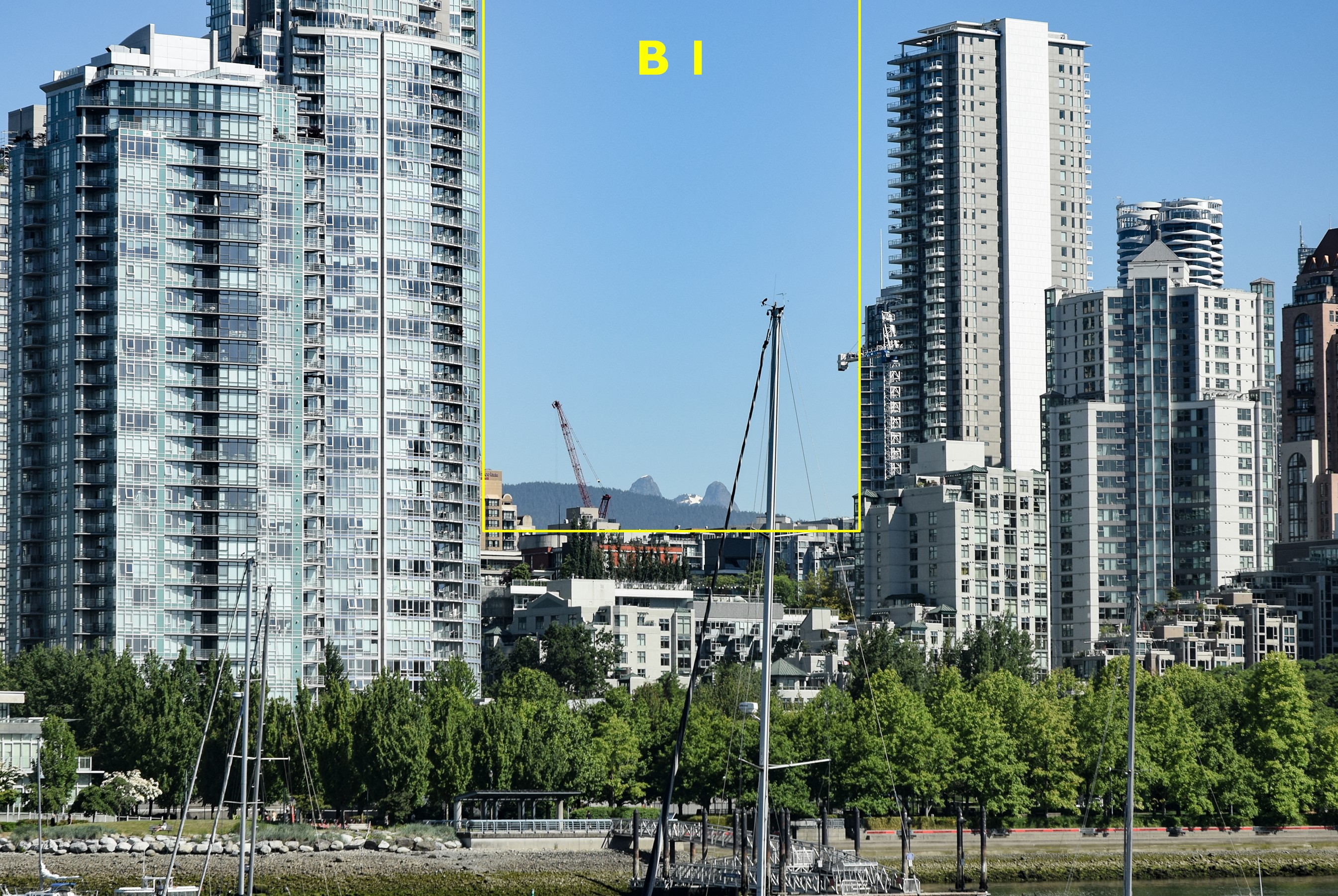
Sure, because this barely-visible slice of the Lions from the seawall isn't forgettable at all.


CoV website
Reply With Quote
     
     
  #1076  
Old Posted Oct 5, 2021, 7:45 PM
whatnext whatnext is offline
Registered User
 
Join Date: Feb 2009
Location: Vancouver
Posts: 27,735
Quote:
Originally Posted by Migrant_Coconut View Post
Sure, because this barely-visible slice of the Lions from the seawall isn't forgettable at all.


CoV website
You're right they never should have allowed those building in the photo in the first place!

The view of the Lions is iconic. But perhaps you feel that way about the McChengs in the photo.
Reply With Quote
     
     
  #1077  
Old Posted Oct 5, 2021, 7:50 PM
Migrant_Coconut's Avatar
Migrant_Coconut Migrant_Coconut is offline
Registered User
 
Join Date: Oct 2015
Location: Kitsilano/Fairview
Posts: 10,126
Quote:
Originally Posted by whatnext View Post
You're right they never should have allowed those building in the photo in the first place!

The view of the Lions is iconic. But perhaps you feel that way about the McChengs in the photo.
The Lions are barely visible from the seawall (if they're not blending in with the clouds) - McChengs or not, you're effectively taking up a sizable chunk of airspace for the sake of a blue hill. Give me Cypress if you're going to hedge-trim downtown.
Reply With Quote
     
     
  #1078  
Old Posted Oct 5, 2021, 8:37 PM
FarmerHaight's Avatar
FarmerHaight FarmerHaight is offline
Peddling to progress
 
Join Date: Jul 2019
Location: Vancouver's West End
Posts: 1,631
Quote:
Originally Posted by Vin View Post
Care to share anything of 6 stories built after 2000 that is considered "affordable"?

Those 6 storey condos built along Cambie are some of the country's most expensive strata buildings. They look cheap but yet cost a bomb.
Care to share anything of more than 6 stories that is "affordable" (market-rate affordable, not subsidized). We can play this game all day long...

The best comparison I can do is Cambie Gardens (28 floors, 1 bedroom, 1 bath, 570 sq. ft.) starting at $729k, while Rowen W47 (two-story townhomes with a walk-out suite on the ground level, 1 bedroom, 1 bath, 580 sq. ft.) starting at $695k. Both are premium new builds in the same location.

Quote:
Originally Posted by Vin View Post
Hate? You make me laugh.
You refer to Vancouver as a backwater while people from all over the world can't wait to move or vacation here, and you lust after the transportation options and housing policies of other cities when they haven't proven any more effective than our own.
__________________
“Nothing compares to the simple pleasure of riding a bike” – John F Kennedy
Reply With Quote
     
     
  #1079  
Old Posted Oct 7, 2021, 4:15 AM
EastVanMark EastVanMark is offline
Registered User
 
Join Date: Oct 2006
Posts: 1,610
Quote:
Originally Posted by djmk View Post
just to ruffle some feathers, there is a lot of not/under utilized land in the ALR..

And just for conversation sake, we might also not need a bazillion acres of blueberry or cranberry fields.
Careful.......the Karens might take offence....
Reply With Quote
     
     
  #1080  
Old Posted Oct 7, 2021, 5:19 AM
EastVanMark EastVanMark is offline
Registered User
 
Join Date: Oct 2006
Posts: 1,610
Quote:
Originally Posted by FarmerHaight View Post
Then pick some other cities from those rankings I provided with similar populations to Vancouver: Beirut, Dakar, Copenhagan, and Stockholm. Vancouver is more affordable and provides a higher quality of life than all of them.

I think you ignored my point: there is no silver bullet for housing affordability. If there was, there would be dozens of cities with large populations that had solved this problem. Vin stated that the right policies can make housing affordable, and I don't believe it is that simple.
Oh Jeez, now we're comparing cities in other regions in the world with much different economic systems. Vancouver more affordable than Beirut? Dakar? Surely, you jest. You can buy a nice home in Beirut for $200K. How far is getting you in Vancouver? Again its an apples to oranges comparison.

Are you seriously making a broad statement that Vancouver has a higher quality of life than Copenhagen? Cause this ranking begs to differ.

https://www.numbeo.com/quality-of-life/rankings.jsp

or Dakar being LESS affordable than Vancouver

https://www.numbeo.com/cost-of-living/rankings.jsp


You always need to take these rankings with a heaping spoonful of salt. They vary from source to source. For example, in the above source, Buffalo ranks higher than Vancouver for quality of life. Now anyone who has ever stepped foot in that city would know that is ridiculous.
Reply With Quote
     
     
This discussion thread continues

Use the page links to the lower-right to go to the next page for additional posts
 
 
Reply

Go Back   SkyscraperPage Forum > Regional Sections > Canada > Alberta & British Columbia > Vancouver > Urban, Urban Design & Heritage Issues
Forum Jump


Forum Jump


All times are GMT. The time now is 6:16 PM.


Powered by vBulletin® Version 3.8.7
Copyright ©2000 - 2026, vBulletin Solutions, Inc.