HomeDiagramsDatabaseMapsForum About
     

Go Back   SkyscraperPage Forum > Discussion Forums > City Discussions


Reply

 
Thread Tools Display Modes
     
     
  #541  
Old Posted Feb 10, 2018, 1:39 PM
north 42's Avatar
north 42 north 42 is online now
Registered User
 
Join Date: Apr 2011
Location: Windsor, Ontario/Colchester, Ontario
Posts: 5,935
Quote:
Originally Posted by mrnyc View Post
although they both share the car culture, otherwise cle has more in common culturally with buffalo and pitts than detroit. even toledo is very distinct from detroit.
What? Toledo is like a mini Detroit, has a very strong automotive manufacturing sector, and is in Detroit’s sphere of influence. It has more in common with Detroit than it does with any other Ohio City.
__________________
Windsor Ontario, Canada's southern most city!
Reply With Quote
     
     
  #542  
Old Posted Feb 10, 2018, 2:11 PM
Crawford Crawford is offline
Registered User
 
Join Date: Nov 2003
Location: Brooklyn, NYC/Polanco, DF
Posts: 34,903
Quote:
Originally Posted by mrnyc View Post
although they both share the car culture, otherwise cle has more in common culturally with buffalo and pitts than detroit. even toledo is very distinct from detroit.
Toledo is basically a Detroit mini-me. I can't think of any cultural differences. It's more or less, the same metro.
Reply With Quote
     
     
  #543  
Old Posted Feb 10, 2018, 5:15 PM
Buckeye Native 001 Buckeye Native 001 is offline
E pluribus unum
 
Join Date: Aug 2003
Location: Arizona
Posts: 30,127
I still can't believe Ohio and Michigan almost went to war over Toledo. If anything, Michigan was the ultimate victor in that fracas. Not only are they not stuck with Toledo, they got the UP from Wisconsin
Reply With Quote
     
     
  #544  
Old Posted Feb 10, 2018, 5:16 PM
Docere Docere is online now
Registered User
 
Join Date: Jul 2014
Posts: 9,109
I haven't been there, but I suspect Toledo is more similar to Detroit than Cleveland.
Reply With Quote
     
     
  #545  
Old Posted Feb 10, 2018, 8:17 PM
north 42's Avatar
north 42 north 42 is online now
Registered User
 
Join Date: Apr 2011
Location: Windsor, Ontario/Colchester, Ontario
Posts: 5,935
Quote:
Originally Posted by Docere View Post
I haven't been there, but I suspect Toledo is more similar to Detroit than Cleveland.
It is!
__________________
Windsor Ontario, Canada's southern most city!
Reply With Quote
     
     
  #546  
Old Posted Feb 11, 2018, 1:03 AM
pj3000's Avatar
pj3000 pj3000 is online now
Registered User
 
Join Date: Jun 2005
Location: Pittsburgh & Miami
Posts: 7,951
To me, Cleveland feels like it could be in PA or NY. Toledo doesn't.
Reply With Quote
     
     
  #547  
Old Posted Feb 11, 2018, 2:01 AM
Doady's Avatar
Doady Doady is offline
Registered User
 
Join Date: Apr 2004
Posts: 5,166
I don't think Toronto is that similar to other Great Lakes cities. Keep in mind, for most Canada's history, Toronto was second largest, Montreal was #1. In 1941, Toronto CMA had less population than the Buffalo MSA. Buffalo has a larger inner city than Toronto.

Toronto is just a much newer city compared to the rest of the Great Lakes. The historic inner city is very small compared to the car-oriented post-war suburbia surrounding it. So it is more like a Sun Belt city. But with the slab towers everywhere, maybe it is more akin to Eastern Europe.
Reply With Quote
     
     
  #548  
Old Posted Feb 11, 2018, 2:24 AM
Docere Docere is online now
Registered User
 
Join Date: Jul 2014
Posts: 9,109
Quote:
Originally Posted by Doady View Post
Buffalo has a larger inner city than Toronto.
No it doesn't. Toronto surpassed Buffalo in population in the 1920s, not after WWII. In addition to the old city of Toronto, the old borough of York and about half of East York are mostly pre-WWII as well.

Toronto's growth trajectory is more akin to Washington DC than Phoenix.
Reply With Quote
     
     
  #549  
Old Posted Feb 11, 2018, 5:37 AM
Doady's Avatar
Doady Doady is offline
Registered User
 
Join Date: Apr 2004
Posts: 5,166
Quote:
Originally Posted by Docere View Post
No it doesn't. Toronto surpassed Buffalo in population in the 1920s, not after WWII. In addition to the old city of Toronto, the old borough of York and about half of East York are mostly pre-WWII as well.
I compared CMA to MSA, so why bring up city proper numbers and then mention York and East York as well? If CMA and MSA doesn't matter then York and East York don't matter either.

Toronto CMA had population of 909,928 in 1941, Buffalo MSA had population 959,487 in 1940. Pre-war Buffalo is larger than pre-war Toronto. Same with pre-war Chicago, Detroit and Cleveland. Chicago metropolitan area had over 5 million people in 1940, Detroit 2,544,287 and Cleveland 1,432,124 in 1940.

Anyways, my point was actually about relative size. But by both relative and absolute measures, the size of pre-war Toronto is smaller compared to those other places.


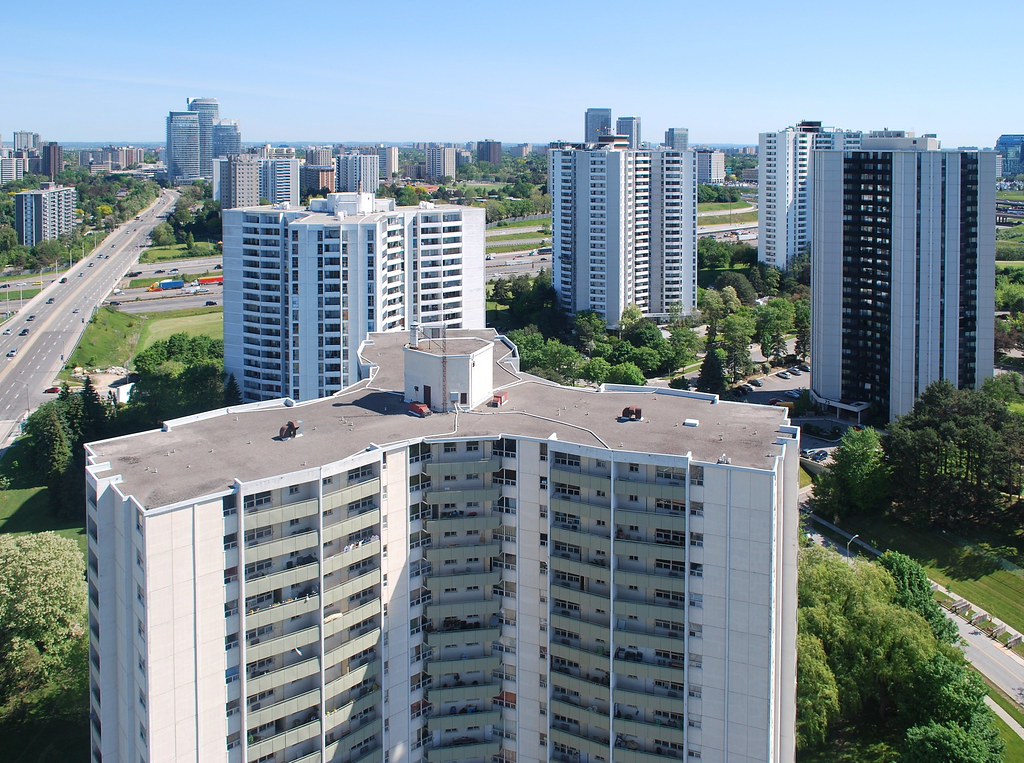
Argento by Marcanadian, on Flickr

Canada's Chicago? This is what most of the City of Toronto proper really looks like. 50s/60/70s suburbia with lots of slab towers. Toronto is in a different country and boomed in a very different era compared to those other cities, so maybe there is not that much similarity.
Reply With Quote
     
     
  #550  
Old Posted Feb 11, 2018, 6:10 AM
Docere Docere is online now
Registered User
 
Join Date: Jul 2014
Posts: 9,109
Quote:
Originally Posted by Doady View Post
I compared CMA to MSA, so why bring up city proper numbers and then mention York and East York as well? If CMA and MSA doesn't matter then York and East York don't matter either.

Toronto CMA had population of 909,928 in 1941, Buffalo MSA had population 959,487 in 1940. Pre-war Buffalo is larger than pre-war Toronto. Same with pre-war Chicago, Detroit and Cleveland. Chicago metropolitan area had over 5 million people in 1940, Detroit 2,544,287 and Cleveland 1,432,124 in 1940.
Are today's CMA/MSA definitions relevant for measuring the urbanized area 75 years ago? Your 909,928 figure is just today's City of Toronto - there were no CMAs then). Meanwhile, you're include all of Erie and Niagara counties for Buffalo, so this isn't really an apples comparison.

The City of Toronto had a population of 667,000 and Buffalo had 576,000 ca. 1940. York Township (pop. 81,000) was clearly part of the contiguous urbanized area then. And if you include Forest Hill, Leaside, East York, Swansea, Weston and the lakeshore suburbs of Mimico, New Toronto and Long Branch, you already have an urbanized population of 843,000, which is larger than Erie County (pop. 798,000 not all of which was the built up urbanized area yet).

You initially stated that pre-war Buffalo is bigger than pre-war Toronto. Yet you're including places like Niagara Falls and Lockport in the population figure you cite as "evidence" for Buffalo being bigger - they are not now and were certainly not then part of "inner city Buffalo."

Quote:
Anyways, my point was actually about relative size. But by both relative and absolute measures, the size of pre-war Toronto is smaller compared to those other places.
OK but it's not some city that just popped up after WWII. It's certainly moved up the ranks but it was already a pretty major city in the early 20th century. In 1940 the City of Toronto's population was similar to that of Pittsburgh and Washington DC. Was DC not a "major city" in 1940 in your opinion? It grew rapidly after WWII and has a lot of new suburbia too.


Last edited by Docere; Feb 11, 2018 at 10:07 AM.
Reply With Quote
     
     
  #551  
Old Posted Feb 11, 2018, 6:18 AM
The North One's Avatar
The North One The North One is online now
Registered User
 
Join Date: Sep 2009
Posts: 5,909
Quote:
Originally Posted by Doady View Post
I don't think Toronto is that similar to other Great Lakes cities. Keep in mind, for most Canada's history, Toronto was second largest, Montreal was #1. In 1941, Toronto CMA had less population than the Buffalo MSA. Buffalo has a larger inner city than Toronto.

Toronto is just a much newer city compared to the rest of the Great Lakes. The historic inner city is very small compared to the car-oriented post-war suburbia surrounding it. So it is more like a Sun Belt city. But with the slab towers everywhere, maybe it is more akin to Eastern Europe.
surprised you would admit this.
__________________
Spawn of questionable parentage!
Reply With Quote
     
     
  #552  
Old Posted Feb 11, 2018, 7:06 AM
Docere Docere is online now
Registered User
 
Join Date: Jul 2014
Posts: 9,109
There's nothing magic about "post-1945" either. An area like Lawrence Manor/Lawrence Heights (built up in the 1950s) or the Etobicoke lakeshore (initially built up in the 1920s but continued to fill in the 1950s) is less "car-oriented" than most of Detroit for example (whether from the interwar or immediate postwar era).
Reply With Quote
     
     
  #553  
Old Posted Feb 11, 2018, 7:23 AM
Capsicum's Avatar
Capsicum Capsicum is offline
Registered User
 
Join Date: Sep 2017
Location: Western Hemisphere
Posts: 2,489
Quote:
Originally Posted by Doady View Post

Argento by Marcanadian, on Flickr

Canada's Chicago? This is what most of the City of Toronto proper really looks like. 50s/60/70s suburbia with lots of slab towers. Toronto is in a different country and boomed in a very different era compared to those other cities, so maybe there is not that much similarity.
Maybe it's just me being tired of winter scenery, but the way that photo of Toronto (North York, I recognize the area) is shot, with its bright whitish apartment blocks in the sun, almost makes it look Miami-like.
Reply With Quote
     
     
  #554  
Old Posted Feb 11, 2018, 4:07 PM
Crawford Crawford is offline
Registered User
 
Join Date: Nov 2003
Location: Brooklyn, NYC/Polanco, DF
Posts: 34,903
Quote:
Originally Posted by Capsicum View Post
Maybe it's just me being tired of winter scenery, but the way that photo of Toronto (North York, I recognize the area) is shot, with its bright whitish apartment blocks in the sun, almost makes it look Miami-like.
Looks more like suburban Belgrade or Prague. It's kinda amazing that two very similar first world countries developed such different suburban housing patterns in the postwar era.
Reply With Quote
     
     
  #555  
Old Posted Feb 11, 2018, 5:05 PM
The North One's Avatar
The North One The North One is online now
Registered User
 
Join Date: Sep 2009
Posts: 5,909
Quote:
Originally Posted by Crawford View Post
Looks more like suburban Belgrade or Prague. It's kinda amazing that two very similar first world countries developed such different suburban housing patterns in the postwar era.
I mean that's obviously a chosen example of a Toronto suburb. Canadian metros are filled with detached home suburbs, the commie blocks are usually just centralized around main arteries, it's not that different. You can find commie blocks in every medium to large US metro as well. Canadian cities might have more, but that doesn't make them significantly different.
__________________
Spawn of questionable parentage!
Reply With Quote
     
     
  #556  
Old Posted Feb 11, 2018, 5:19 PM
dc_denizen's Avatar
dc_denizen dc_denizen is offline
Selfie-stick vendor
 
Join Date: Oct 2005
Location: New York Suburbs
Posts: 10,990
suburban Toronto looked like suburban Detroit more than suburban DC to me (with some judicious sprinkling of co-op city style commieblocks).

DC suburbs are more cul-de-sac-ish, more wooded, more haphazard, more like Atlanta.

I mean look at how similar the overall plan is:

Detroit vs Toronto
__________________
Joined the bus on the 33rd seat
By the doo-doo room with the reek replete
Reply With Quote
     
     
  #557  
Old Posted Feb 11, 2018, 5:26 PM
Crawford Crawford is offline
Registered User
 
Join Date: Nov 2003
Location: Brooklyn, NYC/Polanco, DF
Posts: 34,903
Quote:
Originally Posted by dc_denizen View Post
suburban Toronto looked like suburban Detroit more than suburban DC to me (with some judicious sprinkling of co-op city style commieblocks).
The non-commieblock middle class postwar parts of suburban Toronto look like Macomb County, MI. The newer sprawl looks totally different, but the 1950's-1970's stuff looks basically the same as, say, Sterling Heights, MI.

DC postwar sprawl looks different, with the bungalow styles in the working class areas, and colonials in the upper middle areas, plus the hills, windy streets and heavier tree coverage.
Reply With Quote
     
     
  #558  
Old Posted Feb 11, 2018, 6:02 PM
softee's Avatar
softee softee is offline
Aimless Wanderer
 
Join Date: Jan 2003
Location: Downtown Toronto
Posts: 3,434
Quote:
Originally Posted by Doady View Post
Buffalo has a larger inner city than Toronto.

Toronto is just a much newer city compared to the rest of the Great Lakes. The historic inner city is very small compared to the car-oriented post-war suburbia surrounding it. So it is more like a Sun Belt city. But with the slab towers everywhere, maybe it is more akin to Eastern Europe.
No, pre-war Toronto and surrounding contiguous areas had a higher population, greater population density, and covered more square miles than pre-war Buffalo by 1940. Not to mention that now Toronto's inner city is still intact while much of Buffalo's pre-war urban fabric has been lost to decades of blight and depopulation, so Buffalo's current inner city is now far less substantial than Toronto's.

The fact that Toronto's pre-war urban fabric is small in area when compared to the surrounding postwar suburban development just means that the Toronto metro area grew extremely rapidly in the post war era, and continues to do so.
__________________
Public transit is the lifeblood of every healthy city.
Reply With Quote
     
     
  #559  
Old Posted Feb 11, 2018, 6:19 PM
softee's Avatar
softee softee is offline
Aimless Wanderer
 
Join Date: Jan 2003
Location: Downtown Toronto
Posts: 3,434
Quote:
Originally Posted by The North One;8081524?
You can find commie blocks in every medium to large US metro as well. Canadian cities might have more, but that doesn't make them significantly different.
Toronto in particular has far, far more than just about any other American metro (thousands of them), they are common throughout the city proper and the outer suburbs. Only NYC really compares with its huge clusters of tower blocks throughout the outer boroughs. Co-op city in the Bronx is a good example.
__________________
Public transit is the lifeblood of every healthy city.
Reply With Quote
     
     
  #560  
Old Posted Feb 11, 2018, 6:30 PM
Crawford Crawford is offline
Registered User
 
Join Date: Nov 2003
Location: Brooklyn, NYC/Polanco, DF
Posts: 34,903
Re. Toronto and Buffalo historical populations, there were around 960k in Buffalo MSA in 1940 Census, and 900k in Toronto CMA in 1941 Census. So it's probable that Buffalo was larger than Toronto during WW2.

Does this mean Buffalo had a larger core? Possibly. I'm not sure if prewar metro population is an exact proxy for prewar core. In any case, the cities had similar populations and probably similar-sized cores. Buffalo likely had a grander core, given the differences between U.S. and Canadian cities back then.

https://en.wikipedia.org/wiki/Buffalo%E2%80%93Niagara_Falls_metropolitan_area

https://en.wikipedia.org/wiki/Demographics_of_Toronto
Reply With Quote
     
     
This discussion thread continues

Use the page links to the lower-right to go to the next page for additional posts
 
 
Reply

Go Back   SkyscraperPage Forum > Discussion Forums > City Discussions
Forum Jump


Forum Jump


All times are GMT. The time now is 10:33 PM.


Powered by vBulletin® Version 3.8.7
Copyright ©2000 - 2026, vBulletin Solutions, Inc.