Quote:
Originally Posted by jubguy3

leave
|
Quote:
Originally Posted by stayinginformed
He has left before when he was SLC Projects and couldn't take it anymore, but didn't have the courage to come back with his old username.
|
Come on guys. Do we need to make this personal? Everyone is entitled to their own opinion.
Also, airportvids, I'm sure most of us have a problem with Sandy not because stuff is getting built there and leaders seem to want to make it more urban and walkable, but rather that they've in practice shown that they do a hack job building anything even resembling that.
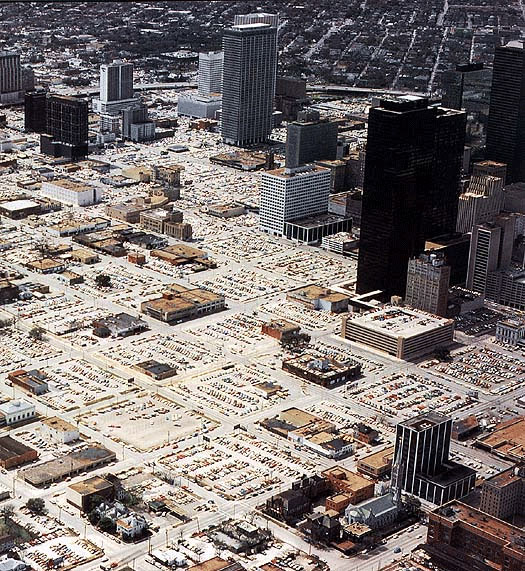
There is nothing urban about Sandy. They can build a nice looking building (which they really haven't yet, imo), but if it's surrounded by a sea of parking and it doesn't engage at the street level where people are, it really serves no purpose other than to house office space and have people think "hey look at all these buildings" as they drive by on the freeway. The infrastructure, street layout, etc... is horrible as well. Traffic congestion actually is way worse on the streets there than it is anywhere in downtown during rush hour.
I wouldn't have a problem with an urban node elsewhere in the valley. I think in the future Daybreak could do it, since it's adhered pretty closely to its master plan and shown some sort of discipline that Sandy, Draper, Lehi, and Orem have not. But that had more to do with Kennecott having a sort of vision rather than the city leaders in South Jordan, though I'm hesitant to not give them any credit.
On the other side, I can see why it would be difficult for city leaders to push for something better.
What's happened in these other cities is that a bunch of people in the end just want to make as much money as they can in the least amount of time possible. Developers don't want to adhere to strict requirements that will make it more difficult and more expensive to build unless they have some kind of incentive. It's difficult for city leaders to offer sufficient incentives without drawing the ire of residents, especially when a neighboring city can swoop in with similar incentives but looser requirements. So in the end the city is giving developers whatever they want to make a quick buck, rather than having the vision and foresight and patience to slowly build something better. And I get that. If I were part of city leadership, I'd probably be a pushover too. There are lots of cities competing to build office space and you don't want your own city to lose out.
So in the end, yeah we can rail on Sandy, and it's true that their developments are crap (they're certainly not alone), but what can city leaders do about it? Not a whole lot.
Full disclosure, I'm actually not too familiar with the process these projects go through but this is some of what I perceive is happening, though probably not entirely accurate.
The other thing that bothers some of us is that these usually mediocre and sometimes crappy buildings go up and are surrounded by seas of parking and people on the forum praise them. It's hard to read that when you abhor sterile, spread out suburban office parks. I worked in a huge office building in the Philadelphia suburbs and it really was a beautiful building, much like Adobe's, and I was in love with the building and my office space, but once I left the building I got depressed. The only reason anyone ever went outside was to walk between the building and their cars. It made me sad and felt like such a waste of space. I could feel the sterility of it and watched people as they got fatter and fatter (including myself, and I was only working there a few months) and honestly, it was horrible. On the other hand, when I moved downtown, people left for their lunch breaks, walked around town, sat out on patios to eat their food, commuted by transit. In my mind it was a much better, more lively experience and it provided me with a much wider social experience. I felt the same thing working in downtown Salt Lake years ago. And that was before City Creek.
Anyway, I'm just rambling now. Sorry to bring up the Sandy thing again, but I had things to say.





 Prev
Prev





 Linear Mode
