Quote:
Originally Posted by Innsertnamehere

It was a 1 billion dollar project, reconfiguring tracks would have turned it into a 2 billion dollar project.
|
I would have rather they spent $2B to get it right.
Quote:
|
Structural support pillars are designed to hold up tracks at existing locations, moving tracks means the pillars would need to be moved too. Given the phasing plan for Union too - I'm not sure they could have done it without entirely shutting down the station - something that isn't exactly desirable or really possible. Trust me - GO is aware of the problems with the existing platforms - the cost to fix it is just insane though, so they deal.
|
GO was in a better position to shut down the entire station than you let on, as was VIA. Only the Lakeshore line travels through Union station. All other GO lines terminate there. Lakeshore could have used the modern platform 27/28 on the south side of the station, and they could have used those other tracks for train movements. All other lines, plus VIA (they could have temporarily suspended through trains to Aldershot) could have terminated on either side of the current union station, using temporary, upgraded outdoor platforms and the teamways as access points to the subway/downtown. Then they could have ripped out the entire middle and rebuilt the station from scratch. The east and west sides have their own GO storage yard, too. What I'm suggesting isn't easy, of course, but it's a lot easier than trying to reconfigure the station 40 years down the line to accommodate RER service because they screwed it up the first time.
We all forget the 5 years of annoyance that we had to put up with to get to the infield terminal so that they could tear down T1 and T2 to build the large, modern new airport terminal. Imagine if they would have tried to spruce up the old terminal 1 and terminal 2 instead. That's what GO's doing now.
Quote:
|
Besides, adding platform width takes away from available tracks. Union needs all the tracks it can get - and its going to max out at 14 tracks, with the existing configuration. Every track you remove to make wider platforms actively reduces capacity.
|
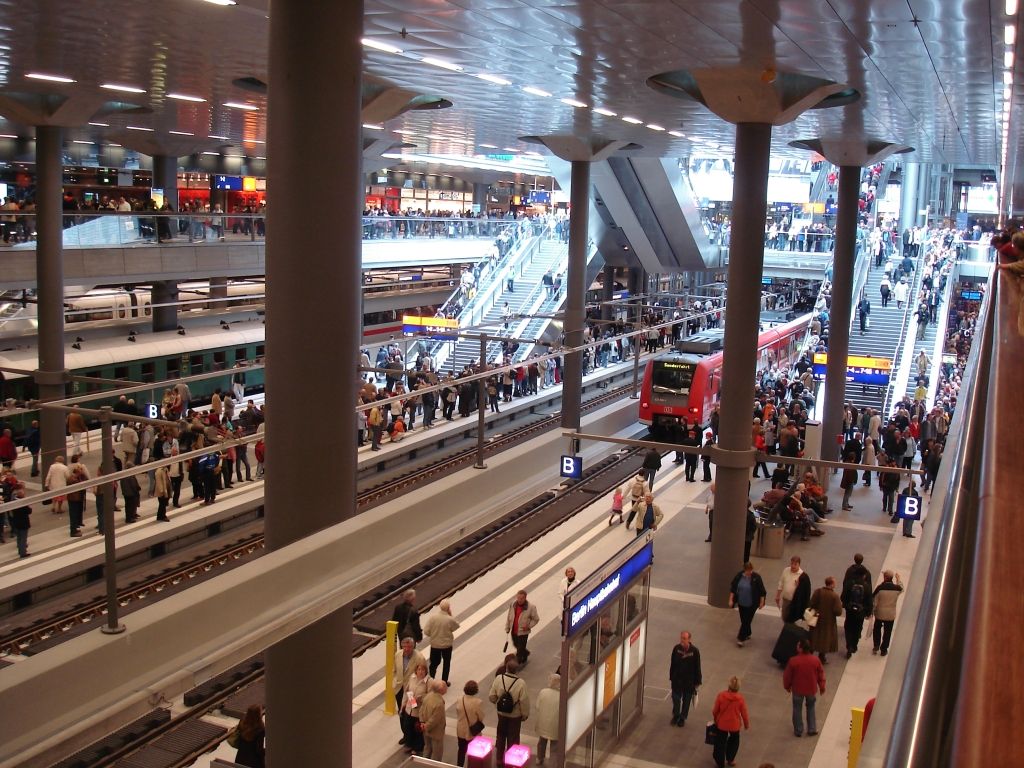
The dwell time is what constrains the capacity of Union, not the number of tracks. In stations like Berlin - which has just 6 tracks on the upper level - or 4 for regional rail - they can thread hundreds of trains at subway-like frequencies.
Quote:
|
One thing Union does have that it doesn't is dual side access tracks - which helps disperse passengers much quicker given the width of the platforms. Hauptbahnhof uses wide, centre platforms serving 2 tracks each, with each track facing a single platform. 9 out of the 11 tracks at Union that are "substandard" (old) have access to two platforms each. Its not as bad as it looks.
|
I think two platforms at Union are still narrower than one platform at Hauptbahnhof. And there are other reasons for going for the 1 big platform design: cross-transfers to other lines being one, and the ability to move around large obstacles like elevator shafts and stairwells being another.
Quote:
|
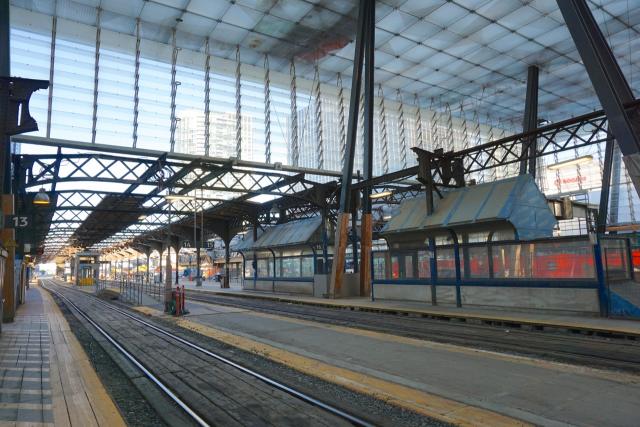
4. The Bush shed is heritage designated as its on of the last ones in North America. That is the reasoning behind keeping 2/3rds of it. Not sure I agree with them doing that, but that is why. They installed the large central shed replacement anyway, so its still a lot nicer.
|
There was nothing preventing them from dismantling the shed and rebuilding it somewhere else. The point is to remove it from Union station where it disrupts the station's functionality.
Quote:
|
The restored shed is also a LOT nicer than the pre-restoration shed.
|
Lipstick on a pig. A $1 billion pig.
Quote:
|
5. The actual platform renovations and shed restoration is only around $100 million if I recall.. the majority of the money (around $700 million) is going into the new concourses below the tracks. Another couple million for the now complete PATH extensions and second platform at the subway station, and you round out to a billion.
|
Yes, and those new concourses have permanently sealed the fate of those narrow, pre-war platforms. It will have to be fixed eventually, and it will cost way more than $1 billion next time around.





 Prev
Prev












 Linear Mode
