Quote:
Originally Posted by counterfactual

First, I have no doubts there are *some* members of HRM planning-- likely younger ones-- who want to be more progressive. But [b]I would say that the vast majority of the bureaucrats there-- like most bureaucrats-- are resistant to change.
|
I don't think it's the vast majority of them. What basis do you have to think it's the vast majority?
Something to keep in mind is that a lot of people get into the field of planning precisely because they want to be in a position where they can make positive changes and have an effect on the future. Of course some will become jaded/entrenched/archaic, but I would guess that there is a slight bias against this compared to "other bureaucracies". Then again maybe I just don't really have enough experience operating within a bureaucracy to gauge this accurately

All I can really say is that my impression of the municipal bureaucracy used to be that it was full of fairly conservative individuals who were kind of stuck in the 1970s. The vast majority of city staff that I have met though are not like this at all (though a few are - and maybe the majority of staff, who I haven't met, are all like this. My impression is this is not really the case though).
Quote:
|
A good example of this is how despite direction from Council for significant Transit shake ups and changes, in the end, the bureaucracy came back with tweaks. Another example is how staff has constantly and consistently recommended against LTE or light transit, often using questionable reasoning.
|
LRT is interesting because again, I've heard many staff members candidly speak enthusiastically about the idea of LRT or something similar here, but all grudgingly admit that it's not really on the table right now. The two biggest factors against it seem to be a lack of funding for transit, and a very serious and often crippling lack of coordination between departments. I also get the impression that the head of Metro Transit (the guy who was in those "explaining transfer-based networks" videos) doesn't have very much in common with most of his staff, and he is the one directing the show. I think if the highest-paid people at Metro Transit
were actually expected to use transit on a regular basis, things would change pretty quickly and radically.
Quote:
|
Second, sorry, but the Centre Plan has absolutely sat dormant.
|
Agreed, I just got the implication (not sure if this was intended) that you meant it's sat dormant because staff would prefer to stick with the status quo. I'm quite confident this is not the case. FWIW I've heard that the "new" iteration of the Centre Plan will be
completely different from what was being proposed before. This is not great in terms of procedure, and I am as frustrated with the timeline as anyone, but the silver lining is that the results might ultimately be better (if there was a compelling reason to completely change the plan's approach and content then I would hope that the new plan is better than the abandoned one).
This is all quite interesting to me because I was unaware of a lot of this - I was living out of province when a lot of these announcements were being made and in many cases living in isolated worksites (often without internet, etc) so I wasn't really able to follow what was going on back home.
My perspective on Housing NS is completely different. I first learned about it when I was doing a study on the physical condition of rental properties constructed mid-century in Spryfield and how changing policies/funding over the years had stacked the cards against them being maintained well. A couple of the findings were:
Most of the privately held apartment buildings in that area were constructed during a period where there were major pressures on the existing housing supply, so the federal government (through what is now CMHC) gave a LOT of financial support for landlords/developers to essentially put up as many apartment buildings as possible (as well as other supports to make sure they were maintained well). Over the next couple decades the incentives were cut and landlords were basically forced to raise rent or skimp out on maintenance.
By the early 1980s, most of the relevant programs no longer existed, and within this segment of the housing stock, properties either began to decline considerably or become significantly less affordable. In the 1990s, public housing, which until then had been under federal jurisdiction (and funding) was transferred to the provinces.
Anyway, by 2014 (when I did the study), most of the privately owned apartment buildings from that era in Spryfield were showing exterior signs of deterioration, some more significant than others, but few were as well-maintained as comparable properties on the Peninsula (where rents are higher), and there were some fairly high-profile cases where
structural/infrastructural problems with them were coming to light. All of the Metropolitan Regional Housing Authority (ie. public housing) properties, built during the same era, were remarkably in much better shape overall.
Apparently this had not been the case a couple years earlier, but there had been
a major provincial-federal investment in the area's public housing over the last couple years. IIRC, by the time of the actual renovations, Housing NS would have been the relevant provincial agency (although I could be wrong here).
The problem was that the private landlords were still in a position where they could not justify properly maintaining the properties without raising rents (the current rents wouldn't have paid for the investment, I guess, especially because there is so much deferred maintenance at this point). HOWEVER, Housing NS had actually launched
programs dealing with this exact problem, among others, shortly before I'd begun the study. All of these programs were quite new and hadn't really had a chance to manifest yet, but based on the findings of my report they are actually quite crucial for allowing low-income people to live in apartment buildings that aren't literally crumbling, leaking sewage, etc while still being able to afford their rent. Without them, within a few years many of Spryfield's residents would essentially be living in third-world conditions, and while newer, I could see the same issues coming up in places like Highfield Park given another decade or so, and Highfield is at such a large scale that this would be really, really bad. Actually adjacent Pinecrest is probably pretty similar to the run-down parts of Spryfield already.
Unfortunately, the wait lists for public housing are huge, because very little new public housing has been created here since the 70s (so currently a lot of people need to be housed in very-low-rent market housing). Prior to the formation of Housing NS, there were no provincial-level programs in place to deal with this kind of thing, so the impression that I got (without having seen any of the "gimmick for the NDP" type news reports) was that prior to Housing NS there simply wasn't a provincial department/agency with the mandate to really do this sort of thing. Again, I could be totally wrong about that.
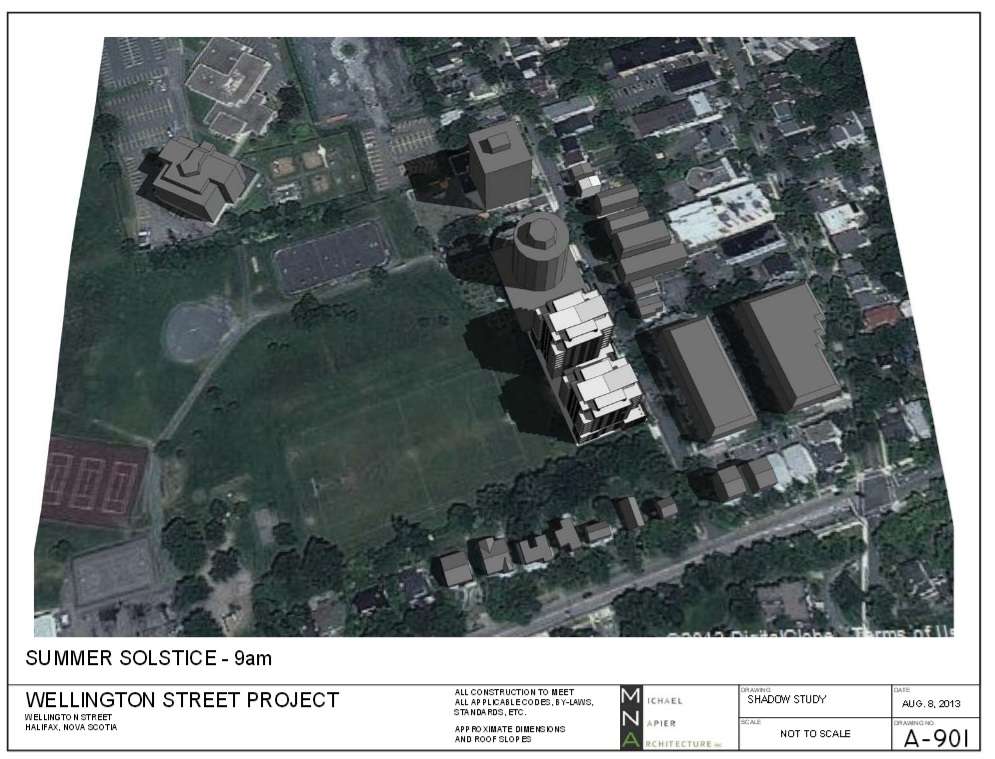
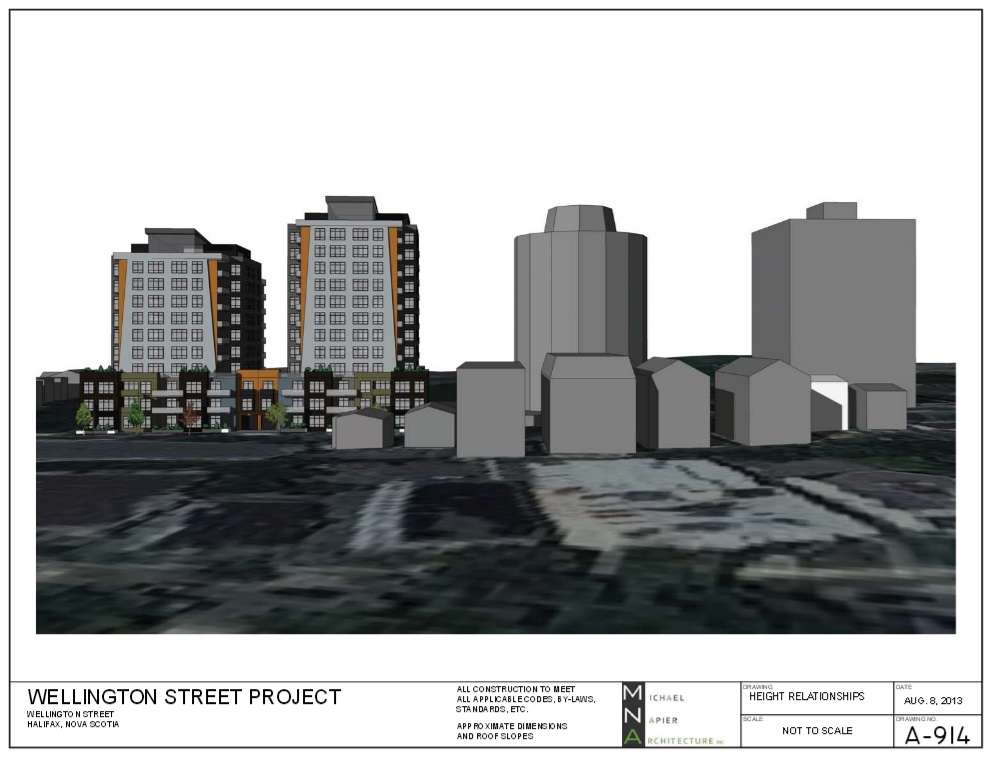
Long story short, I am glad that Housing NS exists, and I know very little of its backstory but support (generally) its programs. The connection with Bloomfield is again something that I can't really say I understand very well at this point. Almost everything I know about the Bloomfield project I have learned in this thread (ie. 1034-1056 Wellington Street)






 Prev
Prev



 [/QUOTE]


 Linear Mode
