Quote:
Originally Posted by wakamesalad

Most of the city looks like this:

Charming?
Hardly.
But it's the dirty secret that SFers don't want the outside world to know about- yes, the Victorians and cable cars and beautiful homes built upon steep hills is only a fraction of SF. Most is built as cookie cutter stucco low density housing.
I've outlined a very loose, unscientific map of what I mean- the enclosed red bordered area is comprised of this type of development:

If the entire city limits were built of the 3 and 4 story multi unit buildings that you designate as "human scale that SF is famed for," the city would easily have over 2 million people.
I say, re- built all the single story single family homes built in the western and souther parts of the city after WWII into a dense up to 8 story multi use district. That would put a huge dent in housing costs. And retain the "human scale." |
Sorry to bring this topic up again, but this is an interesting reality that I never gave much thought about until now. In essence, this is something that applies to many major American cities(aside from LA, for the reason that will be presented soon).
The really urban part of SF has always been concentrated around its historical center at the NE corner. That's the SF most people know about and praise. However, there's this side of the city that is not as known but is significant because it makes up the majority. Despite that fact that some dense housing may exist here, this large part of the city is simply just miles of meandering single family homes like this.
http://foundsf.org/index.php?title=A_City_of_Small_Homes:_Making_the_Mass_Surburban_City
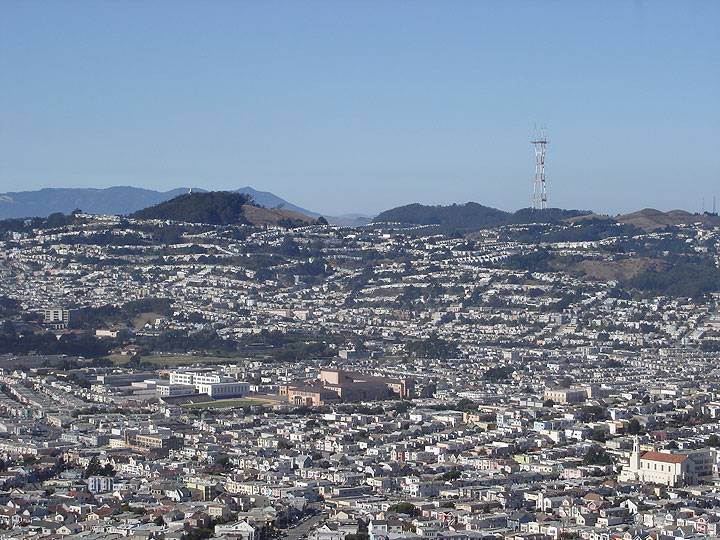
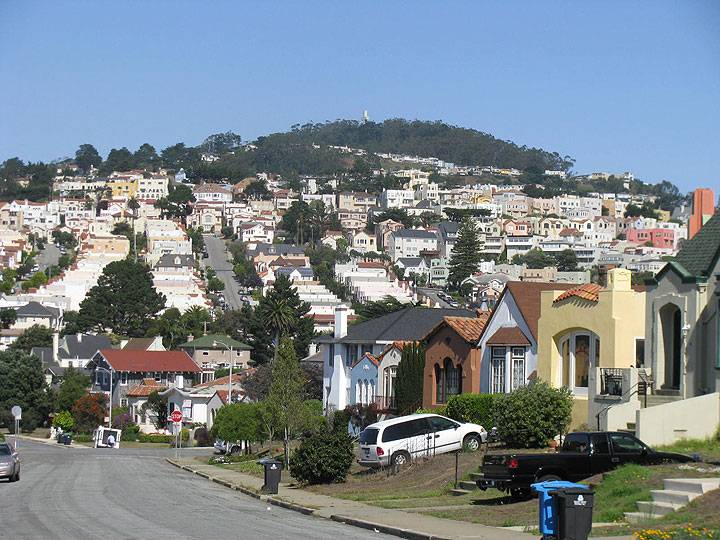
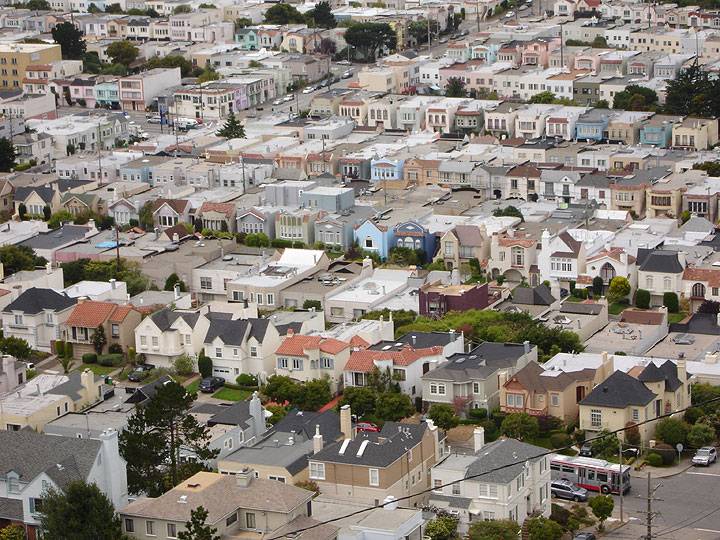
Now, this isn't bad. In fact, it's was great back after WW II when California was growing rapidly and many wanted to live the fullest extent of the American Dream, which living in a single family home in a geographically scenic, mild weathered area. These homes are essentially a testament to the past of urban sprawl. This is where it began to gain ground outside the first suburbs in Long Island, and it's the best example because it's one of the few examples of dense sprawl. Beyond that, it represents California and Western culture, at least to me. When I was a kid and saw images of suburbs like this in pictures,ads,television shows, and movies, I thought this was the epitome of where Middle America should be.
San Francisco is the second most densely populated city in the country despite it and has done an infinitely better job at maintaining density this way than all the other cities in the Sunbelt. However, it can't be ignored that a limit has been reached. The model of development in the Sunset District can only be applied to the suburban areas of the Bay Area. Regardless of its beauty in comparison to other suburban areas in the country, it's a huge obstacle to the future growth of SF. Many houses will be landmarked, but development will have to continue as long as there is a demand.





 Prev
Prev













 Linear Mode
