HomeDiagramsDatabaseMapsForum About
     

Go Back   SkyscraperPage Forum > Discussion Forums > City Discussions


Reply

 
Thread Tools Display Modes
     
     
  #21  
Old Posted Dec 14, 2014, 9:41 PM
Double L's Avatar
Double L Double L is offline
Houston:Considered Good
 
Join Date: Nov 2002
Location: Houston
Posts: 4,836
Houston's two pictures are not accurately from the same perspective.
Reply With Quote
     
     
  #22  
Old Posted Dec 14, 2014, 9:45 PM
kool maudit's Avatar
kool maudit kool maudit is offline
video et taceo
 
Join Date: Jul 2001
Location: Stockholm
Posts: 14,345
saint louis must have been a monster. had it remained intact, it would likely be the third greatest city in america in terms of pre-war expanse. what a loss.
Reply With Quote
     
     
  #23  
Old Posted Dec 14, 2014, 10:13 PM
Centropolis's Avatar
Centropolis Centropolis is offline
disneypilled verhoevenist
 
Join Date: Nov 2009
Location: saint louis
Posts: 12,051
Quote:
Originally Posted by kool maudit View Post
saint louis must have been a monster. had it remained intact, it would likely be the third greatest city in america in terms of pre-war expanse. what a loss.
in the 1870 census, metropolitan st. louis and boston were number 4 and 3, respectively. however, st. louis was a rapidly growing, sprawly city for a 19th century place. ex: i live in the 6800 block in a house built in 1890s. it didn't build up many victorian east coast style inner districts over 3 stories, really, until the apartment era after 1900, probably due to the severe coal pollution and heavy manufacturing scattered in almost every neighborhood which caused the middle class to continuously push west across the upward sloped oak savanna, away from the river. it was sort of the houston of it's era.
Reply With Quote
     
     
  #24  
Old Posted Dec 14, 2014, 11:11 PM
MonkeyRonin's Avatar
MonkeyRonin MonkeyRonin is offline
¥ ¥ ¥
 
Join Date: Sep 2006
Location: Vancouver
Posts: 10,594
Quote:
Originally Posted by kool maudit View Post
saint louis must have been a monster. had it remained intact, it would likely be the third greatest city in america in terms of pre-war expanse. what a loss.

Don't forget Philly. And while the quality of the building stock is one thing, just as far as expanse goes, St. Louis was only the 8th largest city in the country by 1950 (down from 5th in 1900).


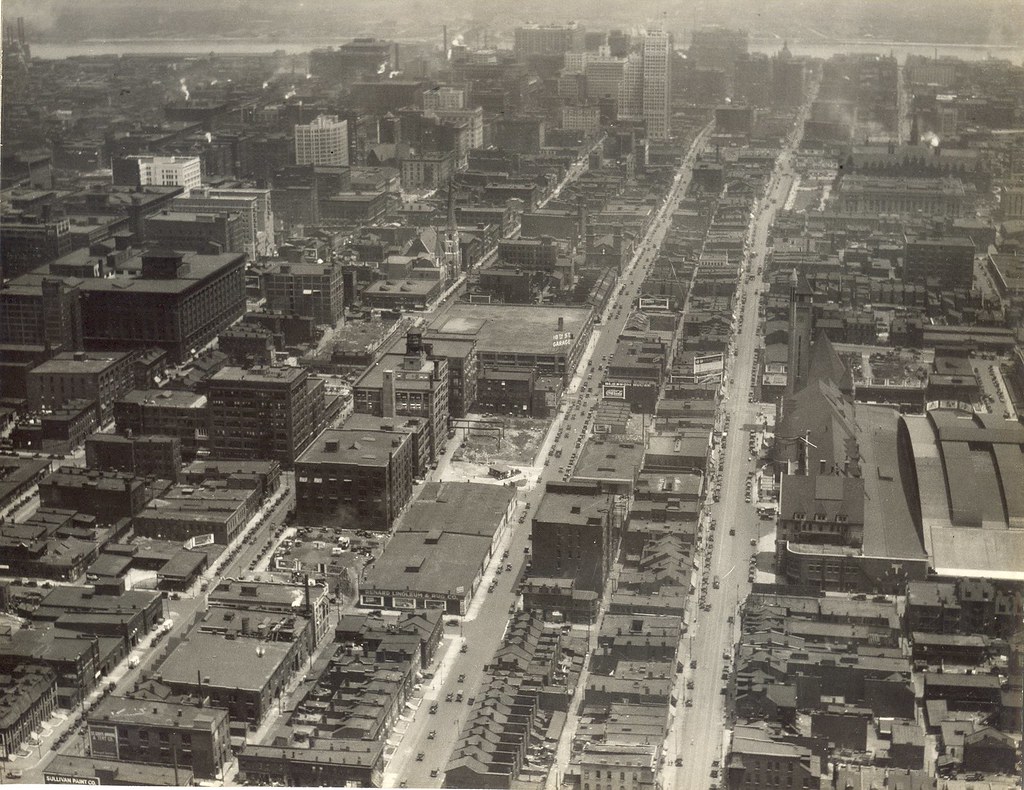
Though, looking through some old photos of it, I might have to reconsider my position relative to Cincinnati:


Cincy lost pretty well all of this:


Detroit of course was even more devastated than either of these two cities (as were many others), but IMO the built form wasn't of the same value (on a national level - i.e. its inner city neighbourhoods wouldn't quite be considered a national treasure if they were still around). Detroit's most distinctive feature was probably its skyscrapers and grand buildings rather than its urban neighbourhoods, most of which remained intact.


Of course, not every city lost out. Among the big cities, New York, San Francisco, and DC's inner cities are all more urban than ever, as are a number of the (historical) second-tier cities like Seattle, Portland, Austin, and Miami. Chicago and Los Angeles have probably lost more than they've gained, but have nonetheless fared well. Meanwhile some other cities big and small like Boston, Philadelphia, New Orleans, Charleston, Savannah, Portland, ME, etc. escaped the post-war years relatively unscathed. And there a bunch more like Minneapolis, Baltimore, Milwaukee, Pittsburgh, and so on that have definitely lost out, but still maintain a cohesive urban form and aren't irreparable. Otherwise, the cities that were most devastated tend to be the ones that didn't really have a whole lot to begin with (eg. most of these Oklahoma and Texas cities).

__________________
Reply With Quote
     
     
  #25  
Old Posted Dec 14, 2014, 11:16 PM
MonkeyRonin's Avatar
MonkeyRonin MonkeyRonin is offline
¥ ¥ ¥
 
Join Date: Sep 2006
Location: Vancouver
Posts: 10,594
Quote:
Originally Posted by niwell View Post
Love that mapping tool you posted (I post it whenever I get a chance)

That's how I found it.


(so thanks for that, I love it too)
__________________
Reply With Quote
     
     
  #26  
Old Posted Dec 15, 2014, 12:01 AM
Centropolis's Avatar
Centropolis Centropolis is offline
disneypilled verhoevenist
 
Join Date: Nov 2009
Location: saint louis
Posts: 12,051
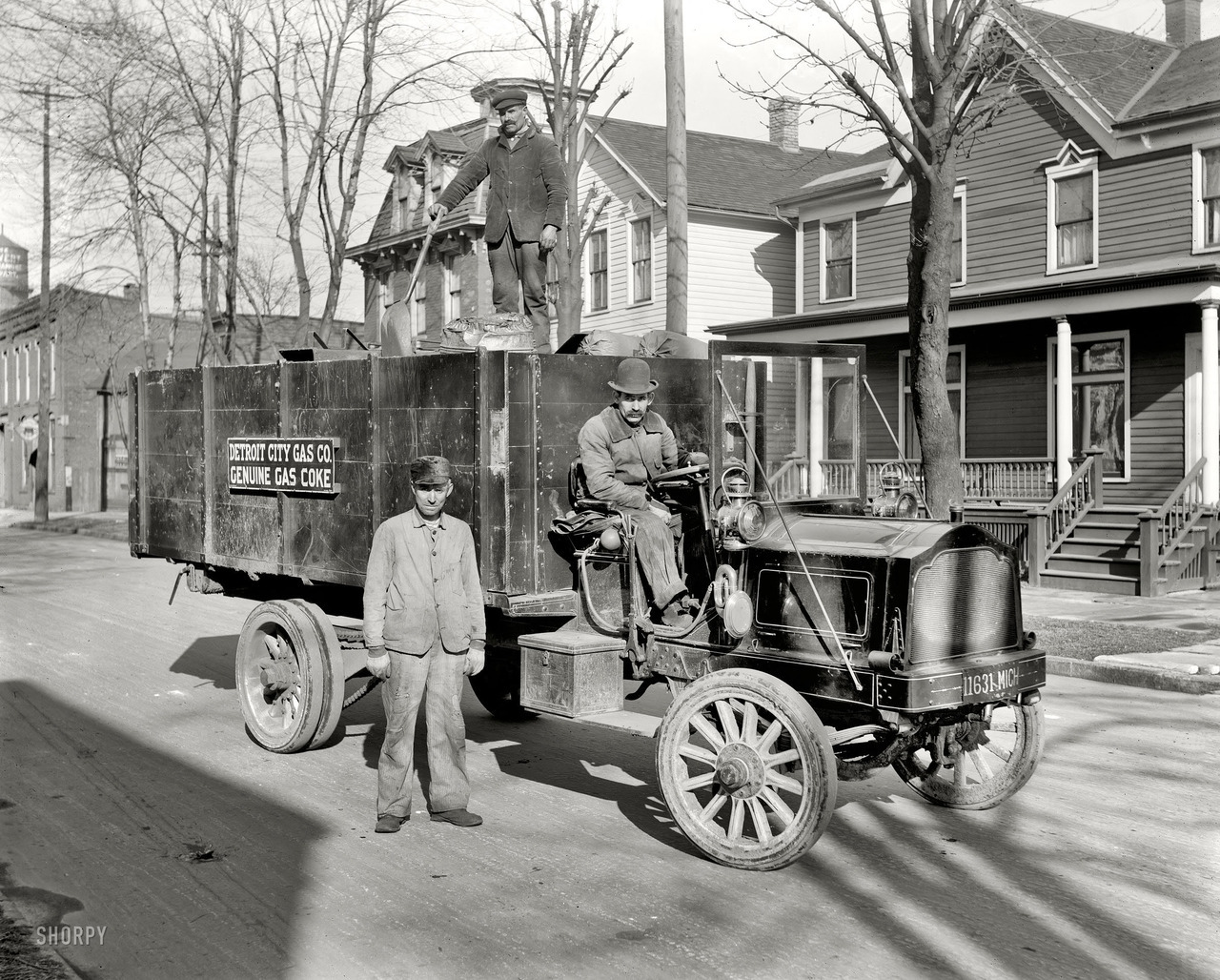
i wonder what those buildings looked like at street level in detroit. i imagine it to sort of resemble milwaukee in sort of a pan-great lakes vernacular.

some of the 1940s photos i've seen of detroit outside of downtown from the air show a well maintained, clean, moderate density that goes on forever. lots of clean, well maintained pavement and a lack of soot covering everything (unlike cincinnati, pittsburgh, st. louis). the decline of inner st. louis was anticipated as early as the late 19th century, but detroit appears to have been blindsided, as it appears to have been a much more clean cut, wealthy, modern city (modern in the sense of smoothly paved streets...no pavers...and pre-war skyscrapers) in 1940.

Last edited by Centropolis; Dec 15, 2014 at 12:18 AM.
Reply With Quote
     
     
  #27  
Old Posted Dec 15, 2014, 12:22 AM
memph memph is offline
Registered User
 
Join Date: Dec 2010
Posts: 1,855
Quote:
Originally Posted by Centropolis View Post
i'd like to see some street level shots of inner detroit. st. louis lost most of its 19th century inner city but there are solid remnants like soulard that have preserved enough to know what the old city might have been like. an entire vernacular appears to have gone extinct in detroit, however.
Searching around, these are some I found.


http://olddetroit.tumblr.com/page/4

Back alley in McDougall Hunt

http://olddetroit.tumblr.com/page/5

Black Bottom

http://udetroit.com/blog.php?user=BrianPastoria&blogentry_id=475

Michigan Central Railroad Passenger Depot at 3rd Street

http://olddetroit.tumblr.com/page/20

Midtown

http://olddetroit.tumblr.com/page/29

It seems difficult to find photos of the more ordinary neighbourhoods, but I think Corktown is probably typical of what they would have looked like, or Asiatown in Cleveland. Wood-frame gable roofed single family homes with maybe the odd block of factory (row) homes and later infill of apartment buildings, industrial buildings (including small ones), 2-3 brick main street style buildings, and maybe (?) the odd lane way house.
Reply With Quote
     
     
  #28  
Old Posted Dec 15, 2014, 12:38 AM
IWant2BeInSTL
Guest
 
Posts: n/a
Quote:
Originally Posted by MonkeyRonin View Post
Though, looking through some old photos of it, I might have to reconsider my position relative to Cincinnati...
I'd say the quality, if not the density, of what was lost in St. Louis is comparable to Cincy's loss.

Check out the st. louis - before the arch thread over in Found City Photos for more riverfront examples like this one:


Source

Looking east from Union Station (right edge just below center):


Source

And an aerial view of our Mill Creek Valley post-clearance. See Centropolis' post above. This is looking east from midtown—note Union Station in the upper right corner. Also note Pruitt-Igoe in the upper left corner:


Source
Reply With Quote
     
     
  #29  
Old Posted Dec 15, 2014, 12:51 AM
the urban politician the urban politician is offline
The City
 
Join Date: Jul 2004
Location: Chicago region
Posts: 21,329
^ To think that when they were massively demo'ing and clearing those sites, they probably had no idea that what was being destroyed would, for socio-political and economic reasons, never be built again.

Not that they cared, they were "slums" to them, after all. How wrong they were. If cities like Detroit, Cleveland, Cincy, St Louis had maintained most of their prewar building stock, they would be absolutely amazing places right now.
__________________
Supercar Adventures is my YouTube channel:

https://www.youtube.com/channel/UC4WNEwTDZlUKB1w8ED5bV2Q
Reply With Quote
     
     
  #30  
Old Posted Dec 15, 2014, 12:51 AM
Centropolis's Avatar
Centropolis Centropolis is offline
disneypilled verhoevenist
 
Join Date: Nov 2009
Location: saint louis
Posts: 12,051
Quote:
Originally Posted by IWant2BeInSTL View Post

And an aerial view of our Mill Creek Valley post-clearance. See Centropolis' post above. This is looking east from midtown—note Union Station in the upper right corner:


Source
and of course pruitt-igoe up in the upper left side. see: philip glass.


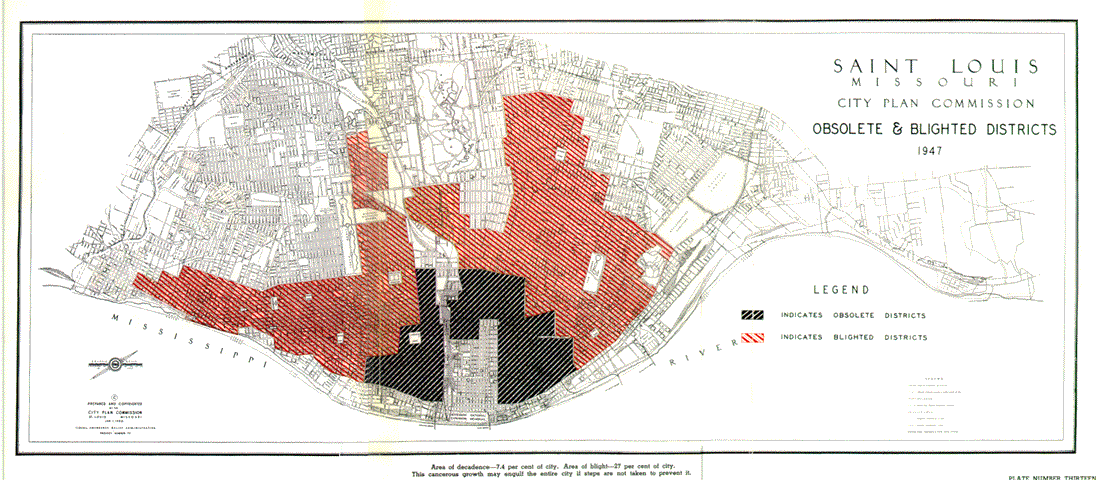
http://preservationresearch.com

most of the "obsolete" districts were wholesale removed, severely altered with expressway construction, or saw industrial/ commercial redevelopment. in 1947 much of the area referred to as "blighted" on the above figure was just mixed-use in a way that the planners were uncomfortable with. the forlorn north side (the right side of the figure) was actually the more contigously urban and older quarter of the city. it's also interesting how they spared the central west end - the residential seat of power around forest park.

at the end of the day, the city government/planners were able to do things that robert moses probably could have never got away with, and were almost certainly on some kind of power trip.

Last edited by Centropolis; Dec 15, 2014 at 1:21 AM.
Reply With Quote
     
     
  #31  
Old Posted Dec 15, 2014, 1:52 AM
Crawford Crawford is online now
Registered User
 
Join Date: Nov 2003
Location: Brooklyn, NYC/Polanco, DF
Posts: 34,697
Quote:
Originally Posted by MonkeyRonin View Post
Don't forget Philly.
Philly would be #2. And I would assume the reference would be to 19th century stock (or even pre civil war stock?), not prewar stock (in which case even an LA could be among the top few cities).
Reply With Quote
     
     
  #32  
Old Posted Dec 15, 2014, 2:44 AM
montréaliste montréaliste is offline
Registered User
 
Join Date: Jun 2010
Location: Chambly, Quebec
Posts: 2,217
You are all so negative. Stop looking at this with your macro eyes on. Give it time to sink in, don't judge a bird's eye view when you know there are treasures to be found at street level like multiple Pancake Emporia and Imperial Burger joints to delight. Freeways need to be told they are lovely too!
Reply With Quote
     
     
  #33  
Old Posted Dec 15, 2014, 2:56 AM
ColDayMan's Avatar
ColDayMan ColDayMan is offline
B!tchslapping Since 1998
 
Join Date: Jul 2001
Location: Columbus
Posts: 20,464
The Queensgate neighborhood was a huge loss, for sure, but Cincinnati still has charming dense neighborhoods around. It was never hurt to the extent of Detroit nor even downtown Columbus.

But...this is a White Castle now!

http://victorianantiquitiesanddesign.blogspot.com/2010/11/cincinnatis-lost-neigborhood-kenyon.html
__________________
Click the x: _ _ X _ _!
Reply With Quote
     
     
  #34  
Old Posted Dec 15, 2014, 3:25 AM
STLgasm's Avatar
STLgasm STLgasm is offline
Red brick mama.
 
Join Date: Aug 2001
Location: City of St. Louis
Posts: 4,740
Quote:
Originally Posted by Centropolis View Post
this is an example of the housing stock demolished in the 1950s west of downtown, the skyline is the midtown skyline. the area became known as "hiroshima flats" after the area was cleared. at least 20,000 residents were displaced when this neighborhood was eviscerated. st. louis also seemed to be sort of a foreshadowing of the twentieth century polycentric city, but built on a mid 19th to early 20th century skeleton.


st louis post-dispatch
It's important to note that the high-rises in the background still remain today. Mill Creek Valley is, in my opinion, St. Louis' greatest loss. No doubt this neighborhood would be the most prized residential address if it wasn't cleared.
__________________
http://stl-style.com
Reply With Quote
     
     
  #35  
Old Posted Dec 15, 2014, 5:53 AM
chris08876's Avatar
chris08876 chris08876 is offline
NYC/NJ/Miami-Dade
 
Join Date: Jul 2013
Location: Great State of NJ
Posts: 49,345
Imagine how great Detroit would of been if it retained its 1950's population and continued to grow.

Surely would of been the 4th most populated. Chicago I believe had something like 3.5 mil by 1950; probably would of been at 5 million by now assuming it continued to grow.
Reply With Quote
     
     
  #36  
Old Posted Dec 15, 2014, 6:06 AM
summit street's Avatar
summit street summit street is offline
Registered User
 
Join Date: Oct 2004
Location: urban Columbus
Posts: 83
Quote:
Cincy, St Louis had maintained most of their prewar building stock, they would be absolutely amazing places right now.
Even with all this, these are still amazing places right now.
Reply With Quote
     
     
  #37  
Old Posted Dec 15, 2014, 6:19 AM
chris08876's Avatar
chris08876 chris08876 is offline
NYC/NJ/Miami-Dade
 
Join Date: Jul 2013
Location: Great State of NJ
Posts: 49,345
^^^^

They are, but its always interesting to imagine what our cities would of been like if lets just say the flight to the suburbs never occurred. Frickin amazing is what they would be like and probably full of much needed mass transit given the much higher populations.
Reply With Quote
     
     
  #38  
Old Posted Dec 15, 2014, 9:08 AM
kool maudit's Avatar
kool maudit kool maudit is offline
video et taceo
 
Join Date: Jul 2001
Location: Stockholm
Posts: 14,345
i did forget philly, which would be third after new york and chicago.

like cleveland, detroit's houses were never much good in terms of solidity and density. they were often made of wood and were small and detached. i imagine that there may have been a few apartment districts around the immediate downtown though.
Reply With Quote
     
     
  #39  
Old Posted Dec 15, 2014, 1:49 PM
RCDC's Avatar
RCDC RCDC is offline
Registered User
 
Join Date: Oct 2010
Location: DC, an eruptive vent of wealth
Posts: 416
Quote:
Originally Posted by Double L View Post
Houston's two pictures are not accurately from the same perspective.
Seems like they are. But this leads me to another thought. How different would this thread have turned out if the OP linked to the Texas cities section?

Quote:
Originally Posted by MonkeyRonin View Post
And there a bunch more like Minneapolis, Baltimore, Milwaukee, Pittsburgh, and so on that have definitely lost out, but still maintain a cohesive urban form and aren't irreparable.
Baltimore of course had freeway construction and demolition of historic stock, but like most of the NE cities it didn't suffer the kind of wholesale, careless destruction that I'm seeing here. It's almost like they set out to vandalize as much as possible. The freeways just barreled through without much regard for the existing grid, with greedy interchanges gobbling up way more blocks than needed, right at the cores. Really sad and a bit infuriating...
Reply With Quote
     
     
  #40  
Old Posted Dec 15, 2014, 3:46 PM
MolsonExport's Avatar
MolsonExport MolsonExport is offline
Pass me the Vomit Bag.
 
Join Date: Oct 2003
Location: Otisburgh
Posts: 50,890
This thread is the most painful on SSP of the past year. I really feel like weeping when I see what was and what is, and when I think about what could have been.
__________________
The whole problem with the world is that fools and fanatics are always so certain of themselves, and wiser people so full of doubts. (Bertrand Russell). Sweet Loretta fart thought she was a cleaner, but she was a frying pan. (John Lennon)
Reply With Quote
     
     
This discussion thread continues

Use the page links to the lower-right to go to the next page for additional posts
 
 
Reply

Go Back   SkyscraperPage Forum > Discussion Forums > City Discussions
Forum Jump


Forum Jump


All times are GMT. The time now is 6:27 AM.

     
SkyscraperPage.com - Privacy Statement - Top

Powered by vBulletin® Version 3.8.7
Copyright ©2000 - 2026, vBulletin Solutions, Inc.