Amazing news from one of Canada's smaller transit systems!
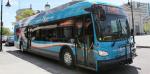
Kingston Transit announced that ridership has increased by 14% (Q1 2014 relative to Q1 2013) since the BRT-lite 'Kingston Express' service was launched last year! Monthly pass sales in particular have increased by 25%, which is a positive sign as it shows that the new riders are dedicated ones.
So the city is moving forward with expanding the Kingston Express, adding two new routes in May 2015. Here's what our "RT" map is going to look like soon! Its going to get more and more BRT-like over time as the city plans to start rolling out transit priority measures at intersections this fall. They also spoke of plans to gradually build up bus lanes in the network as routes get more congested, with medium-term plans for bus lanes on Princess between John Counter & Gardiners, and on Highway 15 between Highway 2 and Gore Road.

I personally talked with Kingston Transit's chief planner, and HOLY CRAP he's amazing! He knows almost everything little detail about the system, right down to miniscule details like what stops have gotten new bus shelters this year, right off the top of his head!
He also really gets the need to improve service. Here's some really cool things he talked about with me:
-Local stops. I don't know about other cities, but both Toronto and Ottawa have problems with buses stopping WAY too frequently. He spoke about the need to consolidate local stops to speed up service. This is something that I've always found really irritating about a lot of municipal transit planners, they always seem to want stops every 10 feet. He even talked about some strategies he's using to consolidate stops sneakily so people don't complain. The city will deliberately add amenities like shelters & benches to only every other stop so ridership on the un-upgraded stops drops enough to remove them from service without complaint. Whenever roads are reconstructed, stops are consolidated too.
-He gets that a connective network is the way to go. He's aggressively expanding frequency while shortening local routes. He gets that as a transit system grows it has to move in this direction. This is something that Ottawa has had a lot of difficulty adopting in its transit planning despite the fact that it desperately needs it.
-He understands that routes need to be made more direct, even if it increases walking distances, in order to allow for higher frequency and faster service. Again, something Ottawa has had trouble with.
-And, this big one: He gets that in order to improve ridership and build a good transit system, you need to suck it up and increase operational funding and allow reduced farebox return rates in the short term while ridership builds. This is something that many of Toronto's suburban transit systems struggle with, particularly York Region Transit.
I want to nominate that man for some sort of award. I don't think I've adequately captured it in my paragraphs above, but this guy is REALLY GOOD. I was blown away talking to him.





 Prev
Prev











 Linear Mode
