Quote:
Here we go again about Philly's declining middle class.
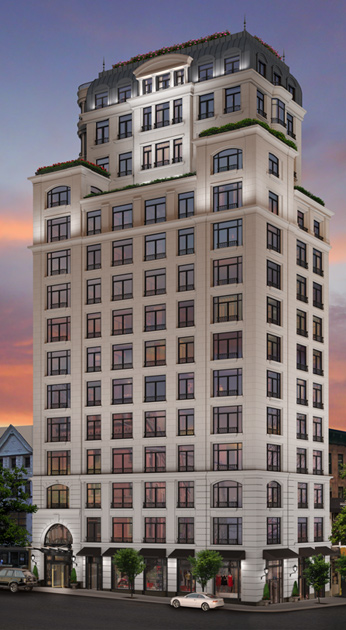
For one, all these new highrise condos and apartment charging hefty condo prices and rent seems at odds with the articles. Can someone explain this?
|
The confusion may be over what you think of as "middle class". The middle class increasingly seems to be comprised of a smaller and smaller group of college+ educated "professionals", the type of people who continue to live in greater Center City, NW Philly, the Mainline and other wealthy suburbs. Increasingly, the middle class does not include people in blue collar work settings, although it used to.
I think the statistics bear out that more people in blue collar jobs are getting paid less. So I'm guessing that as many older "middle class" blue collar workers retire, move to the suburbs, the sunbelt, or die, their jobs, if they still exist are being filled by far lower-paid people who no longer qualify as middle class.
I imagine this dynamic really impacts Northeast Philly, for example, where alot of older "middle class" blue collar whites lived. Now they are leaving in droves and being replaced by poorer people - either people escaping poor or gentrifying sections of the city closer to the center, or altogether new people: primarily poor immigrants from Asia and Latin America. Maybe even from poorer Hispanic communities in the NY Metro? - that, at least, seems to have accounted for alot of the new population in Allentown/Bethlehem.
But the lower Northeast is surely getting alot poorer and alot more ethnically diverse, and alot more like an "inner city" neighborhood. 30 years ago, NE Philly (along with, say, Roxborough) was considered to be more like a moderate income suburb for blue collar whites. Even then, in spite of its "middle class status", the college-education rate was probably considerably lower in the NE than what you would find in, say, West Mt. Airy or University City or Center City. But the demographic transformation there seems to be like that which one would find in many increasingly diverse inner suburbs with cheap, modest housing stock that appeals to the inner city poor and immigrants alike. There seems to be no doubt that older middle class blue collar whites are leaving the city in droves (as they have been for 50 years). But these generally have never been the same demographic as the people moving into Center City highrises and "hipster" neighborhoods.
In addition, to the extent that central Philly is attracting more net new young college educated people, given that these people are just starting out, one might assume they are "poorer" than retiring blue collar workers and pensioners that are moving to warmer or more bucolic settings outside the region or city.
Over the short term, my guess is this dynamic won't really effect greater Center City, which seems to attract large numbers of educated people with greater economic mobility, while large sections of the rest of the city - those areas with dated, relatively small and unattractive but functional and inexpensive 2-story housing stock built between WWI and the early 1960s (eg, SW Philly, much of W Philly west of 52nd Street, the Lower NE, Olney, Logan, East Mt. Airy, Logan, West Oak Lane) - will grow increasingly poor.
Over the longer term, my sense is that the impact on Center City is far less predictable.
My assumption is that the city's indigenous population of poor people with minimal formal education will remain poor (as they have for decades), and will continue to migrate from gentrifying areas around the core to places like the lower NE, Pennsauken, eastern Delaware County, parts of Gloucester County, etc. I suppose there is a possibility that the likely financial drain caused by increased poverty and economic disparity on the city and poorer suburban counties will impede the development greater Center City to the extent that it results in a higher tax burden for wealthier people.
My guess is that part of greater Center City's long-term growth will likely hinge on the success of the immigrant population in climbing the economic ladder and on whether those immigrants and their kids decide to stay in the city and participate in the renaissance of the core.
The Pew data might be read to reflect, in general, the expanding economic divide in the country between the growing number of poor - which increasingly consists not only of blue collar and grey collar people, but also college-educated people with lower valued skill-sets -and an increasingly rarified group of succesful entrepreneurs and high-value professionals particularly in STEM fields.
Presumably, the urban core will remain successful if it is able to attract that latter group of people and the region as a whole can be a place in which immigrant entrepreneurs can build success.





 Prev
Prev







 Linear Mode
