HomeDiagramsDatabaseMapsForum About
     

Go Back   SkyscraperPage Forum > Global Projects & Construction > City Compilations


Reply

 
Thread Tools Display Modes
     
     
  #3581  
Old Posted Apr 14, 2013, 2:29 PM
Captain Crash Captain Crash is offline
Registered User
 
Join Date: Feb 2011
Posts: 140
Really interesting piece discussing the merits of gondolas as a potential means of urban transit. Had no idea its been so widely used in cities elsewhere. Wonder if this could be an option here? I know one of the members has talked about this before.

http://www.theatlanticcities.com/commute...might-be-just-around-corner/5220/#slide6
Reply With Quote
     
     
  #3582  
Old Posted Apr 14, 2013, 3:06 PM
BrianTH BrianTH is offline
Registered User
 
Join Date: Jan 2010
Posts: 6,078
Pittsburgh certainly seems to have a lot of unmet transit needs that aerial gondolas could address in a very cost-effective way, most notably a decent transit network centered on Oakland. Here is a map I sketched out to illustrate the concept:

http://goo.gl/maps/fGMgJ

Whether planners relevant to Pittsburgh can be persuaded to pursue that option is a different question, and unfortunately our planners may still lack the courage to be an early mover (for the U.S.) in this area.
Reply With Quote
     
     
  #3583  
Old Posted Apr 14, 2013, 3:20 PM
markson33's Avatar
markson33 markson33 is offline
Registered User
 
Join Date: May 2011
Location: Pittsburgh
Posts: 303
I'm not opposed to a Gondola system, and I would think it would be relatively inexpensive to build, but I wonder at the capacity vs cost issues. Can a Gondola system move enough people quickly enough to be cost effective?

I'm still not sure I understand why trolley lines can't be cost effectively added into Fifth Avenue, the busway and/or Penn/Liberty to create a loop through Oakland and the Strip.
Reply With Quote
     
     
  #3584  
Old Posted Apr 14, 2013, 7:20 PM
BrianTH BrianTH is offline
Registered User
 
Join Date: Jan 2010
Posts: 6,078
Quote:
Originally Posted by markson33 View Post
I'm not opposed to a Gondola system, and I would think it would be relatively inexpensive to build, but I wonder at the capacity vs cost issues. Can a Gondola system move enough people quickly enough to be cost effective?
A basic system of the sort they have been installing in South America can carry around 3000 people per hour per direction ("pphpd"). A more robust and faster system (but still using existing technology) could carry around 6000-8000 pphpd. You could also add additional lines to the same right of way to increase peak capacity as necessary. For comparison, North American light rail lines tend to peak in the 2000-5000 pphpd range as actually operated (although in theory they could be pushed higher).

Average speed can be around 10-15 mph depending on the technology used. That may not sound like much but a lot of transit services operating in mixed traffic in urban areas average less even though their vehicles have much higher peak speeds. In a city like Pittsburgh, you can also contemplate more direct routing in many cases since rivers, ravines, cliffs, and so on aren't really barriers. Of course rail or bus services with their own ROW can be much faster, but in many circumstances would be prohibitively expensive (particularly when bridges and tunnels would be involved).

All that adds up to a potentially very useful technology. But they definitely don't make sense in all situations--e.g., speeds are too slow for long-distance routes, capacities are generally too low for trunk service in major transit systems, and so on. Basically, you want to pick out cases where there is a moderate amount of potential demand, modest distances as the crow flies, and not a lot of excess direct surface capacity.

Quote:
I'm still not sure I understand why trolley lines can't be cost effectively added into Fifth Avenue, the busway and/or Penn/Liberty to create a loop through Oakland and the Strip.
The short answer is that when surface LRT options have been considered and compared to BRT for Downtown/Oakland, they haven't been projected to add enough trips over BRT to justify the additional capital cost. A subway between Downtown and Oakland would be more of a game-changer, but obviously would be way more expensive.

Adding the Strip and Lawrenceville hasn't been studied nearly as much as just Downtown/Oakland. That sort of loop might change the math, but perhaps not, because you'd still face the basic problem of not giving LRT much of a natural advantage over BRT in the absence of dedicated ROW.
Reply With Quote
     
     
  #3585  
Old Posted Apr 14, 2013, 9:14 PM
Jonboy1983's Avatar
Jonboy1983 Jonboy1983 is offline
Registered User
 
Join Date: Apr 2010
Location: The absolute western-most point of the Philadelphia urbanized area. :)
Posts: 1,721
Quote:
Originally Posted by BrianTH View Post
A basic system of the sort they have been installing in South America can carry around 3000 people per hour per direction ("pphpd"). A more robust and faster system (but still using existing technology) could carry around 6000-8000 pphpd. You could also add additional lines to the same right of way to increase peak capacity as necessary. For comparison, North American light rail lines tend to peak in the 2000-5000 pphpd range as actually operated (although in theory they could be pushed higher).

Average speed can be around 10-15 mph depending on the technology used. That may not sound like much but a lot of transit services operating in mixed traffic in urban areas average less even though their vehicles have much higher peak speeds. In a city like Pittsburgh, you can also contemplate more direct routing in many cases since rivers, ravines, cliffs, and so on aren't really barriers. Of course rail or bus services with their own ROW can be much faster, but in many circumstances would be prohibitively expensive (particularly when bridges and tunnels would be involved).

All that adds up to a potentially very useful technology. But they definitely don't make sense in all situations--e.g., speeds are too slow for long-distance routes, capacities are generally too low for trunk service in major transit systems, and so on. Basically, you want to pick out cases where there is a moderate amount of potential demand, modest distances as the crow flies, and not a lot of excess direct surface capacity.
I could probably see something like this working for an Oakland or East Liberty-based network. Other than that, yeah, I would say traditional LRT/heavy rail would be necessary for a trunk route.

Quote:
The short answer is that when surface LRT options have been considered and compared to BRT for Downtown/Oakland, they haven't been projected to add enough trips over BRT to justify the additional capital cost. A subway between Downtown and Oakland would be more of a game-changer, but obviously would be way more expensive.

Adding the Strip and Lawrenceville hasn't been studied nearly as much as just Downtown/Oakland. That sort of loop might change the math, but perhaps not, because you'd still face the basic problem of not giving LRT much of a natural advantage over BRT in the absence of dedicated ROW.
Only recently did I think of the idea of having a LRT or even a true subway running from Downtown through the Strip and back out to East Liberty following a Penn Avenue alignment. Think of the amount of additional traffic that would bring to East Liberty and the Strip. The Cultural and Strip districts are already major destinations for retail and restaurants as well as entertainment, and East Liberty is an emerging such destination at least in terms of the former two.

In terms of this option versus a direct link to Oakland, I'd still place the priority with the latter...
__________________
Transportation planning, building better communities of tomorrow through superior connections between them today...
Reply With Quote
     
     
  #3586  
Old Posted Apr 15, 2013, 1:08 PM
Steel City Scotty's Avatar
Steel City Scotty Steel City Scotty is offline
Registered User
 
Join Date: Feb 2013
Location: Pittsburgh, PA
Posts: 301
More on the sale of Pittsburgh public school buildings...

http://www.post-gazette.com/stories/loca...nders-possible-sale-of-buildings-683552/

Quote:
Pittsburgh Public Schools board ponders possible sale of buildings
April 15, 2013 12:23 am
By Eleanor Chute / Pittsburgh Post-Gazette

When money is tight, people think not only of looking for coins under the sofa cushions but also selling the family heirlooms.

In Pittsburgh Public Schools, which expects to go broke in 2016 unless it changes course, the board last week talked briefly about whether to sell the Board of Education building on South Bellefield Avenue in Oakland.


Read more: http://www.post-gazette.com/stories/loca...-sale-of-buildings-683552/#ixzz2QXM9PHb3
__________________
"I didn't speak English until I came to Pittsburgh" - Mario Lemieux
Reply With Quote
     
     
  #3587  
Old Posted Apr 15, 2013, 1:30 PM
BrianTH BrianTH is offline
Registered User
 
Join Date: Jan 2010
Posts: 6,078
"Family heirlooms" isn't a very accurate metaphor. Closer would be something like the large five-bedroom house you owned when you were raising your kids, which you are thinking of trading in for a more modest townhouse now that you are empty-nesters.
Reply With Quote
     
     
  #3588  
Old Posted Apr 15, 2013, 3:54 PM
Topher51's Avatar
Topher51 Topher51 is offline
Registered User
 
Join Date: Jan 2011
Location: The South Hills
Posts: 83
Quote:
Originally Posted by markson33 View Post
I've worked downtown for 15 years and I feel very safe. There are going to be questionable elements in any urban environment. I would say the downtown is probably the safest that its been in a long time. A larger police precense wouldnt hurt though.
Granted, I've only lived around here for a year, but I have never felt unsafe downtown. In my line of work, I go to some of the sketchier parts of town for site visits, and even in Hazelwood, Homestead, Duquesne, McKeesport, the Hill, etc, though my guard is always up, I have never felt threatened or had any trouble. Hell, my brother and I walked from PNC Park to our hotel in Oakland through the hill district at night a few years ago (before I knew it was supposedly a bad part of town) and the people we ran into were pretty friendly.

In regards to the proposed SSP meet up, what is normally done at these? I'd be up for it. I am in town most of the time.
Reply With Quote
     
     
  #3589  
Old Posted Apr 16, 2013, 3:00 PM
Evergrey's Avatar
Evergrey Evergrey is offline
Eurosceptic
 
Join Date: Apr 2003
Location: Pittsburgh
Posts: 24,141
http://www.bizjournals.com/pittsburgh/bl...other-sign-of-a-healthy-real-estate.html

Quote:
Another sign of a healthy real estate market: apartment edition


To anybody waiting on Pittsburgh’s apartment market to deflate, my answer to you is: not yet.

Not by a long shot.

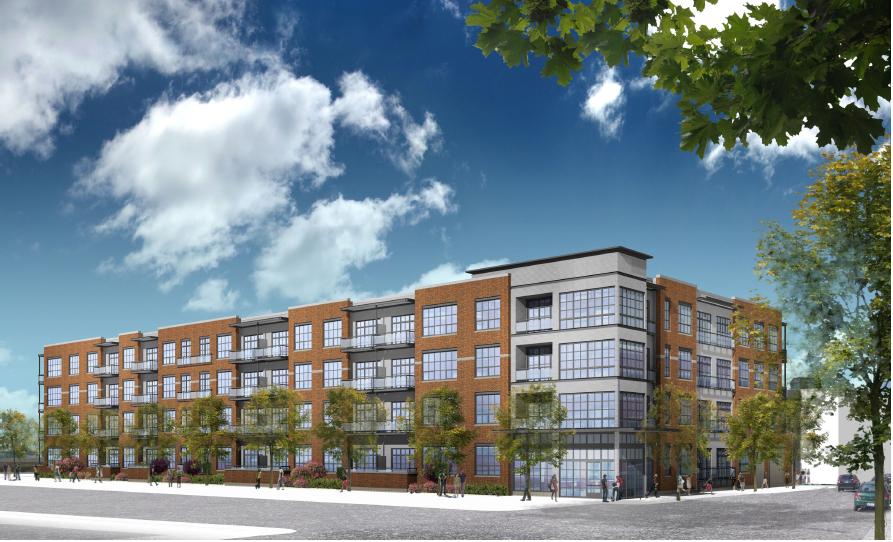
The owners of Lot 24, the 96-unit apartment building built as a second phase of the Cork Factory Lofts in the Strip District, report the project is all but fully leased.

Chuck Hammel, chairman of Pitt Ohio Express and a partner in Lot 24 with Chicago-based McCaffery Interests, said the new building opened in December and now only has a unit or two left to lease, putting Lot 24 at near full occupancy.

While the original Cork Factory just across the railroad tracks took about a year to lease up its nearly 300 apartments when it was projected to take two years, Hammel said Lot 24 leased up in less than 120 days.

“The unusual thing is that basically nobody moves in in December, January and February,” said Hammel.

Noting that the cold and snow and slush of winter is never a great time for anyone to move furniture and personal belongings into a new home, Hammel added, “it was just amazing.”

He said the expectation was for Lot 24 to take eight months to a year to lease up.

Hammel suspects that the new residents may represent newcomers to the city, much as residents of the Cork Lofts often have been, although he had no research data at hand at the time to support it.

He was quick to see the quick leasing of Lot 24 in conjunction with a report from last week that Pittsburgh was at the top of the list in terms of percentage growth of metros nationwide on U-Haul’s 2012 National Migration Trend Report, topping such metros known for population growth as Henderson,Nevada and Austin.

“How surprising is that?” said Hammel. “All we ever heard for years and years is that everybody is moving out of Pittsburgh.”
Reply With Quote
     
     
  #3590  
Old Posted Apr 16, 2013, 3:05 PM
glowrock's Avatar
glowrock glowrock is offline
Becoming Chicago-fied!
 
Join Date: Dec 2002
Location: Chicago (West Avondale)
Posts: 19,443
Just goes to show you that no matter what the old Yinzer guard thinks about Pittsburgh being a dying city who's heydey has long since passed, it's simply not true.

Aaron (Glowrock)
__________________
"Deeply corrupt but still semi-functional - it's the Chicago way." -- Barrelfish
Reply With Quote
     
     
  #3591  
Old Posted Apr 16, 2013, 3:52 PM
BrianTH BrianTH is offline
Registered User
 
Join Date: Jan 2010
Posts: 6,078
That would seem to support the notion that Buncher should be going for the higher rather than lower end of the planned range for the new Strip apartment buildings.

And, for that matter, it should be pushing the Penguins to do more rather than fewer units in the Lower Hill, and so on throughout the core area.
Reply With Quote
     
     
  #3592  
Old Posted Apr 16, 2013, 6:41 PM
markson33's Avatar
markson33 markson33 is offline
Registered User
 
Join Date: May 2011
Location: Pittsburgh
Posts: 303
Quote:
Originally Posted by BrianTH View Post
That would seem to support the notion that Buncher should be going for the higher rather than lower end of the planned range for the new Strip apartment buildings.

And, for that matter, it should be pushing the Penguins to do more rather than fewer units in the Lower Hill, and so on throughout the core area.
I for one believe that there is enough demand to support quite a few new projects, but not everyone agrees. Based upon the number of units in our benchmark cities, Pittsburgh should be able to support an additional 20,000 units.

If Buncher, the Penguins, PMC et all keep adding projects, at what point will the market be saturated? I just wonder what the effect will be of all of these units come on line at the same time.
Reply With Quote
     
     
  #3593  
Old Posted Apr 16, 2013, 7:12 PM
BrianTH BrianTH is offline
Registered User
 
Join Date: Jan 2010
Posts: 6,078
Quote:
Originally Posted by markson33 View Post
If Buncher, the Penguins, PMC et all keep adding projects, at what point will the market be saturated? I just wonder what the effect will be of all of these units come on line at the same time.
Of course over the long term, there are feedback loops such that more residents will in turn lead to more of the things that are attracting residents to the core area in the first place (more jobs, more restaurants/bars, more amenities of other sorts, more walkable neighborhoods, and so on). I think it is worth worrying about certain particular issues where these feedback loops may be blocked for extraneous reasons (e.g., transit), but overall there is no obvious fundamental limit to the possible population growth of the core urban area, particularly if you don't artificially limit your definition of that area to the City of Pittsburgh itself.

But I take it your question is more about what sort of short term pace is sustainable. To some extent that pace is also subject to feedback, and I also think there are underlying trends that will if anything be accelerating the growth in potential demand. Still, at some point if you are building enough new units you are going to outpace potential demand growth, even with all these factors contributing.

I have no idea exactly what that pace would be, but I do think two things are fairly obvious given recent data and experience:

(1) Whatever that pace might be, we are currently nowhere near it;

(2) Reasonably conservative estimates of that pace likely have been recently requiring continual upward revision.

In fact we pretty much know (2) is true just from things like the recent redesigns of Bakery Square 2.0, the East Liberty Transit Center, and so on--smart, experienced players are clearly revising their short-term demand projections for residential units upward.

And that is more or less the point I was making. Even without knowing a current best guess for that maximum sustainable building pace, I am quite confident that older best guesses are now way too low. And if you look back at the history of things like Buncher's plan or the Penguin's plan, they are in fact getting pretty stale by now.


Last edited by BrianTH; Apr 16, 2013 at 7:43 PM.
Reply With Quote
     
     
  #3594  
Old Posted Apr 16, 2013, 8:08 PM
Evergrey's Avatar
Evergrey Evergrey is offline
Eurosceptic
 
Join Date: Apr 2003
Location: Pittsburgh
Posts: 24,141
Quote:
Originally Posted by BrianTH View Post
Of course over the long term, there are feedback loops such that more residents will in turn lead to more of the things that are attracting residents to the core area in the first place (more jobs, more restaurants/bars, more amenities of other sorts, more walkable neighborhoods, and so on). I think it is worth worrying about certain particular issues where these feedback loops may be blocked for extraneous reasons (e.g., transit), but overall there is no obvious fundamental limit to the possible population growth of the core urban area, particularly if you don't artificially limit your definition of that area to the City of Pittsburgh itself.

But I take it your question is more about what sort of short term pace is sustainable. To some extent that pace is also subject to feedback, and I also think there are underlying trends that will if anything be accelerating the growth in potential demand. Still, at some point if you are building enough new units you are going to outpace potential demand growth, even with all these factors contributing.

I have no idea exactly what that pace would be, but I do think two things are fairly obvious given recent data and experience:

(1) Whatever that pace might be, we are currently nowhere near it;

(2) Reasonably conservative estimates of that pace likely have been recently requiring continual upward revision.

In fact we pretty much know (2) is true just from things like the recent redesigns of Bakery Square 2.0, the East Liberty Transit Center, and so on--smart, experienced players are clearly revising their short-term demand projections for residential units upward.

And that is more or less the point I was making. Even without knowing a current best guess for that maximum sustainable building pace, I am quite confident that older best guesses are now way too low. And if you look back at the history of things like Buncher's plan or the Penguin's plan, they are in fact getting pretty stale by now.
Buncher's plan was Stale On Arrival. It was as if it was laying around since 1989.

Penguins' plan is also stale... relying too much on "entertainment/festival district" features that were so popular about 10 years ago.
Reply With Quote
     
     
  #3595  
Old Posted Apr 16, 2013, 9:09 PM
themaguffin themaguffin is offline
Registered User
 
Join Date: Mar 2005
Posts: 2,312
Quote:
Penguins' plan is also stale... relying too much on "entertainment/festival district" features that were so popular about 10 years ago.
Is it? That would be so unnecessary. It should be nice and functional and make good use of that valuable land by not wasting on gimmicks or tiny North Shore buildings.
Reply With Quote
     
     
  #3596  
Old Posted Apr 16, 2013, 9:21 PM
BrianTH BrianTH is offline
Registered User
 
Join Date: Jan 2010
Posts: 6,078
Quote:
Originally Posted by themaguffin View Post
Is it? That would be so unnecessary. It should be nice and functional and make good use of that valuable land by not wasting on gimmicks or tiny North Shore buildings.
It is actually an outgrowth of the old Isle of Capri plan, which had a focus on entertainment in part because the plan at the time included both a new arena (which of course got done) and their proposed casino (which of course got done elsewhere). And that was mid-2000s, when the conventional wisdom about the future of the residential and office markets in Pittsburgh was pretty different.

The Penguins' plan has been gradually evolving since then and I think it has been more or less steadily trending away from that sort of vision (not entirely eliminating entertainment/dining, but de-emphasizing it in relative terms over time), but I haven't seen an update for a while.
Reply With Quote
     
     
  #3597  
Old Posted Apr 17, 2013, 12:12 AM
markson33's Avatar
markson33 markson33 is offline
Registered User
 
Join Date: May 2011
Location: Pittsburgh
Posts: 303
The Penguins don't even have a developer yet, let alone a plan. I know there were some pretty pictures thrown out there, but I doubt they will have much resemblance to what actually gets built.
Reply With Quote
     
     
  #3598  
Old Posted Apr 17, 2013, 2:37 AM
BrianTH BrianTH is offline
Registered User
 
Join Date: Jan 2010
Posts: 6,078
Supposedly they are working on a master plan and presented something at a recent Hill community meeting:

http://www.pittsburghpa.gov/district6/lowerhillmeet

Quote:
Updates were provided on the preliminary development plans for the site, current work being done to finalize the site’s master plan, and upcoming deadlines for site development. . . . A second presentation was given by the Pittsburgh Penguins and the Sports and Exhibition Authority on the planned infrastructure for the site, on the initial concept plan for site development, and on the regulatory process that needs to be completed before ground is broken and construction can commence.
It would be interesting to get a copy of the Penguins' presentation if one was available, and in fact there is another meeting tomorrow:

http://www.hdcg.org/Events?eventId=658162&EventViewMode=EventDetails
Reply With Quote
     
     
  #3599  
Old Posted Apr 17, 2013, 10:49 AM
BrianTH BrianTH is offline
Registered User
 
Join Date: Jan 2010
Posts: 6,078
More details on the plans for Sienna Mercato in the Cultural District, including a retractable roof:

http://www.post-gazette.com/stories/loca...ve-eatery-plans-retractable-roof-683777/
Reply With Quote
     
     
  #3600  
Old Posted Apr 17, 2013, 10:58 AM
BrianTH BrianTH is offline
Registered User
 
Join Date: Jan 2010
Posts: 6,078
Another overview of why Pittsburgh has become a prime market for apartment development:

http://triblive.com/business/headlines/3780438-74/downtown-apartments-pittsburgh#axzz2QiVYiexh
Reply With Quote
     
     
This discussion thread continues

Use the page links to the lower-right to go to the next page for additional posts
 
 
Reply

Go Back   SkyscraperPage Forum > Global Projects & Construction > City Compilations
Forum Jump


Forum Jump


All times are GMT. The time now is 4:11 AM.


Powered by vBulletin® Version 3.8.7
Copyright ©2000 - 2026, vBulletin Solutions, Inc.