GOED board members uneasy about public funding for SLC hotel
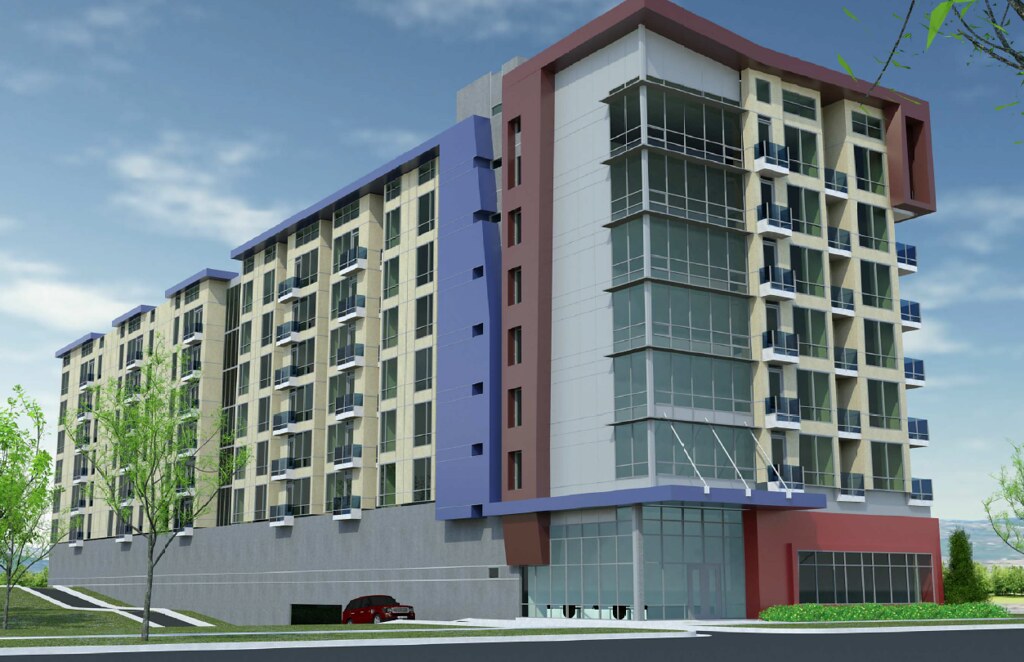
A report commissioned by Salt Lake City and Salt Lake County will assess a preliminary financing model for a hotel near the Salt Palace (pictured) with 800 to 1,000 rooms to attract larger conventions. Photo by Adam Barker, courtesy of Visit Salt Lake.

By Brice Wallace
The Enterprise
A consultant’s financial analysis about a possible convention center hotel in Salt Lake City is pending, but two members of the Governor’s Office of Economic Development (GOED) board recently expressed trepidation about having a large amount of public involvement in any such project.
Salt Lake County and Salt Lake City are spending $50,000 for a report from Strategic Advisory Group about having a hotel of 800 to 1,000 rooms adjoining or within a block of the Salt Palace as a way of attracting larger conventions to the city.
During a discussion of the matter at the board’s October meeting, members Jake Boyer and Brent Brown expressed concern about public money being used to construct the hotel. Boyer, whose development company owns the Hyatt Place Hotel, said he could favor public funding but only to the same extent as other downtown projects that have been publicly financed.
“The difficulty is this is a $300 million hotel and they’re looking for a $100 million check from the public, so [it’s] a third of the cost for this hotel to work,” Boyer said. “It seems like that’s not a level playing field.”
He said room rates and occupancy would suffer for area hotels on nights when conventions are not in town. “It’s a simple supply-demand equation,” he said. “If you flood the market with a thousand rooms, all the other hotels throughout the market have to adjust [their] rate. … We’re concerned about what it might do to occupancy in the downtown, especially with those [hotel development companies] that have invested their own private dollars.”
Brown, a car dealership owner, likened the project to Salt Lake City saying it would become the car-buying capital of the western U.S. and the government would build a dealership four to five times bigger than others in the state. “I would really struggle with that concept,” he said.
Brown added that he wants to see more-concrete evidence about how much additional convention business would come to Salt Lake City if the hotel were built. “So far, what I’ve heard sounds almost like ‘if you build it, they will come.’ That works in a Hollywood movie but not always in reality,” he said.
GOED’s executive director, Spencer Eccles, acknowledged that the hotel matter is “an emotionally charged” issue, especially regarding the role of government and that role’s possible ramifications on the private sector. He urged caution, saying the consultant’s report will determine the next steps of the process.
Leaders of the Salt Lake Chamber have said a convention hotel would generate more local and state taxes from out-of-state delegates and bring more business to Utah restaurants, entertainment venues, transportation companies and retail stores, and ultimately result in guests spilling over to other hotels. However, those leaders oppose using government credit or local tax dollars to finance the hotel’s construction. They support a convention center hotel with financing that is privately led, and with the hotel being devoted to a public purpose consistent with financing used for other significant privately led projects in Salt Lake. The chamber also opposes using transient room taxes to help finance the hotel.
“Pretty much all the studies say that a hotel like this would be successful,” Jason Mathis, executive vice president of the Salt Lake Chamber and executive director of the Downtown Alliance, told the GOED board. “There has never been a study that said this would not bring more conventions to our community and it would be a net positive for our community.”
Salt Lake County has about 17,000 hotel rooms, with downtown accounting for 4,000 to 7,000 of that total, depending on how “downtown” is defined.
Mathis said one study indicated that a convention hotel would cause existing hotels to experience occupancy rates decreases of 1 to 2 percent and daily room rate declines of $4 to $5, but those dips would last only a couple of years before rising. Currently average occupancy is nearly 70 percent, he said.
About two dozen cities have convention “anchor” hotels, with various financing mechanisms, he said. One was built in Baltimore completely with public money but drew the wrath of area hoteliers when it lowered its rates during the recession and the other hotels had to do the same in order to compete. A nonprofit organization built one in Denver, but hoteliers there like it because it helped meet an established need for more rooms.
Mathis said four private entities are interested in developing the Salt Lake City hotel but added that the chamber insists that the hotel be managed by a national hotel brand that would allow Visit Salt Lake to book its rooms two years out.
He suggested that the GOED board could issue a statement on the matter or at least be involved in and learn more about the process. “We think this project has legs,” Mathis said. “We think it has merit, but we want to be really thoughtful and careful how we proceed.”
The hotel is perceived as a way for Salt Lake City to retain the twice-a-year Outdoor Retailer trade show. Mathis said the facility would allow the city to compete against San Antonio, Seattle and Denver for larger conventions, rather than against Albuquerque and Boise, with the area gaining $90 million in direct convention spending.
“Right now, we’ve got a great convention center [but] it sits empty half the time because we don’t have enough convention-quality rooms adjacent to it to keep it full,” Mathis said.
Meeting planners hail Salt Lake City’s attributes but would prefer having convention attendees booked at three to five hotels rather than having to negotiate contracts with 20 and having to arrange transportation to and from the Salt Palace, he said.
“The size of the hotels that we have in Salt Lake right now aren’t really big enough to host the size of the conventions that make it worth the while of commission-based salespeople at a national level working to book business,” Mathis said. “So if they have a chance to bring in somebody to the San Francisco Marriott and the Salt Lake Marriott, they’re always going to look at projects that will go to the San Francisco Marriott because it’s four times larger and their commission will be four times greater.”
Mathis described Salt Lake City as “well equipped” and with a convention industry “ready to explode.”
“You think about the proximity to the mountains, the beauty of this community, what we’re doing right now with ‘Downtown Rising,’ with City Creek Center, with the Gateway, all the things happening in our community, and great access and an airport that’s going to have a TRAX line going to it that will open up in the spring, we’re really poised for success and we really do feel that this project is the next thing that will really take us to the next level.”
GOED board chairman Mel Lavitt expressed frustration about the matter, which has been studied for several years.
“I think probably everyone in this room can agree that the long-term effects if we have the right rooms and the right convention center, we will do more business,” Lavitt said. “The problem is to get across that chasm to get there. This thing has been going on so long. I don’t understand why this wasn’t settled three or four years ago ….”
Read more: The Enterprise - GOED board members uneasy about public funding for SLC hotel





 Prev
Prev




 Linear Mode
