Quote:
Originally Posted by Makid

Try this one:
http://en.wikipedia.org/wiki/Kearns,_Utah
Population (2010)
• Total 35,731
• Density 6,994.1/sq mi (2,700.4/km2)
I think Kearns is the highest density municipality/town/city in the state. But is is out of room to grow and I doubt there will be any more apartments built in the area. That means other areas have a chance to catch up. |
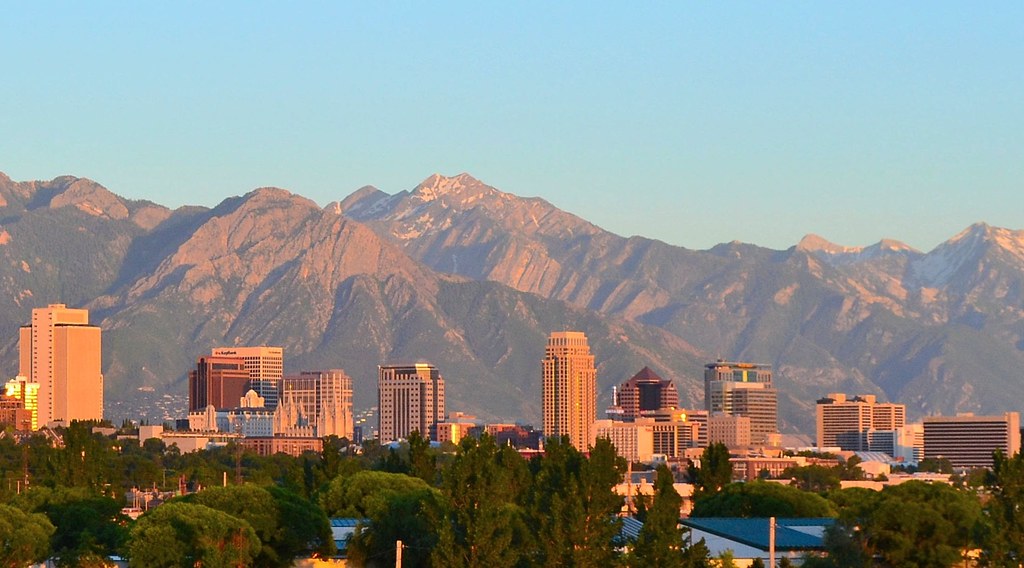
This is why density figures are misleading. Kearns is mostly sprawl and hardly dense. Salt Lake City's residential neighborhoods are far more denser, but the problem is that a huge portion of the city's boundaries incorporate part of the mountains to the east and a gigantic uninhabitable area on the west-side of the city.
Kearns and other Salt Lake suburban area score far higher than the city itself because they're generally located in areas where their boundaries are almost entirely developed and that development is rather suburban in nature.
Just check the walking score for all the communities.
Kearns (using the 84118 zip), gets a 46 walking score. My neighborhood, which isn't even all that urban (compared to a great deal of the city - I live on the south-eastern area of SugarHouse) is a 66 walking score (84106).
To further expand, here's the density of each of those zip codes:
Kearns: 3,329
SugarHouse: 5,603
It's so frustrating because this number is used a lot to suggest Salt Lake is a suburban sprawling city compared to other cities in its region (Denver, Boise, even Phoenix). But in reality, the city's numbers are skewed greatly by the fact most of the city limits incorporate unused land.
Remember, the city limits go all the way up to Grandview Peak to the east and the end of the valley to the west.

Sorry, just had to vent there!





 Prev
Prev



 This led me to check on a statistic that is not necessarily thread specific. So, forgive me on this. But, the population of Utah seems to be on track to overpass 4 states in the next ten years. Currently, Utah is almost 3 million. It should overpass Mississippi, Arkansas, Kansas, and Iowa in the next ten years to become the 30th most populous state. It's not huge news, but I find it interesting to see how fast Utah's population growth is far outpacing many states. Here's a link that shows a graph of state population increases:
.jpg/1024px-Salt_Lake_City..._and_TRAX_(again).jpg)




 ^^^ Congrats...



 Linear Mode
