HomeDiagramsDatabaseMapsForum About
     

Go Back   SkyscraperPage Forum > Regional Sections > United States > Mountain West


Reply

 
Thread Tools Display Modes
     
     
  #3021  
Old Posted May 11, 2011, 8:04 PM
(Eco)nomy_404's Avatar
(Eco)nomy_404 (Eco)nomy_404 is offline
Registered User
 
Join Date: Feb 2011
Location: Jersey Shore
Posts: 299
Quote:
Originally Posted by delts145 View Post
If pics of Viaduct can be sexy S.P., then those are very sexy pics indeed.
You want sexy? This one has curves in all the right places...


Reply With Quote
     
     
  #3022  
Old Posted May 12, 2011, 3:24 AM
SLCdude's Avatar
SLCdude SLCdude is offline
Lurker
 
Join Date: Mar 2010
Location: Salt Lake City
Posts: 836
Ahh! S.P. beat me to it. My TRAX update:

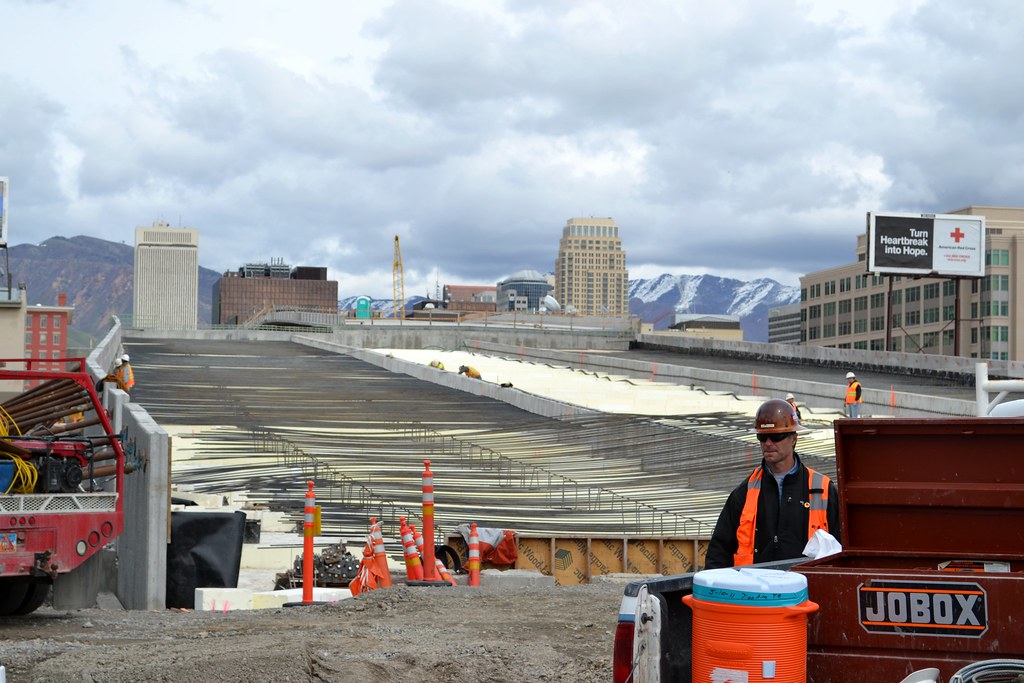
North Temple


Viaduct


Daybreak


Reply With Quote
     
     
  #3023  
Old Posted May 12, 2011, 3:52 AM
s.p.hansen's Avatar
s.p.hansen s.p.hansen is offline
Exurb Enjoyer
 
Join Date: Sep 2010
Location: The Great Salt Lake, Utah
Posts: 2,261
Quote:
Originally Posted by SLCdude View Post
Ahh! S.P. beat me to it.
Lol. I just checked your flickr account to make sure you haven't taken pictures of the Airport TRAX line progressing past the viaduct. My plan is to do that tomorrow .

Great viaduct update anyway!
Reply With Quote
     
     
  #3024  
Old Posted May 12, 2011, 4:12 AM
SLCdude's Avatar
SLCdude SLCdude is offline
Lurker
 
Join Date: Mar 2010
Location: Salt Lake City
Posts: 836


A actually did take some, but from a moving vehicle since I was in a hurry. They ended up being very blurry. That rhymed!

It has progressed a ton since the Fall and I strongly recommend you check it out! They've pretty much laid all the track that is not on North Temple or downtown. There's also ballast where they have laid rail and the middle of North Temple has been dug up (as seen in my first picture above).
Reply With Quote
     
     
  #3025  
Old Posted May 12, 2011, 4:18 AM
s.p.hansen's Avatar
s.p.hansen s.p.hansen is offline
Exurb Enjoyer
 
Join Date: Sep 2010
Location: The Great Salt Lake, Utah
Posts: 2,261
Quote:
Originally Posted by SLCdude View Post


A actually did take some, but from a moving vehicle since I was in a hurry. They ended up being very blurry. That rhymed!

It has progressed a ton since the Fall and I strongly recommend you check it out! They've pretty much laid all the track that is not on North Temple or downtown. There's also ballast where they have laid rail and the middle of North Temple has been dug up (as seen in my first picture above).

I'm very excited to get a look!


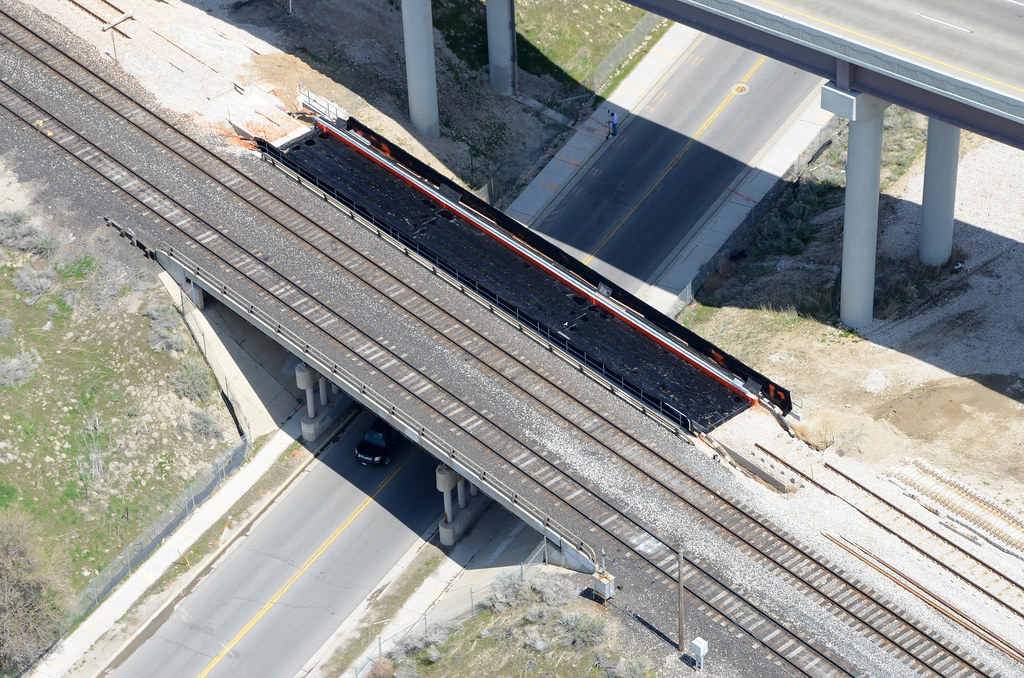
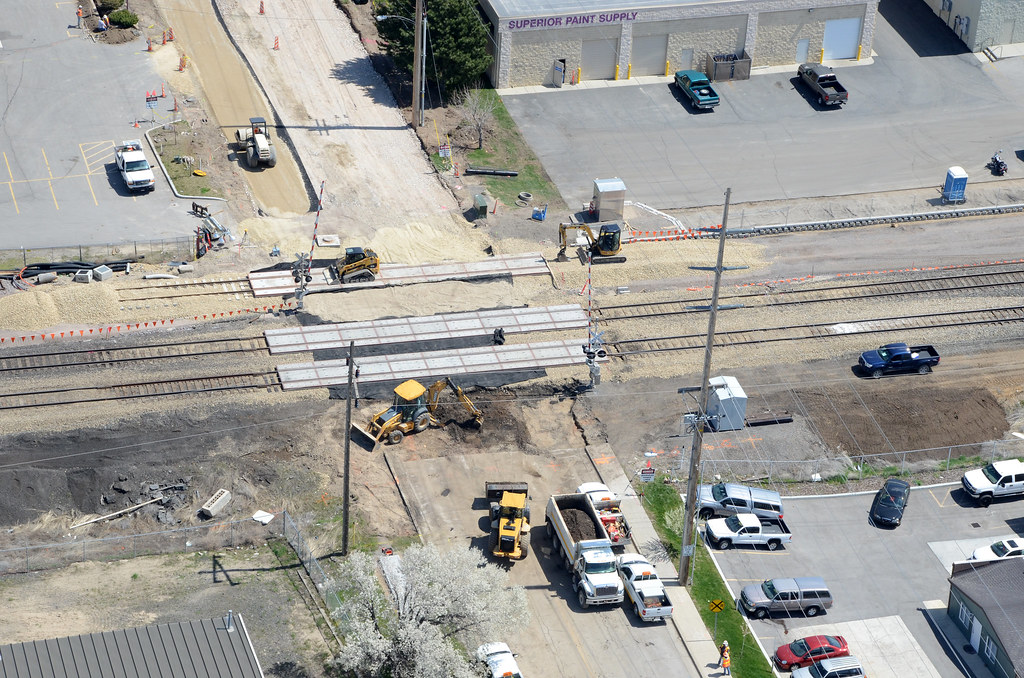
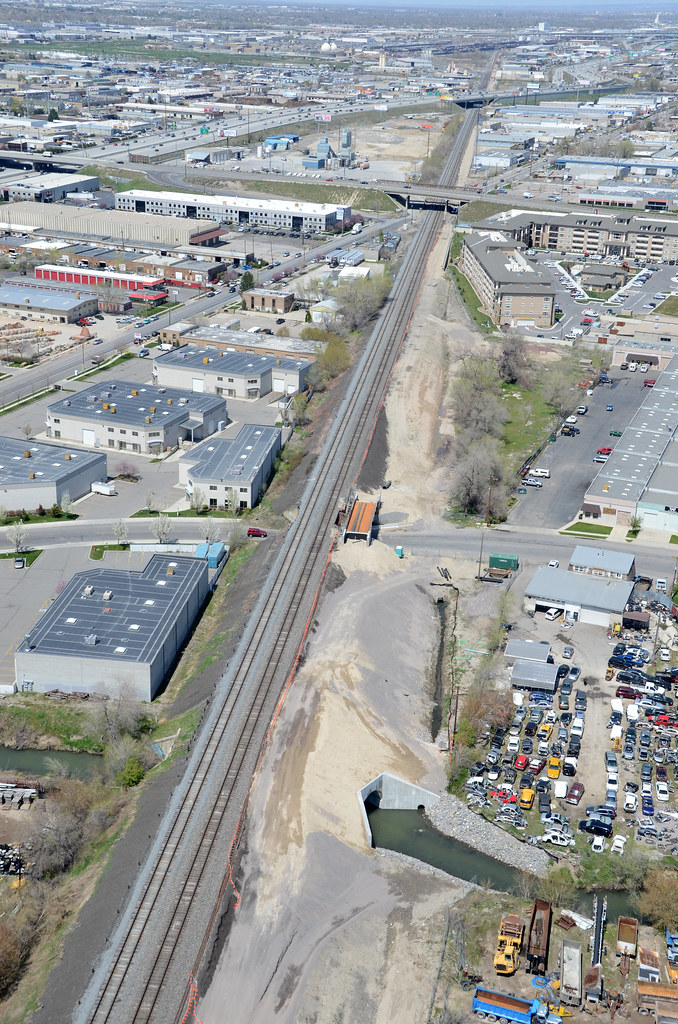
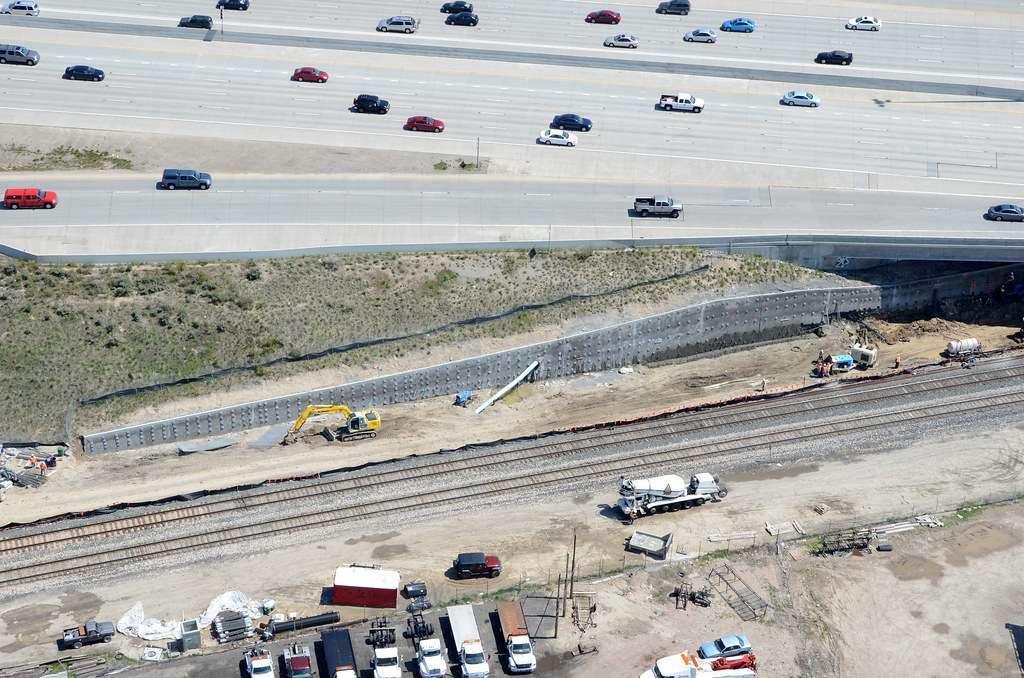
FrontRunner Update From RideUTA's flickr Account

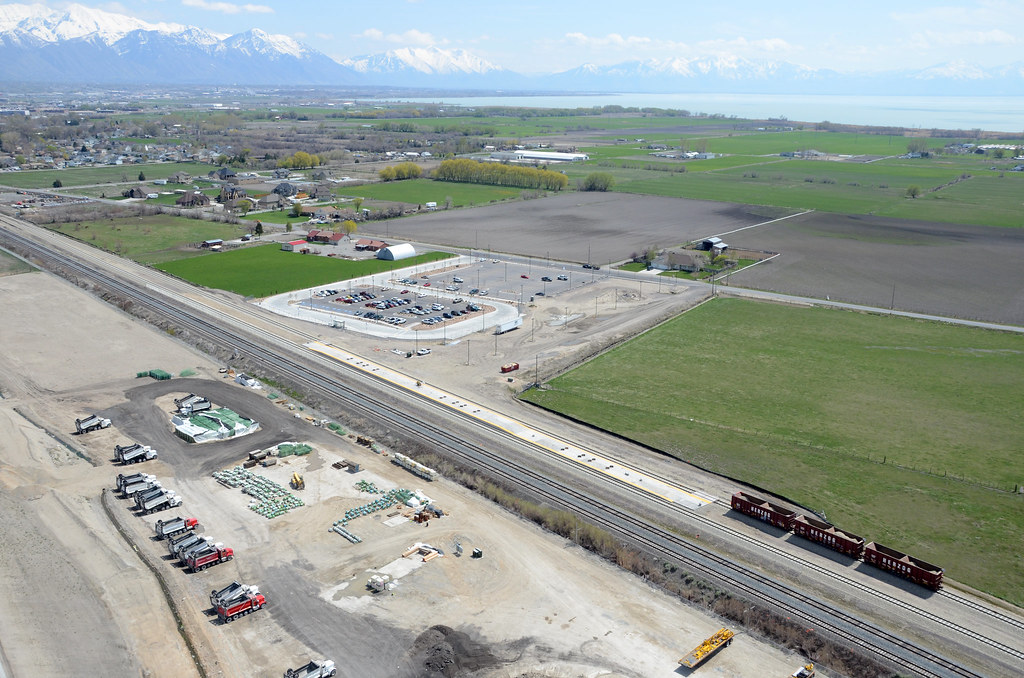
American Fork FrontRunner Progress


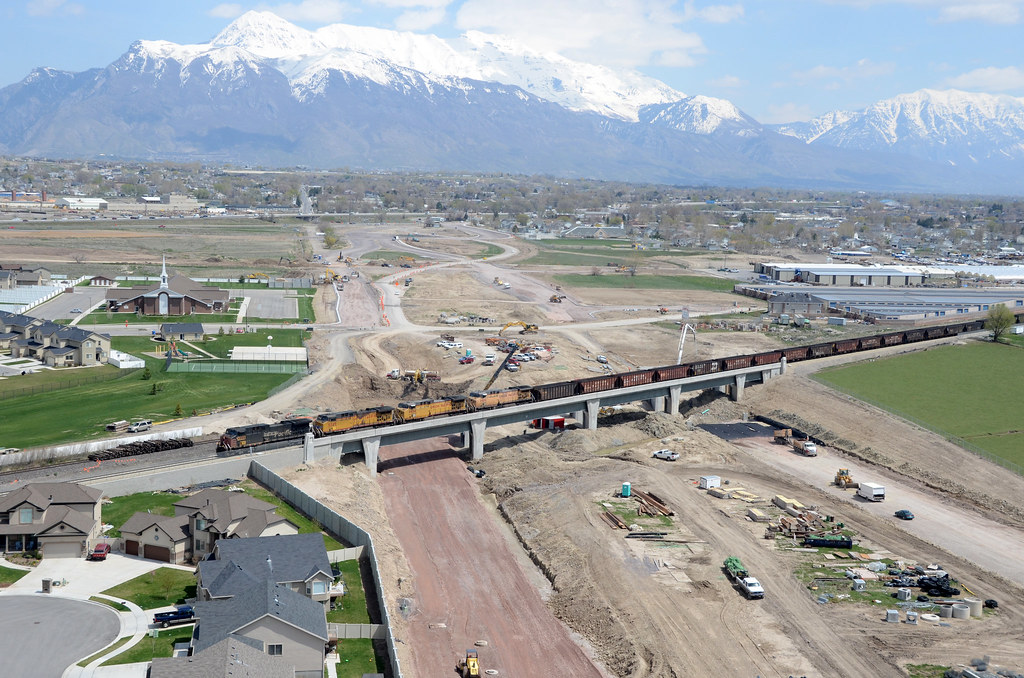
Mountain View Corridor FrontRunner and UP Bridges in Lehi


Jordan Narrows FrontRunner and UP Bridges


Completed Track Near 11400 South


Flyover Bridge at 9800 South Looking South


Deck Sealant Installed on the Winchester Street Bridge


UTA and UPRR Crews Installing New Crossing Panels at the 5900 South Crossing


5300 South Bridge: In this picture you can see the UP lines and the existing light rail lines


4500 S. Bridge


Central Ave. Bridge


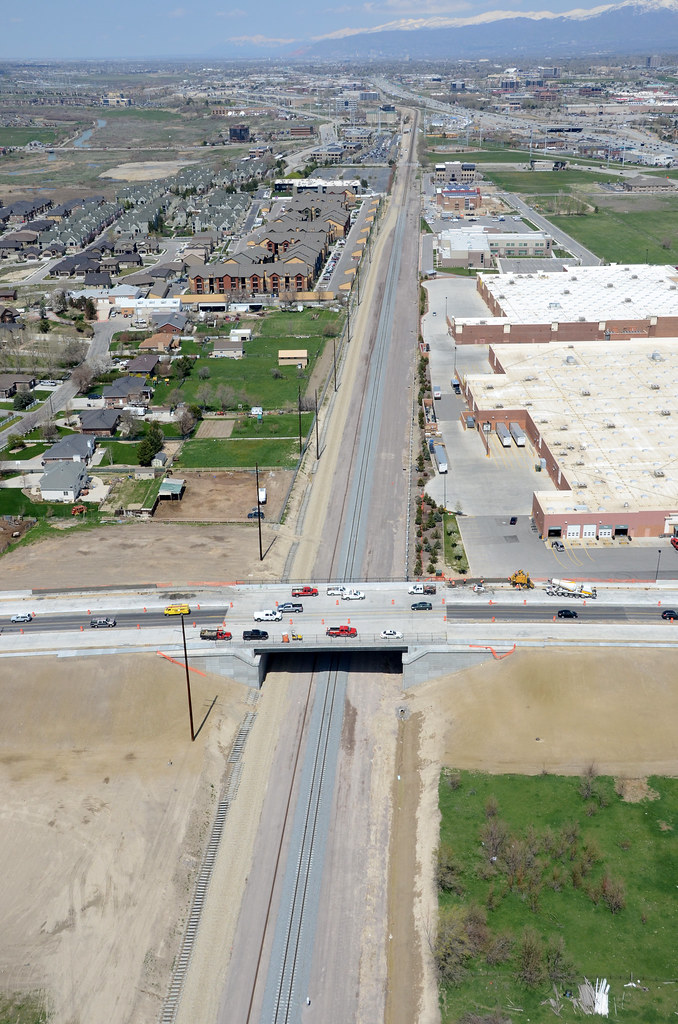
3500 South Underpass


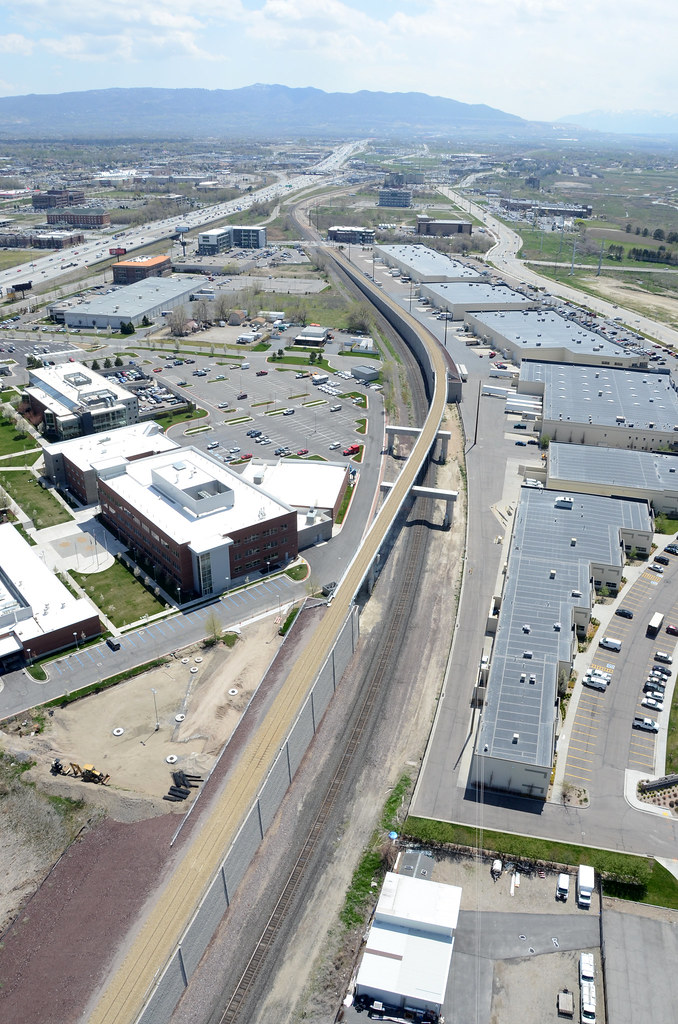
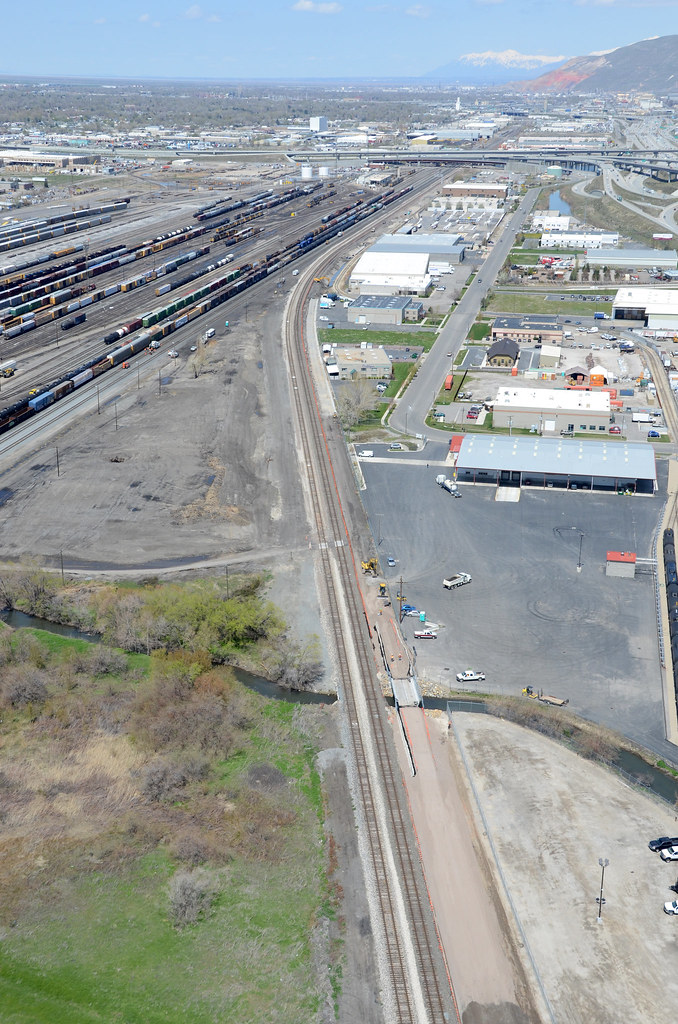
Millcreek Bridge Construction: Union Pacific's Roper Yards is visible in the picture
Reply With Quote
     
     
  #3026  
Old Posted May 12, 2011, 4:56 AM
Future Mayor's Avatar
Future Mayor Future Mayor is offline
Vote for me in 2019!
 
Join Date: Jun 2007
Location: Salt Lake City, UT
Posts: 4,803
Quote:
Originally Posted by SLCdude View Post

Viaduct
Imagine how good this area will look when a new building, is built on this parking lot. Maybe Boyer is holding off on this Gateway Tower, maybe there is potential for something taller than originally proposed now that a FrontRunner Station is 2 feet away. (exaggerating) but still, it's so close. I hope they don't waste that space.
Reply With Quote
     
     
  #3027  
Old Posted May 12, 2011, 5:00 AM
Future Mayor's Avatar
Future Mayor Future Mayor is offline
Vote for me in 2019!
 
Join Date: Jun 2007
Location: Salt Lake City, UT
Posts: 4,803
Quote:
Originally Posted by s.p.hansen View Post

American Fork FrontRunner Progress

American Fork has a huge opportunity to make their FrontRunner stop into a true TOD, not a transit adjacent like Farmington, while still providing parking for commuters. If they place the parking on the south end of the platform, like it shows now, the green field on the north end is ripe for some high density development, commercial, residential and retail. I could see them zoning for up to 5-10 stories right there. Lets keep our fingers crossed for AF. Hell even Payson has zoned their TOD for up to 5 stories.
Reply With Quote
     
     
  #3028  
Old Posted May 12, 2011, 1:26 PM
delts145's Avatar
delts145 delts145 is online now
Registered User
 
Join Date: Aug 2006
Location: Downtown Los Angeles
Posts: 20,625
Fantastic transpotation updates S.P. and SLCDude. It's our good fortune that you guys are TRAX/FrontRunner geeks. From looking at these pics, it's no wonder that Brookings is giving the Wasatch Front such high marks. When this long list of projects under construction is finished, Metro Salt Lake's transportation convenience will be phenomenal. Of course, all of this will put Salt Lake's current boom/growth cycle in an even higher gear. These next ten years will be very interesting to watch in that area.

Brookings - Utah transit among best to connect people and jobs

By Lee Davidson
The Salt Lake Tribune

His past two jobs allow Andrew Gruber to see easily why a new study says most transit agencies nationally do not connect people and jobs well — and why Utah is heralded as a bright-spot exception.


Gruber, executive director of the transportation-planning Wasatch Front Regional Council, said, “I came here from Chicago where I worked in the transit system. It’s 100 years old and is a traditional hub-and-spoke system. It was designed to bring people from the suburbs into the central city where the jobs were.”


Al Hartmann | Tribune file photo In the top 100 metro areas nationally, the Brookings study figured that public transit buses and trains allow residents to reach only 30 percent of their area’s jobs within a 90-minute ride. In the Salt Lake metro area, transit allows reaching 59 percent of jobs — or two times better than average.


But most jobs aren’t downtown anymore. They moved to the suburbs, and the system wasn’t designed to move people between suburbs — a problem faced in many metro areas nationwide.

“In contrast, along the Wasatch Front our transit system is relatively new,” he said. And because the area is compactly boxed in by mountains, it was clear where growth would come and planners “were able to design a new transit network” that transports people to emerging suburban job centers.

That helps Utah areas rank unusually high in a study released Thursday by the Brookings Institution, a Washington-based nonprofit policy group, about how well transit agencies in the nation’s top 100 metro areas connect people and jobs.

The Salt Lake metro area ranked No. 3, Provo-Orem ranked No. 9 and Ogden-Clearfield ranked No. 11.

“Utah is a strong example of how good planning and strong investment can really help metro areas effectively connect people to jobs,” Elizabeth Kneebone, a coauthor of the Brookings study, told The Salt Lake Tribune.

In the top 100 metro areas nationally, the study figured that public transit buses and trains allow residents to reach only 30 percent of their area’s jobs within a 90-minute ride.

In the Salt Lake metro area, transit allows reaching 59 percent of jobs — or two times better than average. In Provo-Orem, it reaches 48 percent. In Ogden-Clearfield, it reaches 42 percent.

Kneebone said areas that did well in the study share three key characteristics: Their transit networks are extensive and reach far into communities; most jobs are in relatively concentratedareas; and officials use integrated planning for where to allow housing, job areas and transportation systems.

“Utah has done each of these things right,” Kneebone said. “You have efforts like Envision Utah. Its purpose is to think across these different areas of planning, and think of more comprehensive development patterns.”

Gruber said connecting people to jobs via transit is a core part of his agency’s regional planning — and is needed for the Wasatch Front to handle adding an expected 1.4 million additional people in the next 30 years without traffic gridlock.

He adds, “The region has had the vision to make significant investment in transit over the past 10 years. We have the highest per capita transit investment of any region in the area in the last 10 years,” in building TRAX lines, FrontRunner commuter rail and bus rapid transit lines that have their own highway lanes.

Tyler Garcia, a planner for the Utah Transit Authority, said UTA came up with a unique sort of hybrid system to allow a more extensive reach into communities.

It is partially a hub-and-spoke system — with TRAX lines being the elongated hub into which local buses feed. It also has a grid system for buses where people can travel east-west, and north-south. Additionally, UTA has some express and fast buses for quick, direct service between big job and population centers.


(Al Hartmann | The Salt Lake Tribune) Because many jobs aren’t downtown anymore, the best transit systems move people to emerging suburban job centers, the Brrookings study said

He said UTA looked at planned growth, surveys of what people said they wanted, demographic and other data to redesign the system away from a traditional hub and spoke — such as a complete revamping of the Salt Lake County system in 2007, which he said has increased ridership.

Lorin Simpson, UTA general manager for Salt Lake County, said that trying to connect people and jobs “is definitely a high priority for us and a significant ridership generator.”

Gruber also said companies considering relocating or expanding to Utah increasingly look at transit options available to their workers.

“Part of the reason for that is employers know often transit can provide a more predictable trip time from home to work, particularly on rail system, than the vagueries of traveling by car,” he said.

Kneebone said she would like to see Utah “continue to be leader on these kind of issues. It really does show what good planning and good investment can do for metro areas.”

http://www.sltrib.com/sltrib/money/51794064-79/transit-jobs-lake-salt.html.csp?page=1

.

Last edited by delts145; May 12, 2011 at 1:57 PM.
Reply With Quote
     
     
  #3029  
Old Posted May 12, 2011, 3:44 PM
(Eco)nomy_404's Avatar
(Eco)nomy_404 (Eco)nomy_404 is offline
Registered User
 
Join Date: Feb 2011
Location: Jersey Shore
Posts: 299
Quote:
Originally Posted by delts145 View Post
Fantastic transpotation updates S.P. and SLCDude. It's our good fortune that you guys are TRAX/FrontRunner geeks. From looking at these pics, it's no wonder that Brookings is giving the Wasatch Front such high marks. When this long list of projects under construction is finished, Metro Salt Lake's transportation convenience will be phenomenal. Of course, all of this will put Salt Lake's current boom/growth cycle in an even higher gear. These next ten years will be very interesting to watch in that area.
I am going to just make a commentary that I hope doesn't get some people heated up. From what I have observed, Denver and Portland seem to be major rivals to Salt Lake City (healthy rivalry, of course). In this report it looks like SLC has Denver beat in every statistic except for wait time which Denver wins by just 24 seconds. SLC has Portland beat in every statistic execpt for wait time as well, which has Portland winning by 1 min and 6 sec:

SLC/Denver/Portland

89% /84%/83% : Coverage (population w/access to transit near home)
8.5 /8.1/7.4 : Frequency (wait time in minutes)
59% /47%/40% : Job Access (population w/access to jobs in less than 90 min from home)
3rd /6th/12th : Overall Rank

Conrats SLC! Now UTA just needs to boost service frequency by a little and it'll have them both beat!

One advantage SLC has against the previously stated rivals is that it was slower to mature than such cities. Since SLC started its growth boom just over the last two decades, it has the advantage of pre-contruction planning that other cities that matured in the 70's or 80's didn't have. SLC doesn't have to do a lot of demolition to build more rail but can take advantage of existing open space and rail. Also, SLC is maturing in a completely different political atmosphere. With gas on the raise, both local and national political atitudes support SLC's efforts and its easier for SLC to secure state and federal funding to fund its transit projects. Cities like Denver matured in a different climate - where everyone was rushing to the burbs and supported auto-mobile transit investments such as freeways. These cities had to go back later to clear space to put in such systems - which is an uphill political battle. With Obama throughing money around to fund smart transit projects and local Utah residents votting in favor of tax increases to fund them, SLC has an even greater opportunity to continue future investment. I can only see good horizons for SLC's growing mass transit system.

Later Note:

I just looked again and it appears that Provo and Ogden also have Portland beat at 9th and 11th place respectively. Wow! Utah has three metros ahead of Portland - and that's saying something!

Last edited by (Eco)nomy_404; May 12, 2011 at 11:29 PM.
Reply With Quote
     
     
  #3030  
Old Posted May 12, 2011, 5:02 PM
Future Mayor's Avatar
Future Mayor Future Mayor is offline
Vote for me in 2019!
 
Join Date: Jun 2007
Location: Salt Lake City, UT
Posts: 4,803
While not certain exactly how much it will effect the frequency times, I would guess that the opening of the West Valley and South Jordan Trax lines will increase frequencies a little bit, at least along the elongated hub, (Trax).
Reply With Quote
     
     
  #3031  
Old Posted May 12, 2011, 5:20 PM
scottharding scottharding is offline
Registered User
 
Join Date: Oct 2008
Location: Salt Lake City
Posts: 1,681
Maybe I missed it, but can anyone clarify for me if this study factored in the lines yet to be completed here in SLC? Did the proximity to homes and jobs include the WV, WJ, Aiport, and Sugarhouse lines?
I'm thinking yes, as much of the study talked about future planning, but if not, it seems to me that when those lines are completed, SLC becomes the best in the nation.
Reply With Quote
     
     
  #3032  
Old Posted May 13, 2011, 12:10 AM
s.p.hansen's Avatar
s.p.hansen s.p.hansen is offline
Exurb Enjoyer
 
Join Date: Sep 2010
Location: The Great Salt Lake, Utah
Posts: 2,261
Airport TRAX Line Update


Switching over to my 80mm Medium Format jerry-rigged tilt-shift lens makes things appear much closer. Compare these two pictures below with the two above.


Hopefully SLCdude got some pictures of the line at the actual airport because I certainly did not. Sufficeth to say it is coming along nicely.
Reply With Quote
     
     
  #3033  
Old Posted May 13, 2011, 1:33 AM
Smuttynose1 Smuttynose1 is offline
Registered User
 
Join Date: Jul 2007
Posts: 236
Quote:
Originally Posted by Future Mayor View Post
While not certain exactly how much it will effect the frequency times, I would guess that the opening of the West Valley and South Jordan Trax lines will increase frequencies a little bit, at least along the elongated hub, (Trax).
Yes, you're right. The West Valley and West Jordan trains will continue up the main TRAX spine, so frequencies north of Fashion Place, and particularly north of Central Pointe, will increase quite a bit.
Reply With Quote
     
     
  #3034  
Old Posted May 13, 2011, 2:30 AM
s.p.hansen's Avatar
s.p.hansen s.p.hansen is offline
Exurb Enjoyer
 
Join Date: Sep 2010
Location: The Great Salt Lake, Utah
Posts: 2,261
TRAX moving to colorful names

The Salt Lake Tribune
By lee davidson


A colorful change is coming to TRAX when it adds new lines on Aug. 7.

"Instead of referring to them as the Sandy or Mid-Jordan lines, we’re going to be moving to color-coding the lines publicly. It’s very common to see in other systems — the red line, the blue line, the green line," said Andrea Packer, UTA chief communications officer.

Although UTA hasn’t yet decided exactly what color names will go with what lines, she said, "We’re very much aware that the line to the University of Utah better be the red line."

What has been called the Mid-Jordan line, which will open on Aug. 7, will run between the Daybreak area of South Jordan and the University of Utah.

The current University line will disappear as a separate line on Aug. 7, as will a current temporary, direct line between Sandy and the U. Riders on other lines will then need to transfer to the Mid-Jordan line to get to the university. And university riders seeking to go downtown to the intermodal hub will also need to transfer.

The new West Valley City TRAX line, which will also open Aug. 7, will initially go the intermodal hub in downtown Salt Lake City, as will the existing Sandy line. However, the West Valley line is intended eventually to extend to the Salt Lake City International Airport.

http://www.sltrib.com/sltrib/politics/51804358-90/aug-color-jordan-lake.html.csp


UTA to dump some routes, change others

The Salt Lake Tribune
By Lee Davidson


Ninety percent of Salt Lake County bus routes will change — and 10 percent will be eliminated — under a final system redesign unveiled Thursday by the Utah Transit Authority.

UTA is cutting, shortening or combining bus routes countywide to pay to operate the new Mid-Jordan and West Valley City TRAX lines that are scheduled to begin operation on Aug. 7, the day that the bus system changes will also take effect.

UTA spokesman Gerry Carpenter said the recession deeply cut sales taxes that fund about 80 percent of UTA operations, which forced the cuts. He said UTA’s budget this year is $70 million lower than what the agency had projected when the two new TRAX lines were planned.

Even with the bus cuts, Carpenter said UTA estimates that overall ridership will increase a minimum of 6 percent between adding the two new TRAX lines and implementing changes that preserve the most popular bus routes by discarding or combining little-used ones.

"We will have more miles of service than ever before when you combine bus and rail. We will have more riders than ever before, and we will meet our budget," said Lorin Simpson, UTA regional general manager for buses in Salt Lake County.

Maps and descriptions of route-by-route changes are available online at rideuta.com. However, detailed hourly schedules will not be available until July 7, Carpenter said.

Simpson said impacts to the bus system could have been more severe, but comments from riders suggested some creative changes and route combinations that preserved transit in most areas on most days.

For example, UTA had considered eliminating all Sunday buses to save money, but it ended up saving most. Simpson said many riders suggested that some Sunday routes were used more than some weekday routes. UTA looked at that, found it was true, and dumped the less popular routes instead. Also, UTA said it was persuaded that the Sunday routes were essential to many riders for jobs.

"How you decide where to cut when you have a limited budget is based on low ridership, inefficient services and services where you have supporting or back-up options for people," Simpson said.

In another case, about 100 riders who used the Route 320 fast bus from Sandy to downtown Salt Lake City were upset their route had been proposed for elimination. They proposed instead that just a couple of buses each in the morning and evening be offered, which would fill buses and save money. UTA found that made economic sense and adopted that.

David Sturgeon, a Route 320 rider who helped lead a protest over its proposed demise, said, "I’m excited they chose to maintain the route but am disappointed they couldn’t see that on their own — and that we had to protest and create a little nuisance."

In other moves, UTA shortened many routes that used to run from sites in the western valley to downtown Salt Lake City to instead take riders to the new TRAX routes where they can transfer.

Simpson said the agency heard hundreds of comments from residents in Herriman, Riverton and South Jordan concerned about the loss of express buses from there to downtown Salt Lake City.

He said UTA came up with a new shuttle in some of those areas that gives frequent service to the new Mid-Jordan TRAX line. Also, research showed that many riders drove cars to park-and-ride lots to take fast buses, and found driving instead to TRAX parking lots will result in a commute that is essentially the same, since TRAX moves faster than buses.

Simpson said rider comments also showed that earlier proposals would have left a void of bus service in Salt Lake City’s industrial northwest quadrant, because routes that ran there were shortened to go directly to TRAX lines. He said UTA found savings to allow shuttles to circulate through that area.

Simpson said that about 60 percent of all concerns raised by riders during UTA’s earlier comment period were largely solved.

"The public gave us terrific ideas," he said.

Carpenter added, "Our planners have done some terrific things and stretched the budget beyond what any of us had hoped."

Carpenter said some people who find that transit will no longer work for them because of the changes could consider van pool service offered by the agency — where vans are offered for low cost — or consider using UTA’s service that helps match people with similar schedules into carpools.

http://www.sltrib.com/sltrib/politics/51804265-90/bus-buses-lake-riders.html.csp

Reply With Quote
     
     
  #3035  
Old Posted May 13, 2011, 2:57 AM
SLCdude's Avatar
SLCdude SLCdude is offline
Lurker
 
Join Date: Mar 2010
Location: Salt Lake City
Posts: 836


That's great news about the color-coding. I've even said in a previous post that this would be a good idea. I think riding the red line, yellow line, green line, etc. sounds a lot more fun and simple than riding the sandy line, West Valley Line, etc.

Besides, trains start somewhere and end somewhere else. A line titled "University Line" doesn't tell you where the other end of the line is. I'm glad to see Salt Lake City is following Denver and Portland's examples for line naming.
Reply With Quote
     
     
  #3036  
Old Posted May 13, 2011, 8:05 AM
SLC4L SLC4L is offline
Registered User
 
Join Date: Feb 2010
Location: Salt Lake City, Utah
Posts: 157
That color-coding popped up a long time ago and then sort of fell off the face of the Earth. I'm glad they're finally switching it up now.
Reply With Quote
     
     
  #3037  
Old Posted May 13, 2011, 3:18 PM
Future Mayor's Avatar
Future Mayor Future Mayor is offline
Vote for me in 2019!
 
Join Date: Jun 2007
Location: Salt Lake City, UT
Posts: 4,803
Quote:
Originally Posted by SLCdude View Post


Besides, trains start somewhere and end somewhere else. A line titled "University Line" doesn't tell you where the other end of the line is. I'm glad to see Salt Lake City is following Denver and Portland's examples for line naming.
And many other cities.
Reply With Quote
     
     
  #3038  
Old Posted May 13, 2011, 5:15 PM
UTPlanner's Avatar
UTPlanner UTPlanner is offline
Registered User
 
Join Date: Dec 2007
Posts: 941
The color coded names for the routes is especially helpful for visitors. Sandy, West Valley or Mid-Jordan doesn't mean much to somebody from out of town.
Reply With Quote
     
     
  #3039  
Old Posted May 13, 2011, 7:14 PM
arkhitektor arkhitektor is offline
Registered User
 
Join Date: Feb 2005
Location: Clearfield, UT
Posts: 1,784
Quote:
Originally Posted by s.p.hansen View Post
TRAX moving to colorful names

The Salt Lake Tribune
By lee davidson


A colorful change is coming to TRAX when it adds new lines on Aug. 7.

"Instead of referring to them as the Sandy or Mid-Jordan lines, we’re going to be moving to color-coding the lines publicly. It’s very common to see in other systems — the red line, the blue line, the green line," said Andrea Packer, UTA chief communications officer.

Although UTA hasn’t yet decided exactly what color names will go with what lines, she said, "We’re very much aware that the line to the University of Utah better be the red line."

What has been called the Mid-Jordan line, which will open on Aug. 7, will run between the Daybreak area of South Jordan and the University of Utah.

The current University line will disappear as a separate line on Aug. 7, as will a current temporary, direct line between Sandy and the U. Riders on other lines will then need to transfer to the Mid-Jordan line to get to the university. And university riders seeking to go downtown to the intermodal hub will also need to transfer.

The new West Valley City TRAX line, which will also open Aug. 7, will initially go the intermodal hub in downtown Salt Lake City, as will the existing Sandy line. However, the West Valley line is intended eventually to extend to the Salt Lake City International Airport.

http://www.sltrib.com/sltrib/politics/51804358-90/aug-color-jordan-lake.html.csp
This is also the first that I've seen officially stating the West Valley Line (Yellow or whatever color they assign in) will go to the airport. Does this mean than when the airport segment opens, Central Station will be back to only being served by one TRAX line?
Reply With Quote
     
     
  #3040  
Old Posted May 13, 2011, 7:48 PM
(Eco)nomy_404's Avatar
(Eco)nomy_404 (Eco)nomy_404 is offline
Registered User
 
Join Date: Feb 2011
Location: Jersey Shore
Posts: 299
Quote:
Originally Posted by SLCdude View Post


That's great news about the color-coding. I've even said in a previous post that this would be a good idea. I think riding the red line, yellow line, green line, etc. sounds a lot more fun and simple than riding the sandy line, West Valley Line, etc.

Besides, trains start somewhere and end somewhere else. A line titled "University Line" doesn't tell you where the other end of the line is. I'm glad to see Salt Lake City is following Denver and Portland's examples for line naming.
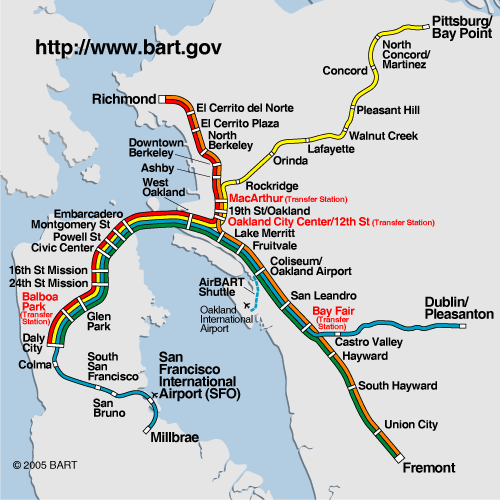
One transit system I have a lot of repect for in the US is that of the San Francisco Bay Area. When I lived there I took the BART (Bay Area Rapid Transit) weekly. On their maps the lines are colored but the trains retain the destination names on the digital sign. For example, the line colored yellow is always refered to as Pitsburg/Bay Point when going northest and the same line is refered to as SF Airport/Milbrae while going southwest (and the digital sign on the train says the place name, not color). I found it easier to navigate with the place names. In the city proper, however, the MUNI lines are named by letters ("the J-line", "the K-line", etc.) To make it easier to navigate, they combined the neighborhood/street names with the letters. I personaly perfer this method of route naming. I suppose that people in SLC will just have to study the map and get to know it well - tourists will have to pay close atention to the route maps.

BART Map:


MUNI Map:


Last edited by (Eco)nomy_404; May 13, 2011 at 8:00 PM.
Reply With Quote
     
     
This discussion thread continues

Use the page links to the lower-right to go to the next page for additional posts
 
 
Reply

Go Back   SkyscraperPage Forum > Regional Sections > United States > Mountain West
Forum Jump


Forum Jump


All times are GMT. The time now is 4:38 PM.


Powered by vBulletin® Version 3.8.7
Copyright ©2000 - 2026, vBulletin Solutions, Inc.