Quote:
Originally Posted by JACKinNYC

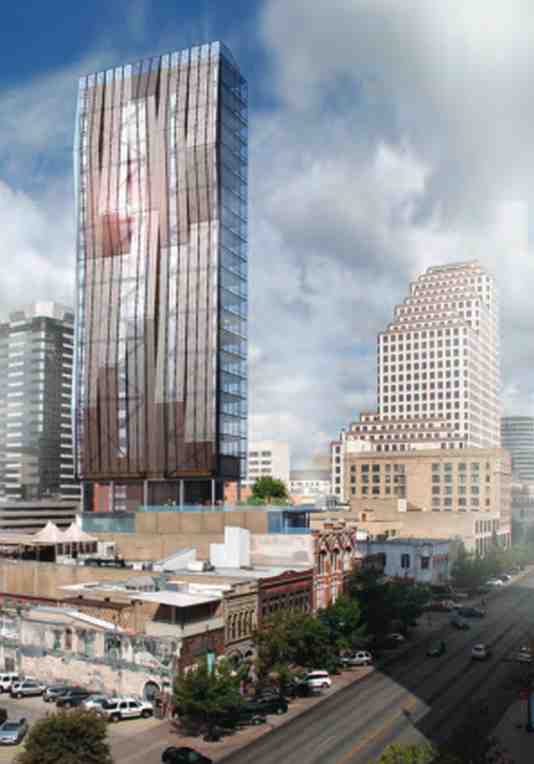
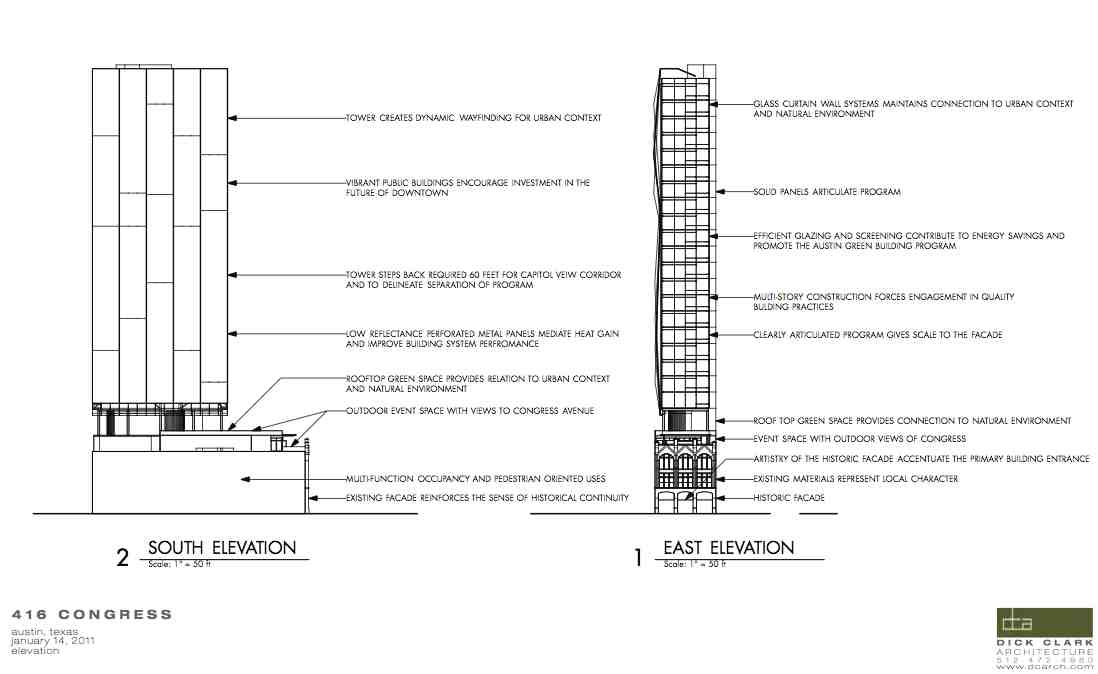
That's a good example of just one of the many added benefits of preserving historic buildings: this is a small lot with an old building on it, forcing the new building to fit all their floorspace into a confined area, thus causing the building to be skinnier and taller than it might otherwise have been.
|

A friend of mine in the mid 80's was the historic preservation architect for the Robertson building. I remember how he diligently worked to bring that building back to its original style by studying old Congress Avenue photos. He had to use a news photo taken around 1915 of the building fire next to it in order to re-draw the four limestone caps at the roof line, which had been removed. It was an amazing transition of a building that had been "modernized" in the 50's with a fake facade that covered the entire front.
I was curious about the interior, as he did a full redesign on it, leaving little of the original, though being sensitive to certain period styles. He explained that in many old buildings the facades were the most significant for restoration. The interiors were often shells that would be continually retrofitted for tenants.
I've seen that done a lot since. In DC I saw a half block of old buildings hollowed out and rebuilt while maintaining the original facades. Pretty cool, actually.





 Prev
Prev










 Linear Mode
