HomeDiagramsDatabaseMapsForum About
     

Go Back   SkyscraperPage Forum > Global Projects & Construction > City Compilations


Closed Thread

 
Thread Tools Display Modes
     
     
  #7381  
Old Posted Apr 11, 2010, 6:46 AM
KevinFromTexas's Avatar
KevinFromTexas KevinFromTexas is offline
Meh
 
Join Date: Jul 2001
Location: Austin<--->Birmingham<--->Atlanta
Posts: 55,831
I've said it before, but I'm glad those highways near downtown didn't get built. Other cities are now trying to find ways (and money) to bury those freeways so they can open up that land again and reconnect neighborhoods that were cutoff from the rest of the city. People up north scratch their heads about the huge flyovers on our freeways in Texas, but I cringe less over them than I do the awful elevated highways alongside waterways and downtowns like what they have up north. If those highways near downtown had been built, that's probably what we would have gotten. And every city I've seen that has its downtown surrounded with highways has a dead downtown. Name any city in that situation, and its downtown is but a shadow of its former self.
__________________
My girlfriend has a poodle named Kevin.
     
     
  #7382  
Old Posted Apr 11, 2010, 7:51 AM
hookem hookem is offline
Registered User
 
Join Date: Apr 2007
Posts: 1,565
Quote:
Originally Posted by KevinFromTexas View Post
I've said it before, but I'm glad those highways near downtown didn't get built. Other cities are now trying to find ways (and money) to bury those freeways so they can open up that land again and reconnect neighborhoods that were cutoff from the rest of the city. People up north scratch their heads about the huge flyovers on our freeways in Texas, but I cringe less over them than I do the awful elevated highways alongside waterways and downtowns like what they have up north. If those highways near downtown had been built, that's probably what we would have gotten. And every city I've seen that has its downtown surrounded with highways has a dead downtown. Name any city in that situation, and its downtown is but a shadow of its former self.
I totally agree. I'm so thankful those plans never came to fruition. If I ever encounter a past Austin city leader from the 60s/70s/80s, I'll definitely be buying them a beer!

Quote:
Originally Posted by OU812 View Post
austin is going to have transportation problems faaaaaar into the future. of the 4 major cities of texas (not including el paso because i know nothing about them) -- austin had the worst planning back 30/40/50 years ago. we all know by now that new expressways were voted down. a loop around the city (beltway) was voted down. a downtown crosstown expressway was voted down, etc. etc. etc. it's an endless debate that only makes me sick to my stomach to argue about, so i just grin and bear it.
I disagree 100%. Like so much of history, the truly wise decisions don't get acknowledged until years after the fact. Austin is different from (and to many people, more desirable than) the other Texas metros precisely because the city leaders didn't follow the generic suburban model that was pushed so much in the 60's and 70s. They resisted, rightfully so, a terrible philosophy of city planning despite how popular it may have been at the time.

As far as I'm concerned, it's Dallas, Houston, and San Antonio that made the planning mistakes 30/40 years ago. I don't blame them, because it really would have taken an out-of-the box philosophy to foresee what would be truly valued in a city 40 years later. Nonetheless, they took the "easy" route of just assuming that urban planning = increased road capacity. They built loop after loop, sending a clear message to the residents of the original core areas of the city: We're abandoning you. Your neighborhood is obsolete. Come live in one of the fancy, modern neighborhoods off the new highway, away from all the trouble of the inner city. And with their cities encouragement, the residents did just that.

Now, 40 years later, cities across the country are learning the folly of that idea. It's not sustainable, it's not efficient (doesn't lend itself to public transportation), it's not pretty, and it dilutes any culture a city might have otherwise developed. It goes against centuries of city design, all in the name of the automobile. And you know what? That is poor planning. Shortsighted, misguided, whatever you want to call it.

So today we have the resurgence of the core neighborhoods in cities all over America. Austin is well positioned in this resurgence, as its core neighborhoods haven't been abandoned or chopped up by highways like DFW or Houston. It's part of the reason the downtown building boom here has such a better chance of success than in those other Texas cities.

Dallas, Houston, and San Antonio will always have urban areas in their core, and areas like Austin... which will provide people in those cities a good modern lifestyle, if they choose to live in those areas. Unfortunately, they will always just remain pockets, because of the poor planning of the past (ie, just build more road capacity). I'm afraid they are just too far gone to ever be able to recover the entire "urban cores" they had back when cities were planned logically.

So, while you are enjoying driving in the "suburban canyons" of tall buildings in the burbs of Dallas or Houston (and I do admit it's cool to drive through them), just remember that those corridors may represent the permanent loss of a cohesive urban core for those cities.

     
     
  #7383  
Old Posted Apr 11, 2010, 5:09 PM
eburress's Avatar
eburress eburress is offline
Registered User
 
Join Date: Sep 2005
Posts: 1,531
^^ According to you, it would seem as if Austin is this ultra dense urban oasis without suburbs or sprawl, which absolutely is not the case. Austin is not NYC or San Francisco, and frankly, it isn't any more dense and its neighborhoods aren't any more cohesive than any of the other Texas cities. You seem to ignore the fact that Austin does have freeways - the problem is that theirs don't serve its people in a terribly helpful way.
     
     
  #7384  
Old Posted Apr 11, 2010, 6:26 PM
hookem hookem is offline
Registered User
 
Join Date: Apr 2007
Posts: 1,565
Quote:
Originally Posted by eburress View Post
^^ According to you, it would seem as if Austin is this ultra dense urban oasis without suburbs or sprawl, which absolutely is not the case. Austin is not NYC or San Francisco, and frankly, it isn't any more dense and its neighborhoods aren't any more cohesive than any of the other Texas cities.
No, it's not ultra dense, and I didn't mean to say that it was. Please don't imply that I ever compared it to NYC or SF, because I clearly did not. What I did say is that the central part of Austin is almost entirely "blight-free", with the neighborhoods pretty much intact (especially compared to every other city in Texas) and maintaining basically the same status they had when the city was young. So yes, it is my opinion that Austin's central neighborhoods are more cohesive than the other Texas cities. And that characteristic helps Austin in the challenge all cities are facing when trying to return to the more urbanized model.

Quote:
You seem to ignore the fact that Austin does have freeways - the problem is that theirs don't serve its people in a terribly helpful way.
By Texas standards, even sunbelt standards, no it doesn't have many freeways. At least not within the city limits. It has one interstate, I-35, and that's probably half filled with people who don't even live in Austin (traffic going to/from Dallas, SA, and the rest of the country). Then there is Mopac, much of which thankfully was built without access roads (totally opposite of the typical DFW, Houston, or SA freeway), so the neighborhoods aren't as split up. Add recent segments of 183 and 71, and you've got the entire highway infrastructure of the central city. No loop. No highway interchanges downtown.

As to whether they serve it's people in a terribly helpful way... well, that was the whole point of my previous message. Tons of road capacity moves cars, but does it really serve the city in a helpful way? That depends. I'd say Austin's roads overall do a better job, long-term, than the other cities when it comes to central neighborhoods and maintaining their character. Do they help with shuttling people in and out of unsustainable suburban sprawl? No, not really.
     
     
  #7385  
Old Posted Apr 11, 2010, 7:21 PM
Scottolini Scottolini is offline
Closed account
 
Join Date: Oct 2008
Posts: 1,480
Suburban high-rises along freeway frontage roads don't add anything to a city's quality of life.

But if that's what floats your boat, there is massive quantities of suburban office space in this city. 33 million square feet to be exact, versus only 8 million square feet in the CBD. Most of the suburban office space may be in 5-8 story buildings, but it's there nonetheless.

http://www.grubb-ellis.com/SitePages/GetFileFromDB.ashx?type=9&id=367
     
     
  #7386  
Old Posted Apr 11, 2010, 7:26 PM
Scottolini Scottolini is offline
Closed account
 
Join Date: Oct 2008
Posts: 1,480
Just as a comparison, San Antonio has 4 million square feet of office space downtown, and 20 million square feet of suburban office space.

http://www.grubb-ellis.com/SitePages/GetFileFromDB.ashx?type=9&id=380

While Houston's CBD has 35 million square feet, and 133 million square feet of suburban office space

http://www.grubb-ellis.com/SitePages/GetFileFromDB.ashx?type=9&id=500
     
     
  #7387  
Old Posted Apr 11, 2010, 7:46 PM
Scottolini Scottolini is offline
Closed account
 
Join Date: Oct 2008
Posts: 1,480
Quote:
Originally Posted by OU812 View Post
i actually like all those mid rises on 410. but that's just me. yeah it's not necesarily pedestrian friendly but it wasn't designed to be- just companies setting up shop because of easy freeway access (and perhaps close proximity to the airport). for some reason austin's office market has never really been hot the way san antonio, dallas, or houston has/is. again, i think it's austin's heavy zoning rules, neighborhood opposition, and probably it's substandard freeway network. i guess in a way, the hippies of the 60s/70s prevailed but voting down massive freeway initiatives- don't build it, they won't come.
Umm, they have come. You do realize Austin's been among this nation's fastest growing cities for decades, right? You do realize that Austin's job market has been among the best in the nation for decades as well, right? Now obviously Houston and Dallas, being so much larger have much more office space, but you mention San Antonio, which as the numbers I posted above show, has substantially less office space than Austin.
     
     
  #7388  
Old Posted Apr 11, 2010, 9:37 PM
KevinFromTexas's Avatar
KevinFromTexas KevinFromTexas is offline
Meh
 
Join Date: Jul 2001
Location: Austin<--->Birmingham<--->Atlanta
Posts: 55,831
One thing that strikes me about the pro highway argument, is people say they wish all those proposed highways in the 60s and 70s had been built, or at least most of them, but then when you look at I-35 which is only a decade older, built in the 50s, it's suffering big time from not being adequate today and there's little room for expansion or upgrades to it.

Quote:
Originally Posted by eburess
^^ According to you, it would seem as if Austin is this ultra dense urban oasis without suburbs or sprawl, which absolutely is not the case.
I don't think anyone in Austin could ever say that with a straight face.

Quote:
Originally Posted by eburress
and frankly, it isn't any more dense and its neighborhoods aren't any more cohesive than any of the other Texas cities.
While I agree that Austin isn't more dense, I think our neighborhoods are pretty well connected and cohesive. The only areas that seem cutoff, not just geographically, but culturally too, are the ones that are divided from the rest of the city by highways. East Austin comes to mind here which is divided from the rest of the city by I-35, and West Austin which is divided by Mopac.

Quote:
Originally Posted by hookem
What I did say is that the central part of Austin is almost entirely "blight-free"
This is true. One thing that strikes me so much about Austin, is the lack of really bad ghettos or areas that are just generally run down. Austin has no real ghettos. To claim that is kind of funny really. I'm shocked sometimes when I see it in other cities. Even in cities that are much smaller than Austin. Even the "bad" areas, the "bad" neighborhoods, aren't even that bad. Typically those are ones you find in East Austin, that is, east of I-35, and yet, there are some very nice neighborhoods over there. My sister in law's grandparents lived in Southeast Austin in what is thought of as a less desirable area, and yet, the neighborhood was very nice and quiet, and the houses were very nice.

By the way, this isn't a city versus city thing. I still like and even love those other cities for their own unique attributes.
__________________
My girlfriend has a poodle named Kevin.
     
     
  #7389  
Old Posted Apr 12, 2010, 7:01 PM
priller's Avatar
priller priller is offline
Registered User
 
Join Date: Apr 2007
Posts: 1,979
Quote:
Originally Posted by KevinFromTexas View Post
One thing that strikes me so much about Austin, is the lack of really bad ghettos or areas that are just generally run down. Austin has no real ghettos.

About 15 years ago when my kids were younger they were complaining about not having a bigger house or nicer stuff that other kids at school had. So I thought I would take them through some of the "bad" neighborhoods in town so they could realized how fortunate they were. We drove down to the east side and discovered that really none of those neighborhoods were that bad. Oh well, never mind that lesson, kids!

A few weeks ago there was that article saying that Austinites spent the most in the country per household. Since Austin doesn't number of wealthy people that other places have (like NYC), I wondered what was it that brought Austin's average up? I wonder if it's because we have fewer poor households?
     
     
  #7390  
Old Posted Apr 12, 2010, 7:38 PM
austin242 austin242 is offline
Registered User
 
Join Date: Jun 2007
Location: Austin
Posts: 591
But what all of you are forgetting is our downtown is way more dense if 4000 people are liveing in downtown austin in 2000 and same in houston wouldn't that make our downtown more dense considering our downtown is smaller. I don't count people who work somewhere as density because they are there and then they are gone.
http://www.houstondowntown.com/Home/Business/DoingBusiness/Retail/TrafficCounts/
http://www.downtownaustin.com/business/faq/#3
     
     
  #7391  
Old Posted Apr 12, 2010, 10:36 PM
Scottolini Scottolini is offline
Closed account
 
Join Date: Oct 2008
Posts: 1,480
Quote:
Originally Posted by priller View Post
I wonder if it's because we have fewer poor households?
http://caritasofaustin.org/about/documents/2010PovertyFactSheet.pdf

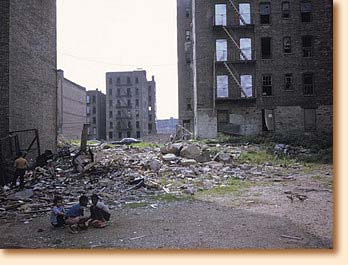
Just because Austin doesn't have areas looking like this...

http://images.google.com/imgres?imgurl=h...US:official%26channel%3Ds%26tbs%3Disch:1

does not mean that there aren't wide areas of poverty in this city. Many of the poor live in apartment complexes in suburban areas which may not look all that bad from your car, but have many of the social ills of the "ghetto" you see above.
     
     
  #7392  
Old Posted Apr 13, 2010, 3:53 AM
ahealy's Avatar
ahealy ahealy is offline
Registered User
 
Join Date: Jul 2008
Location: San Antonio / Austin
Posts: 2,829
Good point. As someone who was born & raised in the suburbs of San Antonio, I can tell you that SOME (not all) apartment complexes that seem to pop up out of nowhere can certainly become very "bad" neighborhoods.

**Not to jump from one subject to the other, but the digging at Seaholm is not for any parking facility, or retail component..It was said to be "enviornmental work"
     
     
  #7393  
Old Posted Apr 13, 2010, 7:43 AM
austin242 austin242 is offline
Registered User
 
Join Date: Jun 2007
Location: Austin
Posts: 591
Well at least they are doing something for the enviornment. Didn't they have to clean the site before construction started anyways. I think i heard that somewhere
     
     
  #7394  
Old Posted Apr 13, 2010, 12:14 PM
gardensoul gardensoul is offline
Registered User
 
Join Date: Jun 2008
Posts: 123
This is an important conversation about Austin's reality versus our self image. While I love Austin, and frankly wouldn't care to live anywhere else in Texas, we do need to face some big issues in our community.

We are a sprawling sunbelt town that is only now beginning to develop real density - like the West Campus area which is supposed to be the most densely populated neighborhood in the state. Our highway system is incomplete, we need a LOT more alternative transit, and we are in denial about the poverty and inequalities that exists in our city.

While East Austin is gentrifying and is a safe neighborhood when compared to say, Houston's 5th ward, there is still a tremendous amount of poverty there. What is happening as a result of the gentrification is that the poor are being forced out of central East Austin and are moving northeast, southeast, east of Airport and 183 and into north Austin (Rundberg area.) Some of these areas may look suburban when you are driving at 50 MPH, but there is deep poverty settling into a lot of sprawling neighborhoods and large apartment complexes where the working poor live.

We need to get serious about making some cultural and political interventions that will impact the next generation - most importantly to turn the dropout rate around for minority youth and provide affordable housing for the working poor. If we don't do this the "cool" Austin we all love will become the land of the haves and have-nots only. Not a pretty picture.
     
     
  #7395  
Old Posted Apr 13, 2010, 7:50 PM
mars-man's Avatar
mars-man mars-man is offline
the air is great up here
 
Join Date: Aug 2006
Location: Downtown Austin
Posts: 171
Quote:
Originally Posted by ahealy View Post
**Not to jump from one subject to the other, but the digging at Seaholm is not for any parking facility, or retail component..It was said to be "enviornmental work"
I suspected that. Seems logical to think there might be some fuel tanks or somesuch lurking underground near a decommissioned power plant. But I've yet to see them pull anything out except lots and lots of dirt.

On a related note, there've been increasing numbers of architect/engineer types coming onsite to scope out the library site now that it's been cleared. Looking forward to seeing some renderings for that project.
     
     
  #7396  
Old Posted Apr 14, 2010, 2:18 AM
ahealy's Avatar
ahealy ahealy is offline
Registered User
 
Join Date: Jul 2008
Location: San Antonio / Austin
Posts: 2,829
Quote:
Originally Posted by mars-man View Post
On a related note, there've been increasing numbers of architect/engineer types coming onsite to scope out the library site now that it's been cleared. Looking forward to seeing some renderings for that project.
I can't wait. I really hope to see some movement with that
     
     
  #7397  
Old Posted Apr 14, 2010, 2:53 AM
Schertz1 Schertz1 is offline
Registered User
 
Join Date: Jun 2006
Posts: 495
Quote:
Originally Posted by Scottolini View Post
Umm, they have come. You do realize Austin's been among this nation's fastest growing cities for decades, right? You do realize that Austin's job market has been among the best in the nation for decades as well, right? Now obviously Houston and Dallas, being so much larger have much more office space, but you mention San Antonio, which as the numbers I posted above show, has substantially less office space than Austin.

Many of the large office complexes in San Antonio are owner occupied. I am sure there are a few in Austin that fall into that category, but none as large as USAA, Tesoro, or Valero. USAA alone is over 5 million square feet. Frost Bank in the CBD is about .5 million. San Antonio also has a huge Med Center, much of which is not included in this count. Below is the inventory criteria:

Inventory: Office inventory includes all multi-tenant and single
tenant buildings at least 20,000 square feet. Owner-occupied,
government and medical buildings are not included.


I understand Austin has many government buildings, but I believe the majority are leased.
     
     
  #7398  
Old Posted Apr 14, 2010, 3:18 AM
wwmiv wwmiv is offline
Registered User
 
Join Date: Sep 2009
Location: Austin -> San Antonio -> Columbia -> San Antonio -> Chicago -> Austin -> Denver -> Austin
Posts: 5,798
That they are leased or not is beside the point, they are still government owned and therefore excluded from the tally. Austin and San Antonio for all intents and purposes are similar sized cities in population, office space, economic size, etc, etc, etc.
     
     
  #7399  
Old Posted Apr 14, 2010, 3:58 AM
Schertz1 Schertz1 is offline
Registered User
 
Join Date: Jun 2006
Posts: 495
Quote:
Originally Posted by wwmiv View Post
That they are leased or not is beside the point, they are still government owned and therefore excluded from the tally. Austin and San Antonio for all intents and purposes are similar sized cities in population, office space, economic size, etc, etc, etc.


Just so I understand this, the buildings being leased by the government are also owned by the government.
     
     
  #7400  
Old Posted Apr 14, 2010, 4:20 AM
wwmiv wwmiv is offline
Registered User
 
Join Date: Sep 2009
Location: Austin -> San Antonio -> Columbia -> San Antonio -> Chicago -> Austin -> Denver -> Austin
Posts: 5,798
Sorry... Whoops. What I thought you meant was that the government owned certain space and was leasing it out to other occupants. Which, to be quite honest, sounded unrealistic to me in the first place (though obviously I continued with the concept in my post).
     
     
This discussion thread continues

Use the page links to the lower-right to go to the next page for additional posts
 
 
Closed Thread

Go Back   SkyscraperPage Forum > Global Projects & Construction > City Compilations
Forum Jump


Forum Jump


All times are GMT. The time now is 7:45 AM.

     
SkyscraperPage.com - Privacy Statement - Top

Powered by vBulletin® Version 3.8.7
Copyright ©2000 - 2026, vBulletin Solutions, Inc.