Quote:
Originally Posted by ardecila

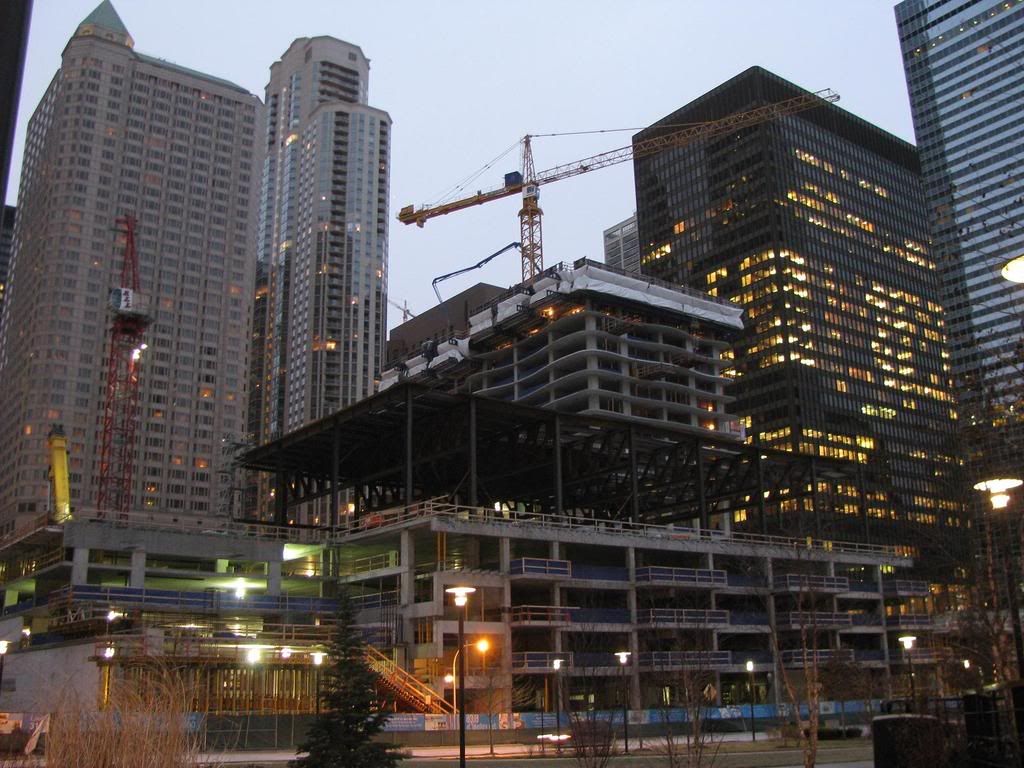
Most of the work in pouring a concrete floor, I'll bet, is not building the forms, but rather doing the "surface work" of making the concrete have a smooth surface. This process doesn't take any longer here than it does when the floorplates are rectangular.
The forms are precision-set using GPS technology. The people who lay the perimeter have GPS devices that tell them where to put the splines, or 2x4s, or whatever they're using to define the shape.
|
The work is in the formwork, reinforcing, and in the utilities that are embedded in the slab.
Studio Gang was very wise in their approach to this tower - the undulations take place at the perimeter exclusively, and do not affect the interior structure itself. In effect, the structural changes from floor to floor are fairly minor. This is a huge contrast from some of the other "organic" designs going on now, which require massive adjustment at fairly regular intervals along the structure. These efficiencies greatly reduced the complexity of the job and the risk to the developer in producing with an untried method.
To most untrained eyes, this building will appear every bit as unusual as anything out there, but it actually is a much more simplistic scheme. The Chicago Spire also fits into this category to some extent.





 Prev
Prev



 it,s not happening.....


 Linear Mode
