HomeDiagramsDatabaseMapsForum About
     

Go Back   SkyscraperPage Forum > Discussion Forums > City Discussions


Reply

 
Thread Tools Display Modes
     
     
  #61  
Old Posted Aug 6, 2026, 7:21 PM
Steely Dan's Avatar
Steely Dan Steely Dan is online now
devout Pizzatarian
 
Join Date: Jul 2001
Location: Lincoln Square, Chicago
Posts: 30,427
Quote:
Originally Posted by mhays View Post
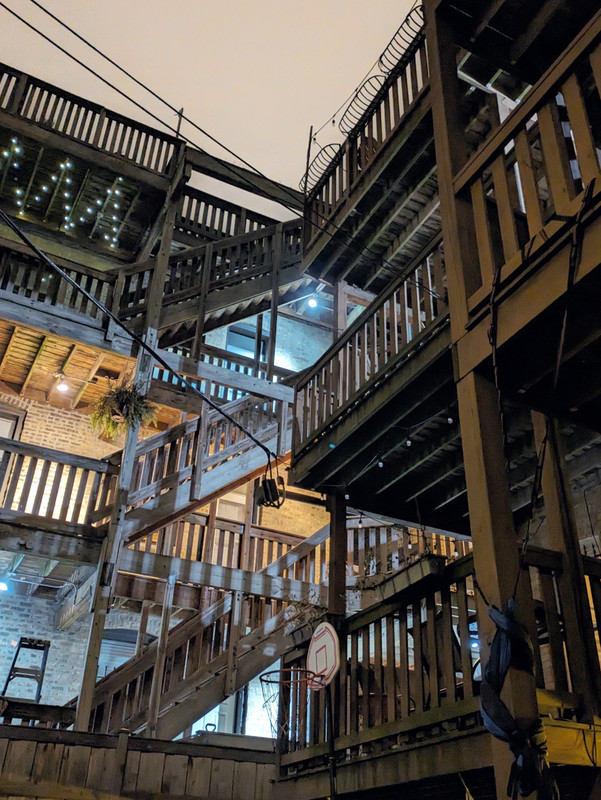
Chicago three flats also look terrible in the back.
They say beauty is in the eye of the beholder.

They also say familiarity breeds contempt.

I don't know what to believe anymore.


__________________
"Missing middle" housing can be a marvelous middle ground for many middle class families.
Reply With Quote
     
     
  #62  
Old Posted Aug 6, 2026, 7:44 PM
sentinel's Avatar
sentinel sentinel is online now
Plenary pleasures.
 
Join Date: Oct 2004
Location: CHI/MRY
Posts: 4,784
Quote:
Originally Posted by mhays View Post
I hate the idea of shared spaces right outside my window, meaning no assurance of privacy. So no exterior staircases please. Not to mention the security risk.

Chicago three flats also look terrible in the back. There I said it and I'm glad.
Cool.
__________________
Don't be shy. Step into the light.
Reply With Quote
     
     
  #63  
Old Posted Aug 7, 2026, 12:58 PM
pip's Avatar
pip pip is offline
Registered User
 
Join Date: Mar 2003
Location: Chicago
Posts: 4,574
Quote:
Originally Posted by Steely Dan View Post
They say beauty is in the eye of the beholder.

They also say familiarity breeds contempt.

I don't know what to believe anymore.


Love it! It's like the back of my building.
Reply With Quote
     
     
  #64  
Old Posted Aug 7, 2026, 1:24 PM
mrnyc mrnyc is online now
cle/west village/shaolin
 
Join Date: Jul 2006
Posts: 15,417
Quote:
Originally Posted by Steely Dan View Post


now thats giving off very clevelandy antwone fisher meets mom finale vibes


now torn down ... of course

Reply With Quote
     
     
  #65  
Old Posted Aug 7, 2026, 2:51 PM
Steely Dan's Avatar
Steely Dan Steely Dan is online now
devout Pizzatarian
 
Join Date: Jul 2001
Location: Lincoln Square, Chicago
Posts: 30,427
Quote:
Originally Posted by mrnyc View Post
now thats giving off very clevelandy antwone fisher meets mom finale vibes
I never saw that film.

I should probably rectify that.

Anyway, that's just a pic of my back "yard".

And as pip corroborated, A LOT of Chicago looks like that "in da back".

I can understand why some might find it ugly, but for me, it just looks like home.
__________________
"Missing middle" housing can be a marvelous middle ground for many middle class families.

Last edited by Steely Dan; Aug 7, 2026 at 3:06 PM.
Reply With Quote
     
     
  #66  
Old Posted Aug 7, 2026, 3:07 PM
iheartthed iheartthed is online now
Registered User
 
Join Date: Oct 2009
Location: New York
Posts: 12,025
I thought this thread could use some quantitative data. I've listed below the share of "middle housing" units for the 30 largest municipalities in the U.S. plus some additional cities of interest that did not meet the top 30 threshold. "Middle housing" is defined as attached housing units in the 1 - 4 unit range. The average for this group of cities is 21%. An argument could be made that Philly and Baltimore are over represented in with "middle housing", but that's due to their housing types being heavily indexed 1-unit, attached structures.

70% -- Philadelphia
60% -- Baltimore
47% -- Buffalo
33% -- Milwaukee
33% -- San Francisco
32% -- Washington, D.C.
31% -- Chicago
30% -- St. Louis
29% -- Pittsburgh
28% -- New York City
28% -- Cleveland
25% -- Cincinnati
23% -- Columbus
18% -- San Diego
18% -- San Jose
17% -- Indanapolis
16% -- Miami
16% -- Nashville
16% -- Detroit
15% -- Minneapolis
15% -- Los Angeles
14% -- Louisville
14% -- Denver
14% -- Memphis
14% -- Las Vegas
13% -- Portland
13% -- Charlotte
12% -- Jacksonville
12% -- Austin
12% -- Atlanta
12% -- Houston
11% -- Seattle
11% -- El Paso
11% -- Phoenix
11% -- Dallas
10% -- Oklahoma City
10% -- San Antonio
08% -- Fort Worth
Reply With Quote
     
     
  #67  
Old Posted Aug 7, 2026, 3:50 PM
Steely Dan's Avatar
Steely Dan Steely Dan is online now
devout Pizzatarian
 
Join Date: Jul 2001
Location: Lincoln Square, Chicago
Posts: 30,427
I find this chart more interesting because it breaks the data down even further by unit count.

Philly, Baltimore, and to a lesser extent DC, are major rowhouse outliers.

Of course, this is all just by proportion, in aggregate, NYC is gonna have more of everything l, other than SFH, given its extreme size.


__________________
"Missing middle" housing can be a marvelous middle ground for many middle class families.
Reply With Quote
     
     
  #68  
Old Posted Aug 7, 2026, 3:56 PM
mhays mhays is online now
Never Dell
 
Join Date: Jul 2001
Posts: 21,171
Great chart. What year is the data?

The attached-1-4-unit percentage is interesting, but it's missing some (sometimes debatable) missing middle -- backyard cottages, unattached townhouses, townhouse units in larger buildings...
__________________
"Alot" has never been a word.
Reply With Quote
     
     
  #69  
Old Posted Aug 7, 2026, 4:07 PM
eschaton eschaton is offline
Registered User
 
Join Date: Dec 2013
Posts: 5,608
Personally, I don't consider rowhouses to be "missing middle" housing for two reasons.

1. They are single-family homes, just set up in a different manner than most.

2. The U.S. actually builds a fair amount of townhouses. Close to one out of every five units of SFH is now a townhouse. So while you can argue they're a middle density, they're not really "missing" from any metropolitan area.

I think of missing middle as really being small multifamily - two flats, triple-deckers, etc. These are indeed quite rare - often due to a combination of zoning, building codes, parking minimums, elevator requirements, etc.

Here in Pittsburgh, we never had a ton of this style of housing, though there was a brief period around 1900 to 1910 when some Chicago style three/six flats were being built, and another period in the 1920s where even more two/four flats were constructed. Still, in the modern era, these style of buildings are essentially only constructed for affordable housing.
Reply With Quote
     
     
  #70  
Old Posted Aug 7, 2026, 4:07 PM
Steely Dan's Avatar
Steely Dan Steely Dan is online now
devout Pizzatarian
 
Join Date: Jul 2001
Location: Lincoln Square, Chicago
Posts: 30,427
Quote:
Originally Posted by mhays View Post
Great chart. What year is the data?

The attached-1-4-unit percentage is interesting, but it's missing some (sometimes debatable) missing middle -- backyard cottages, unattached townhouses, townhouse units in larger buildings...
I think its about 10 years old... so getting pretty long in the tooth now.

It'd be cool to have an updated one.

Stopping at 4 units also leaves out the 5 to 9 unit stuff, which some cities have a decent amount of according to the chart.
__________________
"Missing middle" housing can be a marvelous middle ground for many middle class families.

Last edited by Steely Dan; Aug 7, 2026 at 5:18 PM.
Reply With Quote
     
     
  #71  
Old Posted Aug 7, 2026, 4:38 PM
mhays mhays is online now
Never Dell
 
Join Date: Jul 2001
Posts: 21,171
A number of cities would be up massively in unit count since then. Seattle maybe 20%. Most of that would be in the 20+ category.
__________________
"Alot" has never been a word.
Reply With Quote
     
     
  #72  
Old Posted Aug 7, 2026, 6:13 PM
Notonfoodstamps Notonfoodstamps is offline
Registered User
 
Join Date: Dec 2022
Posts: 276
Quote:
Originally Posted by eschaton View Post
Personally, I don't consider rowhouses to be "missing middle" housing for two reasons.

1. They are single-family homes, just set up in a different manner than most.

2. The U.S. actually builds a fair amount of townhouses. Close to one out of every five units of SFH is now a townhouse. So while you can argue they're a middle density, they're not really "missing" from any metropolitan area.
Structurally, townhomes are attached buildings that share side walls, so they "are" multi-family housing (and are frequently converted legally to such). Legally and functionally they are classified as single-family attached dwellings because each unit is independently owned from the foundation to the roof with its own private ground-level entrance and land parcel.

Historically they were very much missing especially relative to the total historic housing stock. They usually comprised 10-14% of all SFH construction between '00-'20.


Quote:
Originally Posted by eschaton View Post
I think of missing middle as really being small multifamily - two flats, triple-deckers, etc. These are indeed quite rare - often due to a combination of zoning, building codes, parking minimums, elevator requirements, etc.

Here in Pittsburgh, we never had a ton of this style of housing, though there was a brief period around 1900 to 1910 when some Chicago style three/six flats were being built, and another period in the 1920s where even more two/four flats were constructed. Still, in the modern era, these style of buildings are essentially only constructed for affordable housing.
I live between Baltimore & DC. Theres a huge difference between inner-city row/townhomes vs. suburban townhomes especially in terms of ergonomics and density.

Last edited by Notonfoodstamps; Aug 7, 2026 at 6:25 PM.
Reply With Quote
     
     
  #73  
Old Posted Aug 7, 2026, 6:18 PM
mhays mhays is online now
Never Dell
 
Join Date: Jul 2001
Posts: 21,171
A townhouse can be a fully-separated house as well. It's a subjective term, subject to the winds of common use.

A rowhouse on the other hand is always attached, or built to be attached.
__________________
"Alot" has never been a word.
Reply With Quote
     
     
  #74  
Old Posted Aug 7, 2026, 6:21 PM
iheartthed iheartthed is online now
Registered User
 
Join Date: Oct 2009
Location: New York
Posts: 12,025
Quote:
Originally Posted by eschaton View Post
Personally, I don't consider rowhouses to be "missing middle" housing for two reasons.

1. They are single-family homes, just set up in a different manner than most.

2. The U.S. actually builds a fair amount of townhouses. Close to one out of every five units of SFH is now a townhouse. So while you can argue they're a middle density, they're not really "missing" from any metropolitan area.

I think of missing middle as really being small multifamily - two flats, triple-deckers, etc. These are indeed quite rare - often due to a combination of zoning, building codes, parking minimums, elevator requirements, etc.

Here in Pittsburgh, we never had a ton of this style of housing, though there was a brief period around 1900 to 1910 when some Chicago style three/six flats were being built, and another period in the 1920s where even more two/four flats were constructed. Still, in the modern era, these style of buildings are essentially only constructed for affordable housing.
The technical definition of "missing middle" includes 1-unit, attached but here's the share per city if you limit to 2 - 4 units:

43% -- Buffalo
29% -- Milwaukee
27% -- Chicago
26% -- St. Louis
21% -- New York City
20% -- Cincinnati
20% -- San Francisco
20% -- Cleveland
15% -- Pittsburgh
14% -- Philadelphia
13% -- Columbus
12% -- Minneapolis
10% -- Washington, D.C.
10% -- Louisville
10% -- Baltimore
9% -- Los Angeles
9% -- Detroit
9% -- Indanapolis
9% -- Memphis
8% -- Portland
8% -- Las Vegas
8% -- San Diego
8% -- El Paso
7% -- San Antonio
7% -- Miami
7% -- Jacksonville
7% -- Austin
7% -- Houston
7% -- Nashville
7% -- Dallas
7% -- San Jose
6% -- Oklahoma City
6% -- Phoenix
6% -- Atlanta
5% -- Seattle
5% -- Denver
5% -- Fort Worth
4% -- Charlotte

The average of these cities is 12%. Unsurprisingly, old, prewar cities with small footprints dominate the upper end, while newer Sun Belt cities mostly dominate the lower end. Prewar urban/sprawly hybrids (L.A., Detroit) hover close to the middle.
Reply With Quote
     
     
  #75  
Old Posted Aug 7, 2026, 6:32 PM
Notonfoodstamps Notonfoodstamps is offline
Registered User
 
Join Date: Dec 2022
Posts: 276
Quote:
Originally Posted by mhays View Post
A townhouse can be a fully-separated house as well. It's a subjective term, subject to the winds of common use.

A rowhouse on the other hand is always attached, or built to be attached.
Yeah it all gets a bit muddy.
Reply With Quote
     
     
  #76  
Old Posted Aug 7, 2026, 6:35 PM
Six Corners Six Corners is offline
Registered User
 
Join Date: Feb 2016
Location: Omaha -> Chicago -> St. Louis
Posts: 170
Quote:
Originally Posted by iheartthed View Post
Nashville ranks 28th out of the 30 most populated cities in terms of density. It only beats out Jacksonville, Florida, and Oklahoma City:
  1. New York: 29,298 per square mile
  2. San Francisco: 18,635 per square mile
  3. Boston: 13,989 per square mile
  4. Chicago: 12,061 per square mile
  5. Philadelphia: 11,933 per square mile
  6. Washington: 11,286 per square mile
  7. Seattle: 8,795 per square mile
  8. Los Angeles: 8,304 per square mile
  9. Baltimore: 7,240 per square mile
  10. San Jose: 5,683 per square mile
  11. Portland: 4,888 per square mile
  12. Denver: 4,674 per square mile
  13. Detroit: 4,608 per square mile
  14. Las Vegas: 4,527 per square mile
  15. San Diego: 4,256 per square mile
  16. Columbus: 4,117 per square mile
  17. Dallas: 3,841 per square mile
  18. Houston: 3,599 per square mile
  19. Phoenix: 3,105 per square mile
  20. Austin: 3,007 per square mile
  21. San Antonio: 2,876 per square mile
  22. Charlotte: 2,837 per square mile
  23. Fort Worth: 2,646 per square mile
  24. El Paso: 2,627 per square mile
  25. Indianapolis: 2,455 per square mile
  26. Memphis: 2,132 per square mile
  27. Louisville: 1,948 per square mile
  28. Nashville: 1,449 per square mile
  29. Jacksonville: 1,271 per square mile
  30. Oklahoma City: 1,123 per square mile
Nashville is a consolidated city-county. Its boundaries are coterminous with Davidson County, which is not capable of being fully developed due to topography. That's why it comes across as so low-density. Take a Streetview trip around The Gulch or near Vanderbilt University and you'll find that it does have a fair amount of density.

Jacksonville and Louisville are city-counties as well.
Reply With Quote
     
     
  #77  
Old Posted Aug 7, 2026, 6:35 PM
Steely Dan's Avatar
Steely Dan Steely Dan is online now
devout Pizzatarian
 
Join Date: Jul 2001
Location: Lincoln Square, Chicago
Posts: 30,427
Quote:
Originally Posted by iheartthed View Post
Prewar urban/sprawly hybrids (L.A., Detroit) hover close to the middle.
The great lakes cities tend to do well on the 2-4 unit score.

As discussed recently in another thread, Detroit was likely a lot closer to its great lakes cousins back in the day.
__________________
"Missing middle" housing can be a marvelous middle ground for many middle class families.
Reply With Quote
     
     
  #78  
Old Posted Aug 7, 2026, 6:47 PM
iheartthed iheartthed is online now
Registered User
 
Join Date: Oct 2009
Location: New York
Posts: 12,025
Quote:
Originally Posted by Steely Dan View Post
The great lakes cities tend to do well on the 2-4 unit score.

As discussed recently in another thread, Detroit was likely a lot closer to its great lakes cousins back in the day.
Yeah, the 2 - 4 unit structures are where Detroit has lost the most housing since the mid 20th century. Detroit had 120,706 units in 2-unit structures in 1940, but only 21,214 as of the 2024 ACS data -- an 83% drop. By comparison, Detroit only has 17% more single-family, detached units in 2024 than it had in 1940.

If Detroit had as many units in 2-unit structures today it would have the third most of that type of any city in the entire country, only behind New York and Chicago.
Reply With Quote
     
     
  #79  
Old Posted Aug 7, 2026, 7:07 PM
eschaton eschaton is offline
Registered User
 
Join Date: Dec 2013
Posts: 5,608
Quote:
Originally Posted by Notonfoodstamps View Post
Structurally, townhomes are attached buildings that share side walls, so they "are" multi-family housing (and are frequently converted legally to such). Legally and functionally they are classified as single-family attached dwellings because each unit is independently owned from the foundation to the roof with its own private ground-level entrance and land parcel.
Well, there's also the caveat here that not everything we call a rowhouse/townhouse would even technically be considered a single building. Older city neighborhoods are full of blocks where houses were constructed individually, but have zero setback with one or more of their neighbors. And as modern infill is patching the "missing teeth" new ones are being built as well. I mean, is something like this multi-family housing? It's just one house, built between two other houses.

Quote:
Originally Posted by Notonfoodstamps View Post
Historically they were very much missing especially relative to the total historic housing stock. They usually comprised 10-14% of all SFH construction between '00-'20.
That's still way, way more than any form of small-scale multifamily. Again, outside of a few cities new build up/down flats are just not built at all.

Quote:
Originally Posted by Notonfoodstamps View Post
I live between Baltimore & DC. Theres a huge difference between inner-city row/townhomes vs. suburban townhomes especially in terms of ergonomics and density.
Yes, but the suburban townhouse complexes are built very similarly to suburban subdivisions. In both cases, what they most closely resemble is other nearby areas of similar vintage filled with single-family housing, not multifamily.

Quote:
Originally Posted by Steely Dan View Post
Stopping at 4 units also leaves out the 5 to 9 unit stuff, which some cities have a decent amount of according to the chart.
I feel like the logical cutoff for missing middle is 6 units, which gets you small-scale purpose built multifamily like double triple deckers in Boston, Chicago Six-flats, etc. Too bad the Census doesn't count that.

It also needs to be noted in the vast majority of cities (outside of ones like Boston and Chicago that had a small-scale multifamily vernacular) the "missing middle" is probably mostly comprised of larger homes originally designed as SFH which were chopped up into apartments during the period of urban decline. They're quite common in certain areas of cities - particularly around universities.

Reply With Quote
     
     
  #80  
Old Posted Aug 7, 2026, 7:16 PM
iheartthed iheartthed is online now
Registered User
 
Join Date: Oct 2009
Location: New York
Posts: 12,025
Quote:
Originally Posted by Six Corners View Post
Nashville is a consolidated city-county. Its boundaries are coterminous with Davidson County, which is not capable of being fully developed due to topography. That's why it comes across as so low-density. Take a Streetview trip around The Gulch or near Vanderbilt University and you'll find that it does have a fair amount of density.

Jacksonville and Louisville are city-counties as well.
I know it's a consolidated city-county. I don't think that matters to the overall point that there is a lot more underutilized land within Nashville's borders than there exists within Chicago's borders.
Reply With Quote
     
     
This discussion thread continues

Use the page links to the lower-right to go to the next page for additional posts
 
 
Reply

Go Back   SkyscraperPage Forum > Discussion Forums > City Discussions
Forum Jump


Forum Jump


All times are GMT. The time now is 8:51 PM.


Powered by vBulletin® Version 3.8.7
Copyright ©2000 - 2026, vBulletin Solutions, Inc.