Quote:
Originally Posted by Notonfoodstamps

Structurally, townhomes are attached buildings that share side walls, so they "are" multi-family housing (and are frequently converted legally to such). Legally and functionally they are classified as single-family attached dwellings because each unit is independently owned from the foundation to the roof with its own private ground-level entrance and land parcel.
|
Well, there's also the caveat here that not everything we call a rowhouse/townhouse would even technically be considered a single building. Older city neighborhoods are full of blocks where houses were constructed individually, but have zero setback with one or more of their neighbors. And as modern infill is patching the "missing teeth" new ones are being built as well. I mean,
is something like this multi-family housing? It's just one house, built between two other houses.
Quote:
Originally Posted by Notonfoodstamps
Historically they were very much missing especially relative to the total historic housing stock. They usually comprised 10-14% of all SFH construction between '00-'20.
|
That's still way, way more than any form of small-scale multifamily. Again, outside of a few cities new build up/down flats are just not built at all.
Quote:
Originally Posted by Notonfoodstamps
I live between Baltimore & DC. Theres a huge difference between inner-city row/townhomes vs. suburban townhomes especially in terms of ergonomics and density.
|
Yes, but the suburban townhouse complexes are built very similarly to suburban subdivisions. In both cases, what they most closely resemble is other nearby areas of similar vintage filled with single-family housing, not multifamily.
Quote:
Originally Posted by Steely Dan
Stopping at 4 units also leaves out the 5 to 9 unit stuff, which some cities have a decent amount of according to the chart.
|
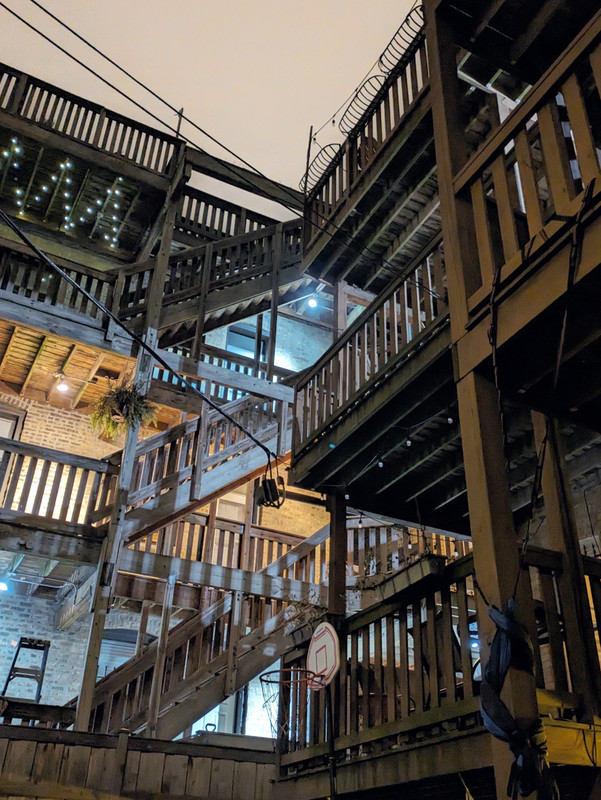
I feel like the logical cutoff for missing middle is 6 units, which gets you small-scale purpose built multifamily like double triple deckers in Boston, Chicago Six-flats, etc. Too bad the Census doesn't count that.
It also needs to be noted in the vast majority of cities (outside of ones like Boston and Chicago that had a small-scale multifamily vernacular) the "missing middle" is probably mostly comprised of larger homes originally designed as SFH which were chopped up into apartments during the period of urban decline. They're quite common in certain areas of cities - particularly around universities.





 Prev
Prev




 Linear Mode
