Housing starts in Canada are significantly higher in the past six years than in the previous thirty years.
CMHC show
data back to 1990.
The average annual housing starts for each decade are
1990s - 123,662
2000s - 174,873
2010s - 183,433
2020s - 230,266
Statistics Canada
show the components of the population change estimates. Here's the data since 1990, to match the housing starts.
Natural change is pretty much a wash in the 2020s. These days births and deaths pretty much cancel each other out, and it's been a falling component of population change over the past 36 years.
1990s - 167,968
2000s - 122,058
2010s - 117,635
2020s - 37,040
(net annual natural growth of population)
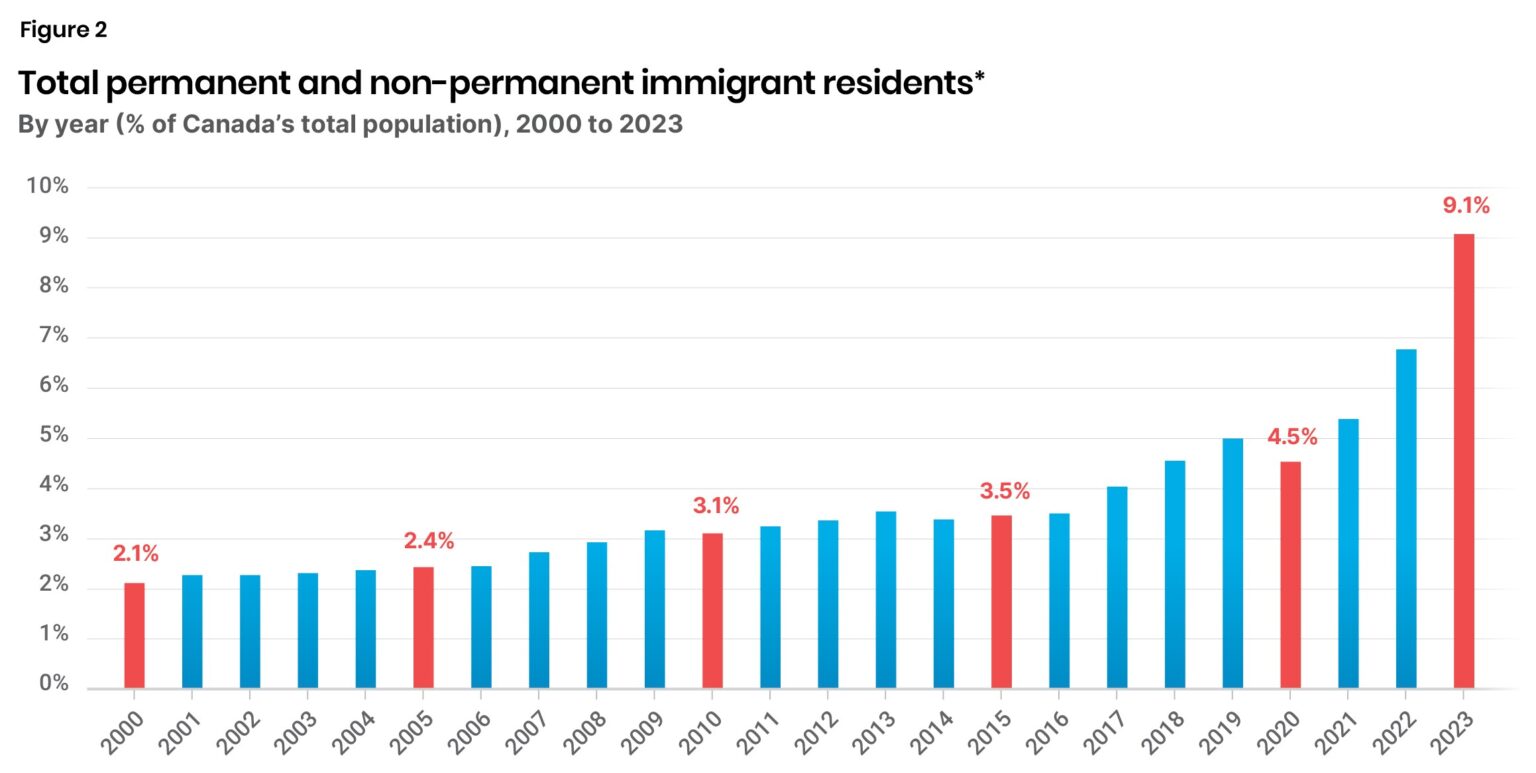
Immigration was, as we know, much greater in the 2020s than in recent decades. (These are permanent residents arriving in Canada)
1990s - 220,433
2000s - 241,446
2010s - 282,367
2020s - 396,246
Emigration on the other hand has barely changed over the decades. (This is net emigration - about half of emigrants have returned to Canada over the past 36 years).
1990s - 49,949
2000s - 51,273
2010s - 48,083
2020s - 51,867
The other big increase, as we also know, was temporary non-permanent residents, including TFWs and those studying here.
1990s - 16,269
2000s - 32,952
2010s - 73,301
2020s - 207,359
The
Interactive dashboard shows the big numbers for immigration and temporary workers were in the early 2020s, and the numbers are much lower, or negative now (hence the falling population). Net international immigration has been negative over the past three quarters, and net non-permanent residents have been negative for a year and a half. The number of immigrants being allowed to enter has also been falling, in line with recent government policy.





 Prev
Prev




 Linear Mode
