 Posted May 30, 2026, 5:19 AM
|
 |
Moderator
|
|
Join Date: Aug 2002
Location: Winnipeg, Manitoba
Posts: 7,768
|
|
Quote:
Proposed St. Boniface apartment building sparks battle over housing, history
Developer proposes 120-unit block on land city says was part of former residential school
Cameron MacLean · CBC News · Posted: May 29, 2026

Winnipeg-based Freedhome Developments has applied to build a six-storey, 120-unit apartment building at 470 Des Meurons St. (Freedhome Developments)
Hundreds of people have signed a petition against a proposed apartment building in St. Boniface.
In addition to concerns about the size and density of the project, opponents say the property sits on part of a former residential school.
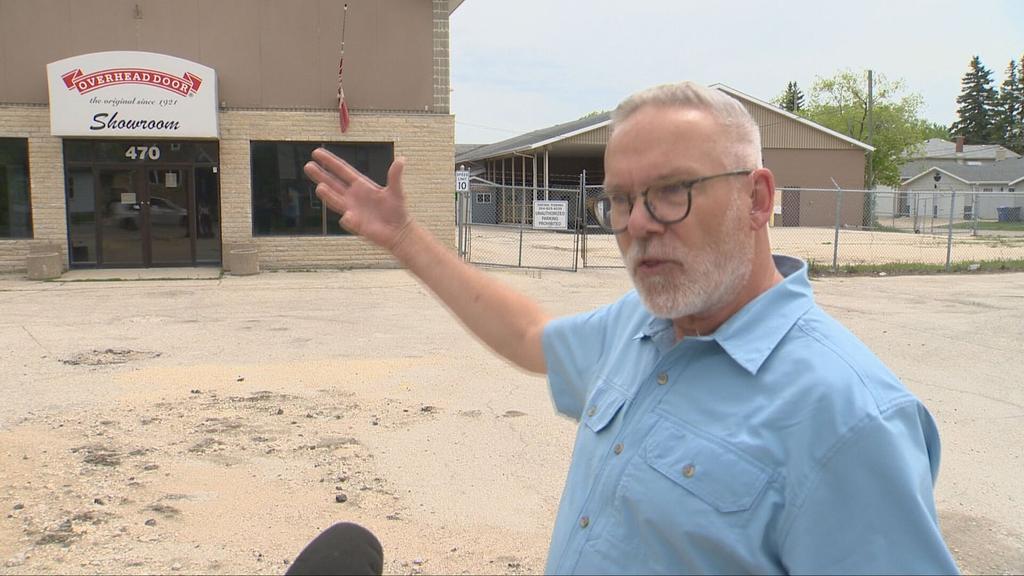
Winnipeg-based Freedhome Developments has applied to build a six-storey, 120-unit apartment building at 470 Des Meurons St. The property is currently occupied by a single-storey industrial building and its parking lot.
Jim Hoeppner, who lives one street over on Gaboury Place, said he and other area residents "got together as a community … and decided we were going to fight this on a united front."
The developer has applied to rezone the property from "light manufacturing" to "residential multi-family (large)." The plan calls for the existing commercial building, an overhead door retailer, to be demolished.
A variance application also seeks permission for a building that is larger, closer to the street, and has less parking and green space than local zoning rules normally allow. City planners have recommended approval, but suggested scaling back the project to allow greater setbacks from the property line, more parking and proper landscaping.
A hearing on the project is set to go before the City of Winnipeg's Riel community committee on Tuesday.
Hoeppner says the size of the building is out of character with the surrounding neighbourhood, would impede sightlines for drivers pulling out an adjacent back lane, and doesn't leave room for green space.
Opponents of the project say the design creates a traffic bottleneck and an overbearing presence in the neighbourhood.
"Don't try to bring a six-storey [building] into a mature community and try … to make it fit, because it doesn't," Hoeppner said.
St. Boniface Industrial School

The St. Boniface Industrial School, one of Canada's first residential schools, operated from 1890 to 1905. The building was destroyed by a fire in 1911. (St Boniface Historical Society)
A city spokesperson told CBC News the property sits on part of the site of the former St. Boniface Industrial School, a residential school that operated from 1890 to 1905, according to the St. Boniface Historical Society.
Another resident, Barbara Signer-Delorme, says the St. Boniface Historical Society has done extensive research, using maps to confirm the school's location.
"The school burned down in the early 1900s, and it has since been developed numerous times. However, that doesn't change what happened here on this land," Signer-Delorme said.
According to an article on the society’s website, about 300 Indigenous children attended the school, about half of whom were identified as Métis.
It says almost a third — 87 children — died at the school or shortly after leaving it. Archival documents indicate most of those children are buried in the St. Boniface Cathedral Cemetery in unmarked graves, the historical society's website says.
The property has no current heritage status from the City of Winnipeg, and nothing on the site marks it as a former residential school. It is also not listed among the recognized schools as part of the federal government's Indian Residential Schools Settlement Agreement.
Freedhome Developments declined an interview request, but in a written statement, a spokesperson told CBC News the developer "has undertaken extensive review and engagement throughout the pre-development process," including "public consultation with neighbouring residents and outreach to Indigenous groups."
Emilie Pigeon, executive director of the St. Boniface Historical Society, says commemorating sites like the former St. Boniface Industrial School should be a consideration for any developments of this nature.
"Societies have a collective responsibility to remember the past. Honouring the lives of the Indigenous children and families most impacted by Canada's colonial project is a small gesture that can leave a big legacy, ensuring at the very least that we do not repeat this history," she said in an email.
A spokesperson for St. Boniface Coun. Matt Allard declined a request for an interview, telling CBC News in an email he would reserve his comments for the hearing next week.
|
CBC Manitoba
|





 Prev
Prev










 Linear Mode
