Quote:
Originally Posted by Tuckerman

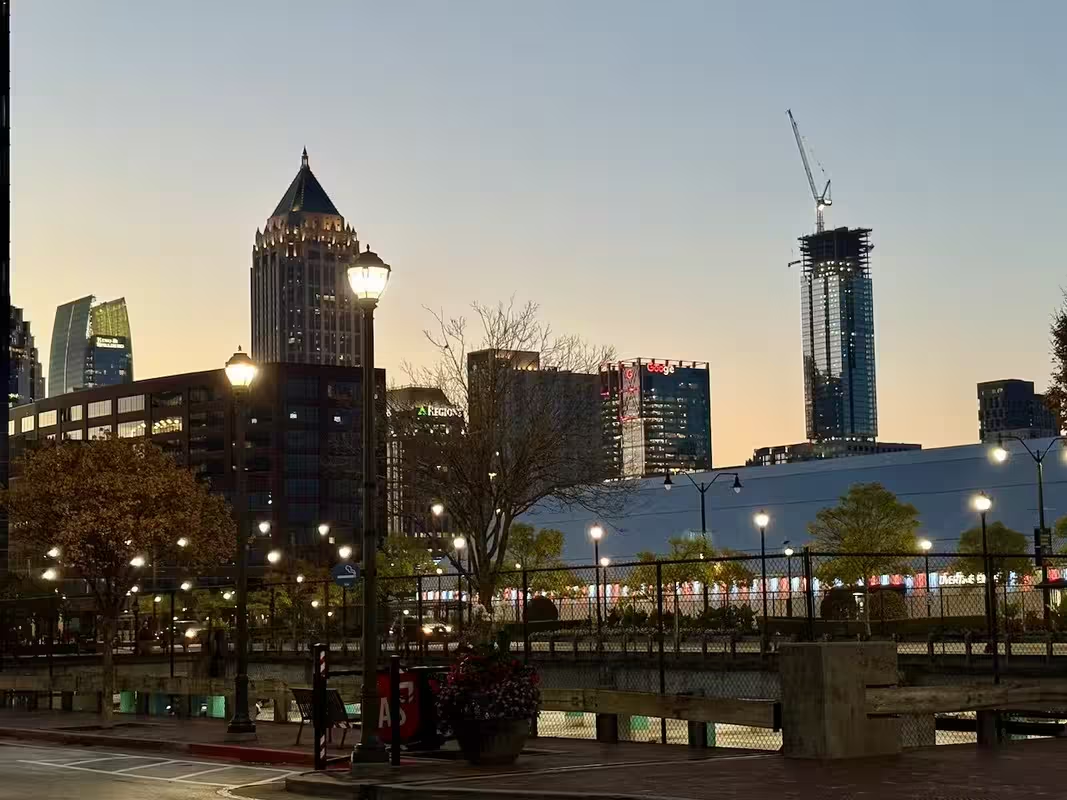
With regard to skyscraper design the reality is that very few skyscrapers of architectural note have been built in American cities in the past 5 decades. One has to turn to Asia (notably Singapore and Shanghai), Europe (notably London and Istanbul) and the Middle East (numerous cities) to see adventurous and architecturally interesting high-rise buildings. One significant factor has been construction cost in the US, but I would also argue that American cities just build high rises on a regular basis without much attention to innovative design because there is not any aesthetic push to come up with a unique and architecturally innovative design. I believe that Atlanta is pretty typical of high-rise design at the present time in North America. Still, the skyline is quite pleasing from many vantage points and looks very nice at night. Special skyscrapers are in the American past; we can look to other countries if we want to see innovative architecture.
|
It is not without reason to suggest that the trajectory of architectural design in many American cities has, since the early 2000s, entered a period of stagnation. Atlanta serves as a pertinent case: over the subsequent twenty-five years, the city has produced relatively few works of distinction. Although some recent projects in the Old Fourth Ward and West Midtown exhibit commendable design qualities, these examples remain limited when set against the steady stream of noteworthy architectural achievements emerging in Asian cities such as Shanghai, Singapore, and Tokyo since 2000. Meanwhile, European architecture has also advanced, with an intensified emphasis on elegance, design logic, and technical constructability. In both quantity and quality, these regions appear to have taken the lead, while American cities—and Atlanta in particular—seem to have regressed.
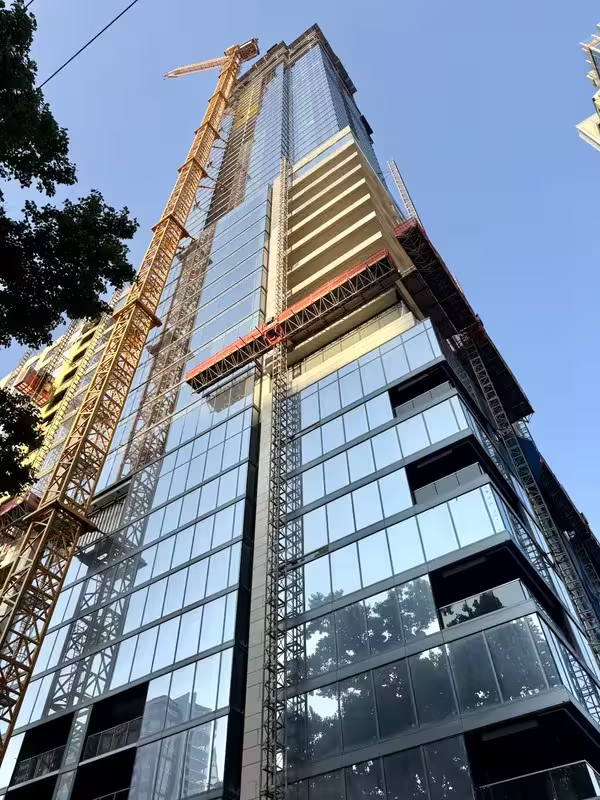
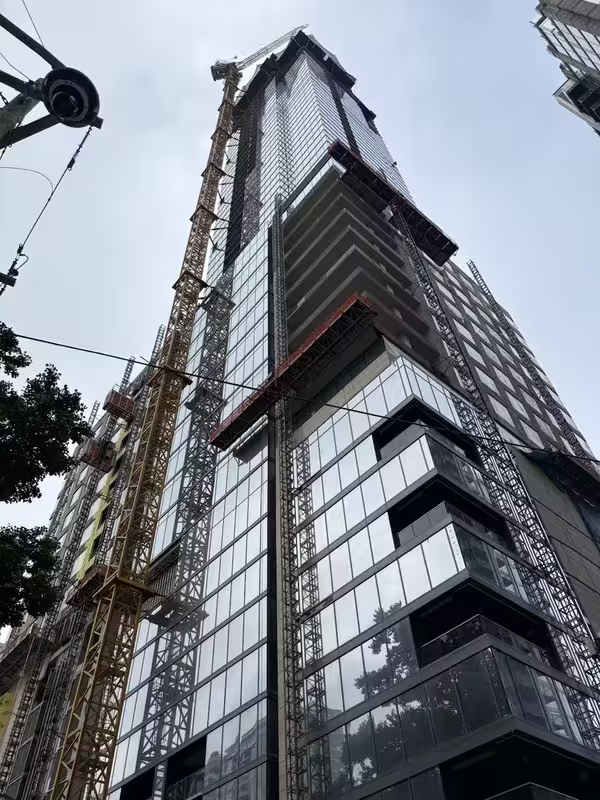
The building at 1072 West Peachtree provides a telling example. When juxtaposed with contemporary skyscraper designs abroad, one recognizes that their architectural expression is decades ahead, whereas Atlanta remains anchored in an aesthetic and technical register characteristic of the early 2000s. Paradoxically, many of these exemplary skyscrapers abroad have been conceived by American firms—including SOM, KPF, Goettsch Partners, Adrian Smith + Gordon Gill Architecture, and NBBJ—highlighting a curious disjunction: why has Atlanta failed to cultivate or realize comparable excellence within its own urban context?
In reality, the demand is not for quantity but for quality. We do not ask for countless new towers, but simply for excellence in their design. Even if only a single new skyscraper were to rise, we would hope it could stand among the very best. Yet the current state of affairs exposes something far more disheartening: a culture of expediency in which developers chase quick returns and architects comply with lowest-common-denominator expectations. What we see in Atlanta’s skyline today is not the pursuit of architectural vision, but the residue of compromise, short-term profit, and a troubling indifference to the city’s long-term identity.





 Prev
Prev









 Linear Mode
