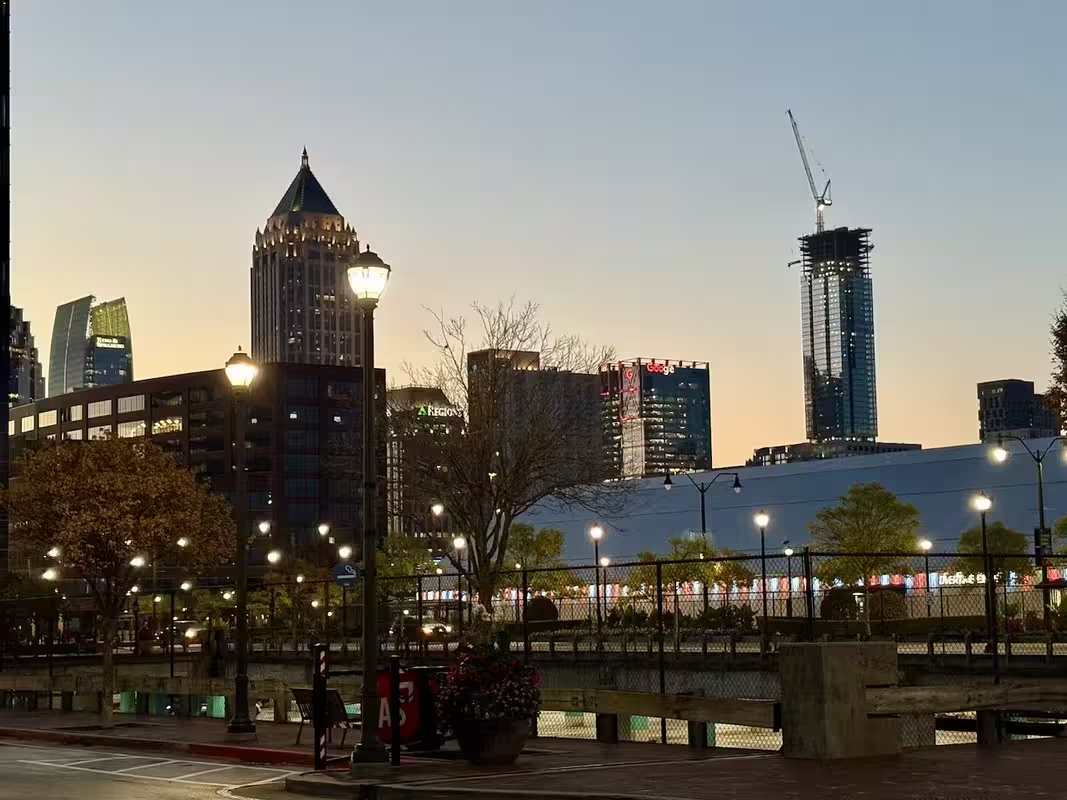
With regard to skyscraper design the reality is that very few skyscrapers of architectural note have been built in American cities in the past 5 decades. One has to turn to Asia (notably Singapore and Shanghai), Europe (notably London and Istanbul) and the Middle East (numerous cities) to see adventurous and architecturally interesting high-rise buildings. One significant factor has been construction cost in the US, but I would also argue that American cities just build high rises on a regular basis without much attention to innovative design because there is not any aesthetic push to come up with a unique and architecturally innovative design. I believe that Atlanta is pretty typical of high-rise design at the present time in North America. Still, the skyline is quite pleasing from many vantage points and looks very nice at night. Special skyscrapers are in the American past; we can look to other countries if we want to see innovative architecture.

You are using an out of date browser. It may not display this or other websites correctly.
You should upgrade or use an alternative browser.
You should upgrade or use an alternative browser.
1072 West Peachtree | 61 FLR | 733 feet
- Thread starter smArTaLlone
- Start date
With regard to skyscraper design the reality is that very few skyscrapers of architectural note have been built in American cities in the past 5 decades. One has to turn to Asia (notably Singapore and Shanghai), Europe (notably London and Istanbul) and the Middle East (numerous cities) to see adventurous and architecturally interesting high-rise buildings. One significant factor has been construction cost in the US, but I would also argue that American cities just build high rises on a regular basis without much attention to innovative design because there is not any aesthetic push to come up with a unique and architecturally innovative design. I believe that Atlanta is pretty typical of high-rise design at the present time in North America. Still, the skyline is quite pleasing from many vantage points and looks very nice at night. Special skyscrapers are in the American past; we can look to other countries if we want to see innovative architecture.
It is not without reason to suggest that the trajectory of architectural design in many American cities has, since the early 2000s, entered a period of stagnation. Atlanta serves as a pertinent case: over the subsequent twenty-five years, the city has produced relatively few works of distinction. Although some recent projects in the Old Fourth Ward and West Midtown exhibit commendable design qualities, these examples remain limited when set against the steady stream of noteworthy architectural achievements emerging in Asian cities such as Shanghai, Singapore, and Tokyo since 2000. Meanwhile, European architecture has also advanced, with an intensified emphasis on elegance, design logic, and technical constructability. In both quantity and quality, these regions appear to have taken the lead, while American cities—and Atlanta in particular—seem to have regressed.
The building at 1072 West Peachtree provides a telling example. When juxtaposed with contemporary skyscraper designs abroad, one recognizes that their architectural expression is decades ahead, whereas Atlanta remains anchored in an aesthetic and technical register characteristic of the early 2000s. Paradoxically, many of these exemplary skyscrapers abroad have been conceived by American firms—including SOM, KPF, Goettsch Partners, Adrian Smith + Gordon Gill Architecture, and NBBJ—highlighting a curious disjunction: why has Atlanta failed to cultivate or realize comparable excellence within its own urban context?
In reality, the demand is not for quantity but for quality. We do not ask for countless new towers, but simply for excellence in their design. Even if only a single new skyscraper were to rise, we would hope it could stand among the very best. Yet the current state of affairs exposes something far more disheartening: a culture of expediency in which developers chase quick returns and architects comply with lowest-common-denominator expectations. What we see in Atlanta’s skyline today is not the pursuit of architectural vision, but the residue of compromise, short-term profit, and a troubling indifference to the city’s long-term identity.
A nice summary of a complicated situation. It reminds one that unless city leaders and citizens show strong support for innovative architecture it will not happen. In addition, the companies that invest in high-rises have to prioritize good design and believe that it enhances their product and its marketability.
At present, we don't seem to live in a time that values higher cultural aspirations.
At present, we don't seem to live in a time that values higher cultural aspirations.
It is not without reason to suggest that the trajectory of architectural design in many American cities has, since the early 2000s, entered a period of stagnation. Atlanta serves as a pertinent case: over the subsequent twenty-five years, the city has produced relatively few works of distinction. Although some recent projects in the Old Fourth Ward and West Midtown exhibit commendable design qualities, these examples remain limited when set against the steady stream of noteworthy architectural achievements emerging in Asian cities such as Shanghai, Singapore, and Tokyo since 2000. Meanwhile, European architecture has also advanced, with an intensified emphasis on elegance, design logic, and technical constructability. In both quantity and quality, these regions appear to have taken the lead, while American cities—and Atlanta in particular—seem to have regressed.
The building at 1072 West Peachtree provides a telling example. When juxtaposed with contemporary skyscraper designs abroad, one recognizes that their architectural expression is decades ahead, whereas Atlanta remains anchored in an aesthetic and technical register characteristic of the early 2000s. Paradoxically, many of these exemplary skyscrapers abroad have been conceived by American firms—including SOM, KPF, Goettsch Partners, Adrian Smith + Gordon Gill Architecture, and NBBJ—highlighting a curious disjunction: why has Atlanta failed to cultivate or realize comparable excellence within its own urban context?
In reality, the demand is not for quantity but for quality. We do not ask for countless new towers, but simply for excellence in their design. Even if only a single new skyscraper were to rise, we would hope it could stand among the very best. Yet the current state of affairs exposes something far more disheartening: a culture of expediency in which developers chase quick returns and architects comply with lowest-common-denominator expectations. What we see in Atlanta’s skyline today is not the pursuit of architectural vision, but the residue of compromise, short-term profit, and a troubling indifference to the city’s long-term identity.

NYbyWAYofGA
New member
My wish would be for them to carefully deconstruct the Turner building, and other buildings on the site (not "demolish" them) and reuse the parts to create a façade for a new 10 story (deck height) L-shaped residential building that would go up to the zero lot line of that awful deck. The building would be narrow on the south wing, and wide on the west wing.
A project like that would hide the deck and pave the way for a future 11th Street extension to Spring.
I am convinced we need to find a way to crowdsource and design buildings collectively... we have too many good ideas and good talent on forums like this that aren't being utilized.
These developers obviously need help, they can't seem to build much of anything that looks decent these days. Re-utilizing parts of existing buildings, instead of wrecking them, would be a good place to start...
Except they do know what to do, in other cities. When it comes to Atlanta, they lose their collective shit tho...:shrug::shrug::shrug:
Last edited:

bryantm3
New member
Coming into Midtown from the west on 14th st. this building is now looking as tall as One Atlantic. For all of the design critiques it is at least adding some height to the skyline.
It does look pretty cool from a distance, I have to admit. It's the massive turd on the bottom I have a problem with.
MarketsWork
New member
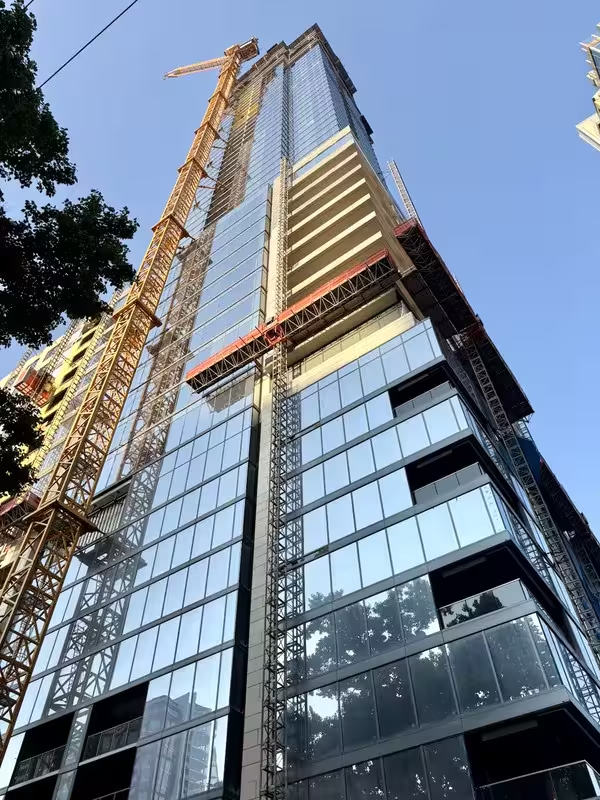
Today is Day Two of the tower crane's final raising.
Sojourner_Terminus
New member
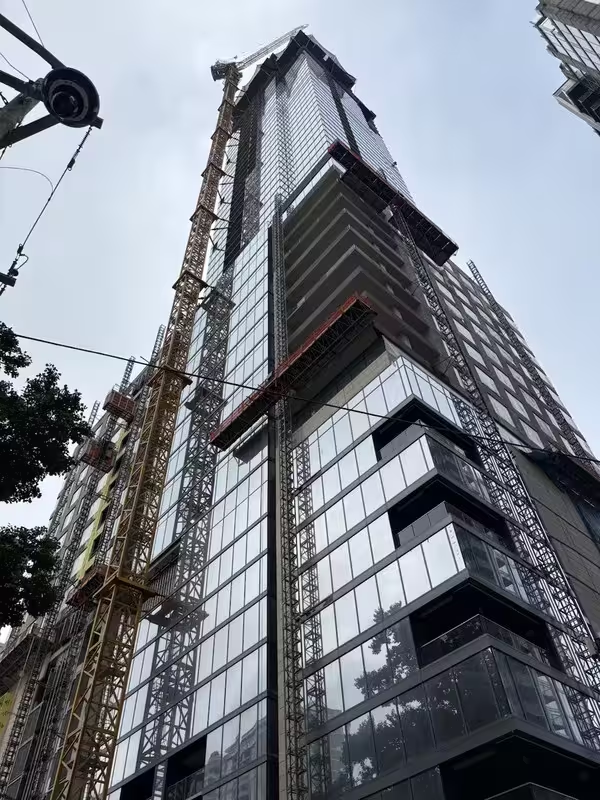
This ones going to be done soon, and we'll miss having something tall to watch go up. Could be a long while before we get another 700+ footer.




shivtim
New member
When is this going to top out? How many more floors?
There will be 20 floors above the two taller transfer floors, and I count 16 completed as of yesterday, so there should be 4 more floors to go plus a small crown.
NYbyWAYofGA
New member
There will be 20 floors above the two taller transfer floors, and I count 16 completed as of yesterday, so there should be 4 more floors to go plus a small crown.
Is it me or did this one go up super fast?
RocketSurgeon
New member
Is it me or did this one go up super fast?
Seems to be about 1 floor a week, which is pretty typical. The first was poured a year and a half ago. Total time from site work to finish will end up being ~3 years.
ATL Champion
New member
Demolition of the prior post office and site work started in March 0f 2023 . First Crane erected in Oct 2023. It should top out next month (Oct 2025) with completion anticipated in March of 2026
atlwarrior
New member
While I know some are not thrilled with the design. It does have a commanding presence in the skyline. You can see the skyscraper from every direction as you approach the City.
While I know some are not thrilled with the design. It does have a commanding presence in the skyline. You can see the skyscraper from every direction as you approach the City.