HomeDiagramsDatabaseMapsForum About
     

Go Back   SkyscraperPage Forum > Discussion Forums > City Discussions


Reply

 
Thread Tools Display Modes
     
     
  #81  
Old Posted Jul 30, 2025, 9:11 PM
edale edale is offline
Registered User
 
Join Date: Apr 2017
Posts: 2,815
Quote:
Originally Posted by Yuri View Post
Thank you! It's fun. It's almost like travelling in time, thinking on how those cities felt back then.

BTW, I added Mount Royal into Montreal, so density dropped slightly. I also removed the airports of New York, Chicago and Cleveland, which increased their densities. I also removed non-developed area inside Cincinnati proper, on the northwest and southeast corners of it and that "finger" on west.

And now adding Washington (without airport) and Baltimore (without that peninsula in the far south), which were a bit hard as they have lots of unincorporated communities around them:

------------------------- Population 1950 ------ Area ------- Density
Code:
New York ------- 10,244,422 -- 1,205 km² ---- 8,502 inh./km²

London ---------- 8,164,416 -- 1,238 km² ---- 6,593 inh./km²

Chicago --------- 3,930,506 ---- 650 km² ---- 6,046 inh./km²

Los Angeles ----- 3,512,434 -- 1,502 km² ---- 2,339 inh./km²

Detroit --------- 2,048,410 ---- 414 km² ---- 4,951 inh./km²

San Francisco --- 1,386,789 ---- 342 km² ---- 4,053 inh./km²

Montreal -------- 1,181,123 ---- 172 km² ---- 6,867 inh./km²

Baltimore ------- 1,088,708 ---- 259 km² ---- 4,203 inh./km²

Cleveland ------- 1,082,067 ---- 237 km² ---- 4,564 inh./km²

St. Louis ------- 1,044,363 ---- 233 km² ---- 4,486 inh./km²

Washington ------ 1,041,662 ---- 279 km² ---- 3,727 inh./km²

Pittsburgh ------ 1,038,137 ---- 263 km² ---- 3,940 inh./km²

Toronto ----------- 921,132 ---- 149 km² ---- 6,182 inh./km²

Cincinnati -------- 708,469 ---- 183 km² ---- 3,871 inh./km²

Milwaukee --------- 637,392 ---- 129 km² ---- 4,922 inh./km²

Buffalo ----------- 600,198 ---- 108 km² ---- 5,394 inh./km²
Interesting to see how close Cincinnati and Pittsburgh's densities are here. The topography plus soil conditions in both cities mean that large swaths of hillside areas will never be heavily developed, which obviously brings density figures down. San Francisco, while just as hilly, doesn't have the same soil conditions and amount of precipitation that CIN and PGH have, so they were able to develop their hillsides differently.
Reply With Quote
     
     
  #82  
Old Posted Jul 30, 2025, 9:28 PM
Yuri's Avatar
Yuri Yuri is offline
Registered User
 
Join Date: Sep 2008
Posts: 6,297
A small EDIT: I eliminated Presidio and the southwestern tip of SF as Alameda and Oakland's airports:

------------------------- Population 1950 ------ Area ------- Density
Code:
New York ------- 10,244,422 -- 1,205 km² ---- 8,502 inh./km²

London ---------- 8,164,416 -- 1,238 km² ---- 6,593 inh./km²

Buenos Aires ---- 4,017,913 ---- 492 km² ---- 8,166 inh./km²

Chicago --------- 3,930,506 ---- 650 km² ---- 6,046 inh./km²

Los Angeles ----- 3,512,434 -- 1,502 km² ---- 2,339 inh./km²

Mexico City ----- 2,661,437 ---- 265 km² --- 10,056 inh./km²

Philadelphia ---- 2,474,196 ---- 458 km² ---- 5,400 inh./km²

Rio de Janeiro -- 2,425,931 ---- 294 km² ---- 8,249 inh./km²

Detroit --------- 2,048,410 ---- 414 km² ---- 4,951 inh./km²

Boston ---------- 1,826,741 ---- 408 km² ---- 4,477 inh./km²

São Paulo ------- 1,756,956 ---- 291 km² ---- 6,027 inh./km²

San Francisco --- 1,386,789 ---- 309 km² ---- 4,488 inh./km²

Montreal -------- 1,181,123 ---- 172 km² ---- 6,867 inh./km²

Baltimore ------- 1,088,708 ---- 259 km² ---- 4,203 inh./km²

Cleveland ------- 1,082,067 ---- 237 km² ---- 4,564 inh./km²

St. Louis ------- 1,044,363 ---- 233 km² ---- 4,486 inh./km²

Washington ------ 1,041,662 ---- 279 km² ---- 3,727 inh./km²

Pittsburgh ------ 1,038,137 ---- 263 km² ---- 3,940 inh./km²

Toronto ----------- 921,132 ---- 149 km² ---- 6,182 inh./km²

Cincinnati -------- 708,469 ---- 183 km² ---- 3,871 inh./km²

Milwaukee --------- 637,392 ---- 129 km² ---- 4,922 inh./km²

Buffalo ----------- 600,198 ---- 108 km² ---- 5,394 inh./km²

Quote:
Originally Posted by edale View Post
Interesting to see how close Cincinnati and Pittsburgh's densities are here. The topography plus soil conditions in both cities mean that large swaths of hillside areas will never be heavily developed, which obviously brings density figures down. San Francisco, while just as hilly, doesn't have the same soil conditions and amount of precipitation that CIN and PGH have, so they were able to develop their hillsides differently.
Exactly. It's impossible to extract completely non-urbanized areas in Cincinnati and specially in Pittsburgh: hills and deep valleys are everywhere.
__________________
London - São Paulo - Rio de Janeiro - Londrina - Frankfurt
Reply With Quote
     
     
  #83  
Old Posted Jul 31, 2025, 1:18 AM
streetscaper streetscaper is offline
Registered User
 
Join Date: May 2004
Location: New York
Posts: 2,998
Quote:
Originally Posted by Yuri View Post
Finally, Philadelphia and Boston to finish all major North American cities.

And as an extra, I also brought Buenos Aires, Mexico City, Rio de Janeiro and São Paulo:

Buenos Aires would cover a slightly bigger area as some partidos (municipalities) were only partially urbanized and I left them out. Figures are from 1947 and as it was experience a rapid growth around that time, still getting lots of Europeans, I'd say it would be around 4.4 million and maybe 530 km² or so.

São Paulo was growing like crazy, avoiding flood plains, leapfrogged everywhere, lots of small farms and still didn't have the same urban grandeur of the other 3 Latin American, which were national capitals and we already big cities in the turning of the century. That probably explains the much lower density.


------------------------- Population 1950 ------ Area ------- Density
Code:
New York ------- 10,244,422 -- 1,205 km² ---- 8,502 inh./km²

London ---------- 8,164,416 -- 1,238 km² ---- 6,593 inh./km²

Buenos Aires ---- 4,017,913 ---- 492 km² ---- 8,166 inh./km²

Chicago --------- 3,930,506 ---- 650 km² ---- 6,046 inh./km²

Los Angeles ----- 3,512,434 -- 1,502 km² ---- 2,339 inh./km²

Mexico City ----- 2,661,437 ---- 265 km² --- 10,056 inh./km²

Philadelphia ---- 2,474,196 ---- 458 km² ---- 5,400 inh./km²

Rio de Janeiro -- 2,425,931 ---- 294 km² ---- 8,249 inh./km²

Detroit --------- 2,048,410 ---- 414 km² ---- 4,951 inh./km²

Boston ---------- 1,826,741 ---- 408 km² ---- 4,477 inh./km²

São Paulo ------- 1,756,956 ---- 291 km² ---- 6,027 inh./km²

San Francisco --- 1,386,789 ---- 342 km² ---- 4,053 inh./km²

Montreal -------- 1,181,123 ---- 172 km² ---- 6,867 inh./km²

Baltimore ------- 1,088,708 ---- 259 km² ---- 4,203 inh./km²

Cleveland ------- 1,082,067 ---- 237 km² ---- 4,564 inh./km²

St. Louis ------- 1,044,363 ---- 233 km² ---- 4,486 inh./km²

Washington ------ 1,041,662 ---- 279 km² ---- 3,727 inh./km²

Pittsburgh ------ 1,038,137 ---- 263 km² ---- 3,940 inh./km²

Toronto ----------- 921,132 ---- 149 km² ---- 6,182 inh./km²

Cincinnati -------- 708,469 ---- 183 km² ---- 3,871 inh./km²

Milwaukee --------- 637,392 ---- 129 km² ---- 4,922 inh./km²

Buffalo ----------- 600,198 ---- 108 km² ---- 5,394 inh./km²
So we can go back to Canada!
Very interesting data.. thanks for tabulating and sharing!
__________________
hmmm....
Reply With Quote
     
     
  #84  
Old Posted Jul 31, 2025, 2:55 PM
iheartthed iheartthed is offline
Registered User
 
Join Date: Oct 2009
Location: New York
Posts: 12,086
Quote:
Originally Posted by Yuri View Post
Finally, Philadelphia and Boston to finish all major North American cities.

And as an extra, I also brought Buenos Aires, Mexico City, Rio de Janeiro and São Paulo:

Buenos Aires would cover a slightly bigger area as some partidos (municipalities) were only partially urbanized and I left them out. Figures are from 1947 and as it was experience a rapid growth around that time, still getting lots of Europeans, I'd say it would be around 4.4 million and maybe 530 km² or so.

São Paulo was growing like crazy, avoiding flood plains, leapfrogged everywhere, lots of small farms and still didn't have the same urban grandeur of the other 3 Latin American, which were national capitals and we already big cities in the turning of the century. That probably explains the much lower density.


------------------------- Population 1950 ------ Area ------- Density
Code:
New York ------- 10,244,422 -- 1,205 km² ---- 8,502 inh./km²

London ---------- 8,164,416 -- 1,238 km² ---- 6,593 inh./km²

Buenos Aires ---- 4,017,913 ---- 492 km² ---- 8,166 inh./km²

Chicago --------- 3,930,506 ---- 650 km² ---- 6,046 inh./km²

Los Angeles ----- 3,512,434 -- 1,502 km² ---- 2,339 inh./km²

Mexico City ----- 2,661,437 ---- 265 km² --- 10,056 inh./km²

Philadelphia ---- 2,474,196 ---- 458 km² ---- 5,400 inh./km²

Rio de Janeiro -- 2,425,931 ---- 294 km² ---- 8,249 inh./km²

Detroit --------- 2,048,410 ---- 414 km² ---- 4,951 inh./km²

Boston ---------- 1,826,741 ---- 408 km² ---- 4,477 inh./km²

São Paulo ------- 1,756,956 ---- 291 km² ---- 6,027 inh./km²

San Francisco --- 1,386,789 ---- 342 km² ---- 4,053 inh./km²

Montreal -------- 1,181,123 ---- 172 km² ---- 6,867 inh./km²

Baltimore ------- 1,088,708 ---- 259 km² ---- 4,203 inh./km²

Cleveland ------- 1,082,067 ---- 237 km² ---- 4,564 inh./km²

St. Louis ------- 1,044,363 ---- 233 km² ---- 4,486 inh./km²

Washington ------ 1,041,662 ---- 279 km² ---- 3,727 inh./km²

Pittsburgh ------ 1,038,137 ---- 263 km² ---- 3,940 inh./km²

Toronto ----------- 921,132 ---- 149 km² ---- 6,182 inh./km²

Cincinnati -------- 708,469 ---- 183 km² ---- 3,871 inh./km²

Milwaukee --------- 637,392 ---- 129 km² ---- 4,922 inh./km²

Buffalo ----------- 600,198 ---- 108 km² ---- 5,394 inh./km²
So we can go back to Canada!
It's almost shocking how much less dense Los Angeles was than other major cities in 1950.
Reply With Quote
     
     
  #85  
Old Posted Jul 31, 2025, 3:15 PM
craigs's Avatar
craigs craigs is online now
Registered User
 
Join Date: May 2019
Location: Los Angeles
Posts: 10,966
Quote:
Originally Posted by iheartthed View Post
It's almost shocking how much less dense Los Angeles was than other major cities in 1950.
Personally, I don't believe Los Angeles had a population density of 903 persons per square mile in 1950. That figure is far below even those of basic suburban tracts. But hey, this isn't my thread.

Los Angeles in November 1950:
__________________
Chaos upon my enemies, chaos upon my enemies, chaos upon my enemies.
Reply With Quote
     
     
  #86  
Old Posted Jul 31, 2025, 3:25 PM
iheartthed iheartthed is offline
Registered User
 
Join Date: Oct 2009
Location: New York
Posts: 12,086
Quote:
Originally Posted by craigs View Post
Personally, I don't believe Los Angeles had a population density of 903 persons per square mile in 1950. That figure is far below even those of basic suburban tracts. But hey, this isn't my thread.
I believe LA's density would have been 6,057 per square mile in 1950 if you're converting Yuri's calculated numbers. That's a plausible density but it's just so much lower than most other major cities at the time.

Granted, so much of Los Angeles was still undeveloped in 1950 that the average density doesn't necessarily represent the environment most residents lived in at the time.
Reply With Quote
     
     
  #87  
Old Posted Jul 31, 2025, 3:30 PM
craigs's Avatar
craigs craigs is online now
Registered User
 
Join Date: May 2019
Location: Los Angeles
Posts: 10,966
Quote:
Originally Posted by iheartthed View Post
I believe LA's density would have been 6,057 per square mile in 1950 if you're converting Yuri's calculated numbers. That's a plausible density but it's just so much lower than most other major cities at the time.

Granted, so much of Los Angeles was still undeveloped in 1950 that the average density doesn't necessarily represent the environment most residents lived in at the time.
I need more coffee.
__________________
Chaos upon my enemies, chaos upon my enemies, chaos upon my enemies.
Reply With Quote
     
     
  #88  
Old Posted Jul 31, 2025, 3:40 PM
sopas ej's Avatar
sopas ej sopas ej is offline
Registered User
 
Join Date: Jul 2007
Location: South Pasadena, California
Posts: 8,174
Quote:
Originally Posted by iheartthed View Post
I believe LA's density would have been 6,057 per square mile in 1950 if you're converting Yuri's calculated numbers. That's a plausible density but it's just so much lower than most other major cities at the time.

Granted, so much of Los Angeles was still undeveloped in 1950 that the average density doesn't necessarily represent the environment most residents lived in at the time.
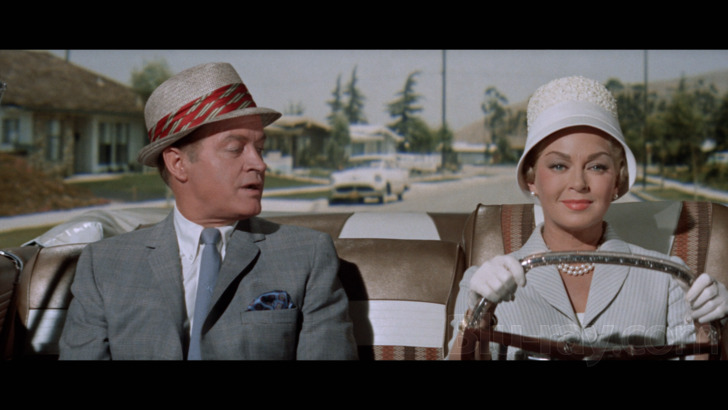
Indeed. The San Fernando Valley was still largely agricultural in the 1940s. By 1950, though, the post-war boom had begun. By 1960, a lot of those orange groves and agricultural plots were mowed over for tract homes. If you ever watch the 1961 comedy film "Bachelor in Paradise," you'll see the San Fernando Valley during its post-war boom. It was filmed in Woodland Hills and Panorama City. Total time warp of a movie, and kind of fun in its mid-20th Century look. You'll see brand new post-war tract homes with obviously newly planted landscaping, the cars, the clothes...

Bob Hope and Lana Turner in "Bachelor in Paradise." Obviously a rear-projection driving scene, but the scene is the San Fernando Valley.

(Warner Archive Collection)
__________________
"I guess the only time people think about injustice is when it happens to them."

~ Charles Bukowski
Reply With Quote
     
     
  #89  
Old Posted Jul 31, 2025, 4:10 PM
badrunner badrunner is offline
Registered User
 
Join Date: Oct 2016
Posts: 3,134
LA in 1950 had pretty much the same land area as today with only about half the population, so yeah it did have bloated city limits at the time after going on an annexation spree. The San Fernando Valley was mostly farmland and ranches with a majority of the housing development taking place in the 50s, as you can see in this building age map. But LA did/does have a dense urban core that is comparable to the other legacy cities that is not captured in the above chart. I also think it's a flawed methodology to add on connected suburbs that meet a certain density threshold, because you are basically penalizing a city for having denser suburbs (adding "dozens and dozens" of random suburbs for LA which pulls down the average), while cities that have a lower density fringe (that do not meet the density threshold) get to "preserve" their higher density numbers.
Reply With Quote
     
     
  #90  
Old Posted Jul 31, 2025, 4:15 PM
Yuri's Avatar
Yuri Yuri is offline
Registered User
 
Join Date: Sep 2008
Posts: 6,297
Quote:
Originally Posted by streetscaper View Post
Very interesting data.. thanks for tabulating and sharing!
Thank you!


Quote:
Originally Posted by iheartthed View Post
It's almost shocking how much less dense Los Angeles was than other major cities in 1950.
I used a 1950 map to make sense of what suburbs were urban and what were not. They still have lots of sparsed populated land between Los Angeles and Long Beach. Same for the edges of the San Fernando Valley.

They had some ribbons of development where urban areas mixed with rural ones, something we see in São Paulo, the only other city in the list with crazy growth. The two rising stars that were much less proeminent merely 15 years before.


Quote:
Originally Posted by iheartthed View Post
Granted, so much of Los Angeles was still undeveloped in 1950 that the average density doesn't necessarily represent the environment most residents lived in at the time.
Indeed. I even included some suburbs below 2,000 inh./km² that were apparently fully urbanized, but probably had many of empty plots.


Quote:
Originally Posted by badrunner View Post
I also think it's a flawed methodology to add on connected suburbs that meet a certain density threshold, because you are basically penalizing a city for having denser suburbs (adding "dozens and dozens" of random suburbs for LA which pulls down the average), while cities that have a lower density fringe (that do not meet the density threshold) get to "preserve" their higher density numbers.
I wouldn't call "methodology". I'm doing the best with tools I have on hand. Of course it won't be perfect. Even Census numbers might be flawed, let alone to decide whether a given suburb was full urbanized in 1950 for having 1,500 inh.km² or 2,000 km².

And in Los Angeles case suburbs and the city had pretty much the same density.
__________________
London - São Paulo - Rio de Janeiro - Londrina - Frankfurt
Reply With Quote
     
     
  #91  
Old Posted Jul 31, 2025, 4:43 PM
Yuri's Avatar
Yuri Yuri is offline
Registered User
 
Join Date: Sep 2008
Posts: 6,297
I couldn't help myself, but yesterday evening I included Minneapolis-St. Paul, Kansas City and New Orleans. The only urban in North America above 500k left out was Houston but I couldn't find a way to measure its area (I'd love if some one volunteer). If we consider Havana as being North America, it's missing too but as Houston I couldn't find granular figures for 1950.

Minneapolis brought a new low for density except for Los Angeles. And it was fully urbanized. For St. Paul I cut of the southwest and southeast corners that weren't urbanized. And some suburbs were not included even though they were fully urbanized in old maps (e.g. Richfield, South of Minneapolis), but was way below the 2,000 inh./km² and I decided to let it out.

Kansas City was tricky but I guess I did a decent job. Basically the two KCs and a tiny suburb on the southwest.

New Orleans I only included Gretna and only of its area. Metairie (west) is not incorporated so it was impossible to find data on it. It probably had some urbanization on New Orleans borders. And of course, I cut of all the empty areas on northeastern and eastern sections Orleans Parish.

And of course, two bonus: Montevideo and Glasgow, cities that were way more prominent on the past. Montevideo was a shocker. I knew it was big, but I've never stopped to think on how big. A world class metropolis.


------------------------- Population 1950 ------ Area ------- Density
Code:
New York ------- 10,244,422 -- 1,205 km² ---- 8,502 inh./km²

London ---------- 8,164,416 -- 1,238 km² ---- 6,593 inh./km²

Buenos Aires ---- 4,017,913 ---- 492 km² ---- 8,166 inh./km²

Chicago --------- 3,930,506 ---- 650 km² ---- 6,046 inh./km²

Los Angeles ----- 3,512,434 -- 1,502 km² ---- 2,339 inh./km²

Mexico City ----- 2,661,437 ---- 265 km² --- 10,056 inh./km²

Philadelphia ---- 2,474,196 ---- 458 km² ---- 5,400 inh./km²

Rio de Janeiro -- 2,425,931 ---- 294 km² ---- 8,249 inh./km²

Detroit --------- 2,048,410 ---- 414 km² ---- 4,951 inh./km²

Boston ---------- 1,826,741 ---- 408 km² ---- 4,477 inh./km²

São Paulo ------- 1,756,956 ---- 291 km² ---- 6,027 inh./km²

San Francisco --- 1,386,789 ---- 342 km² ---- 4,053 inh./km²

Glasgow --------- 1,206,665 ---- 194 km² ---- 6,867 inh./km²

Montreal -------- 1,181,123 ---- 172 km² ---- 6,867 inh./km²

Montevideo ------ 1,140,000 ---- 150 km² ---- 7,600 inh./km²

Baltimore ------- 1,088,708 ---- 259 km² ---- 4,203 inh./km²

Cleveland ------- 1,082,067 ---- 237 km² ---- 4,564 inh./km²

St. Louis ------- 1,044,363 ---- 233 km² ---- 4,486 inh./km²

Washington ------ 1,041,662 ---- 279 km² ---- 3,727 inh./km²

Pittsburgh ------ 1,038,137 ---- 263 km² ---- 3,940 inh./km²

Toronto ----------- 921,132 ---- 149 km² ---- 6,182 inh./km²

Minneapolis ------- 833,067 ---- 252 km² ---- 3,310 inh./km²

Cincinnati -------- 708,469 ---- 183 km² ---- 3,871 inh./km²

Milwaukee --------- 637,392 ---- 129 km² ---- 4,922 inh./km²

Buffalo ----------- 600,198 ---- 108 km² ---- 5,394 inh./km²

Kansas City ------- 588,187 ---- 170 km² ---- 3,467 inh./km²

New Orleans ------- 584,258 ---- 187 km² ---- 3,128 inh./km²

__________________
London - São Paulo - Rio de Janeiro - Londrina - Frankfurt
Reply With Quote
     
     
  #92  
Old Posted Jul 31, 2025, 6:48 PM
Docere Docere is offline
Registered User
 
Join Date: Jul 2014
Posts: 9,120
Quote:
Originally Posted by Docere View Post
Wonder if this should be moved here as the thread is becoming less about Canadian cities specifically:

https://skyscraperpage.com/forum/showthread.php?t=254554
?
Reply With Quote
     
     
  #93  
Old Posted Jul 31, 2025, 11:45 PM
Werthers Werthers is offline
BANNED
 
Join Date: Nov 2024
Location: The Great Wet North
Posts: 181
It's crazy that Winterpeg was the third biggest city in the country a century ago, now it barely cracks the top ten
Reply With Quote
     
     
  #94  
Old Posted Aug 1, 2025, 12:28 AM
montréaliste montréaliste is offline
Registered User
 
Join Date: Jun 2010
Location: Chambly, Quebec
Posts: 2,230
Quote:
Originally Posted by sopas ej View Post
Indeed. The San Fernando Valley was still largely agricultural in the 1940s. By 1950, though, the post-war boom had begun. By 1960, a lot of those orange groves and agricultural plots were mowed over for tract homes. If you ever watch the 1961 comedy film "Bachelor in Paradise," you'll see the San Fernando Valley during its post-war boom. It was filmed in Woodland Hills and Panorama City. Total time warp of a movie, and kind of fun in its mid-20th Century look. You'll see brand new post-war tract homes with obviously newly planted landscaping, the cars, the clothes...

Bob Hope and Lana Turner in "Bachelor in Paradise." Obviously a rear-projection driving scene, but the scene is the San Fernando Valley.

(Warner Archive Collection)

It’s a happy coincidence that you chose a Bob Hope vehicle to speak to post 1950 L.A. development, since he was a major land owner prior to subsequent subdivision housing.
Reply With Quote
     
     
  #95  
Old Posted Aug 1, 2025, 2:48 AM
Docere Docere is offline
Registered User
 
Join Date: Jul 2014
Posts: 9,120
Quote:
Originally Posted by Werthers View Post
It's crazy that Winterpeg was the third biggest city in the country a century ago, now it barely cracks the top ten
Winnipeg grew rapidly before WWI but fell behind Vancouver in the 1920s.

1881 7,995
1891 26,529
1901 42,540
1911 136,035
1921 179,097
1931 218,785

Last edited by Docere; Aug 1, 2025 at 3:10 AM.
Reply With Quote
     
     
  #96  
Old Posted Aug 1, 2025, 2:55 AM
Docere Docere is offline
Registered User
 
Join Date: Jul 2014
Posts: 9,120
Canada's 10 largest cities: 1871, 1901, 1931

1871

Montreal 107,225
Quebec 59,699
Toronto 56,092
Halifax 29,582
Saint John 28,805
Hamilton 26,716
Ottawa 21,545
London 15,826
Portland (NB) 12,520
Kingston 12,407

1901

Montreal 267,730
Toronto 208,040
Quebec 68,840
Ottawa 59,928
Hamilton 52,634
Winnipeg 42,340
Halifax 40,832
Saint John 40,711
London 37,981
Vancouver 26,133

1931

Montreal 818,517
Toronto 631,207
Vancouver 246,593
Winnipeg 218,784
Hamilton 155,547
Quebec 130,594
Ottawa 126,872
Calgary 83,761
Edmonton 79,197
London 71,148


Montreal and Toronto already had significant suburban populations by 1931.
Reply With Quote
     
     
  #97  
Old Posted Aug 1, 2025, 2:14 PM
niwell's Avatar
niwell niwell is offline
sick transit, gloria
 
Join Date: Nov 2004
Location: Roncesvalles, Toronto
Posts: 11,644
I believe Montreal's urban area hit 1 million in the early 1930s with Toronto a bit over 800k. A fair bit of development outside of city limits both in established municipalities and more informal development with minimal services.

According to the City of Toronto the population within what would become the current city limits was 1,117,140 in 1950 (with a then municipal population of 675,754). While some of this would have been rural the vast majority would be within Toronto's contiguous urban area. Some would be pretty low density as this is when unserviced developments in previously platted areas of North York and Scarborough began to take form. There also would have been some development in what is now Mississauga along the lakeshore adjacent to Toronto that would be considered part of the metro area.
__________________
Check out my pics of Johannesburg
Reply With Quote
     
     
  #98  
Old Posted Aug 1, 2025, 2:28 PM
Yuri's Avatar
Yuri Yuri is offline
Registered User
 
Join Date: Sep 2008
Posts: 6,297
Quote:
Originally Posted by Werthers View Post
It's crazy that Winterpeg was the third biggest city in the country a century ago, now it barely cracks the top ten
Yes, but they rebounded greatly on the past 15 years after decades of slow growth. They even surpassed Quebec City and Hamilton.
__________________
London - São Paulo - Rio de Janeiro - Londrina - Frankfurt
Reply With Quote
     
     
  #99  
Old Posted Aug 1, 2025, 2:40 PM
Yuri's Avatar
Yuri Yuri is offline
Registered User
 
Join Date: Sep 2008
Posts: 6,297
Quote:
Originally Posted by Docere View Post
1931

Montreal 818,517
Toronto 631,207
Vancouver 246,593
Winnipeg 218,784
Hamilton 155,547
Quebec 130,594
Ottawa 126,872
Calgary 83,761
Edmonton 79,197
London 71,148


Montreal and Toronto already had significant suburban populations by 1931.
How Toronto was if we add East York and York?

Montreal plus Verdun, Westmount and Outremont is at 932,198. I guess Montreal won't go beyond that by 1931.
__________________
London - São Paulo - Rio de Janeiro - Londrina - Frankfurt
Reply With Quote
     
     
  #100  
Old Posted Aug 1, 2025, 6:17 PM
Docere Docere is offline
Registered User
 
Join Date: Jul 2014
Posts: 9,120
Toronto's early 20th century suburbanization, includes population figures.

https://southofbloorstreet.blogspot.com/2015/09/population-growth-in-metropolitan.html

York Township and Verdun were the largest interwar suburbs in Canada.
Reply With Quote
     
     
This discussion thread continues

Use the page links to the lower-right to go to the next page for additional posts
 
 
Reply

Go Back   SkyscraperPage Forum > Discussion Forums > City Discussions
Forum Jump


Forum Jump


All times are GMT. The time now is 10:40 PM.


Powered by vBulletin® Version 3.8.7
Copyright ©2000 - 2026, vBulletin Solutions, Inc.