It’s a fact that we can’t be certain about the future. However, if in 1900, you had thought that investing in horse stables was a good idea, it would have seemed completely plausible to almost everyone. Horse stables had been around for centuries, and that was the traditional way of caring for horses. It had always been this way and would continue to be this way.
Now think about our current transportation systems and the dual revolutions that are happening in AI and AV at near the speed of light. Look at this picture and it is easy to see that we are in for HUGE changes and coming soon.
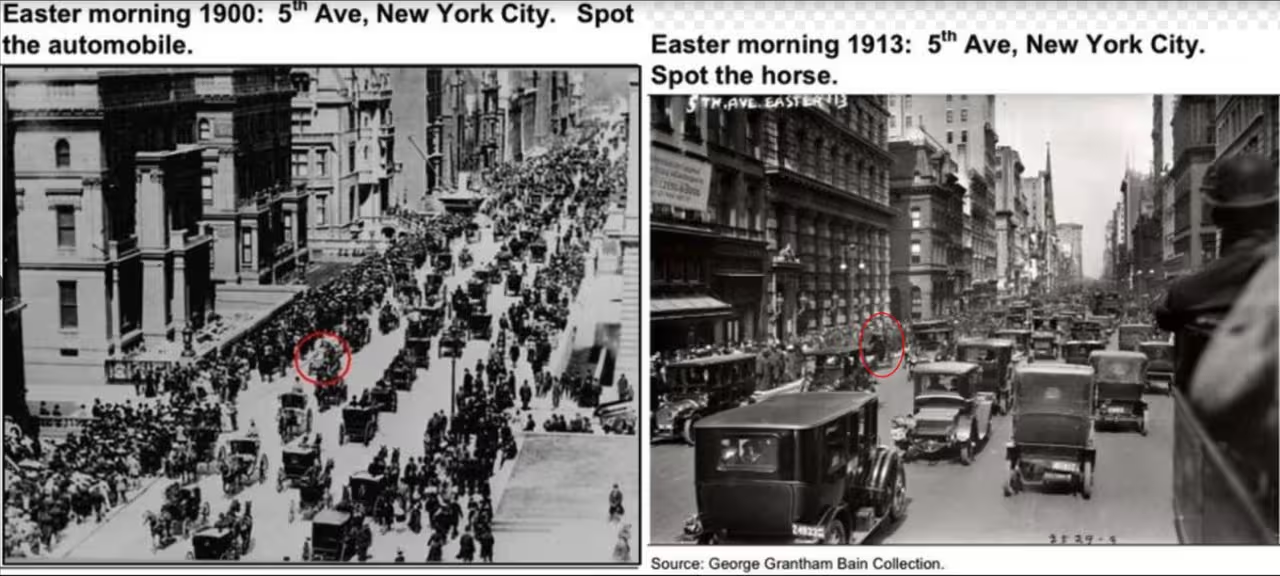
Here are two classic images that illustrate the dramatic transformation of New York City streets during the early 20th century, highlighting the "buggy whip effect"-the rapid obsolescence of an entire industry as new technology takes over:
1. New York City Streets Before Cars (circa 1900)
Streets were dominated by horse-drawn carriages. Horses powered nearly all personal and commercial transportation, resulting in congested, noisy, and often unsanitary streets due to the enormous quantities of manure produced. A famous photo shows Fifth Avenue in 1900 filled with horses and carriages, with only a rare early automobile present.
2. New York City Streets After Cars Took Over (circa 1913)
Just 13 years later, the same stretch of Fifth Avenue is packed with automobiles, with only a single horse-drawn carriage visible among a sea of cars. This image starkly demonstrates how quickly the automobile displaced the horse, rendering entire trades (like buggy whip makers) obsolete.
These pics were taken
ONLY 13 years apart. Same place 5th Av. NY City. On the left horse carriages and 1 car, on the right, 1 horse carriage and all the cars.
This visual transformation is a textbook example of the "buggy whip effect": as soon as the automobile reached a tipping point in affordability and practicality, the infrastructure, businesses, and jobs supporting horse-drawn transport vanished within a decade. The shift was so rapid and complete that by the 1920s, the horse, once ubiquitous in city life, had all but disappeared from the urban landscape.





 Prev
Prev




 Linear Mode
