Quote:
Originally Posted by Truenorth00

|
I must admit that I’m not sure what you are trying to say with all of those graphs, pulled out of the linked study.
My take from looking over the graphs is, basically, that denser cities can offer more jobs within a given commute travel time. No big surprise – but I did go an read the study report. In it, is this interesting paragraph:
Quote:
|
The automobile provides better access than transit in all cities we compared, except in Shanghai, China, where automobile reaches about 90% of the jobs reachable by transit at 30 min. The disparity between transit and automobile access is greatest in American cities; Oceania and Canadian cities have more comparable levels of access between the two modes, although the gap remains significant. Among the Oceania cities, Perth and Wellington are the two extremes (outliers) for respectively having the largest and smallest gaps between transit and automobile access to jobs.
|
If you go back and look at the graphs again, you will notice that the number of jobs accessible by automobile FAR exceeds the number of jobs available to folks using other methods of commuting.
Here is that in graph form:
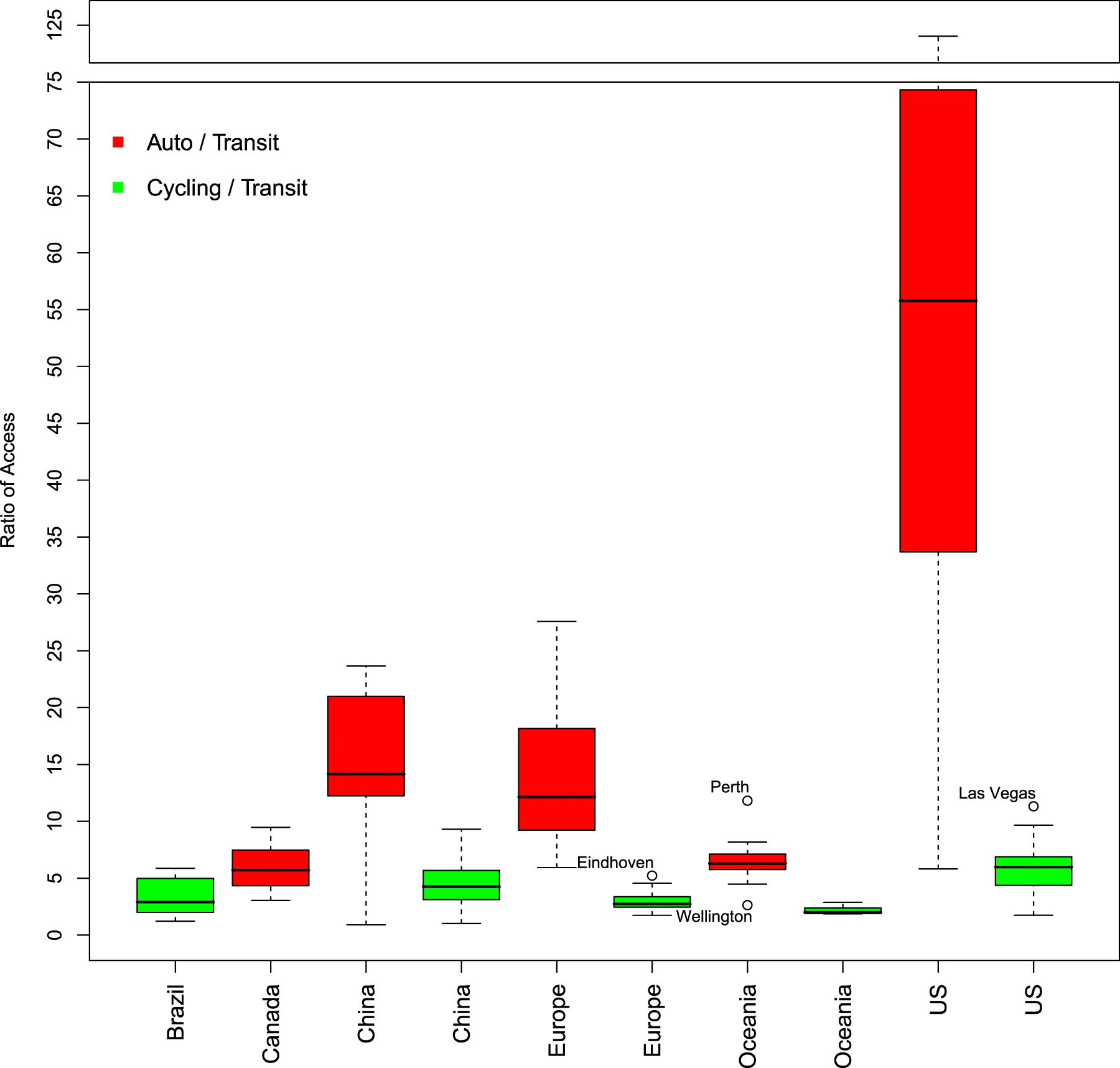
Take-away; Roads are the most important link between people and their jobs, giving them access to far more choices of employment. The road network of every city (except, maybe Shanghai) – regardless of its density – must be maintained to a useful level. Setting up ‘road-blocks’ (pun intended) for automobiles adversely affects cities more than any other form of transportation.





 Prev


 Linear Mode

