
You are using an out of date browser. It may not display this or other websites correctly.
You should upgrade or use an alternative browser.
You should upgrade or use an alternative browser.
CHICAGO | General Developments
- Thread starter ChicagoBruce
- Start date
-
- Tags
- chicago
- Status
- Not open for further replies.

Jibba
Active member
Yes, I am extremely interested. Thanks for all of your reporting on this issue. Please keep us informed as to the other events happening in your 'hood too if you have time. For instance, what's the deal with the dual facade removals on either side of Milwaukee near Leavitt?
Philip (of the BCO) told me that he would contact me should any major events happen with the garage proposal prior to the public meeting about the project on the 17th of February.
As far as the facade removals of those buildings on opposite sides of Milwaukee near Leavitt, I know that at least one of them (the one on the east side of Milwaukee adjacent to the Aldi parking lot) is undergoing renovation to luxury lofts, and there is a (very minimal) website for that project that I can look up for you to check out. As for the building across the street, I am not entirely sure but I believe that it is undergoing a similar renovation (I took a peek behind the scaffolding one day and I'm sure I saw some framing installed for new windows). A building adjoining the one on the east side of Milwaukee was demolished completely some time ago (less than a year, though).
I am going to write to Alderman Burnett and voice my support for the preservation of St. Boniface, too, but I really don't have enough information about the structure to form a substantive argument advocating its landmarking. Is there a source that you know of off-hand that you could direct me to that would be a good source for some general info/history? I can certainly research around, but if you have a source that you know of without having to look around that would help. Otherwise, if you know enough good info off the top of your head and could possibly PM me a few bullet points that would work, too.
^ You're in luck. In the process of fact-checking some things for you, I stumbled upon this site. I haven't read the whole thing, but what I've seen thus far looks pretty accurate and more thorough than anything I have time to put together.
http://www.saintbonifaceinfo.com/SaintBoniface/Home.html
The site links to Wikipedia's entry on architect Henry J. Schlacks, which is pretty weak. I would add to what you find there that he worked for Louis Sullivan, and was one of the foremost church designers in the Chicago area. Among his structures are the classic St. Gelasius in Woodlawn (now landmarked and happily reused after a very similar attempted demolition move by the Archdiocese), St. Anthony's in Bridgeport, the towering, twin-steepled St. Paul's in Heart of Chicago (greater Pilsen), the stunning St. Mary of the Lake in Uptown, and many others.
Here is a cool photo of the interior: http://seabringer.blogspot.com/2006/09/abandoned-st-boniface-church-chicago.html
I hope everyone has a chance to check out these links and drop a quick note to Ald. Burnett. Here is the e-mail address listed on his web site: [email protected]
_____
If you're really interested, here is a link to the St. Gelasius group that is restoring that building (very meticulously, I might add). There is a lot of good info here. Their budget is pretty daunting, but the work they are doing is probably more lavish than what would go into St. Boniface (which I doubt is in good enough shape any longer to receive a total interior restoration, but I could be wrong).
It's also highly amusing to read their version of the history of the structure, which skips the demo permit application, the public outcry, and the massive advocacy that resulted in the City of Chicago landmarking the building against threats of lawsuits etc. Instead, the site gives credit to "Francis Cardinal George, who had always regretted closing the church, [and] was overjoyed at the possibility of preserving this historic gem." Like Saint Boniface, the building absolutely would not be standing today had there not been community advocacy, leaders who worked tirelessly to raise awareness, and action by the alderman to direct the City toward landmarking. In other words, writing Burnett now to present a strong showing of community support is critical.
http://www.historic-landmark.org/
Last edited:

emathias
Adoptive Chicagoan
Don't forget the embedded energy to make brick pavers. Cutting Belgian Block is probably pretty energy efficient, though.
...
I hadn't considered the heat necessary in brick manufacturing, but I would imagine that tallying up everything required to create and maintain an asphalt road vs a brick one would tilt increasingly in favor of brick over its lifespan.
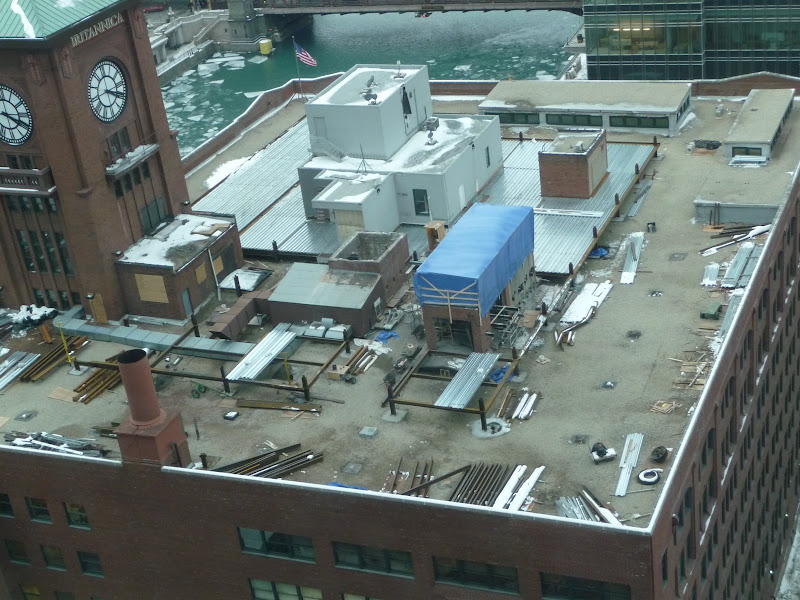
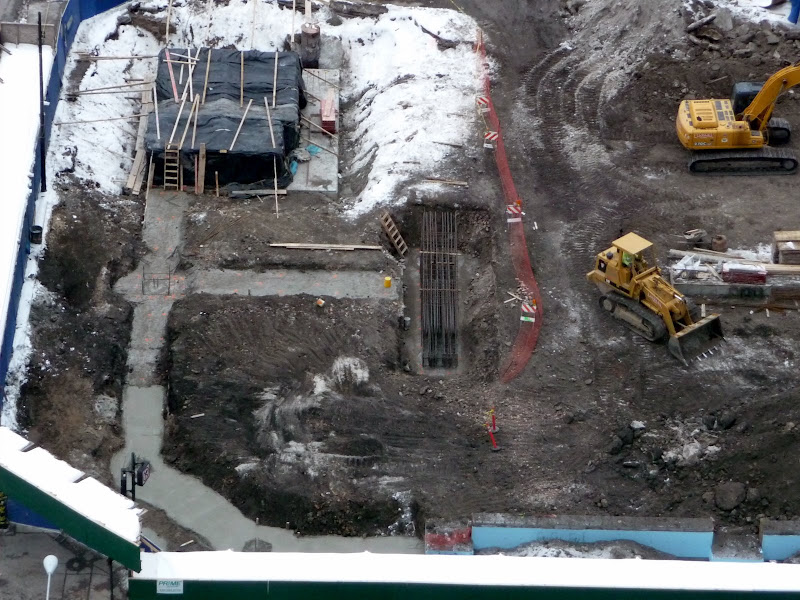

harryc
New member
Working on the river
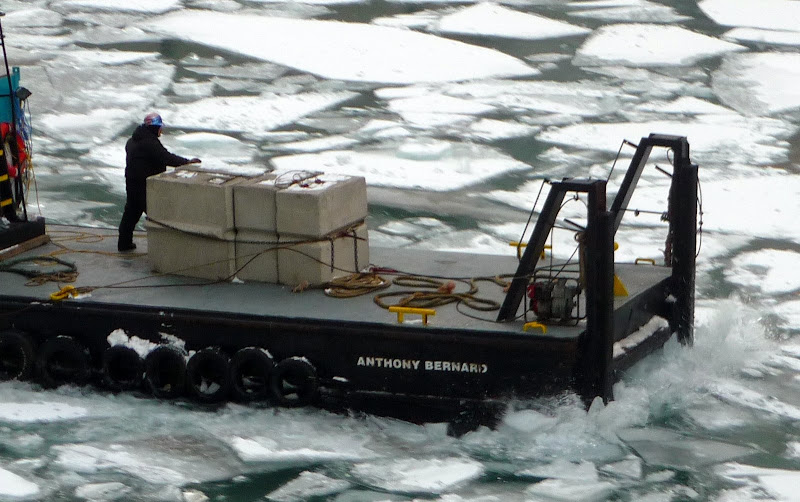
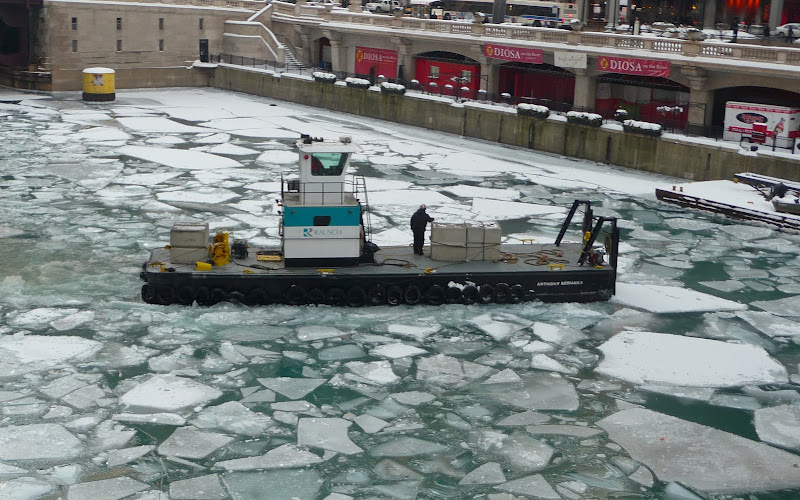
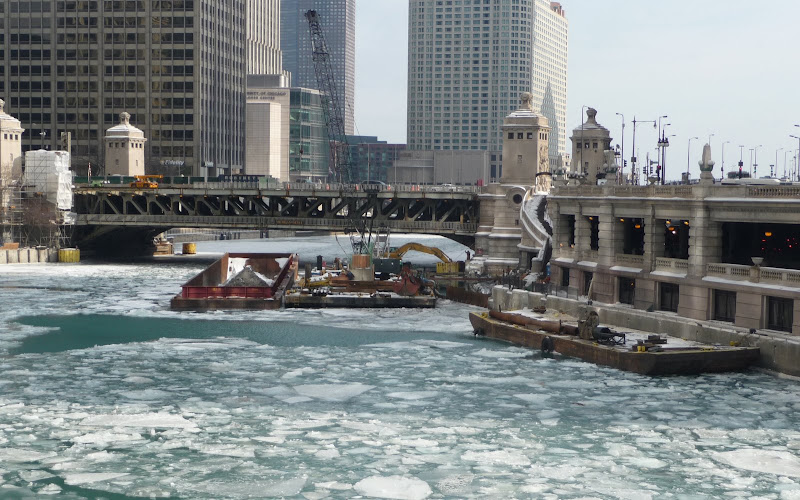
Chicago Riverwalk work.
Jan 22
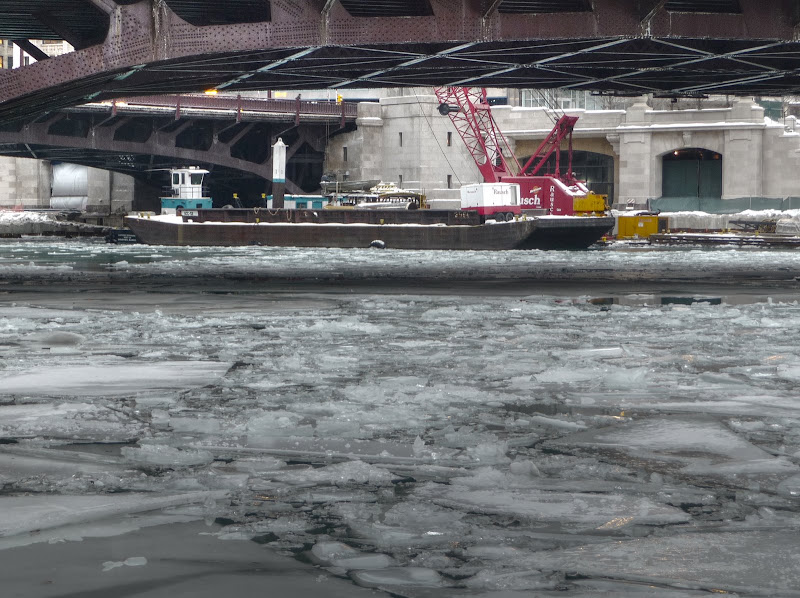
NOT an Ice Breaker. They were doing repeated runs at the ice, backing up, getting a running start, then buting in another 20ft or so, backing up, repeat .....
Jan 23
Michigan Ave.
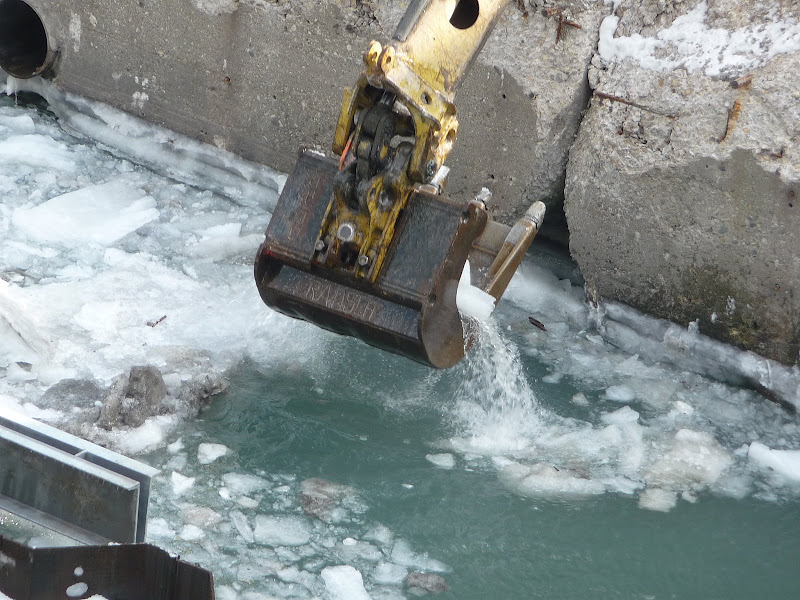
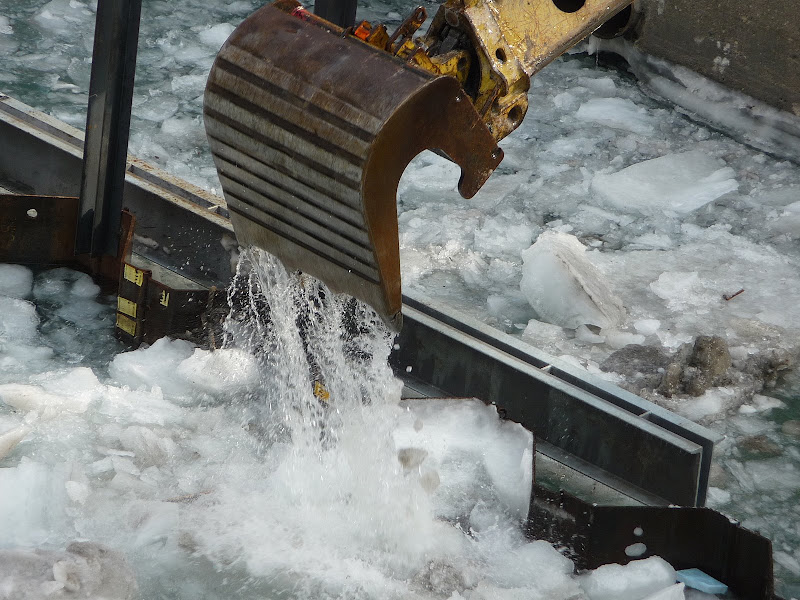
Breaking and removing ice - a nice tool to have.
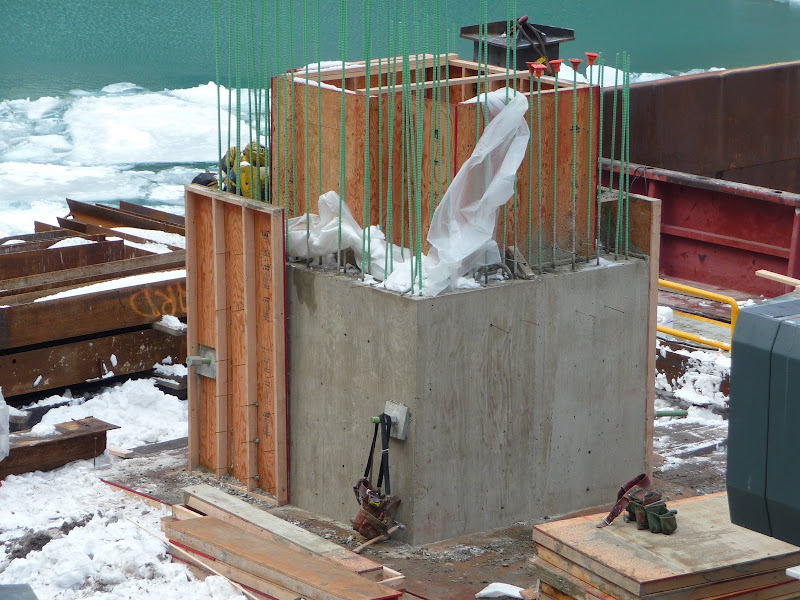
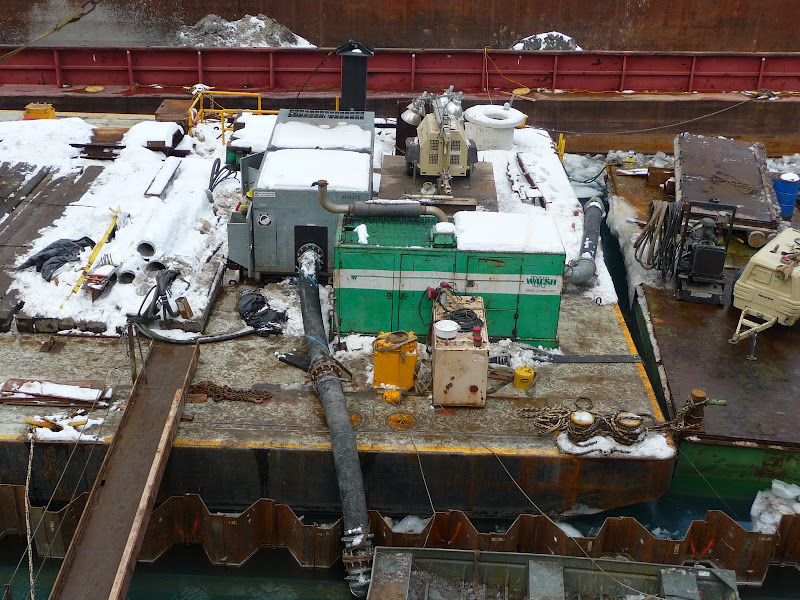
Footing being built on site (on barge)
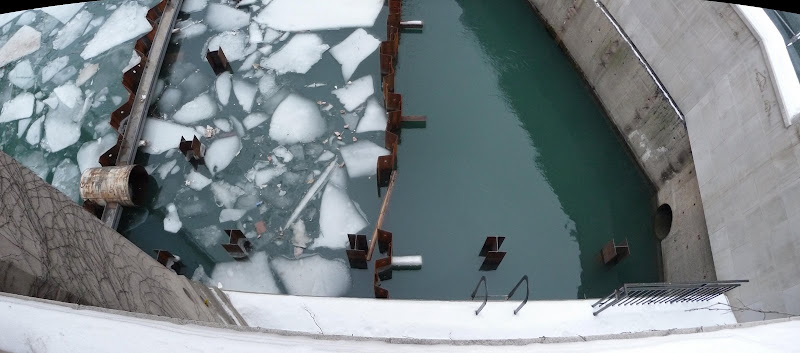
Serious pumps - it appears that they will pump out the space between the sheet piles and the old wall at some point.
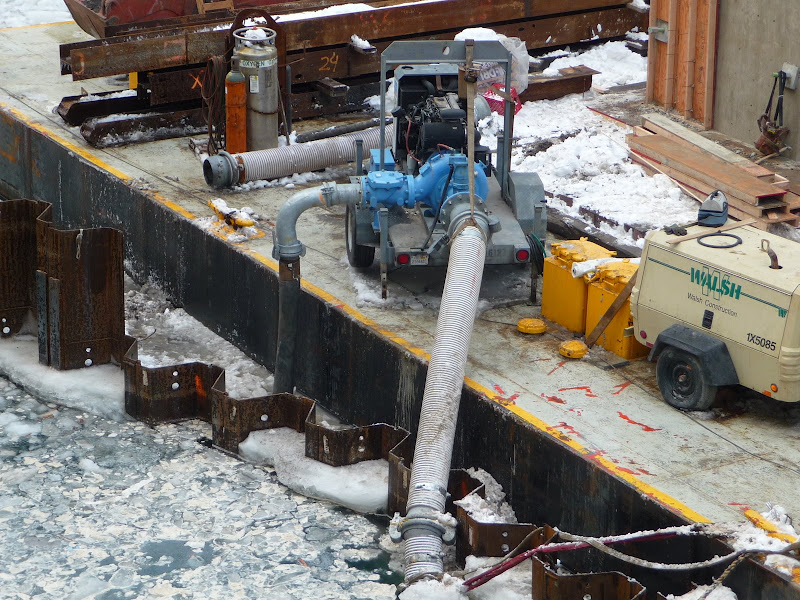
Old piles for old wall
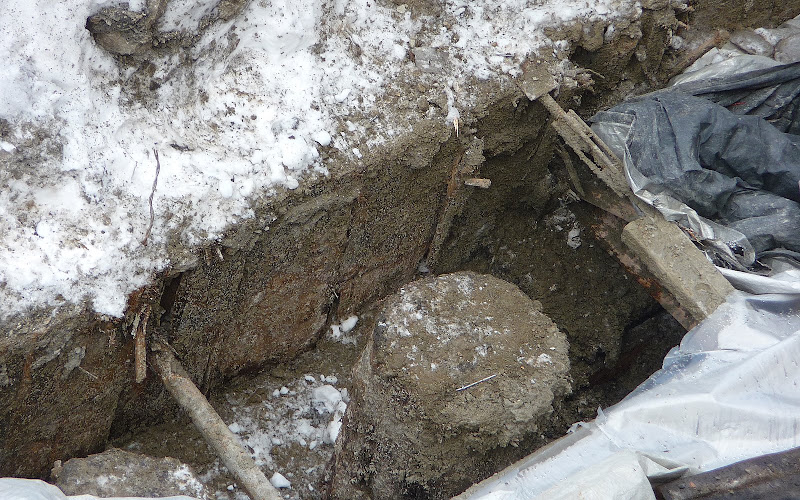
Not so old piles (?)
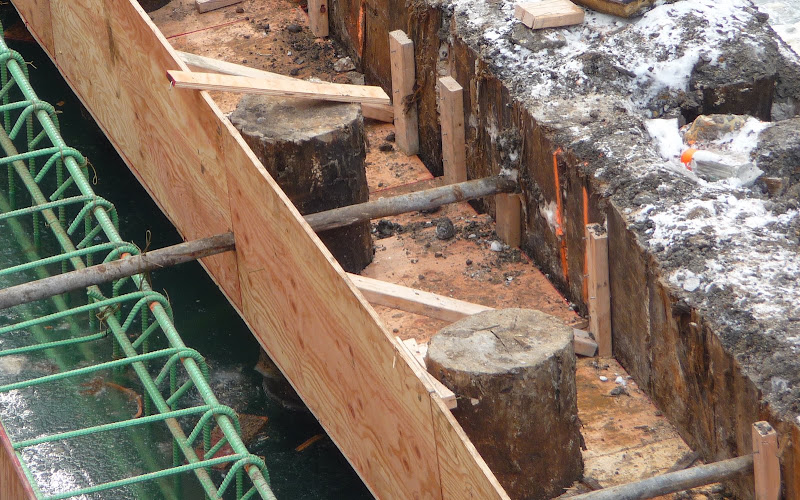
River bank is on the left

Michigan Ave bridge railing work.
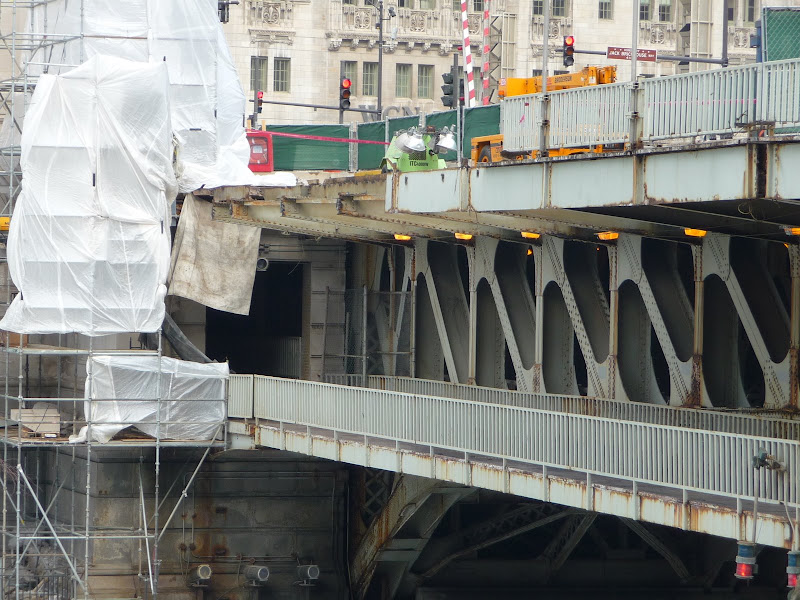
Wabash, looking under state.
Extending a drain pipe
Chicago Riverwalk work.
Jan 22
NOT an Ice Breaker. They were doing repeated runs at the ice, backing up, getting a running start, then buting in another 20ft or so, backing up, repeat .....
Jan 23
Michigan Ave.
Breaking and removing ice - a nice tool to have.
Footing being built on site (on barge)
Serious pumps - it appears that they will pump out the space between the sheet piles and the old wall at some point.
Old piles for old wall
Not so old piles (?)
River bank is on the left
Michigan Ave bridge railing work.
Wabash, looking under state.
Extending a drain pipe
MrLakepoint
Chicago, il.- Malibu, Ca
 revious: harryc, "Thanks" for the updates. You just saved me e-mailing CBOTNYSE to see if he had any shots of the bridge and walkway construction. Great shots.:worship:
Jibba
Active member
^Yes, great detailed shots of the Riverwalk, harry.
Here are some more shots of some stuff around my area:
honte, here are some photos of the aforementioned rehabs on Milwaukee near Leavitt that you were wondering about:
(Rehab on the north/east side of Milwaukee)


(backhoe is occupying the site of the previously-mentioned demo'ed building)


(Rehab on south/west side of Milwaukee)


(Project on Division)


(Vision on Division)


Sorry for the amount of shots, everyone; I tried to arrange the photos so as to not use up as much length on the page.
Here are some more shots of some stuff around my area:
honte, here are some photos of the aforementioned rehabs on Milwaukee near Leavitt that you were wondering about:
(Rehab on the north/east side of Milwaukee)
(backhoe is occupying the site of the previously-mentioned demo'ed building)
(Rehab on south/west side of Milwaukee)
(Project on Division)
(Vision on Division)
Sorry for the amount of shots, everyone; I tried to arrange the photos so as to not use up as much length on the page.
the urban politician
The City
^ Ya know, I kind of don't mind that "Vision on Division" project. It wouldn't hurt to also redevelop that Wendy's across the street into something a bit nicer
honte, here are some photos of the aforementioned rehabs on Milwaukee near Leavitt that you were wondering about:
Thanks, but I think your description of the projects as "rehabs" is far too charitable. I'd prefer to call this neighborhood desecration. Total trash. It's not even possible to call this stuff architecture.
This one was a lovely warehouse with glazed brick.

The other (now that Purple PoMo People eater) was a rather plain Prairie-era warehouse but far better than that ill-proportioned, generic facade they've put up. When will people learn? I'll never understand what makes people want to rip off the facades of their buildings.
Jibba
Active member
^Yes, "rehab" was definitely far too charitable. I knew you weren't going to like what I had to post (I find it quite pathetic myself). That white, glazed brick was great, and from what I remember it was in pretty good shape from what I was able to see of it before they put the scaffolding up (which was walking by it 4-5 times a week).
Sadly, the cheap, purple-brick caricature is one of many such hack-jobs of renovated old building stock in the area (West Town has had quite a few that have been particularly awful).
Sadly, the cheap, purple-brick caricature is one of many such hack-jobs of renovated old building stock in the area (West Town has had quite a few that have been particularly awful).
^ Rereading my post, I want to say that I was not trying to attack your position or phrasing. Sorry if my anger might have sounded to be directed at you.
Thank you very much for capturing the crime in progress.
Facade removal is a huge problem throughout the city and it's one way building owners are able to sneak around potential protection of buildings - by destroying any historic value prior to any potential review, which is only triggered by demolition (and in that case, only far too rarely as it is). The City has turned a blind eye to this epidemic and the destruction has reached truly amazing levels. Meanwhile, fly-by-night developers and building owners who cash-in at the expense of our neighborhood character are laughing themselves all the way to Scottsdale. We need to bring more attention to this issue - it's probably the biggest preservation problem in Chicago now.
Thank you very much for capturing the crime in progress.
Facade removal is a huge problem throughout the city and it's one way building owners are able to sneak around potential protection of buildings - by destroying any historic value prior to any potential review, which is only triggered by demolition (and in that case, only far too rarely as it is). The City has turned a blind eye to this epidemic and the destruction has reached truly amazing levels. Meanwhile, fly-by-night developers and building owners who cash-in at the expense of our neighborhood character are laughing themselves all the way to Scottsdale.
We need to bring more attention to this issue - it's probably the biggest preservation problem in Chicago now.
Jibba
Active member
^Don't worry about it; I certainly knew your intentions with the way your words were phrased (reading text makes this difficult, but I know your methods of speech well enough now to know what you mean).
I certainly agree that it's quite a problem--I haven't looked further into the issue in particular, but all I need to do is walk around a few blocks and I will come across multiple examples of the destruction. These actions, along with the mega-mansion cancer that is out of control in gentrifying areas like Bucktown, threaten to erode the character of the neighborhood at an alarming rate.
I certainly agree that it's quite a problem--I haven't looked further into the issue in particular, but all I need to do is walk around a few blocks and I will come across multiple examples of the destruction. These actions, along with the mega-mansion cancer that is out of control in gentrifying areas like Bucktown, threaten to erode the character of the neighborhood at an alarming rate.
It's sort of amazing that it hasn't really let up with the economy falling apart. There is no market for vastly overpriced new/"rehabbed" space, yet it keeps being built. What gives?
Honte, I think I know where you stand on this, but I wanted to ask: How much of the modernist residential development in Hyde Park should be protected? Should it become a historic district, and if so, should any of the modernist stuff be excluded to permit redevelopment?
Actually, more generally, in a neighborhood with historic architecture from multiple periods, are there overlapping historic districts or is it all in one district regardless of period?
Last edited:

nomarandlee
My Mind Has Left My Body
..http://featuresblogs.chicagotribune...-buildings-likely-to-be-demolished-as-pa.html
Originally posted: January 26, 2009
Former Meigs Field terminal, Reese hospital buildings head new "Chicago 7" list of endangered historic places
The glassy airport terminal from the former Meigs Field and postwar hospital buildings that stand in the way of Chicago's plans for an Olympic Village head the list of an advocacy group's seven most threatened historic places in Chicago.
The list, released at noon Monday by Preservation Chicago, also singles out the 105-year-old St. Boniface Church, which the Archdiocese of Chicago wants to tear down; the vacant Art Deco Chicago Motor Club building at 68 E. Wacker Place; and the Bucktown home of the late historic preservationist and photographer Richard Nickel.
Rounding out the list are the Harper Theater in Hyde Park and an unusual choice--the old-fashioned wood window..........

Mr Downtown
Urbane observer
in a neighborhood with historic architecture from multiple periods, are there overlapping historic districts or is it all in one district regardless of period?
All in one district, though you occasionally have a preexisting individual landmark (Dearborn Station) in a later-designated Landmark District (Printing House Row).

VivaLFuego
New member
^ Ya know, I kind of don't mind that "Vision on Division" project. It wouldn't hurt to also redevelop that Wendy's across the street into something a bit nicer
In terms of density/use, Vision is good. I'm not thrilled with the massive curb cut and apparent surface parking in front of the retail, but I guess you win some and lose some. The finished product might be ok. The Wendy's and Pizza Hut across the street would ideally be a large-site mixed use development of decent size (let's say FAR 3.0), which the community group seems to be on board with. The trick there is waiting for the markets to improve. But I'd rather they sit underdeveloped waiting for something good down the road than get filled in with a crap 1-story Walgreens.
- Status
- Not open for further replies.