CHICAGO | General Developments


Status
Not open for further replies.
Honte, I think I know where you stand on this, but I wanted to ask: How much of the modernist residential development in Hyde Park should be protected? Should it become a historic district, and if so, should any of the modernist stuff be excluded to permit redevelopment?

Actually, more generally, in a neighborhood with historic architecture from multiple periods, are there overlapping historic districts or is it all in one district regardless of period?

Hyde Park has one of the nation's greatest collections of Modernism. Absolutely it should be cherished and protected. There are very few developments there that I would like to see redeveloped, aside from the strip malls, etc. Actually, if you look at purely noncontributing buildings, Hyde Park has many suitable development sites. I don't think we're going to cross the line toward needing to sacrifice nice things for neighborhood growth any time soon (such as St. Steven's, VivaL. ;)).

I disagree with Mr. Downtown's reply to you, as you probably intended for it to pertain to the Modernist stuff and older stock in one district. Generally speaking, historic districts in Chicago do have buildings from multiple eras, but this is only possible when the district remains cohesive for another reason. This could have been a type of use, a particular developer, a certain type of construction, what have you. So, it's rather easy for buildings from multiple eras to get landmarked as a bundle. However, less understood and equally easy is for buildings to be thrown out of districts prior to the designation for the same reasons. The Modern bank on North Avenue and Clark was removed from its proposed designation after objections by the owners - and the cause was this very reason. Off the top of my head, there is only one landmark district in Chicago with protected buildings that date from before and after WWII, and if someone tried to pull a demo permit on one of those, it would be up for debate rather than simply rejected.

For instance, why was the Borg-Warner building left out of the Michigan Avenue district? It's the only Lescaze structure in Chicago (at least, that I know of). But with the district, the redevelopment pressure on that poor building is absolutely immense. I doubt it will survive the next cycle.

Back to your specific question, in general, Modernism is a terribly hard sell for landmarking in Chicago or Illinois. The reasons for this are involved and difficult to explain (I've actually done so to a certain extent in this thread before), but in general the reasons are simply that Modernism is less understood and suffers from a bad image. Some of the great stuff in Hyde Park is still less than 50 years of age as well, which, although entirely arbitrary, further hurts its chances.

If the stuff there manages to hang on for the next 20 years, I could see a city Landmark District happening. But sadly I don't see that happening any time sooner. If you could magically get tons of community support for this and then magically get both Aldermen to get behind the issue in a tremendous way, then you might be able to make something happen.

You know, Hyde Park proper has many highly viable landmark districts of older stock (Woodlawn area, Rosalie Villas, a significant grouping of pre-fire house, Madison Park, the old Quads, and on and on), but even those do not exist. It's amazing so much survives, to be frank.
 
Thanks, but I think your description of the projects as "rehabs" is far too charitable. I'd prefer to call this neighborhood desecration. Total trash. It's not even possible to call this stuff architecture.

This one was a lovely warehouse with glazed brick.
14313220200000.jpg


The other (now that Purple PoMo People eater) was a rather plain Prairie-era warehouse but far better than that ill-proportioned, generic facade they've put up. When will people learn? I'll never understand what makes people want to rip off the facades of their buildings.

$$$$$$$$$$$$$$$$$$$$$$$$$$$$$$$$$$$$$$$$$$$$$$$$$$$$$$$$$

Not much more to be said.

Unfortunately with the old facades, you tend to find that all the lintels are completely shot. You get in there and the only thing holding the wall together is the fact that it's still put together in one piece. To take the window out would collapse the rest of the wall. It gets to the point that to replace a window requires that you shore and rebuild almost the whole wall anyway.

Overall it becomes cheaper just to replace it all.
 
Last edited:
^ I've run into plenty of bad lintels and have replaced them. It's not a big deal. There is not enough knowledge out there on how to restore / correct the problems we encounter, but there sure are a lot of people who'd like to take the easy (as in typical) way out. Then there are the salesmen who give crappy advice. This has been going on at least since the 1950s - all the asphalt siding, fake stone, etc that you see is mostly the lingering scars of an amazing marketing campaign.

It's pretty rare that I come across a building whose facade appears to be beyond repair. Even in such cases, if you are concerned, creative, and willing to do a little work, it's possible to take the facade down and rebuild it. Case in point is an 1880s building on 26th that recently was town down, but had the historic facade put right back up on new construction in the same spot. Most people who drive by there will never know anything happened.

Meanwhile, all of these narrow-minded owners and crude businessmen are forgetting that architecture and art have value. Unless they do a very interesting and high-quality facade like the one they are removing (which in my experience is about 1 in 100), they are losing money simply in the reduction of curb appeal, character, etc.
 
Landmarking Modernism

Chicago is a difficult place to landmark more obscure pieces of modernism, because Chicago is so chock full of good and abhorrent modernism that the great is well known and not in any real danger in the eyes of chicagoans and to all the rest "they're just knock offs".

I definitely don't agree with this, but I also disagree with the idea of singling modernism out. The recent past is the more appropriate term to refer to post war buildings that tend to be passed over by this generation of the populace much like appreciation for any old building pre Richard Nickel.

Preservationists work for this generation of building as well, it is one of the more difficult sells, and one that is rarely acknowledged when it succeeds.

Landmarks Preservation Council of Illinois, Preservation Chicago, and the City's Landmarks Department all need our support and input in order to be successful though. So voice your opinion outside of these boards as well.

There's an echo out there, and it does more good.
 
^ I've run into plenty of bad lintels and have replaced them. It's not a big deal. There is not enough knowledge out there on how to restore / correct the problems we encounter, but there sure are a lot of people who'd like to take the easy (as in typical) way out. Then there are the salesmen who give crappy advice. This has been going on at least since the 1950s - all the asphalt siding, fake stone, etc that you see is mostly the lingering scars of an amazing marketing campaign.

It's pretty rare that I come across a building whose facade appears to be beyond repair. Even in such cases, if you are concerned, creative, and willing to do a little work, it's possible to take the facade down and rebuild it. Case in point is an 1880s building on 26th that recently was town down, but had the historic facade put right back up on new construction in the same spot. Most people who drive by there will never know anything happened.

Meanwhile, all of these narrow-minded owners and crude businessmen are forgetting that architecture and art have value. Unless they do a very interesting and high-quality facade like the one they are removing (which in my experience is about 1 in 100), they are losing money simply in the reduction of curb appeal, character, etc.

I can't really disagree with you there. I did a cost analysis on a facade a while back to address all the options for what they wanted to do there. The terra-cotta was in good shape but all the bars and J-hooks were completey disintegrated. Since Landmarks was requiring some re-use of that facade, I determined the best option was to take it down piece-by-piece and rebuild it.

This was compared to leaving it in place, shored similarly to the Baptist Church in Bronzeville, and also compared to knocking it down and rebuilding with new, similar materials.

Given the cost of new terra-cotta and the necessary custom order of brick, there was not much difference in the new construction and the reuse, and the shoring option made building the new hotel next to impossible in terms of access anyway. So the option chosen, at least last I knew, was to rebuild.

A lot of times, as you say, the businessmen are crude, and just freak out with how much work needs to be done, and either run away from it or take the "cheaper" way out.
 
Last edited:
http://chicagojournal.com/main.asp?SectionID=25&SubSectionID=55&ArticleID=6895&TM=84927.45

Saved by land swap?
Fearing imminent demolition, St. Boniface neighbors jam Ald. Burnett’s ward night

By MICAH MAIDENBERG


A land swap between the City of Chicago and the Archdiocese of Chicago might be the best chance for preservation of the St. Boniface campus, according to 27th Ward Ald. Walter Burnett.

That was the news Burnett, who represents the West Town area that includes the St. Boniface church and rectory structures, shared with more than 20 anxious neighborhood residents and preservationist activists who jammed Burnett's office last Thursday night in search of answers.
 
http://chicagojournal.com/main.asp?SectionID=25&SubSectionID=55&ArticleID=6943&TM=84927.45

Boutique hotel on Division Street?
By Jessica Levco and Micah Maidenberg


Details about the possibility of a new hotel opening in Wicker Park will be announced at the Feb. 3 East Village Association meeting.

On Jan. 12, the EVA board unanimously voted not to oppose a special-use zoning permit that the hotel would need to open, according to Scott Rappe, EVA planning director. Rappe described the project as a "boutique hotel."

The hotel is proposed for the building at 1659 W. Division by Third Coast Construction, according to details the company gave EVA. A representative from the company, Dan Sheehy, declined to comment on the proposal. The building falls within the 1st Ward.
 
Given the cost of new terra-cotta and the necessary custom order of brick, there was not much difference in the new construction and the reuse, and the shoring option made building the new hotel next to impossible in terms of access anyway. So the option chosen, at least last I knew, was to rebuild.

So to clarify, the Cedar facade is being demolished and being replaced with a facsimile? Or do you mean that the terra cotta is being saved and re-used, albeit after having been removed?
 
This was a post left on Kamin's blog, re: the Chicago Motor Club building:

http://featuresblogs.chicagotribune...e-citys-most-endangered-places-.html#comments
I want to add a footnote on the Chicago Motor Club situation; I understand through conversation with the owner that he loves the building and understands its importance. It ain't goin' nowhere.

He was understandably disappointed that Preservation Chicago never contacted him to discuss the status of the project.

He has been looking for a viable partner to develop the property and is commissioning a masonry report on long standing issues.

The owner cooperates with the preservation community by allowing graduate students access to the building to study.

Yes. There has been a restructuring of his financing (these deals can be a web of cross-collateralization) but he is solid.

And he would definitely consider landmark status - at a time it could benefit the re-use plan for the site.

- Keith Bringe
Chicago Art Deco Survey Director
 
^ Uh, this is the same guy who wanted to tear it down (and Weese's church) a few years back?

Not saying that Preservation Chicago shouldn't have contacted him, but with that track record, it seems the building deserves to be on the list anyway.
 
Hyde Park has one of the nation's greatest collections of Modernism. Absolutely it should be cherished and protected[...]

You know, Hyde Park proper has many highly viable landmark districts of older stock (Woodlawn area, Rosalie Villas, a significant grouping of pre-fire house, Madison Park, the old Quads, and on and on), but even those do not exist. It's amazing so much survives, to be frank.

Honte, thanks for the reply. My question about modernism was triggered by Harper Court, which looks like it will be one of the first major modernist developments in Hyde Park to bite the dust and seems to have nobody willing to say anything very kind about it. (The RFP is still out on it right now.) The University may roll the Harper Theater/Herald buildings into the Harper Court redevelopment, and I'm not at all convinced that any of them are actually so far gone that they require demolition. Neither is Preservation Chicago, which put Harper Theater on its new list of seven.

I've been somewhat concerned that the pro-development movement in Hyde Park, led/documented by the Hyde Park Progress blog, is wildly overcompensating for the neighborhood's past development phobia by almost dismissing the possibility of preserving anything in Hyde Park unless it rises to individual landmark quality. Unfortunately, I find it very hard to believe them or the University when they claim that so many buildings are "beyond repair" or "in imminent danger of collapse," as the University recently did regarding the Harper Theater/Herald buildings, which it's owned for years now--going so far as to say they might not survive the winter. I would have thought these buildings would get more sympathy than the modernist Harper Court. While most of Hyde Park's modernism seems safe for now, the bulldozer-happy approach doesn't seem to set a very good precedent.

One potentially positive development is that the University has bought the now-closed Hollywood Video on 53rd and Lake Park, a thoroughly unpleasant building that should have been a redevelopment target long before Harper Court. I just wish the emphasis could be on lots like that one and the vacant ones on Cornell and the McMobil site.

p.s. happy Pat Quinn day, everybody.
 
http://www.chicagorealestatedaily.com/cgi-bin/news.pl?id=32807

Hyde Park’s Rosenwald apartment complex on the market

Chicago-based brokerage firm Melvin M. Kaplan Realty Inc. has been hired to sell the Rosenwald, a historic two-building apartment complex with a total of 447 units at 4600 S. Michigan Ave. in Hyde Park, says George Kaplan, executive vice-president with the company. The buildings total 465,544 square feet, with 16,400 square feet of first-floor retail, and are owned by AMA Realty Group LLC, which bought the complex in 2003 for $8 million, according to public records. The complex was built in 1929 by Julius Rosenwald, president of Sears, Roebuck and Co., with the goal of providing quality, affordable housing for working-class families.
 
At first I thought they were trying to heroically expand the boundaries of Hyde Park, but the link has it changed to "Bronzeville" now.
 
Hyde Park is littered with ugly modernist junk. I often used to get aesthetically mugged by the pile of blind-walls crap at the NE corner of Madison Park (the wonderful little neighborhood half a block N of 51st). It even has a plaque! :koko: And then there is that disaster on the S side of 55th between Kimbark and Woodlawn... Someone told me once--seemingly not maliciously--that those turds were built for blind low-income occupants. Which would explain the lack of windows.

The U of C has broken ground on the Regenstein library expansion. Alas.

http://mansueto.lib.uchicago.edu/photo.html

Haven't seen this before:

hosppavilion-north-eleva.jpg


New Hospital Pavillon
57th Street from Drexel to Cottage Grove Avenues

Gross Square
Feet: 1,200,000 SF including 200,000 SF for future development
Floors Above Grade: 10 plus mechanical penthouse
Architect: Rafael Viñoly Architects & Cannon Design
Construction Start Date: 2009
Estimated Completion Date: 2012

Apparently it will span across Maryland. I think the brownstones were torn down a while ago, or am I thinking about the other side of 57th, opposite the IRB?
 
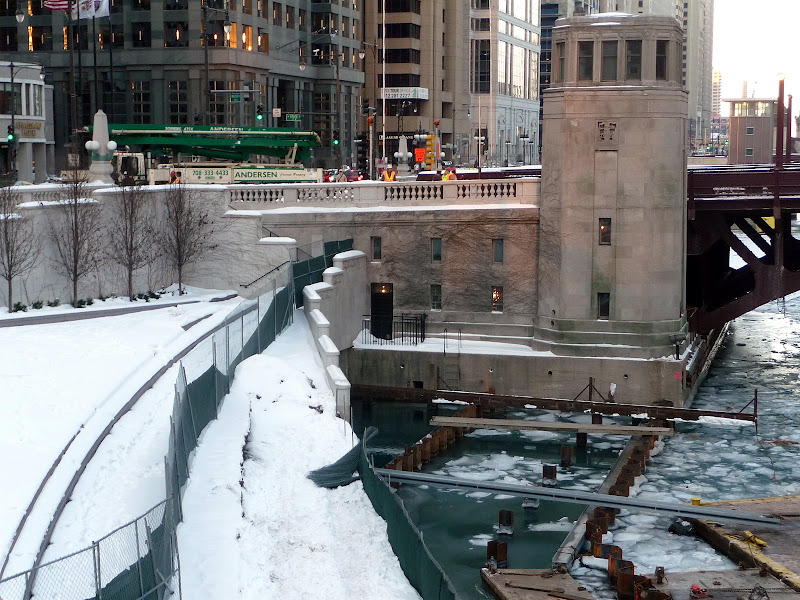
River Walk - Jan 30 am

They are getting ready to pour at the State st. bridge - should make some good photo ops.

P1220703.JPG
 
Status
Not open for further replies.


Back
Top