Albuquerque Development Thread

The Sunport has received nearly $3.7 million in funds from the federal government to go towards a $10 million project to repave and improve Sunport Boulevard and the Sunport Loop terminal access road. Below are stories by Albuquerque Business First and KOB-TV about the funding award and project, including the timeline for construction.

https://www.bizjournals.com/albuquerque/news/2025/07/16/faa-grants-43m-to-new-mexico-airports.html

As Albuquerque prepares for increased air traffic during Balloon Fiesta, airport improvements and new flight routes are set to enhance visitors' local experience.

The New Mexico delegation has announced awards totalling $4,384,758 from the Federal Aviation Administration for upgrades at the Albuquerque International Sunport, Artesia Municipal Airport and Socorro Municipal Airport.

The grant awards are for the planning and development of public-use airports and funded through the FAA’s Airport Improvement Program, according to a news release.

The Sunport will receive almost $3.7 million in funding for infrastructure updates, specifically for rehabilitation of 10,500 feet of existing terminal access road to extend its useful life.

“The (New Mexico) Congressional Delegation keeps close track of all these applications, and they advocate for us. I definitely think that they typically have a pretty significant impact in terms of us, securing those awards,” Manny Manriquez, deputy director of aviation, innovation and development, said.

The project funds awarded to the Sunport will contribute to the complete rehabilitation of Sunport Boulevard and the terminal loop, estimated to cost around $10 million, according to Manriquez.

Additional funding comes from diverse revenue streams, including airport rates, concessions, and parking structure revenues.

The project was on the Sunport’s capital improvement projects list for some months now, and required an engineering study, and plans from a designer. Next, the Sunport goes to bid for construction, which will entail milling and overlay, and the removal of some pavement and reinstallation of new asphalt on the traffic lanes on Sunport Boulevard. There will also be an open graded friction course, a specific kind of pavement which provides ebenefits like allowing water to drain and less tire spray, on the segment between the I-25 interchange and the Central Terminal loop.

Construction is expected to happen in the late summer or early fall to avoid winter temperatures. Work will be done at night to help minimize the impact on people who need to access the terminal.

7TIcNa2L_o.jpg


https://www.kob.com/new-mexico/abq-sunport-secures-3-6m-to-improve-sunport-boulevard/

ALBUQUERQUE, N.M. — The Albuquerque International Sunport secured just over $3.6 million in federal funding to improve a key part of Sunport Boulevard.

The Federal Aviation Administration’s Airport Improvement Program awarded $3,656,508 to the Sunport to improve road conditions, safety and long-term durability, specifically in the terminal approach corridor. The money will go toward:

• Milling and overlay of traffic lanes on Sunport Boulevard
• Removal of the existing pavement section
• Installation of new asphalt concrete
• Application of a new open graded friction course on the segment between the I-25 Interchange and Sunport Terminal Loop

The Sunport plans to replace the existing surface and improve vehicle traction and drainage.

“This is a major win for Albuquerque,” Mayor Tim Keller said. “The Sunport is not only a gateway to our city but also a driver of economic growth and connectivity for the entire region. These upgrades to Sunport Boulevard are a smart infrastructure investment that will keep traffic moving safely and efficiently for years to come.”

Aviation Director Richard McCurley credited New Mexico’s congressional delegation with playing a key role in securing the funds.

“Sunport Boulevard is a vital corridor that sees thousands of vehicles each day, connecting travelers to flights, family, and opportunity,” McCurley said. “This project ensures that we continue delivering a safe, smooth, and welcoming experience from the moment visitors arrive.”

Responses for requests for proposals for construction are open until Aug. 19. They expect to begin construction in late-2025 with “minimal disruption to traffic flow.”

According to the Sunport, they serve over 5.4 million passengers annually.

8WbIYMKz_o.jpg
 
Downtown Albuquerque News this morning published a few cropped screenshots and linked to a couple of neat aerial drone videos that Jaynes posted on its YouTube account earlier this week. They show the construction work and progress on the Rail Trail sections in the Sawmill Area and Downtown Albuquerque at the Central Crossing project. The Sawmill video offers a look at the roundabout construction at Mountain Road and 19th Street as well.

https://downtownalbuquerquenews.com/

New drone footage of rail trail work

Crews have been working on a segment in Sawmill between Mountain and Bellamah, plus a companion project building a roundabout at Mountain and Nineteenth.

Mv5gBxxX_o.png


oL1SvcwX_o.png


hihHcx5T_o.png


• Video Link


Work is also underway at Central and the tracks.

RbtJWkbG_o.png


0eBBInx3_o.png


• Video Link


Here are a few more screenshots of each video that I made as well. You can also spot the Brillante Early Learning Center construction and the reconstruction of 20th Street on either side of the Rail Trail section in the first Sawmill Area screenshot.

Central Crossing

5u18CXyB_o.jpg


ADUzGXus_o.jpg


MQxKiLaT_o.jpg


WgfAlxzR_o.jpg


Sawmill Area

Okqh0WTw_o.jpg


MoBESon2_o.jpg


6LAKEDc0_o.jpg


LKmCx0nW_o.jpg
 
Downtown Albuquerque News at the beginning of the week also had a story about the planned reconstruction and reconfiguration of 8th Street between Central Avenue and Copper Avenue at the east end of Robinson Park. They included renderings of two of the options for the reconfiguration that the city is considering.

https://downtownalbuquerquenews.com/

More options for Eighth are fleshed out as process heads toward a formal plan

Following a round of public engagement that included in-person comments and written surveys, planners are weighing a series of changes - including bike lanes, raised crosswalks, and retractable street bollards - aimed at making Eighth Street between Copper and Central a more useful and inviting connection between Robinson Park and the rest of the Downtown core.

Option One would turn the block-long stretch of Eighth into a one-way northbound street for vehicles while adding bi-directional bike lanes that - unusually for Albuquerque - would be situated next to each other on the west side of the street. The plan would also feature a new pork chop-shaped pedestrian island to the northeast of the roundabout, something that is meant to help facilitate southbound bicycle traffic looking to make its way to Central eastbound.

Option Two, meanwhile, would keep two-way vehicle traffic, put two-way bicycle traffic into a single lane on the west side of the street, add two extended speed bumps known as speed tables, and install retractable bollards meant to help facilitate street closures for special events.

Amy Bell and Richard Perce, who work for a design and planning firm called Anthropopulus, presented the concepts at a meeting last month at FUSION. They said that Option Two was the more popular so far and that, as of the day of last month's meeting, the survey had received 177 responses. They added that several people had written in comments suggesting closing the entire block to vehicular traffic, and that this might be considered as well.

Another plan, which was published over the winter by the Raynolds Addition Neighborhood Association, calls for no new bike lanes and keeping two-way vehicular traffic while narrowing the lanes to 10 feet. With the extra room, the plan would expand the current west-side parking area into a sort of multi-use plaza at the same level as the street. That space could alternately be used for special events, by the Downtown Growers' Market, and on Sundays, as a staging area for an increased number of cruise night participants. (The block tends to attract classic car enthusiasts in particular.) So far at least, the proposal does not seem to have greatly influenced the two concepts under consideration by Anthropopulus.

The next steps for the consultants include finishing up a report - taking into account the comments received at the meeting - and presenting the findings to the city's Parks and Recreation Department and to Downtown ABQ MainStreet, which have been working together to explore options for the block.

The area around Eighth and Central has long been one of the stronger component parts of the Downtown core and has only built on that foundation in recent years. Robinson Park hosts the stalwart Downtown Growers' Market (a MainStreet project), with Downtown Books, Off Center Arts, Mango Automotive, and restaurants Damacios and Curious Toast helping to keep up the bustle. More recently, Ex Novo's Downtown location and the Arrive Albuquerque Hotel have brought even more activity to the area.

IUml3dRo_o.png


u8OtLXdz_o.png
 
The Albuquerque Journal has a story about the soccer stadium project for the New Mexico United at Balloon Fiesta Park. They talk to team owner Peter Trevisani about the project and he gives an "ambitious" timeline of about two years to build the stadium. But there are caveats, he says. Amazingly, he says they anticipate continued "legal wrangling" against the project.

https://www.abqjournal.com/sports/article_d8ae82a7-16d0-4904-837c-8f76f5c049bf.html

Peter Trevisani is finally starting to see twinkling stadium lights at the end of a lengthy tunnel.

Five years into his quest to build a soccer-specific home stadium for New Mexico United, the USL Championship soccer club’s owner/CEO is beginning to think in terms of when instead of if.

The latest in a series of court and city government decisions went United’s way earlier this month, clearing the way for construction of a privately funded stadium at Albuquerque’s Balloon Fiesta Park. A district court judge rejected the latest appeal by three local neighborhood associations seeking to prevent stadium construction on the city-owned site.

Trevisani expects more legal wrangling but said the latest ruling allows city officials to begin making infrastructure improvements at Balloon Fiesta Park (bathroom installations and utility upgrades among them) and construction preparations at the proposed stadium site.

State money was previously approved for the improvements, which will also serve Balloon Fiesta patrons and vendors.

So just how far off are those elusive stadium lights?

Trevisani admits there’s considerable guesswork involved, but he took a stab at a potential opening date in a Friday interview with the Journal.

“If the city’s able to finish its work and get the site ready by next summer, 2027 is not out of the question,” Trevisani said. “It’s going to be a process, but we want to get the core built with at least 7,500 seats — probably more — and we can enhance it as we go.”

Even an ambitious 2027 opening would fall outside of an original deadline set by the USL Championship, which sought to have all of its clubs in soccer-specific stadiums by 2026. Some USLC franchises, including San Diego Loyal and Memphis 901 FC, have ceased operations or been relocated after failing to secure stadium deals. Others, like El Paso Locomotive FC, continue to play in multi-purpose parks.

Trevisani said USLC officials have been patient with New Mexico’s ongoing stadium pursuit. United currently leads the 24-team league in average home attendance at 9,981 fans per match. The club has a sub-lease agreement with the city and the Isotopes to play at Isotopes Park through 2027 if necessary, Trevisani said.

“The league is super excited for us,” Trevisani said. “They understand we’ve been facing some hurdles, but they know we haven’t given up on getting a stadium built.”

What might a new United stadium look like? Trevisani said previous work on building plans was “mothballed” as various legal challenges dragged on. That process will now pick up again, he said, as United’s ownership group considers a range of possible plans. The club has committed to invest at least $30 million into stadium construction under an approved 30-year lease agreement. No city funding will be used for the building project.

“We’ve got some basic plans in place, but now we can get into the nitty gritty,” Trevisani said. “There are some trade-offs to consider. We’re not looking to maximize capacity right away. We’re more concerned about maximizing the experience and keeping games affordable for our fans.”

One detail under consideration for the new stadium is a berm seating area similar to the one beyond the right-field fence at Isotopes Park.

“Fans love the berm area,” Trevisani said. “We’ll have to see if the retaining work and site preparation make it possible, but that’s definitely a feature we’re interested in having.”

Trevisani and Albuquerque Mayor Tim Keller, a stadium proponent, have long suggested that a new facility would not be limited to hosting United games. High school tournaments and a potential women’s pro soccer franchise could he housed there, as well.

“Building something like this is a big project, Trevisani said, “but we’re as excited as ever. We’re grateful to the Isotopes and the city for working with us as we’ve gone through all the legal challenges and it feels like we’re finally getting closer. We’re going to have a great stadium and we honestly can’t wait to start playing there.”

680a79383eec7.image.jpg


3saS9SID_o.jpg


It's so disgusting that a small group of individuals can hold up for years and cast uncertainty over projects in such a way by abusing the court system. I don't like the overall continued noncommittal nature and tone by him and the team either, but I suppose when you're being threatened with lawsuits that's about all you can expect. :uhh:
 
The Albuquerque Journal has a story about another project at Balloon Fiesta Park, the Balloon Museum's planned outdoor exhibit. It recently received a grant from the state tourism department to go towards its $6 million total cost. They hope to break ground on its first phase later this year.

https://www.abqjournal.com/business/article_d489f7ef-b2dd-4fc3-a5de-295673b69d0b.html

Just in time for its 20th anniversary, the Anderson Abruzzo Albuquerque International Balloon Museum has been awarded $257,500 through the New Mexico Tourism Department’s Destination Forward grant program.

The funds will help support the museum’s first development phase of its Outdoor Balloon Adventure exhibit, which will offer immersive experiences about the art, history and science of hot air balloons once complete.

“(The grant) means we are recognized as an important destination for New Mexico tourism,” Museum Director Nan Masland said. “The acknowledgement of the importance of ballooning, but also the importance of this museum to our economy and to our cultural identity as New Mexicans — it’s very meaningful.”

Masland said the museum has been working on getting the project off the ground for about five years. The two-phase project is estimated to cost $6 million, she added.

Project funding comes from a mix of state capital outlay and local fundraising, for which Masland said the museum is accepting partners and sponsors. She hopes they can break ground later this year.

The Outdoor Balloon Adventure exhibit will feature a walkway where attendees can travel through a half-inflated balloon, a sensory sky room and a balloon tower. Throughout the display, Masland said people will learn about all types of ballooning, from competitive to exploration. A performance and activity space and rest areas will also be included.

Opened in 2005 during that year’s Albuquerque International Balloon Fiesta, which will see its 53rd iteration this year, Masland said the museum celebrates all facets of gas and hot air ballooning.

“Part of the reason we were such a strong contender for this Destination Forward grant is because it’s one of the things that New Mexico is known and loved for,” Masland said.

Aside from the museum, the Destination Forward program, managed by the New Mexico Tourism Department, awarded grants to 13 other projects for fiscal year 2026. A total of $1.8 million will support the planning, design, construction and renovation of tourism-related infrastructure projects across the state.

67902139ba0a2.image.jpg


68781694993b7.image.jpg
 
Intel's company-wide job cuts have finally hit Rio Rancho. The Albuquerque Journal is reporting that they are planning to layoff 227 workers at the site by September. Hopefully that's as far as these cuts will go. They will have about 2,900 employees in Rio Rancho after this round of job cuts.

https://www.abqjournal.com/business/article_055090cf-54a9-442d-80ef-6643f244fa4b.html

Intel Corp. has filed a Worker Adjustment and Retraining Notification for its Rio Rancho plant, with 227 positions being cut now through September.

The news comes following the appointment of CEO Lip-Bu Tan, who announced nationwide cuts in April. With the company’s recent multi-billion-dollar investment in the New Mexico plant, local officials previously told the Journal that they thought positions there would remain safe.

It is unclear which positions are affected. The company employs roughly 3,100 New Mexico employees, according to its website.

64b1b0c0c935f.image.jpg
 
Below are some more pics of the Hacienda Motel project and other recent projects by its developer along old Route 66/Central Avenue on the Westside. They are from a recent story by High Country News about repurposing such old and abandoned motel properties for housing in the West, especially in Albuquerque. They talk to developer/real estate agent Karina Chavez who is an immigrant from Mexico. She says she wants to provide housing and improve neighborhoods with these projects.

https://www.hcn.org/articles/in-alb...e-turning-old-motels-into-affordable-housing/

As a housing crisis pummels the West, from Sun Valley, Idaho, to Tucson, Arizona, there’s a dull irony in the number of abandoned houses and old hotels. Some of them cluster around former mining boomtowns; Bannack, Montana, for instance, was briefly the state’s capital before the veins of gold ran dry and the 10,000 residents moved on. Today, some 60 buildings still stand, including the handsome red-brick Hotel Meade. Two Guns, Arizona, once served Dust Bowl migrants and other travelers along Route 66, but when the interstate highway passed it by, the town collapsed. Today, its ruins include homes and motels as well as campgrounds for travelers and the remnants of a zoo that once housed mountain lions and Gila monsters.

These “ghost houses” aren’t just found in old mining camps in the desert or mountains; they’re also in busy Western cities. Even places with housing shortages can be home to thousands of vacant buildings. The city of Denver knocks down dozens of derelict homes every year. Other places, like Albuquerque, New Mexico, have taken a different approach: They’re trying to rehabilitate the abandoned houses and turn them into new housing. Like many mid-size cities, Albuquerque has a shortage of affordable places to live. Housing costs have risen almost 50% since 2019, and the city needs as many as 30,000 new units to keep up with the demand. Meanwhile, plywood covers the windows of unused buildings, many of them one-story faux-adobe Pueblo Revival structures. In 2018, a municipal task force estimated that 1,200 to 1,300 homes were either vacant, abandoned or generally substandard.

The city is also home to a collection of crumbling hotels. Some of these are former motels, which, like the city of Two Guns, went out of business when Route 66 was officially removed from the highway system in 1985. Others fell into a state of decay as the city’s economy and reputation changed.

But Albuquerque has recently ramped up an effort to rescue these old houses and hotels and turn them into new and more affordable homes. Last year, the city created a program that offered developers $4 million to turn hotels and other existing buildings into apartments. It’s not a new idea: In the 2010s, for example, developers reclaimed a string of old Route 66 motels, using federal tax incentives to turn them into new housing.

The city’s increasing involvement has attracted developers with new projects in mind. Like many Albuquerque residents, real estate agent Karina Chavez had noticed the derelict midcentury modern motels scattered around town but paid them little mind. Chavez, a Mexican immigrant, specialized in working with Spanish-speaking clients.

In 2022, a real estate agent friend came to her with an idea: The Adobe Manor, an old motel in West Central Albuquerque, was for sale. “He was like, ‘Why don’t you just buy this motel and convert it into affordable housing?’” Chavez said.

She was passionate about creating new housing for her community and believed that, with the mix of federal and local incentives, she would be able to make some money in the process. “I loved the idea,” she said.

Chavez is familiar with how economic forces can alter entire cities. She was born in Guadalajara, the daughter of a prosperous real estate agent and architect, but her family lost almost everything in the Mexican peso crisis of 1994. When they relocated to Albuquerque, she was still in middle school, sleeping on the floor of a condo with her sisters as her father worked to rebuild his real estate business. In those days, housing in Albuquerque was cheap, and Chavez’s father geared his new agency toward helping other new immigrants and their U.S. citizen children buy their first homes. Chavez, who joined the family business, takes pride in the fact that she built her career by helping many families buy their first homes in the States.

“Having your own place changes everything,” Chavez said.

She’s seen how having a stable home can change a family’s trajectory: Neighbors get to know each other, kids make friends and stay in the same schools. But Albuquerque was hit particularly hard by the nationwide housing crisis. While rents in cities like Denver have fallen significantly from their pandemic-era peak, in Albuquerque they’ve remained high, although they appear to have stabilized. Chavez has seen residents priced out and forced to move to exurbs and rural counties. Chavez hoped that by developing Adobe Manor, she could help the families who wanted to stay in the city.

Adobe Manor wasn’t completely abandoned when Chavez acquired it. It still had a few residents, but the living conditions were bad, and motel rooms, by their nature, tend to make subpar housing. Chavez added kitchenettes, installed mini-split air conditioning units, and put in new cabinets and fixtures. One resident, who decided to stay during the renovations, became a sort of informal super for Chavez.

Today, Adobe Manor has 16 renovated units for families and individual renters. Adobe Manor offers Section 8 affordable housing, and Chavez rents some of the units to Catholic Charities, a nonprofit that provides housing and direct aid to immigrants and the housing insecure in the city.

And now, Chavez is expanding: In the last two years, she’s bought three more Route 66 motels. Two will become new housing, and the third will be converted into a food hall. Since the pandemic, multiple restaurants in the area have shut down, and Chavez worried that the people who moved into her renovated hotels would end up living in a food desert. Opening the food hall seemed like another instance where the well-being of her businesses and the neighborhood could align.

In the mid-1800s, once the gold rush ended and the economy stalled, Californians blamed the Chinese. When the stock market crashed and the Great Depression took hold in 1929, President Herbert Hoover blamed Mexican immigrants for the job shortages. In 2024, Donald Trump and J.D. Vance cannily followed the same playbook. Sensing the anger and frustration about housing shortages, the two spent their campaign blaming immigrants for the crisis.

Repackaging their mass deportation regime as housing policy, Trump and his allies argued that getting rid of immigrants would free up homes for U.S. citizens. “You have got housing that is totally unaffordable because we brought in millions of illegal immigrants to compete with Americans for scarce homes,” said Vance during an October vice-presidential debate. The message resonated; in Albuquerque, in the months before the election, I heard residents grumble about Venezuelan immigrants living in affordable housing.

That’s why there’s hope in renovating existing housing. When a malevolent ghost in the macroeconomic machine creates a crisis, it is human instinct is to find a scapegoat. Rehabilitating older housing solves two problems: It revitalizes an economy that boomed in some neighborhoods and left others blighted. And it’s a rallying cry against scarcity, where the remnants of a past collapse become symbols of new life: boarded-up buildings transformed into new homes for those on the margins.

XcXDS9vU_o.jpg


7QBooV0A_o.jpg


Tyc7ijuU_o.jpg


47SUP8Mj_o.jpg


ttA8Xvot_o.jpg
 
KOB-TV has a story about the Sunport renovation and its new food hall, which they say is almost complete with all tenants open. They also have an update on the other food and beverage operations that are planned to open soon in the rest of the terminal, including the new anchor brewery tenant, Burque Brews, which strikes me as a fairly generic name. I'm thus not sure if it's going to be affiliated with any of the local microbreweries or if it will be a completely new and independent operation. The story also gives us a bit of an update about the renovation of the Sunport Observation Deck, which is apparently becoming a more elaborate and involved project which they now expect to be completed in 2027.

https://www.kob.com/news/top-news/a...of-new-mexico-with-nearly-complete-food-hall/

ALBUQUERQUE, N.M. — The renovations at the Albuquerque International Sunport are taking shape, as a fresher New Mexico experience replaces temporary walls and construction dust.

Suitcase wheels across the brick floor may be the airport’s signature sound, but its signature look is transforming.

But not too much, according to frequent flyer Patrick Mathieu.

“It still has the southwest ambiance to it.,” he said. “It kind of labels itself as an airport in this community in a way that other international airports just don’t. They all look alike, this one does not look like the other airports, and I love that.”

From it’s TSA checkpoint area that unveiled in 2023 to its food hall that’s waiting on just one more concessionaire to open. The Indian Pueblo Kitchen will round out the local flavors, including Cheese and Coffee and Teller Bar.

Deputy Director for Innovation and Development at the Sunport, Manny Manriquez, said it should be open in a few weeks.

“We’re very, very excited to have the food hall complete in the very near future,” he said.

But travelers shouldn’t expect to see the last temporary wall to come down for a while. The nearly $90 million project still has a ways to go.

Sadie’s of New Mexico is set to bring the heat at the T-connector and the Sunport’s flagship, Burque Brews, is still being built out under the observation deck.

Manriquez said they’re mostly on track, but they are extending the timeline for the observation deck as plans have evolved for that part of the project. He can’t share details about the plans just yet.

“Our intention was always to build out our new observation deck, but we’re really going to plus it up,” he said.

That part of construction will go into 2027. There is also local retail and art, including murals and sculptures, to look forward to. Connecting travelers to the Land of Enchantment, even if it’s just for a quick layover.

ABQ-Sunport-gives-travelers-a-taste-of-New-Mexico-with-nearly-complete-food-hall.jpg


Here's a pic of the construction wall that is separating the observation deck from the terminal while it's undergoing the renovation work. It includes renderings of what it will look like when it's completed. The pic was posted last month on Instagram by a local traveler at the Sunport.

https://www.instagram.com/claystorm/p/DLD0qssPiW9/?img_index=4

oQHKl36e_o.jpg


Here's a nice pic showing the Sunport’s terminal with the exterior of the observation deck and its windows visible on the left side of the image. It's from the city’s free image repository.

https://www.facebook.com/freeABQimages/

MloLsAo1_o.jpg
 
KRQE has a story about UNM's plans for a new School of Medicine structure at Lomas and University on the North Campus. They went before the Legislative Finance Committee to make the case for the need for the estimated $600 million structure.

https://www.krqe.com/news/new-mexico/unm-outlines-proposal-for-medical-school-expansion/

ALBUQUERQUE, N.M. (KRQE) – Officials with the University of New Mexico are proposing a major expansion for the school of medicine. The Executive Vice President of UNM Health Sciences Mike Richards went before state lawmakers, arguing an investment into the medical school is essential to getting more physicians in the state.

Last year, the university proposed to double the size of the school of medicine, at an estimated construction cost of $600 million. They worked with the legislature to create a business plan. At that time, $30 million was appropriated for planning and design. “The main educational building that supports our school of medicine, which is Fitz Hall, is nearing its end of life and has to be replaced so we’ll have the appropriate venue to be able to expand and train health care professionals,” said Richards.

Now, officials say those plans prove proposals should continue being supported by the state, saying it would allow for expanded education programs and higher student enrollment. “This doubling of the size of our school of medicine over the next ten years, and doubling of all the health professional programs associated with it, is clearly within our reach and needed by the state of New Mexico,” Richards said.

The expansion comes as a nearly 700,000 square foot critical care tower is just a few months away from opening this fall, offering more employment opportunities for medical professionals. “That sets us on a trajectory where over the next ten years, as we build out that infrastructure, we’ll see about a 70% increase in our in-patient care volume,” said Richards.

Richards said, while their big focus is on education new providers, the state also needs to work on recruiting and retention. “Insuring that we have things like the compacts and that our licensure mechanisms are supportive and we create things that attract individuals to want to come and practice,” Richards said.

Officials predict the medical school expansion could result in an additional 54 physicians completing school and practicing in the state per year. The university said construction of the proposed new facility on Lomas and University would be completed by 2030.

mxW7O88R_o.jpg


zorR75tA_o.jpg
 
The Sunport has a story on its Instagram account showing the completed New Mexico Piñon Coffee location that recently opened for business. Below is a link and a few screenshots for when the video disappears. I think it really came out great!

https://www.instagram.com/stories/abq.sunport/3684468718835446162/

GdGijVYm_o.jpg


OEvInWYU_o.jpg


djGZnRk2_o.jpg


F6ZAMnOV_o.jpg


They also have a story about the new Steel Bender Brewyard location coming to this area of the Sunport terminal. I assume this will be a microbrewery/taproom location apart from the main food and drink tenant, which they recently named as Burque Brews.

https://www.instagram.com/stories/abq.sunport/3684505125603999441/

vwvaLAYO_o.jpg
 
Here are some nice aerial construction pics of the Sandoval Flats project in Rio Rancho. Chavez Concrete posted them on its Facebook account yesterday.

https://www.facebook.com/ChavezConc...DfRvcoMEt4oDYEWjubhMXFRpqseg4TyHiv1K4Y3YBebQl

qyMfQuy6_o.jpg


oWQCCHmV_o.jpg


ue6RdMvq_o.jpg


UjvKCRf4_o.jpg


Here's a nice overhead rendering of the project that we've never seen before. It's from its listing on the Apartments.com website, where there are more exterior and interior renderings to be found if you click the link.

https://www.apartments.com/sandoval-flats-rio-rancho-nm/16kgdg5/

d7pGMUnH_o.jpg
 
Below are some pics, as well as a thumbnail and link to a short video showing the Griegos Farms project in the North Valley. The video was posted on Twitter late last month by a developer who toured the project with the Rembes. He posted a pic showing the project as well, which I've posted first. The rest of the pics after the video link and thumbnail are from the listing for Griegos Farms on the Apartments.com website.

https://x.com/bobbyfijan/status/1938722066632511981/photo/3

Gue4Bt9WsAAotHc.jpg


https://x.com/bobbyfijan/status/1938722066632511981/video/2

vGcrISmoYoBaPVqJ.jpg


https://www.apartments.com/griegos-farms-albuquerque-nm/cvfhnzd/

griegos-farms-albuquerque-nm-building-photo.jpg


griegos-farms-albuquerque-nm-building-photo.jpg


griegos-farms-albuquerque-nm-building-photo.jpg


vKHtQLfM_o.jpg


griegos-farms-albuquerque-nm-building-photo.jpg


OB7AFxkc_o.jpg
 
KRQE has a story about YES Housing’s Aldea del Rio project in the South Valley. They say that they've begun laying the infrastructure and roads for the development and that the building of the apartments and homes should get underway in December. They now say that there will be 400 townhomes and 500 apartments housing about 1,000 people. They also say that there will be a small grocery store to go along with the farm aggregator facility in the development.

https://www.krqe.com/news/albuquerq...ing-to-albuquerque-focused-on-healthy-living/

ALBUQUERQUE, N.M. (KRQE) – A new kind of affordable housing is coming to Albuquerque, focused on making its residents healthier. The Aldea Del Rio community will be located on Rio Bravo Blvd. SW and 2nd St. SW. It is the first project of its kind in New Mexico to be built around an agricultural component. “That’s how this whole concept began, they called it agri-hoods,” Chris Baca said. “Agricultural neighborhoods, and this concept took off. There’s probably half dozen in the U.S., but this will be the first one here.”

The 97-acre community will house about 1,000 people, with 400 townhomes and 500 apartments. The community was designed with a focus on healthy living with on-site farming, growers’ markets, and greenhouses. It will also have easy access to nature, such as the Alameda Trail, the bosque, and the Rio Grande, to help people in lower-income housing have better access to be healthy. “We’ll have what we call an aggregator facility where small farms bring produce to be processed,” Baca said. “We will also have in-ground growing acreage and greenhouses to grow year-round.”

The developer, Yes Housing Inc., partnered with a group of 74 small farms that need a place to produce their crops. “The closer the produce is grown, the less cost because you’re not shipping it,” Baca said.

The developers are excited about the community creating jobs for its residents, where interested people can work as farmers or employees at the on-site businesses.

The community will also have a small grocery store on site, making it even easier for residents to eat healthy, as well as easy access to public transit, I-25, and some small retail businesses.

The developers said they want the greenhouses and farming area to be built first so they can plan the living structures around it. “What we’re trying to do is define the space as green and agricultural,” Baca said. “By doing the greenhouses and farm first, it’ll define what the rest of it is gonna look like.”

The developer said they used their own money to buy the land, the state and county legislature funded the roads. So far, they’ve spent $10 million to buy the land and build infrastructure like water lines and roads. The Bezos Earth Fund gave money to the project to fund the orchards. They expect phase 1 to cost a total of $150 million.

The project has been under development for about three years. Construction recently started on the roads, water lines, electricity and cable access, and getting the land ready for farming. This development will break ground for vertical buildings in December. It’ll be ready for move-in in 2027. The developers say people can start applying towards the end of 2026.

hq720.jpg
 
KOB-TV has a story about the Uptown Connect project.

https://www.kob.com/news/top-news/p...ess-closer-to-breaking-ground-in-albuquerque/

ALBUQUERQUE, N.M. — The City of Albuquerque is inching closer to breaking ground on a $120 million development with transit, housing and business space.

The “Uptown Connect” project is envisioned as a way to bring together public transit, affordable housing and business opportunities.

“A lot of people create apartments but we really like combining those apartments with commercial components to kind of create that vitality, that energy, that will reinvigorate communities,” said Rebecca Velarde, the director of development with Palindrome. “We want people to live here and work here and shop here, and we want it to be a draw for people in throughout Albuquerque.”

Developers are hoping to make 203 of the planned 239 apartments affordable for low-income residents. The ground floor will have micro retail and micro office space. They estimate they will have about 180 underground parking spaces.

Just steps away? Access to transit.

“It’s exciting that we have another opportunity to allow folks to have a place to live and their children now feel secure, so that hopefully they can catch a bus and go to UNM one day and become the next city leaders,” said Bobby Sisneros, the deputy director of ABQ Ride.

ABQ Ride landed a $25 million RAISE federal grant. They plan to use it to help fund the project, including the construction of new bus shelters and other upgrades.

“We’re looking at new technologies. Have some digital screens, some predictive arrival time with some announcements. That way, folks know when their next bus is coming,” Sisneros said.

Security is a top priority, he added.

“It’s going to bring so many people into the area. And where you have more folks, crime tends to be lessened, right? We have more eyeballs on the area,” Sisneros said.

The city plans to break ground on Uptown Connect in early-2026. They estimate construction will take two years.

905788_thumbnail.png
 
The Albuquerque City Council at its meeting last night approved more than $7.5 million in funds to go toward three affordable housing and redevelopment projects in Downtown Albuquerque and Barelas. The projects include the conversion of the former Wells Fargo building, the Gizmo Artspace project, and The Romero mixed-use project in Barelas across from the Rail Yards.

https://www.krqe.com/news/albuquerq...ing-projects-in-downtown-albuquerque-barelas/

ALBUQUERQUE, N.M. (KRQE) – Albuquerque city councilors passed a resolution Monday night appropriating millions of dollars to multiple affordable housing projects in downtown and Barelas. The measure allocates more than $7.5 million in state capital outlay funding to three projects.

The projects include $5 million for the Lomas Towers Apartments Project, which will convert 85% of the Lomas Towers building into 100 – 120 workforce housing apartments. Nearly $2 million is going to the Romero project, which will create 69 affordable housing units, along with commercial space in Barelas. GIZMO Artspace will get more than $630,000 to fund renovations to turn a downtown building into an arts hub that will provide six affordable reentry housing units transitioning for young adults transitioning from incarceration.

hq720.jpg
 
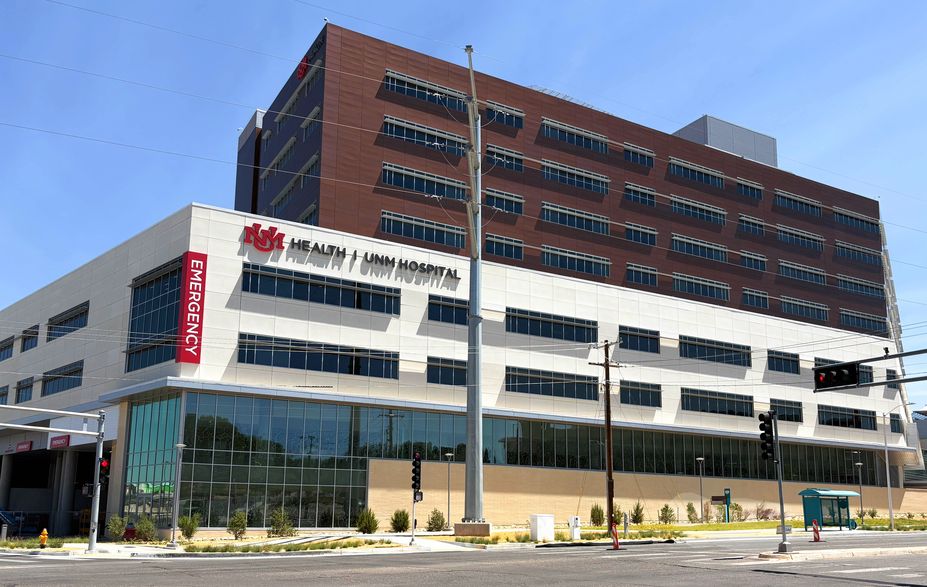
UNM Hospital announced today that construction has been completed on its $842 million expansion. They also announced that the new Critical Care Tower will open for patients in October after two months of staff familiarization and training with the new setup and equipment.

https://www.kob.com/news/top-news/u...c-in-october-starts-2-month-activation-phase/

ALBUQUERQUE, N.M. — The University of New Mexico Hospital has finished phase one of its one-stop-shop Critical Care Tower that’s been six years in the making.

It’s New Mexico’s largest public construction project in our state’s history. It will have 96 ICU beds, hospital rooms, state-of-the-art operating rooms, and new imaging equipment for every level of the nine-story building.

KOB 4 spoke with UNM Hospital’s Chief Operating Officer, Mike Chicarelli, to learn more about how they’ll staff the 700 jobs it’ll bring—500 of them being health care providers.

Like the six years it took to build the Critical Care Tower, the hiring process has also been years in the making.

“When it comes to staffing the tower, we have been working on it for several years now. So this is not something that we wait towards the last minute to begin working on,” said Chicarelli. “Everybody else that’s in the current platform is going to come over into the critical care tower. We’re keeping all the staff that come over, of course, so the number of folks that we needed to recruit is much lower than it would’ve been if we were opening a building fresh with all new services.”

As the region’s only Level 1 trauma center, it hopes to fill the gap in health care accessibility for urgent needs in a single space—something that New Mexican’s miss-out on in high numbers.

“Having all of those components in one tower is very important for the process of critical care and delivery because, you know, folks come into the emergency department and may need to go to the operating room,” Chicarelli said.

The center was built with not only the highest quality care in mind but employs a holistic approach to health and wellness. It has a meditation room, workspaces for studying, decompression rooms and is dappled with natural light. Chicarelli said this was intentional.

“We wanted to make sure these spaces were open, not crowded, had all of the natural light that we could get into the space. It elevates your mood to have natural light,” said Chicarelli.

Now that phase one is complete, the center is entering what’s called an “activation” phase. This is where staff spend months getting to know the building like the back of their hand—so they attend to patients’ needs with no hiccups when time is of the essence.

UNMH-to-open-Critical-Care-Tower-to-public-in-October-starts-2-month-activation-phase.jpg


https://www.abqjournal.com/business/article_f1bb362c-45a8-4c1c-bc99-221a08906d47.html

Construction is complete on the University of New Mexico Hospital's new critical care tower, which officials say will boost the crowded hospital’s capacity to care for its sickest patients when it opens this fall.

The expansion will add, in part, 24 intensive care beds, a new adult emergency department, two operating rooms and more MRI and CT scanners, UNM Health Sciences Chief Operating Officer Michael Chicarelli said.

"It's been a long process, and so we're really excited to be able to offer it so we can continue to deliver care for New Mexicans," Chicarelli said.

The new facility, set to open in October, will also add 400 new staff positions to the hospital. Despite the shortage of health care workers across the state, Chicarelli said UNM is "on a pretty good trajectory" to fill all the open positions.

Over budget and delayed, the expansion is much needed. New Mexico is facing a significant doctor shortage, with projections indicating a deficit of 2,118 physicians, exacerbated by a physician-to-patient ratio that is 16% worse than the national average, according to the Cicero Institute.

New Mexico also has the oldest physician workforce in the nation, with nearly 40% of the state’s doctors aged 60 or older and expected to retire by 2030, according to Think New Mexico.

"We know that the tower is going to open," Chicarelli said. "We know that the care is going to be needed, and we're going to have to have the people there to do it."

UNMH is the only Level 1 trauma center in New Mexico, which means it is the only place in the state equipped to provide 24-hour in-house treatment and comprehensive care for the most severely injured patients.

It also means patients often face long wait times, because the hospital consistently operates at anywhere from 105% to 120% capacity, according to UNM Health Sciences spokesperson Brianna Mortensen.

The new tower, along with an expansion in class size at the UNM School of Medicine, is part of UNMH's efforts to both increase patient care and train more doctors, said UNM Executive Vice President of Health Sciences Dr. Mike Richards during a state Legislative Finance Committee meeting in Albuquerque last month.

The developments are projected to boost the hospital's inpatient care volume by about 70% in the next 10 years, Richards said.

Construction on the nine-story critical care tower began in 2021, though the project has been in planning stages since 2019. The tower comes with a price tag of $842 million, Chicarelli said, funded by $492 million from UNMH, a government-backed mortgage of $320 million and $30 million in state municipal bonds.

The opening comes about a year later than expected — Chicarelli told the Journal in 2021 that the tower would be ready to serve patients in October 2024. It also comes at a higher price than the $700 million it was expected to cost, which officials ascribe partly to global supply chain issues and higher material costs.

Hospital staff will spend the coming weeks moving operations to the new building before the tower opens to its first patients on Oct. 5, Chicarelli said.

68927b6737c5a.image.jpg


https://hscnews.unm.edu/news/construction-officially-completed-at-unm-hospital-critical-care-tower

CCT%20TOWER%20ENHANCED%20_mid.jpg


Here's an interesting rendering/graphic that KOB-TV had recently in a story about UNM's plans for a new School of Medicine facility. It shows and labels the planned structure at Yale and Lomas directly west of the new Critical Care Tower. This will apparently be the new medical office building (MOB) and also possibly a further expansion of the hospital itself. The new School of Medicine structure is of course being planned for the plot further west of this on Lomas and University.

https://www.kob.com/new-mexico/unm-...care-graduates-to-address-statewide-shortage/

Wk2VTxrg_o.jpg
 
The plans for the Andretti Indoor Karting & Games location in Albuquerque are apparently no more, at least for the site on Desert Surf Circle NE next to the existing TopGolf location at I-25 and Montaño/Montgomery. Albuquerque Business First reports that the property has been listed for sale. They don't mention the previous plans but do quote the brokers as saying that it would be ideal for an entertainment facility. They even include the site plan for the Andretti facility in the listing to show the possibilities for building upon the land.

https://www.bizjournals.com/albuquerque/news/2025/08/08/north-i-25-corridor-site-listed.html

A rare land purchase opportunity in Albuquerque’s North Interstate 25 corridor just became available.

A 9.22-acre site between Revel and Top Golf at 1500 Desert Surf Circle NE was listed Aug. 7.

The listing brokers are Trevor Hatchell and Matt Butkus of CBRE.

The previous ownership planned to bring the site up to increases visibility, Hatchell said. This would have brought the property to 8.5 usable acres, Hatchell said.

There’s currently no pads of this size available in the North I-25 corridor, Hatchell said.

“This is like the last piece along I-25,” Hatchell said. “There’s really nothing up there. Pretty much everything has sold. There’s existing (land); we could redevelop something, maybe, but not vacant land.”

Ideal uses for the land would be an entertainment use given its location between Revel and Top Golf or a larger retail use given its proximity to Sam’s Club, Costco and Home Depot, Butkus said.

The corridor is located along one of six arterials crossing the Rio Grande connecting the east and west quadrants of the city, the CBRE listing shows.

The corridor sees 51,300 vehicles per day, and there is a new interchange at I-25 and Montano Road scheduled for completion in Spring 2027, the CBRE listing shows.

“That (interchange) is big,” Hatchell said. “It’s really going to make this a workable hub for traffic.”

The group selling the property so that it can focus on other opportunities, a representative from the group said.

The representative declined to disclose their or the identity of the group.

craP5B33_o.jpg


5Be1r0vy_o.jpg


https://www.cbre.com/properties/pro...rt-surf-circle-northeast-albuquerque-nm-87107

4SsMbhDG_o.jpg


With the ongoing reconstruction of I-25, including the interchange, which is expected to last for at least a couple of years, I wonder whether that played a role in the plans for the Andretti project falling through. Although, as the story above gets at, the site is a bit awkward and sunken and difficult to build upon with drainage considerations as well, which might've also contributed to its demise.

Below is a story by KOB-TV today talking about the progress on the nearby I-25 reconstruction project, which recently completed its first phase and is beginning the second phase. Traffic has been shifted to the new outer portions of the roadway and bridges of the I-25 mainline. Work will now commence to demolish the rest of the old inner bridge structures and roadway and begin rebuilding the new ones. They are also getting ready for construction on the frontage roads and the new braided ramps as well. The story also talks about the widening of Rio Bravo Boulevard in the South Valley ahead of the construction of the new bridge over the Rio Grande.

https://www.kob.com/new-mexico/albuquerque-metro/nmdot-to-begin-next-phase-of-i-25-construction/

ALBUQUERQUE, N.M. — Whether you are making your way through I-25 or south Albuquerque, there are a lot of changes and detours across the city.

The New Mexico Department of Transportation says starting as early as this Thursday for the next two weeks, crews will be out driving steel piles into the ground on the northbound Pan American Frontage Road near Comanche.

“People can expect in the area if they have any business, or residences local in that area, it will be very noisy and there will be increased vibration,” said Kimberly Gallegos, public information officer for the New Mexico Department of Transportation.

NMDOT says they completed a major phase back in June. They finished the outer lanes of the interstate. Now, they’re moving to the inside lanes and are preparing for new braided ramps coming up along Comanche.

“Most of this work will be taking place during the day; however, if there’s some need for safety reasons, then some of it might take at night,” said Gallegos.

If your daily commute takes you down Rio Bravo, you will want to add more time to your commute.

“We are rebuilding Rio Bravo from previously had four lanes, and now it’s going to be six lanes, three lanes in each direction,” said Rodrigo Eichwald, engineering manager for Bernalillo County.

Second Street will be shut down for 60 days starting Aug. 26, as crews rebuild a portion of the street.

“Storm drain is being installed, and median is going to be added, and it’s just that’s all being rebuilt,” said Eichwald.

NMDOT-to-begin-next-phase-of-I-25-construction.jpg


Back
Top