Quote:
Originally Posted by Keith P.

Adding more bureaucratic loopholes and hurdles is not the solution. Those character elements you speak of were not stripped frivolously. They were stripped because they had fallen off, rotted, cracked, or otherwise failed. The same holds true for structural elements. If sills and beams were subject to water damage, insects or general rot then the building is compromised and often cannot be fixed economically.
|
These kinds of building elements may be discarded because they're old and in poor repair, but it's hard to argue (IMO) that there isn't a civic culture here that simply doesn't value these things. I don't really buy the the idea that it's un-economical in all or most cases to repair these things; it's absolutely cultural, when we compare to other regions. If you look at cities throughout the developed world, I do think that in this part of Canada we fall on the "cheap" end of the spectrum with regards to aesthetics. (Canada overall does, and the east coast even moreso).
On one end you have parts of Europe--I was in Denmark two months ago and expected to see a higher regard for architectural aesthetics but was still surprised to see it in action. Everywhere you go, run-of-the-mill 300 year-old buildings undergoing regular maintenace, facade work, and other upgrades, and the overall standard of beauty and function is very high. We're talking right down to the distinctive types of door levers used citywide for the past few hundred years, still being manufactured--not a lot of cheapo Home Depot-type hardware to be found.
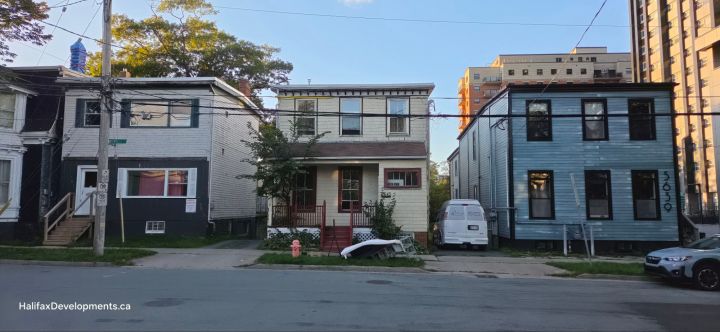
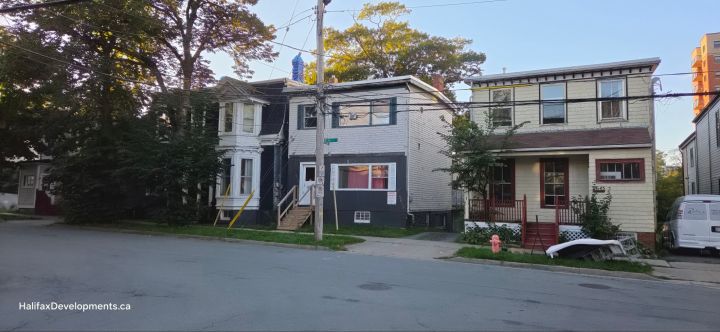
But you don't even have to go to those extremes (though it's wonderful). Down in New England, buildings of exactly the same age and vintage as ours, in essentially the same climate, are on average maintained to a higher level. Of course there are still plenty of rundown buildings and vinyl siding, but overall you've got got fewer vinyl-covered boxes and more houses that have distinguishing features like gables, brackets, finials, corbels, etc., and relatively more wood siding. These streetscapes in South Boston (like
this and
this and
this) are more typical. There's definitely some dubious siding and generations of patchwork repairs on some of these, but the equivalent Halifax streetscapes would still be a lot more box-like.
There's also just a strange attachment to vinyl siding. The Hydrostone is the best example--I cannot think of anywhere else in the world where perfectly good masony facades have been covered up en masse by vinyl siding. People are convinced it's necessary for insulation or whatever, which is ludicrous. It's just become the norm. If it were necessary for insulation you would expect all those Victorian Montreal gray stones and brick rowhouses to be covered in vinyl too (which of course they're not, because that would be ludicrous).





 Prev
Prev




 Linear Mode
