HomeDiagramsDatabaseMapsForum About
     

Go Back   SkyscraperPage Forum > Regional Sections > Canada > Atlantic Provinces > Halifax > General


Reply

 
Thread Tools Display Modes
     
     
  #1  
Old Posted Oct 15, 2025, 4:51 PM
q12's Avatar
q12 q12 is offline
Registered User
 
Join Date: Mar 2008
Location: Halifax
Posts: 5,108
Friends of Clayton Park Squirrels

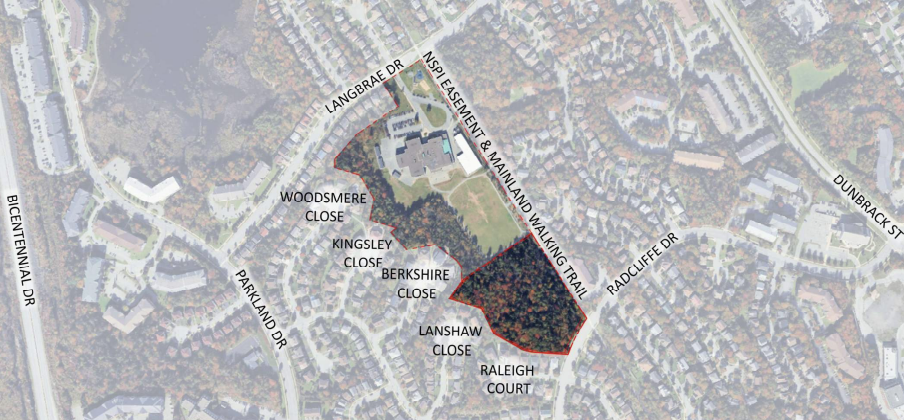
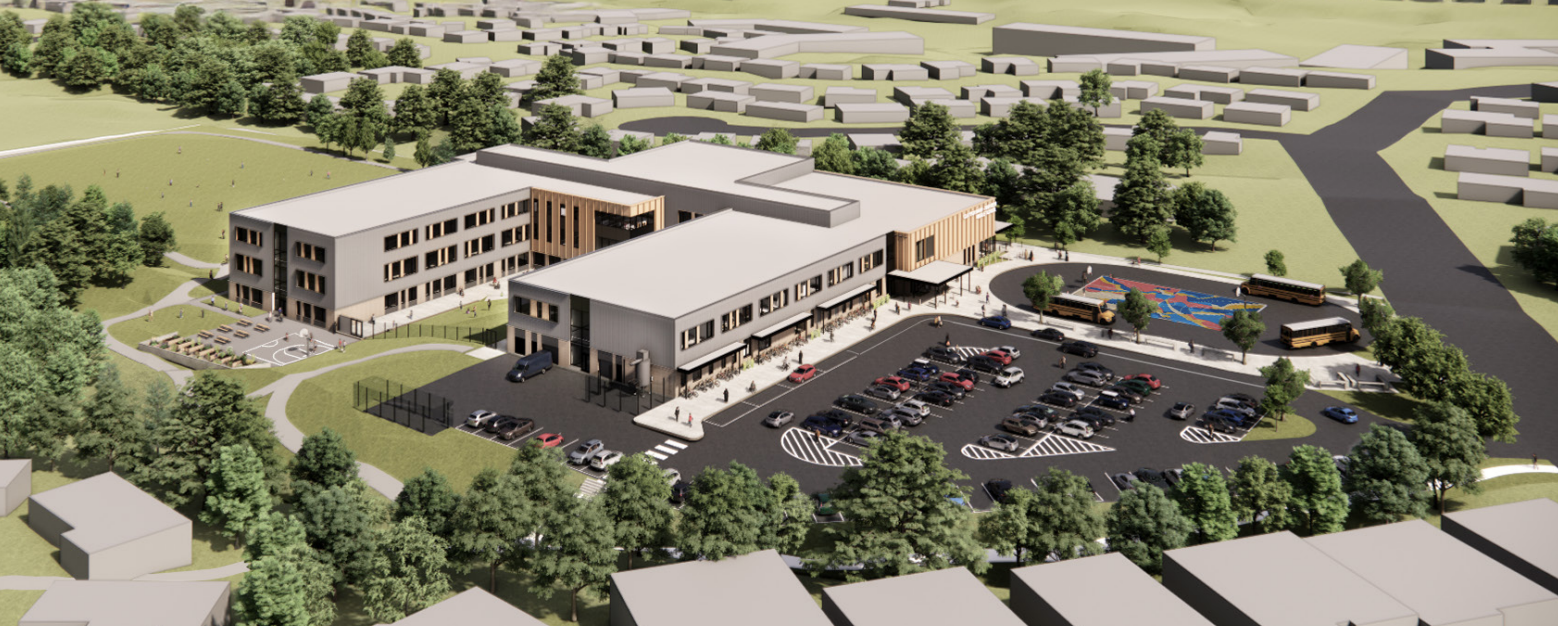
We have another NIMBY group. Friends of Clayton Park Squirrels are worried the squirrels are confused now that construction has started on the new desperately needed Clayton Park - Fairview School middle school.

Which is being constructed.... in the middle of the Clayton Park neighborhood. Crazy idea that kids might be able to walk/bike to the school in their neighborhood.

https://www.reddit.com/r/halifax/com...ing_right_now/


Source: https://www.hrce.ca/sites/default/fi..._Optimized.pdf
Reply With Quote
     
     
  #2  
Old Posted Oct 15, 2025, 6:29 PM
someone123's Avatar
someone123 someone123 is online now
hähnchenbrüstfiletstüc
 
Join Date: Nov 2001
Location: Vancouver
Posts: 35,316
If you actually care about the squirrels and deer you should want more compact development so that less habitat is affected, not low density with little pockets of trees all over. Most people don't actually care about that, they want a view of trees from their house.
Reply With Quote
     
     
  #3  
Old Posted Oct 16, 2025, 7:14 PM
OldDartmouthMark OldDartmouthMark is online now
Registered User
 
Join Date: May 2010
Posts: 9,874
I don't think most people on this forum, or the general urban component of our communities, actually care about urban wildlife. We're all about using up every square inch of available land to occupy more humans, but there is never any consideration (or never has been) for displaced non-human animals. It's what our city (all cities, actually) has been built on.

If you know anything about squirrels, they are extremely territorial, but also very resourceful. Removing their environment will really stress their population, but the ones that don't die will find places to live through competition, and perhaps through living in peoples' homes or outbuildings, only to be exterminated later as they are considered to be "pests" by most, and AFAIK there are no regulations to prevent their mistreatment (at least none that have any effectiveness).

So... not sure why we are discussing this, other than to express outrage at some group that appears to be *gasp* antidevelopment...
Reply With Quote
     
     
  #4  
Old Posted Oct 16, 2025, 7:26 PM
someone123's Avatar
someone123 someone123 is online now
hähnchenbrüstfiletstüc
 
Join Date: Nov 2001
Location: Vancouver
Posts: 35,316
Quote:
Originally Posted by OldDartmouthMark View Post
We're all about using up every square inch of available land to occupy more humans, but there is never any consideration (or never has been) for displaced non-human animals. It's what our city (all cities, actually) has been built on.
The style of development has a big impact though and I am not sure the impact matches the perception. People think of spacious green suburban areas as environmentally friendly, but if you are accommodating a certain number of inhabitants (as is required in Halifax), a compact urban development will be much better for wildlife. It is true that something has to give and if there's no school capacity for children, the children will win out over the squirrels.

If you don't want to upset the squirrels it's probably best not to have a Clayton Park at all but build more like the peninsula. And if you want green space, provide compact urban parks or parks (with transit access) that preserve wildlife.
Reply With Quote
     
     
  #5  
Old Posted Oct 16, 2025, 7:39 PM
OldDartmouthMark OldDartmouthMark is online now
Registered User
 
Join Date: May 2010
Posts: 9,874
Quote:
Originally Posted by someone123 View Post
a compact urban development will be much better for wildlife.
If that compact urban development has an actual provision for greenspace with natural forest setting large enough to accommodate animals, then sure. I don't think that's how our planning situation is functioning, however. After all, density is what we're all about, no?
Reply With Quote
     
     
  #6  
Old Posted Oct 17, 2025, 12:18 PM
eastcoastal eastcoastal is offline
Registered User
 
Join Date: Mar 2009
Posts: 1,377
Quote:
Originally Posted by OldDartmouthMark View Post
... density is what we're all about, no?
Evidently not. It seems we're about preserving views of the water from an old fortress in the middle of the peninsula, while homes lining Robie street, many used for housing multiple students, are bulldozed to provide vacant lots and a streetscape with lots of missing teeth.

Cities are bad for wildlife - they don't co-exist well together... even if reserving swaths as "park," often the park isn't wild enough, and even when it is, wildlife doesn't stay contained and we can expect border skirmishes and garbage raids.
Reply With Quote
     
     
  #7  
Old Posted Oct 17, 2025, 12:43 PM
Nouvellecosse's Avatar
Nouvellecosse Nouvellecosse is online now
Volatile Pacivist
 
Join Date: Aug 2005
Location: Nova Scotia
Posts: 10,950
Quote:
Originally Posted by eastcoastal View Post
Cities are bad for wildlife - they don't co-exist well together... even if reserving swaths as "park," often the park isn't wild enough, and even when it is, wildlife doesn't stay contained and we can expect border skirmishes and garbage raids.
Yes it's MUCH better for wildlife to make human developments dense and compact to prevent them from sprawling as much into natural areas and encroaching on the ecosystems there rather than trying to include more "natural" areas within cities. Having natural areas in cities is really only to the benefit of people. Which, people are important and should have access to park space and ecosystem services, but we're getting things twisted if we pretend it's for the benefit of wildlife. They only really benefit a few select species that thrive near humans and therefore don't need help.
__________________
"The reasonable man adapts himself to the world; the unreasonable one persists in trying to adapt the world to himself. Therefore all progress depends on the unreasonable man." - George Bernard Shaw
Don't ask people not to debate a topic. Just stop making debatable assertions. Problem solved.
Reply With Quote
     
     
  #8  
Old Posted Oct 17, 2025, 2:32 PM
MonctonRad's Avatar
MonctonRad MonctonRad is offline
Wildcats Rule!!
 
Join Date: Jun 2008
Location: Moncton NB
Posts: 40,343
I like squirrels. I have lots of squirrels in my backyard. There is an ongoing war between the grey and red squirrels in Moncton, with my backyard on the front lines. Right now, the larger greys are winning, but, I am kinda rooting for the native reds.

How do I sign up to join the Clayton Park squirrel defenders???
__________________
Go 'Cats Go
Reply With Quote
     
     
  #9  
Old Posted Oct 17, 2025, 3:13 PM
OldDartmouthMark OldDartmouthMark is online now
Registered User
 
Join Date: May 2010
Posts: 9,874
Quote:
Originally Posted by MonctonRad View Post
I like squirrels. I have lots of squirrels in my backyard. There is an ongoing war between the grey and red squirrels in Moncton, with my backyard on the front lines. Right now, the larger greys are winning, but, I am kinda rooting for the native reds.

How do I sign up to join the Clayton Park squirrel defenders???
In many places I have read that the larger grey squirrels have driven out (or eliminated) the red squirrels. Here in Halifax I have only seen the red squirrels, but I know people who live in SJ and they only have the grey ones in their area.

Go reds!!

(oh, and lots of blue jays here too... Go Jays! )
Reply With Quote
     
     
  #10  
Old Posted Oct 17, 2025, 3:24 PM
OldDartmouthMark OldDartmouthMark is online now
Registered User
 
Join Date: May 2010
Posts: 9,874
Quote:
Originally Posted by eastcoastal View Post
Evidently not. It seems we're about preserving views of the water from an old fortress in the middle of the peninsula, while homes lining Robie street, many used for housing multiple students, are bulldozed to provide vacant lots and a streetscape with lots of missing teeth.
but

Quote:
Originally Posted by eastcoastal View Post
Cities are bad for wildlife - they don't co-exist well together... even if reserving swaths as "park," often the park isn't wild enough, and even when it is, wildlife doesn't stay contained and we can expect border skirmishes and garbage raids.
It's true. Anybody who lives in a city lives in an area previously inhabited by wildlife. We're all 'guilty' in that light.

Honestly, what bothers me a little bit is what do we do when we cut down massive swaths of previously natural forested area (as was recently done in Clayton Park where all those new [ugly] buildings were put up) within a city. There is wildlife there, but I have no idea whether there is a plan to deal with them humanely (a loaded term), i.e. taking them to a place more conducive to their survival, or are they just squeezed out into areas that are already built out and inhabited by people?

I didn't even read about the "Friends of whatever" because I'm sure there are some thinly veiled attempts at not getting something built by attempting to appeal to peoples' love of animals, but urban wildlife is a real thing, and doesn't just go away because we build upon their living area. So we can all theorize about what is better for them to prove a point and score a 'win' on SSP, but really as one who appreciates wild animals, I would like to know if anybody who makes the plans actually ever considers animals over and above the ones that gain clickable headlines.

OK... back to our pontifications and such.
Reply With Quote
     
     
  #11  
Old Posted Oct 17, 2025, 4:08 PM
eastcoastal eastcoastal is offline
Registered User
 
Join Date: Mar 2009
Posts: 1,377
Quote:
Originally Posted by OldDartmouthMark View Post
... It's true. Anybody who lives in a city lives in an area previously inhabited by wildlife. We're all 'guilty' in that light...
Agreed. We can mitigate impact though.

Quote:
Originally Posted by OldDartmouthMark View Post
... Honestly, what bothers me a little bit is what do we do when we cut down massive swaths of previously natural forested area (as was recently done in Clayton Park where all those new [ugly] buildings were put up) within a city. There is wildlife there, but I have no idea whether there is a plan to deal with them humanely (a loaded term), i.e. taking them to a place more conducive to their survival, or are they just squeezed out into areas that are already built out and inhabited by people?
...
Nothing is done typically. They are left to fend for themselves. Often trying to live in built-out areas.

Quote:
Originally Posted by OldDartmouthMark View Post
... I didn't even read about the "Friends of whatever" because I'm sure there are some thinly veiled attempts at not getting something built by attempting to appeal to peoples' love of animals...
It's not a realy "Friends Of" group. Just someone trying to be funny with a headline. The complaint posted on Reddit seems to be someone mostly concerned about loosing some woodland where they used to walk their dog to a new school. Honestly, if they're concerned about "local" wildlife, Clayton Park is not the place to be laying that concern. I feel like meaningful wildlife populations there are long gone, so having a new school located where students can WALK there is a big win.

Quote:
Originally Posted by OldDartmouthMark View Post
... I would like to know if anybody who makes the plans actually ever considers animals...
I very seriously doubt it. And I suspect, given the desire to pursue resource extraction in this Province with fewer rules in the way, we won't see any kind of wildlife management requirements for developments any time soon. This is not a local issue, but one requiring a coordinated Province-wide approach, and we know what happened with Coastal Protection around these here parts.
Reply With Quote
     
     
  #12  
Old Posted Oct 17, 2025, 4:51 PM
OldDartmouthMark OldDartmouthMark is online now
Registered User
 
Join Date: May 2010
Posts: 9,874
^ Thanks for the info and I appreciate your opinion! 👍🏻
Reply With Quote
     
     
  #13  
Old Posted Oct 17, 2025, 5:11 PM
someone123's Avatar
someone123 someone123 is online now
hähnchenbrüstfiletstüc
 
Join Date: Nov 2001
Location: Vancouver
Posts: 35,316
Quote:
Originally Posted by OldDartmouthMark View Post
If that compact urban development has an actual provision for greenspace with natural forest setting large enough to accommodate animals, then sure. I don't think that's how our planning situation is functioning, however. After all, density is what we're all about, no?
I think generally that as far as the environment goes, pockets of greenspace within the urban footprint are probably worse than just putting those next to real wilderness areas to increase the amount of fully natural habitat. That is my point.

For endemic wildlife habitat, it's likely better to have 1 square km of compact city and 9 additional square km of wilderness than 10 square km of suburbia. And filling in the gaps in an area like Clayton Park is probably better than greenfield development, all else being equal. Clayton Park superficially looks "greener" (and there's nothing wrong with having trees per se) but it's not actually great for animals as there are roadways all over the place. Squirrels remain but it's not so great for bears, foxes, deer, etc. that would be abundant in true wilderness.

As far as park amenities go for people, a lot of it I think comes down to how you plan the space and add uses to it. Something Halifax doesn't do a great job of, although it's getting better. I believe a lot of the existing urban parks could be organized better, and that quality matters as well as quantity.
Reply With Quote
     
     
  #14  
Old Posted Oct 17, 2025, 6:20 PM
OldDartmouthMark OldDartmouthMark is online now
Registered User
 
Join Date: May 2010
Posts: 9,874
Quote:
Originally Posted by someone123 View Post
I think generally that as far as the environment goes, pockets of greenspace within the urban footprint are probably worse than just putting those next to real wilderness areas to increase the amount of fully natural habitat. That is my point.

For endemic wildlife habitat, it's likely better to have 1 square km of compact city and 9 additional square km of wilderness than 10 square km of suburbia. And filling in the gaps in an area like Clayton Park is probably better than greenfield development, all else being equal. Clayton Park superficially looks "greener" (and there's nothing wrong with having trees per se) but it's not actually great for animals as there are roadways all over the place. Squirrels remain but it's not so great for bears, foxes, deer, etc. that would be abundant in true wilderness.

As far as park amenities go for people, a lot of it I think comes down to how you plan the space and add uses to it. Something Halifax doesn't do a great job of, although it's getting better. I believe a lot of the existing urban parks could be organized better, and that quality matters as well as quantity.
Fair enough. The takeaway is that people are not good for other species of animals in general, so as we take over their habitat, then perhaps we should have a parallel plan for existing animal populations. Of course, there will always exist interactions (even if we actually acted in a way that we perceive as being responsible) mostly relating to scavenging thrown away food from humans, or attempting to coexist in human-made structures (almost always to the detriment of the small animal).

So sure, maybe as a concept it is generally better to just fill in areas for human habitation, but there is still the messiness of what to do with the animals that currently rely on that land for survival. The human solution is often to turn a blind eye (like we also do with birds being killed off in alarming numbers by our urban formats - other than a few activists, nothing is being done about it), or perhaps organize a cull, if the annoying creatures are a little larger and capable of creating more inconvenience to our desired manufactured habitats... but I think we can and should do better than that.

That's all I have to say about it. It's an issue that has bothered me, personally, for some time, but never has a topic been introduced where I felt it appropriate to discuss. I am a 'friend of squirrels', but not in the implied sense...

I'll leave it here so we can return to discussing Reddit comments, etc. I don't populate that platform, so I can't really comment as to the quality of information there.
Reply With Quote
     
     
  #15  
Old Posted Oct 17, 2025, 6:37 PM
someone123's Avatar
someone123 someone123 is online now
hähnchenbrüstfiletstüc
 
Join Date: Nov 2001
Location: Vancouver
Posts: 35,316
I'd guess that actually a lot of animals are probably doing better in NS than they have for a long time as there's been a reduction in heavy polluting industry, pesticides, there's more hunting regulation, etc., and rural human populations have fallen in general while urbanization covers a much smaller footprint. Activities like farming and logging are more impactful over a large area than a Halifax-sized city.

Local extinctions of some populations like wolves and moose in mainland NS go far back and have more to do with rural land uses than urbanization, such as farmers shooting the wolves because they threaten livestock. The vast bulk of land in NS is rural or wilderness.
Reply With Quote
     
     
  #16  
Old Posted Oct 17, 2025, 6:49 PM
Nouvellecosse's Avatar
Nouvellecosse Nouvellecosse is online now
Volatile Pacivist
 
Join Date: Aug 2005
Location: Nova Scotia
Posts: 10,950
Development plans are always required to consider endangered or threatened animal/plant species but for species that are neither, it isn't really much of a consideration. Well, with the exception of when a species can be a threat or nuisance to people. The number of individuals in a given species is always fluctuating with numbers increasing and decreasing from year to year based on fluctuations in the weather, climate, diseases, competitor or predator/prey species, etc. so human development is just another factor that can cause numbers to increase or decrease. Concerns about non-threatened species isn't really a basis to limit or meaningfully alter development since development already requires so many things to be considered.
__________________
"The reasonable man adapts himself to the world; the unreasonable one persists in trying to adapt the world to himself. Therefore all progress depends on the unreasonable man." - George Bernard Shaw
Don't ask people not to debate a topic. Just stop making debatable assertions. Problem solved.
Reply With Quote
     
     
End
 
 
Reply

Go Back   SkyscraperPage Forum > Regional Sections > Canada > Atlantic Provinces > Halifax > General
Forum Jump


Forum Jump


All times are GMT. The time now is 10:46 PM.

     
SkyscraperPage.com - Privacy Statement - Top

Powered by vBulletin® Version 3.8.7
Copyright ©2000 - 2026, vBulletin Solutions, Inc.