HomeDiagramsDatabaseMapsForum About
     

Go Back   SkyscraperPage Forum > Regional Sections > Canada > Ontario > Ottawa-Gatineau > Transportation


Closed Thread

 
Thread Tools Display Modes
     
     
  #11901  
Old Posted Aug 29, 2019, 1:08 PM
J.OT13's Avatar
J.OT13 J.OT13 is offline
Moderator
 
Join Date: Mar 2012
Location: Ottawa
Posts: 28,759
From David James Twitter:

Quote:
Just east of Carruthers Ave where #OttawaLRT comes off the ballasted track onto the plinth-mounted track there is a 13-17 dB jump in noise. Buses in the trench at Churchill were similar to LRT on ballast in the trench. @JLeiper @jchianello
https://twitter.com/semaj_d/status/1163928826331783171

I asked why no had done that when the story came out, and here we go. Seems the buses make just about as much noise decibel wise. I wonder if the type of noise from the train, or the fact that it comes in bursts every few minutes (as opposed to constant bus traffic) is what makes the difference. Or maybe that residents had a couple years break from noise coming out of the trench.
     
     
  #11902  
Old Posted Aug 29, 2019, 1:17 PM
OCCheetos OCCheetos is offline
Registered User
 
Join Date: Aug 2017
Posts: 2,107
Quote:
Originally Posted by J.OT13 View Post
From David James Twitter:


https://twitter.com/semaj_d/status/1163928826331783171

I asked why no had done that when the story came out, and here we go. Seems the buses make just about as much noise decibel wise. I wonder if the type of noise from the train, or the fact that it comes in bursts every few minutes (as opposed to constant bus traffic) is what makes the difference. Or maybe that residents had a couple years break from noise coming out of the trench.
The noise from a bus can peak pretty high, especially if its fans are running full blast (like on a double decker), but that noise is so directed out of the back of the bus, and a bus is so short, that it only lasts for a moment.

Compared to the train, where the full 90m length makes noise.
     
     
  #11903  
Old Posted Aug 29, 2019, 1:28 PM
AuxTown's Avatar
AuxTown AuxTown is offline
Registered User
 
Join Date: Apr 2006
Location: Ottawa, Canada
Posts: 4,613
Quote:
Originally Posted by On Edge View Post
Why encourage more sprawl by running trains out there, using up precious scarce public funds? The fact that 350,000 live there already is shocking. Run trains to Barrhaven, Kanata and Orleans AFTER the communities inside the belt are well served. Live in the sticks, live with the consequences.
If the city could have stopped all development outside the greenbelt starting in 1960 then your argument could be valid but there are 150k people living in Kanata/Stittsville as well as a major employment centre. It would be the only suburb with significant bidirectional transit use all day. Unfortunately, the logistics of my job don't allow me to use transit so this it not for my benefit; it just seems to make sense at this point in our city's development and growth.
     
     
  #11904  
Old Posted Aug 29, 2019, 1:29 PM
Kitchissippi's Avatar
Kitchissippi Kitchissippi is offline
Busy Beaver
 
Join Date: Nov 2005
Location: Ottawa
Posts: 4,679
Quote:
Originally Posted by J.OT13 View Post
From David James Twitter:


https://twitter.com/semaj_d/status/1163928826331783171

I asked why no had done that when the story came out, and here we go. Seems the buses make just about as much noise decibel wise. I wonder if the type of noise from the train, or the fact that it comes in bursts every few minutes (as opposed to constant bus traffic) is what makes the difference. Or maybe that residents had a couple years break from noise coming out of the trench.

The way I read the tweet, if the bus noise is equivalent to trains running on balast, then the trains in trench where the tracks are plinth-mounted are clearly louder than before.
     
     
  #11905  
Old Posted Aug 29, 2019, 1:43 PM
H>T&T>P H>T&T>P is offline
Registered User
 
Join Date: Jun 2018
Posts: 40
Quote:
Originally Posted by lrt's friend View Post
That is like saying that Brampton should have no rail service to Toronto.

There is now at least 350,000 people living outside the Greenbelt. In some respects, getting to the outside of the Greenbelt is critical to our transportation future. We cannot keep expanding the Queensway and other roads across the Greenbelt.
According to these estimated #'s on the city website inside the greenbelt was 491197 in 2018 while outside the greenbelt had 491589. Again that was estimated #'s. The extra growth to get to a million most likely came from outside the greenbelt aswell.

https://ottawa.ca/en/city-hall/get-know-...rrent-population-and-household-estimates
     
     
  #11906  
Old Posted Aug 29, 2019, 2:12 PM
McC's Avatar
McC McC is offline
Registered User
 
Join Date: Apr 2010
Posts: 3,057
Quote:
Originally Posted by Kitchissippi View Post
The way I read the tweet, if the bus noise is equivalent to trains running on balast, then the trains in trench where the tracks are plinth-mounted are clearly louder than before.
The Bus traffic wasn't "constant" either; they usually spaced-out/bunched-up into platoons.
     
     
  #11907  
Old Posted Aug 29, 2019, 2:34 PM
CityTech CityTech is offline
Registered User
 
Join Date: May 2016
Location: Ottawa
Posts: 2,798
Quote:
Originally Posted by H>T&T>P View Post
According to these estimated #'s on the city website inside the greenbelt was 491197 in 2018 while outside the greenbelt had 491589. Again that was estimated #'s. The extra growth to get to a million most likely came from outside the greenbelt aswell.

https://ottawa.ca/en/city-hall/get-know-...rrent-population-and-household-estimates
How did you get that number? I summed it and ended up with 536,156 inside the Greenbelt and 455,274 outside. 95k of the latter is rural residents, however, so a more accurate distribution would be:

-Inside Greenbelt: 536,156
-Outside Greenbelt suburbs: 359,751
-Rural areas: 95,523

We've still got a long ways to go before the majority of the urban population is outside the Greenbelt and with intensification making up nearly half of the city's growth, the gap isn't going to be closing particularly fast.
     
     
  #11908  
Old Posted Aug 29, 2019, 2:51 PM
H>T&T>P H>T&T>P is offline
Registered User
 
Join Date: Jun 2018
Posts: 40
Quote:
Originally Posted by CityTech View Post
How did you get that number? I summed it and ended up with 536,156 inside the Greenbelt and 455,274 outside. 95k of the latter is rural residents, however, so a more accurate distribution would be:

-Inside Greenbelt: 536,156
-Outside Greenbelt suburbs: 359,751
-Rural areas: 95,523

We've still got a long ways to go before the majority of the urban population is outside the Greenbelt and with intensification making up nearly half of the city's growth, the gap isn't going to be closing particularly fast.
I took #1 thru #9 as inside the greenbelt and #10 thru #19 as outside. Valid point on rural but I do no quite a few rural people driving to park and rides outside the greenbelt.
     
     
  #11909  
Old Posted Aug 29, 2019, 3:04 PM
CityTech CityTech is offline
Registered User
 
Join Date: May 2016
Location: Ottawa
Posts: 2,798
Quote:
Originally Posted by H>T&T>P View Post
I took #1 thru #9 as inside the greenbelt and #10 thru #19 as outside. Valid point on rural but I do no quite a few rural people driving to park and rides outside the greenbelt.
There's the discrepancy. Area #10 is inside the Greenbelt, not outside.
https://documents.ottawa.ca/sites/default/files/documents/urban-subareas-en.pdf
     
     
  #11910  
Old Posted Aug 29, 2019, 3:20 PM
H>T&T>P H>T&T>P is offline
Registered User
 
Join Date: Jun 2018
Posts: 40
Quote:
Originally Posted by CityTech View Post
There's the discrepancy. Area #10 is inside the Greenbelt, not outside.
https://documents.ottawa.ca/sites/default/files/documents/urban-subareas-en.pdf
Cedarview is attached to Barrhaven between Fallowfield Rd. and the log farm Though technically it may be in the Greenspace it is not inside the greenspace.

Edit: Nevermind I didn't realize it encompassed all the area including Bells Corners. My bad!
     
     
  #11911  
Old Posted Aug 29, 2019, 3:45 PM
TheMatth69 TheMatth69 is offline
Registered User
 
Join Date: Apr 2019
Posts: 158
I don't get Watson's desire to expend the C-line passed to Green Belt. It just wouldn't be reliable in the long term. The advantage of a Light-Metro or even Heavy Metro is to serve heavily dense areas where ridership in stations is pretty constant throughout a day. Such a network going out in the suburbs would mean that these stations would be empty during most of the day and after 8pm. That's not what you're looking for when you build an LRT or a Metro.

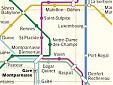
The long C-Line like Watson wants would only result in long term problems like, delay, undercapacity on the line's main trunk and any problem at one point of the line would impact the whole network passed the Green Belt. In Paris Line 13, is the longuest line, has two branchs and goes into suburbs. Result, it's the most overcrowded line in the entire network and has the most delays during rush hours and I know many cases like this one.

There's a solution much cheaper and much more appropriate. Build a real and efficient Commuter Train network! We have tracks going to Stittsville, North of Innovation, East to Vars and even South to Rural communities. Why not use them. The only real expense would be buying the tracks from CN, trains and station. That's what we should aim for. Commuter train are more flexible, because you don't have to run them at a high-frequency during 18 to 21 hours a day like the C-line. It's the best way to deal with Ottawa's high In/Out bound commuting.
     
     
  #11912  
Old Posted Aug 29, 2019, 5:46 PM
lrt's friend lrt's friend is offline
Registered User
 
Join Date: Dec 2006
Posts: 12,767
Quote:
Originally Posted by TheMatth69 View Post
I don't get Watson's desire to expend the C-line passed to Green Belt. It just wouldn't be reliable in the long term. The advantage of a Light-Metro or even Heavy Metro is to serve heavily dense areas where ridership in stations is pretty constant throughout a day. Such a network going out in the suburbs would mean that these stations would be empty during most of the day and after 8pm. That's not what you're looking for when you build an LRT or a Metro.

The long C-Line like Watson wants would only result in long term problems like, delay, undercapacity on the line's main trunk and any problem at one point of the line would impact the whole network passed the Green Belt. In Paris Line 13, is the longuest line, has two branchs and goes into suburbs. Result, it's the most overcrowded line in the entire network and has the most delays during rush hours and I know many cases like this one.

There's a solution much cheaper and much more appropriate. Build a real and efficient Commuter Train network! We have tracks going to Stittsville, North of Innovation, East to Vars and even South to Rural communities. Why not use them. The only real expense would be buying the tracks from CN, trains and station. That's what we should aim for. Commuter train are more flexible, because you don't have to run them at a high-frequency during 18 to 21 hours a day like the C-line. It's the best way to deal with Ottawa's high In/Out bound commuting.
Ottawa is not big enough to support a two tier rail network. This is especially the case when we ripped out most of our rail network especially in the centre of the city years ago. What do we accomplish building commuter rail that doesn't go downtown? It does more or less exactly what you don't want to do, by filling up C-Line trains all at one or two locations. We still have to move those people on the C-Line to reach their destination.


Furthermore, without the suburbs and half our population, there is no justification for building the C-Line to the specs that we have implemented.

The biggest problem of all is that the few remaining tracks do not go where most commuters want to go. There is no train to Orleans. There is no train to Stittsville. There is no train to Riverside South/Leitrim. We may have a train to Barrhaven and north Kanata but how much would that cost to bring that up to standard, while still running the C-Train most of the way there anyways.


The overall cost would be much higher while delivering worse service.

Last edited by lrt's friend; Aug 29, 2019 at 6:10 PM.
     
     
  #11913  
Old Posted Aug 29, 2019, 8:24 PM
kmcamp kmcamp is offline
Registered User
 
Join Date: Sep 2016
Posts: 1,401
Quote:
Originally Posted by TheMatth69 View Post
I don't get Watson's desire to expend the C-line passed to Green Belt. It just wouldn't be reliable in the long term. The advantage of a Light-Metro or even Heavy Metro is to serve heavily dense areas where ridership in stations is pretty constant throughout a day. Such a network going out in the suburbs would mean that these stations would be empty during most of the day and after 8pm. That's not what you're looking for when you build an LRT or a Metro.

The long C-Line like Watson wants would only result in long term problems like, delay, undercapacity on the line's main trunk and any problem at one point of the line would impact the whole network passed the Green Belt. In Paris Line 13, is the longuest line, has two branchs and goes into suburbs. Result, it's the most overcrowded line in the entire network and has the most delays during rush hours and I know many cases like this one.

There's a solution much cheaper and much more appropriate. Build a real and efficient Commuter Train network! We have tracks going to Stittsville, North of Innovation, East to Vars and even South to Rural communities. Why not use them. The only real expense would be buying the tracks from CN, trains and station. That's what we should aim for. Commuter train are more flexible, because you don't have to run them at a high-frequency during 18 to 21 hours a day like the C-line. It's the best way to deal with Ottawa's high In/Out bound commuting.
You could argue the TLine is already matches the concept of European regional rail, right down to the stolen DeustchBahn livery. Not quite frequent enough to be urban rail, but much more frequent then North American commuter rail, and also has barebones stations, running a long way out into the burbs in Stage 2, and a terminus transfer station where you have to switch to cover the final but I'd distance
     
     
  #11914  
Old Posted Aug 29, 2019, 8:52 PM
Truenorth00 Truenorth00 is offline
Registered User
 
Join Date: May 2017
Posts: 28,894
Quote:
Originally Posted by TheMatth69 View Post
I don't get Watson's desire to expend the C-line passed to Green Belt. It just wouldn't be reliable in the long term. The advantage of a Light-Metro or even Heavy Metro is to serve heavily dense areas where ridership in stations is pretty constant throughout a day. Such a network going out in the suburbs would mean that these stations would be empty during most of the day and after 8pm. That's not what you're looking for when you build an LRT or a Metro.
This is a very simplistic viewpoint. There's no need for your system to be busy all day to be worthwhile. And you most definitely don't want your trains leaving their terminus (or immediate thereafter) full. That's a recipe for significant overcrowding down the line.

Also, in Ottawa's case, it's mostly existing Transitway being converted and/or replicating Transitway routes. This is replacing a network of routes with lower utility ratios caused by tons of deadheading during the morning rush, with all day two-way service that is fully electrified. Running costs of the LRT should be cheaper while adding capacity. And all the remaining bus routes terminate earlier, allowing OC Transpo to either save on feeder bus service costs or to boost service.

Quote:
Originally Posted by TheMatth69 View Post
The long C-Line like Watson wants would only result in long term problems like, delay, undercapacity on the line's main trunk and any problem at one point of the line would impact the whole network passed the Green Belt. In Paris Line 13, is the longuest line, has two branchs and goes into suburbs. Result, it's the most overcrowded line in the entire network and has the most delays during rush hours and I know many cases like this one.
Comparing Paris to Ottawa? Really?

There's just no valid reason to worry here. A problem on one of the branches is actually easier to compensate for than a problem on a straight line that blocks service beyond a certain point. And capacity should not be an issue if the system is sized for max capacity at peak. Which they say it is.

Quote:
Originally Posted by TheMatth69 View Post
There's a solution much cheaper and much more appropriate. Build a real and efficient Commuter Train network! We have tracks going to Stittsville, North of Innovation, East to Vars and even South to Rural communities. Why not use them. The only real expense would be buying the tracks from CN, trains and station. That's what we should aim for. Commuter train are more flexible, because you don't have to run them at a high-frequency during 18 to 21 hours a day like the C-line. It's the best way to deal with Ottawa's high In/Out bound commuting.
You are worried about delays and propose a system that would have to be run on rail corridors not owned by OC Transpo? How well do you think that would go?

Also, the goal here is to provide suburban service that approximates the existing Transitway services that are there. Having suburban buses feed suburban rail stations with 30 min frequencies just isn't going to work in an Ottawa where even the suburbs are used to higher frequency services.

There's also the issue of cost and access to the core, which others have covered..... Hardly trivial.

     
     
  #11915  
Old Posted Aug 29, 2019, 9:06 PM
Truenorth00 Truenorth00 is offline
Registered User
 
Join Date: May 2017
Posts: 28,894
Quote:
Originally Posted by On Edge View Post
Why encourage more sprawl by running trains out there, using up precious scarce public funds? The fact that 350,000 live there already is shocking. Run trains to Barrhaven, Kanata and Orleans AFTER the communities inside the belt are well served. Live in the sticks, live with the consequences.
They have the votes. That's the problem. I agree with you. LRT should either never have left the greenbelt or be limited to termination immediately after the greenbelt to limit transit induced sprawl. But now we'll have Rockland booming after Stage 2. And Carp booming after Stage 3. Nuts.

Nothing will change until people inside the Greenbelt actually vote and actually start to see that their interests aren't the same as the suburbs.
     
     
  #11916  
Old Posted Aug 29, 2019, 9:56 PM
Gat-Train Gat-Train is offline
BANNED
 
Join Date: Nov 2018
Posts: 508
Quote:
Originally Posted by TheMatth69 View Post
I don't get Watson's desire to expend the C-line passed to Green Belt. It just wouldn't be reliable in the long term. The advantage of a Light-Metro or even Heavy Metro is to serve heavily dense areas where ridership in stations is pretty constant throughout a day. Such a network going out in the suburbs would mean that these stations would be empty during most of the day and after 8pm. That's not what you're looking for when you build an LRT or a Metro.

The long C-Line like Watson wants would only result in long term problems like, delay, undercapacity on the line's main trunk and any problem at one point of the line would impact the whole network passed the Green Belt. In Paris Line 13, is the longuest line, has two branchs and goes into suburbs. Result, it's the most overcrowded line in the entire network and has the most delays during rush hours and I know many cases like this one.

There's a solution much cheaper and much more appropriate. Build a real and efficient Commuter Train network! We have tracks going to Stittsville, North of Innovation, East to Vars and even South to Rural communities. Why not use them. The only real expense would be buying the tracks from CN, trains and station. That's what we should aim for. Commuter train are more flexible, because you don't have to run them at a high-frequency during 18 to 21 hours a day like the C-line. It's the best way to deal with Ottawa's high In/Out bound commuting.
There’s another thread on this very topic. The gist of it is there’s no sense in spending billions of dollars on train service for a few thousand commuters while the 100000+ commuters commute on cramped buses
     
     
  #11917  
Old Posted Aug 29, 2019, 10:28 PM
Truenorth00 Truenorth00 is offline
Registered User
 
Join Date: May 2017
Posts: 28,894
It just struck me that there's a strong likelihood that the PCs just might announce the Barrhaven and Stittsville LRT extensions in 2022 before the next election. By that point, EAs on the extensions will be done, construction on Stage 2 will well on the way, with Trillium Stage 2 on the verge of service.

Also lines up with 1.5 years out from a federal election at that point too. I hope Watson drives a hard bargain and gets the feds and Queen's Park to fund most of this. The amount of debt the city had to take on for Stages 1 and 2 is incredible. I would hope no more than 20% is paid for by the city for Stage 3.
     
     
  #11918  
Old Posted Aug 29, 2019, 11:14 PM
CityTech CityTech is offline
Registered User
 
Join Date: May 2016
Location: Ottawa
Posts: 2,798
The political shifts have been helpful. Until the last seat redrawing, Kanata and Barrhaven were combined with large rural areas in the old Carleton-Mississippi Mills and Nepean-Carleton ridings and were safe conservative as a result, meaning that they were never swing seats, and Orleans was the main swing in the city. But with the rural areas cut out, those two ridings are now proper swing seats.
     
     
  #11919  
Old Posted Aug 30, 2019, 12:12 AM
On Edge On Edge is offline
Registered User
 
Join Date: Oct 2012
Posts: 159
Quote:
Originally Posted by Gat-Train View Post
There’s another thread on this very topic. The gist of it is there’s no sense in spending billions of dollars on train service for a few thousand commuters while the 100000+ commuters commute on cramped buses
Why do we want to encourage more sprawl by making it more convenient to commute from distant suburbs across the belt? As already noted here, this scheme will only foster further development out there and then voila, extensions of lines to them while nothing grows denser inside the belt. This whole O Train plan is just a recipe for a bigger suburbia. Which is wrong no matter how many people live out there.
     
     
  #11920  
Old Posted Aug 30, 2019, 12:44 AM
lrt's friend lrt's friend is offline
Registered User
 
Join Date: Dec 2006
Posts: 12,767
Quote:
Originally Posted by On Edge View Post
Why do we want to encourage more sprawl by making it more convenient to commute from distant suburbs across the belt? As already noted here, this scheme will only foster further development out there and then voila, extensions of lines to them while nothing grows denser inside the belt. This whole O Train plan is just a recipe for a bigger suburbia. Which is wrong no matter how many people live out there.
Roads, not trains encourage sprawl. We can't contain sprawl entirely. People have the right to choose the type of housing they live in. We can reduce sprawl by encouraging more transit oriented development even in the suburbs but there are limits to intensification in already built up areas. Do we want to destroy inner neighbourhoods by widespread demolition of perfectly good older housing?
     
     
This discussion thread continues

Use the page links to the lower-right to go to the next page for additional posts
 
 
Closed Thread

Go Back   SkyscraperPage Forum > Regional Sections > Canada > Ontario > Ottawa-Gatineau > Transportation
Forum Jump


Forum Jump


All times are GMT. The time now is 6:21 AM.

     
SkyscraperPage.com - Privacy Statement - Top

Powered by vBulletin® Version 3.8.7
Copyright ©2000 - 2026, vBulletin Solutions, Inc.