HomeDiagramsDatabaseMapsForum About
     

Go Back   SkyscraperPage Forum > Regional Sections > Canada > Alberta & British Columbia > Vancouver > Transportation & Infrastructure


Reply

 
Thread Tools Display Modes
     
     
  #621  
Old Posted May 22, 2019, 4:49 PM
L00per L00per is offline
Registered User
 
Join Date: May 2019
Posts: 15
Quote:
Originally Posted by BCPhil View Post
Is "several" really enough?

An 80% charge in 30 minutes isn't terrible, until you have to wait for 3 people in front of you take their half hour. And what do you do when you get to a charger, and the guy's taken off for a few hours and you can't get the spot no matter how long you are willing to wait?
In my opinion, no it's not enough, there need to be more.

Several gas stations are piloting L3 chargers, I'll post a link if I can find the article again. They don't want to lose the convenience store $ when they lose the gas customers.

You are right that a gas up is quite a lot faster at the moment than a charge - but see my post from yesterday about changing habits. Comparing possible EV charging lineup waits against 5 minutes for a gasup isn't quite an equal comparison. We just did a 1000km roadtrip and had to wait for a gas pump all 3 times we filled up (couldn't quite make it home on the 2nd tank). Waits can be expected with both sources, from time to time. The good news is that chargers can go just about anywhere, in a distributed fashion. Gas pumps can't.

Charging infrastructure can easily keep up with demand, if there's a will.
Reply With Quote
     
     
  #622  
Old Posted May 22, 2019, 8:26 PM
Jimbo604 Jimbo604 is offline
Registered User
 
Join Date: Jan 2012
Posts: 1,888
Quote:
Originally Posted by mcminsen View Post
Jan.12 '19, my pics
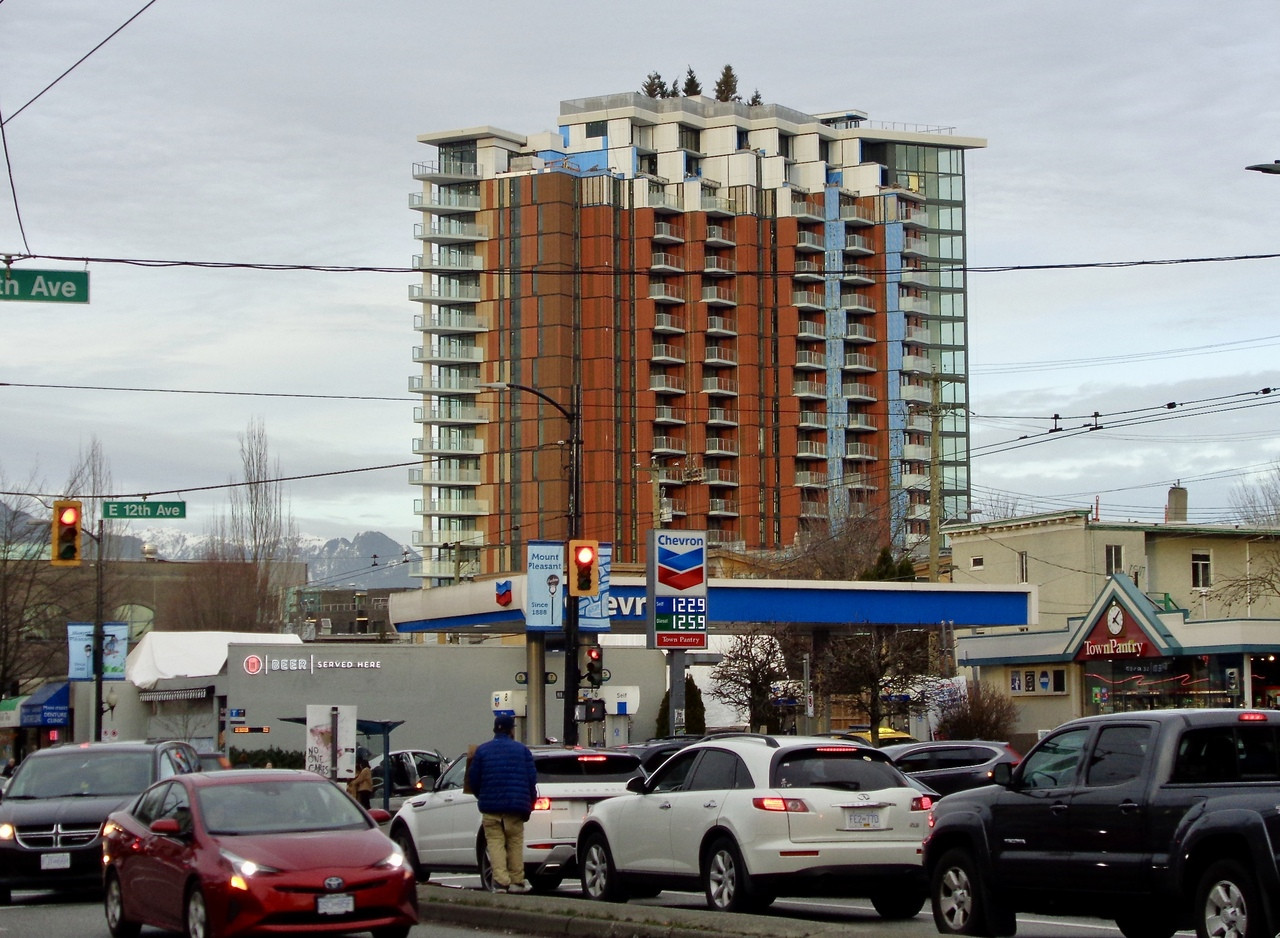
Wow.. cheap gas. Amazing how much the price has changed in 5 months.
Reply With Quote
     
     
  #623  
Old Posted May 22, 2019, 8:45 PM
aberdeen5698's Avatar
aberdeen5698 aberdeen5698 is offline
Registered User
 
Join Date: May 2010
Posts: 4,777
Quote:
Originally Posted by Trainguy View Post
Is there a cost to use these chargers? How many cars can charge at the same time?
Most of the slower, L2 chargers are free - although parking charges might apply based on where they are. L2 chargers work great for overnight charging.

Many of the DC Fast Chargers are currently free, but I think this is just during the introduction period. The ones that require payment end up being in the same ballpark, cost-per-mile-wise, as gas. These are the chargers you want to use when you're out on the road and you need to charge en route to your destination. BC has a pretty good and growing network of these all throughout the lower half of the province and on Vancouver Island. New chargers are being installed this year along the routes north to Prince George and Jasper.

Some people complain about the price of the fast chargers because they're spoiled by the incredibly cheap cost of plugging the car in at home. There's no equivalent to that for gas vehicles, for those you have no choice but to pay whatever the oil companies charge for every last drop that goes into your vehicle.

I don't have a problem with paying for DC Fast Charging - it's a very small percentage of my overall use so it's not that big a deal. And putting a price on them helps to keep them from being swarmed by opportunists who go out of their way for free stuff. I'm more than happy to pay a price for the availability of a charge when I'm out on the road and I really need it.

Reply With Quote
     
     
  #624  
Old Posted May 22, 2019, 9:36 PM
WarrenC12's Avatar
WarrenC12 WarrenC12 is offline
Registered User
 
Join Date: May 2007
Location: East OV!
Posts: 24,557
Quote:
Originally Posted by aberdeen5698 View Post
I don't have a problem with paying for DC Fast Charging - it's a very small percentage of my overall use so it's not that big a deal. And putting a price on them helps to keep them from being swarmed by opportunists who go out of their way for free stuff. I'm more than happy to pay a price for the availability of a charge when I'm out on the road and I really need it.

Some are already pay, but I can't tell what the logic is or who is deciding they are pay stations.

That said I think approximately double the residential cost of electricity is a good benchmark for fast charging. Still cheaper than gas, but the user/BC Hydro can make a little cash.

Lots more L3 on the way:

https://www.nrcan.gc.ca/energy/alternative-fuels/fuel-facts/ecoenergy/21738

Interesting that BC MOTI is now getting in on the action, in addition to BC Hydro, and of course municipalities.
Reply With Quote
     
     
  #625  
Old Posted May 22, 2019, 9:37 PM
Migrant_Coconut's Avatar
Migrant_Coconut Migrant_Coconut is offline
Registered User
 
Join Date: Oct 2015
Location: Kitsilano/Fairview
Posts: 10,046
Quote:
Originally Posted by aberdeen5698 View Post
Some people complain about the price of the fast chargers because they're spoiled by the incredibly cheap cost of plugging the car in at home. There's no equivalent to that for gas vehicles, for those you have no choice but to pay whatever the oil companies charge for every last drop that goes into your vehicle.

I don't have a problem with paying for DC Fast Charging - it's a very small percentage of my overall use so it's not that big a deal. And putting a price on them helps to keep them from being swarmed by opportunists who go out of their way for free stuff. I'm more than happy to pay a price for the availability of a charge when I'm out on the road and I really need it.
Right - compared to $1.70 a litre, $8-12 for an 80% charge seems like a steal.
Reply With Quote
     
     
  #626  
Old Posted May 23, 2019, 8:18 PM
misher's Avatar
misher misher is offline
BANNED
 
Join Date: Jul 2018
Posts: 4,537
https://www.vancourier.com/b-c-mandated-...o-14-cents-per-litre-to-price-1.23831700

Quote:
B.C.-mandated ’boutique gas’ is adding up to 14 cents per litre to price
A senior gasoline analyst indicates the B.C. government is responsible for our province having the highest gasoline prices in the country.

Dan McTeague, petroleum analyst for GasBuddy.com says the B.C. government’s requirement for low carbon fuel is the culprit behind Metro Vancouver’s sky-high gas prices. CTV News reports that McTeague says the cost for refineries to produce the fuel to B.C.’s specifications adds between eight and 14 cents more per litre.

“If you want someone to make your boutique gasoline, which only B.C. has, then you’re going to pay,” said McTeague.

Metro Vancouver gas prices have soared to new heights, smashing records more than once already this year.

McTeague is referring to the Greenhouse Gas Reduction Act which came into effect back in 2009.

Another less understood factor relates to the provinces demand exceeds supply and B.C. is forced to import more expensive fuel from the western United States.
Reply With Quote
     
     
  #627  
Old Posted May 23, 2019, 9:31 PM
L00per L00per is offline
Registered User
 
Join Date: May 2019
Posts: 15
Quote:
Originally Posted by L00per View Post
Several gas stations are piloting L3 chargers, I'll post a link if I can find the article again. They don't want to lose the convenience store $ when they lose the gas customers.
Found it:

https://www.petro-canada.ca/en/personal/fuel/alternative-fuels/ev-fast-charge-network

https://globalnews.ca/news/4976930/petro-canada-fast-charging-electric-vehicle-stations/
Reply With Quote
     
     
  #628  
Old Posted May 23, 2019, 9:44 PM
s211 s211 is offline
Registered User
 
Join Date: Oct 2008
Location: The People's Glorious Republic of ... Sigh...
Posts: 8,489
According to a Vaughan Palmer presentation earlier today, the Terms of Reference for the gas price study by the utility commission expressly excludes provincial taxes or policies from being analyzed/reviewed/considered.

Not sure if that's already been mentioned here already, but what a freaking farce.
__________________
If it seems I'm ignoring what you may have written in response to something I have written, it's very likely that you're on my Ignore List. Please do not take it personally.
Reply With Quote
     
     
  #629  
Old Posted May 23, 2019, 10:59 PM
SFUVancouver's Avatar
SFUVancouver SFUVancouver is offline
Registered User
 
Join Date: Dec 2006
Location: Hamilton
Posts: 6,661
Quote:
Originally Posted by s211 View Post
According to a Vaughan Palmer presentation earlier today, the Terms of Reference for the gas price study by the utility commission expressly excludes provincial taxes or policies from being analyzed/reviewed/considered.

Not sure if that's already been mentioned here already, but what a freaking farce.
An argument could be made that we know exactly how much of an impact on the price at the pump various provincial and regional taxes represent. Meanwhile, there's no credible explanation why a 1 cent per liter increase in the carbon tax triggered a 40 cent spike at the pumps, as but one recent example.
__________________
VANCOUVER | Beautiful, Multicultural | Canada's Pacific Metropolis
Reply With Quote
     
     
  #630  
Old Posted May 24, 2019, 3:08 AM
Sheba Sheba is offline
Registered User
 
Join Date: Jan 2015
Location: BC
Posts: 4,586
'Perfect storm' of high gas prices and rebates driving B.C.'s EV explosion

Quote:
A economics professor at the University of Calgary says the combination of high gas prices and government rebate are set to trigger an explosion in the number of electric vehicles (EVs) on B.C. roads.

"It's the perfect storm in British Columbia right now," said Blake Shaffer. "You've got very high fuel prices — $1.70 at the pump — while at the same time you've got two levels of government offering pretty compelling incentives."

On May 1, the federal government started offering a $5,000 rebate on the purchase of an EV. That's in addition to the $5,000 already available through the provincial government's Clean Energy Vehicles for B.C., or CEVforBC program.

In B.C., EVs already account for 15 per cent of the car market share, almost twice the national average.

In a new policy paper published by the University of Calgary School of Public Policy, Shaffer crunched the numbers around the economics of EVs and rebates, finding that drivers in B.C. stand to save a lot of money if they choose an EV over a popular model internal combustion engine vehicle — and not only because of the thousands of dollars in incentives.

According to his calculations, driving 100 kilometres in B.C. in a top selling electric vehicle will cost between $2 to $4.

That's less than the estimated $12.07 it would cost to drive the same distance in a Honda Civic Sedan, the top selling car in Canada. And it's a lot less than the $18.02 it would cost in a Ford F-150, Canada's top selling truck.

Although EVs cost more than similar model gas powered vehicles, Shaffer figures that with fuel savings and the rebates combined, it would take only two years to pay back the extra expense.

...
Reply With Quote
     
     
  #631  
Old Posted May 24, 2019, 3:17 AM
retro_orange retro_orange is offline
retro_orange
 
Join Date: Sep 2014
Location: East Van
Posts: 2,029

It's hilarious because this is the opposite intended effect that Alberta oil wanted when they arbitrarily jacked up prices. They intended people to get outraged to push for the pipeline but instead people are more quickly reducing their reliance on gasoline for the indefinite future thus having even less reason to support the pipeline.
Reply With Quote
     
     
  #632  
Old Posted May 24, 2019, 3:24 AM
whatnext whatnext is offline
Registered User
 
Join Date: Feb 2009
Location: Vancouver
Posts: 27,576
2009? Damn those BC Liberals!
Reply With Quote
     
     
  #633  
Old Posted May 24, 2019, 4:54 AM
GMD GMD is offline
Registered User
 
Join Date: Jul 2013
Posts: 337
Quote:
Originally Posted by retro_orange View Post
It's hilarious because this is the opposite intended effect that Alberta oil wanted when they arbitrarily jacked up prices. They intended people to get outraged to push for the pipeline but instead people are more quickly reducing their reliance on gasoline for the indefinite future thus having even less reason to support the pipeline.
It's funny, but also deadly serious for Alberta. I drive to work and EV volume seems to grow by the day, meanwhile the buses, the UPS trucks, the garbage trucks, etc. are all running on CNG. It will take a while, but I'd say the writing is on the wall for oil as a transportation fuel, it's no longer a question of if, but when. Who is going to invest in expanded oil sands production over the long haul under these conditions? - even if they build 10 pipelines to the coast.

My next car will be EV for sure, won't pay off overnight, but in 5-10 years, for sure it will save money, probably faster by the time I need to get one with battery prices falling and economies of scale kicking in.
Reply With Quote
     
     
  #634  
Old Posted May 24, 2019, 5:07 AM
retro_orange retro_orange is offline
retro_orange
 
Join Date: Sep 2014
Location: East Van
Posts: 2,029
Meanwhile northern Alberta is on fire again, threatening communities again. I wonder how many of the thousands of people who are currently evacuated who voted for Kenney are regretting it. Maybe Kenney can find some way to use his new 'War Room' to blame the Environmentalists for the fires.
Reply With Quote
     
     
  #635  
Old Posted May 24, 2019, 7:39 AM
WestCoastEcho WestCoastEcho is offline
Registered User
 
Join Date: Jul 2018
Posts: 395
Quote:
Originally Posted by GMD View Post
It's funny, but also deadly serious for Alberta. I drive to work and EV volume seems to grow by the day, meanwhile the buses, the UPS trucks, the garbage trucks, etc. are all running on CNG. It will take a while, but I'd say the writing is on the wall for oil as a transportation fuel, it's no longer a question of if, but when. Who is going to invest in expanded oil sands production over the long haul under these conditions? - even if they build 10 pipelines to the coast.

My next car will be EV for sure, won't pay off overnight, but in 5-10 years, for sure it will save money, probably faster by the time I need to get one with battery prices falling and economies of scale kicking in.
There are still other industries that depend on oil to function.

For example, demand for low-sulphur diesel is expected to massively spike next year; the new IMO 2020 regulations regarding ship emissions and fuel quality standard come into effect, which means ships will either need expensive engine exhaust cleaning retrofits, or burn ultra-low sulphur fuel as an alternative. Funny enough, the best feedstock to produce the ultra-low sulphur fuel is the heavy oil from the oilsands...
Reply With Quote
     
     
  #636  
Old Posted May 24, 2019, 2:34 PM
s211 s211 is offline
Registered User
 
Join Date: Oct 2008
Location: The People's Glorious Republic of ... Sigh...
Posts: 8,489
Quote:
Originally Posted by retro_orange View Post
Meanwhile northern Alberta is on fire again, threatening communities again. I wonder how many of the thousands of people who are currently evacuated who voted for Kenney are regretting it. Maybe Kenney can find some way to use his new 'War Room' to blame the Environmentalists for the fires.
That was uncalled for.
__________________
If it seems I'm ignoring what you may have written in response to something I have written, it's very likely that you're on my Ignore List. Please do not take it personally.
Reply With Quote
     
     
  #637  
Old Posted May 24, 2019, 3:12 PM
bluefox's Avatar
bluefox bluefox is offline
Registered User
 
Join Date: Aug 2013
Posts: 413
Quote:
Originally Posted by s211 View Post
That was uncalled for.
Maybe a bit blunt, but the overarching point isn't wrong -- that populist "jobs, jobs, jobs" rhetoric is often at odds with the environment, and especially so in the case of Alberta voters looking to go back to the glory days of oil and gas industry supremacy not realizing/caring about/connecting the impact of said industry on climate change and its consequences.

You can still point this out and at the same time be hopeful that folks there stay safe.
Reply With Quote
     
     
  #638  
Old Posted May 24, 2019, 5:43 PM
GMD GMD is offline
Registered User
 
Join Date: Jul 2013
Posts: 337
Quote:
Originally Posted by WestCoastEcho View Post
There are still other industries that depend on oil to function.

For example, demand for low-sulphur diesel is expected to massively spike next year; the new IMO 2020 regulations regarding ship emissions and fuel quality standard come into effect, which means ships will either need expensive engine exhaust cleaning retrofits, or burn ultra-low sulphur fuel as an alternative. Funny enough, the best feedstock to produce the ultra-low sulphur fuel is the heavy oil from the oilsands...
Sure, the shipping switch is a one-off that will help for a while, and out of all the uses for oil some will be replaced sooner and some later, but the point is the trend, and the limited need for investment in additional oil sands production when you look out 10-20 years (which you need to, to get a payoff on an oil sands project).
Reply With Quote
     
     
  #639  
Old Posted May 24, 2019, 6:32 PM
whatnext whatnext is offline
Registered User
 
Join Date: Feb 2009
Location: Vancouver
Posts: 27,576
Quote:
Originally Posted by WestCoastEcho View Post
There are still other industries that depend on oil to function.

For example, demand for low-sulphur diesel is expected to massively spike next year; the new IMO 2020 regulations regarding ship emissions and fuel quality standard come into effect, which means ships will either need expensive engine exhaust cleaning retrofits, or burn ultra-low sulphur fuel as an alternative. Funny enough, the best feedstock to produce the ultra-low sulphur fuel is the heavy oil from the oilsands...
Hmm, not according to the Financial Post or Global:

'A devaluation of oilsands assets': New rules on sulphur will make a fifth of output uneconomic within two years

From the lack of available pipeline capacity to the potential adoption of electric cars, there is no shortage of threats facing the Canadian oilsands. But the latest menace lies in a seemingly innocuous and highly common element: sulphur.

Long a byproduct of the heavy oil industry, sulphur is so common that it’s become a part of the general landscape at mining sites such as Syncrude Canada Ltd.’s Mildred Lake facility (now majority owned by Suncor Energy Inc.), where massive blocks of sulphur byproduct are stacked several storeys high, like a kind of yellow-stained low-rise apartment complex.

But global regulators are now trying to stem sulphur-dioxide emissions in a widespread crackdown, one that could shrink the market for heavy crude and force Canadian oilsands companies to stomach an even steeper discount for their product...

...CERI released a report at the end of July that found as many as 574,000 barrels per day of oilsands production, or roughly 20 per cent of unconventional oil projects, would not be economic under a scenario where sulphur levels are lowered to the new IMO standards...


https://business.financialpost.com/commo...ate-threats-to-canadas-oilsands-industry

New marine fuel standards expected to tank oilsands crude prices in 2020

Canada’s oilsands industry, hard hit by a price storm this year, could be sailing straight into a pricing typhoon stirred up by new fuel standards for the international shipping industry.

The tighter pollution rules by the International Maritime Organization, dubbed IMO 2020, are set to take effect Jan. 1, 2020, resulting in the sulphur content limit of “bunker” fuel on ships dropping from 3.5 per cent to just 0.5 per cent.

The switch is expected to wallop prices for heavy oil containing high levels of sulphur — exactly the kind of the raw bitumen that makes up about half of Canada’s 4.4 million barrels per day of crude oil production...

https://globalnews.ca/news/4259018/2020-marine-fuel-standards-oilsands-crude-price/
Reply With Quote
     
     
  #640  
Old Posted May 24, 2019, 6:48 PM
WarrenC12's Avatar
WarrenC12 WarrenC12 is offline
Registered User
 
Join Date: May 2007
Location: East OV!
Posts: 24,557
Quote:
Originally Posted by GMD View Post
Sure, the shipping switch is a one-off that will help for a while, and out of all the uses for oil some will be replaced sooner and some later, but the point is the trend, and the limited need for investment in additional oil sands production when you look out 10-20 years (which you need to, to get a payoff on an oil sands project).
Or longer for a pipeline...
Reply With Quote
     
     
This discussion thread continues

Use the page links to the lower-right to go to the next page for additional posts
 
 
Reply

Go Back   SkyscraperPage Forum > Regional Sections > Canada > Alberta & British Columbia > Vancouver > Transportation & Infrastructure
Forum Jump


Forum Jump


All times are GMT. The time now is 12:49 AM.

     
SkyscraperPage.com - Privacy Statement - Top

Powered by vBulletin® Version 3.8.7
Copyright ©2000 - 2026, vBulletin Solutions, Inc.