Quote:
Originally Posted by Rooted Arborial

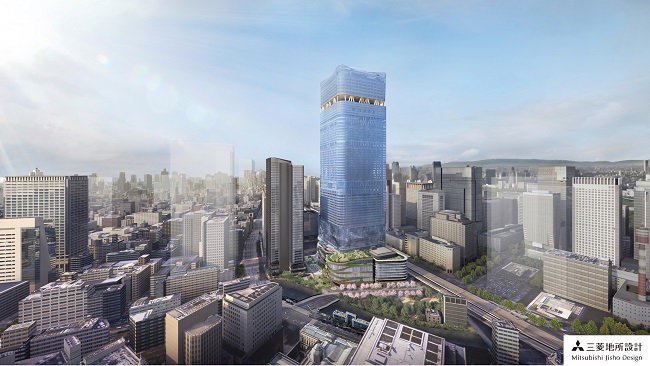
I have difficulty comprehending the massiveness of this building. It looks chunky because the proportions are so unusual. It is hard to understand that
this will only be about two hundred or so feet shorter than the Sears (Willis) tower.
|
They love bulky buildings with big floor areas in Tokyo

. I think developers just want to maximize square footage, which probably means they'll have more space to rent out/sell (and more ¥¥¥ coming into their pockets). I've also heard that buildings with girthier floor plates tend to do better during earthquakes (I don't know how true this is, so take it with a grain of salt). There are also height restrictions due to Haneda Airport and other factors. I think all of these contribute to the bulkiness of skyscrapers over there.
On a side note, some residential highrises in Tokyo actually don't have as much floor area as it looks on the outside, as they sometimes are hollow in the middle (sorry, idk how to explain this in better words, but you can see it in
google maps). Office buildings are usually the massive ones by area (well, I guess this applies to other cities as well, like in NY the largest towers are office or mixed-use, while the slender residentials are very tall but have rather small floor areas).
Quote:
Originally Posted by Rooted Arborial
My brain thinks of it as shorter because I am sort of
unconsciously thinking of it based on other supertalls' proportions and there really isn't another which compares in wideness from bottom to top.
|
The
Azabudai Hills Mori JP Tower is quite big too, so that's probably the closest one you can compare to Torch Tower, but it's not as tall and not as girthy.

source:
Wikipedia / Wikimedia Commons
The videos below show 3D models of the tallest japanese buildings (built, U/C, and proposed) in american cities like NYC, Chicago, LA, etc. (idk if the proportions are 100% accurate, but it'll give you an idea of how they would look in american skylines):
Chicago, NYC, Philadelphia:
https://www.youtube.com/watch?v=QTIiI8idyOU
LA, San Francisco, Seattle:
https://www.youtube.com/watch?v=pBjVJIIw_dk
Older video showing NYC and non-US cities like London, Toronto, Frankfurt, etc.:
https://www.youtube.com/watch?v=pNuIgA5d748&list=PLA-feC8PZjtw6aYUxuVAuwquZya4ShMMf
Skyscrapers shown in the videos as 3D models:
1.
https://skyscraperpage.com/cities/?buildingID=106870
2.
https://skyscraperpage.com/cities/?buildingID=146804
3.
https://skyscraperpage.com/cities/?buildingID=112894
4.
https://skyscraperpage.com/cities/?buildingID=67963 (this one is from Osaka, not Tokyo)
5.
https://skyscraperpage.com/cities/?buildingID=146805
Quote:
Originally Posted by Rooted Arborial
I think Sears is about 225 feet long on each side at street level.
How long is each side of this building going to be at street level?
I'm guessing it might be close to 400 feet wide.
|
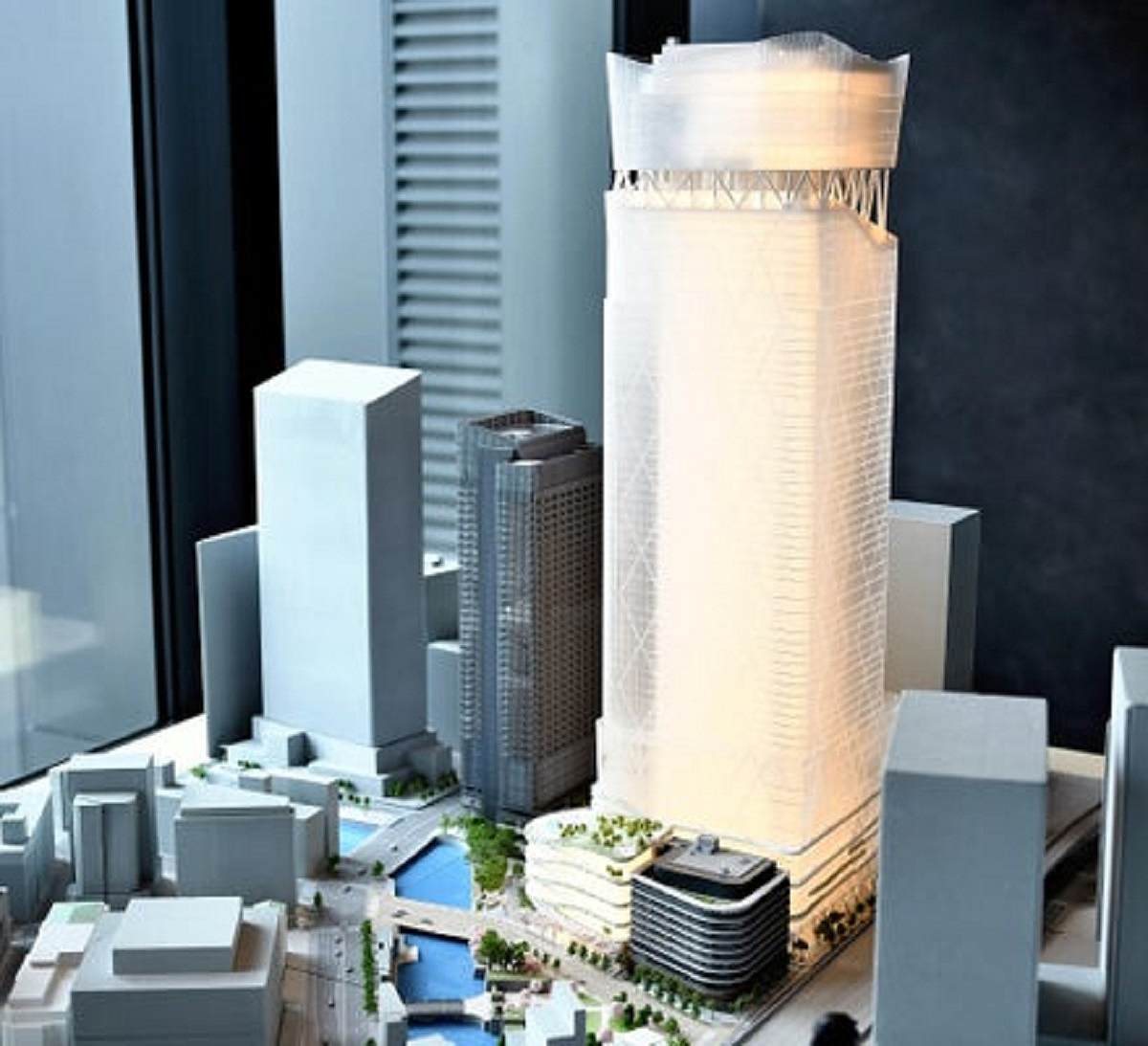
Regarding the Torch Tower's proportions, I don't think it will be that long horizontally. Each side will probably be between 90 m (295 ft) and 100 m (328 ft). I'm saying this based on measurements I've done on
google maps (google maps images are outdated though, you can still see the old, smaller highrise that has already been demolished, those images are probably from 2022) and based on
this image. 400 ft seems doable too, but it feels like it would get too close to Tokiwabashi Tower. Also, looking at its floor area of around 550,000 sqm (close to 6 million sq ft) and the floor count of 62+4, it seems to better match a size between 90 m x 90 m and 100 m x 100 m.





 Prev
Prev





 Hitachi Receives an Order for 173 Elevators


 Linear Mode
