Quote:
Originally Posted by mikevbar1

A unique history indeed! In many ways that rail history could be turned around into a model for transit and connectivity in post-manufacturing cities, and your showing new facets of that with every post. By the time the line and yard is available for purchase, the LRT should be complete and the merits of additional E/W connections will be a lot stronger. I completely agree with your first point about our unique history and conditions, as Its part of what makes Hamilton so great. I think there's something about Hamilton worth loving, even if a bit rough around the edges. I'd say Hamilton is the 'good ending' of many rustbelt cities, where manufacturing remains present and the working-class neighborhoods retain their charm.
|
There's an alternate universe where I'm going to school to work at the HPL, somewhere I could properly use for research to get all that I know about the city onto print. I like to tell my friends that I can give a history, usually brief but not always, on any area of the city that they show me. Though I do hate to brag, so I'll just say that of any city in the province, Hamilton is incredibly underrated, it's truly weathered the effects of the Rust Belt better than any of it's industrial peers, excepting Toronto and Chicago, though they were hardly the industrial centres they once were by the time the 90s rolled around. We're much better off than Cleveland, Gary, Detroit, Toledo, Akron, one could even make the argument for places like Buffalo.
Quote:
|
This is where I figured I would lose you and anyone else reading my post haha. While that H&LE/CN line is certainly useful and I don't understand why such a challenging feat would be removed, I actually am referring to canceled plans for a monorail in Hamilton from the 1970s. It was never even close to being built mind you, but I got the info from the fantastic Unbuilt Hamilton book. I'll try to find some images online and post them later, or just take pictures from the book directly if I can't find any. In essence, the federal govt was experimenting with monorail tech or something like that as a cheaper, less intensive form of urban transit. We were going to have mostly elevated stations across the lower city and presumably the mountain as well, and Fennell would have had the only submerged station. Now, for why we don't have the monorail...
|
Ah yes, the old ICTS proposal, I know all about that. I have
Unbuilt Hamilton as well, though I heard about the proposal before I bought it. A crown corp for the province (the same people who had the CLRV's built for the TTC) came up with a new experimental transport alternative, but like you said only Vancouver wanted it... and Scarborough.
Quote:
Typical Hamilton sob story. I like telling people this one because it gets people in a very YIMBY mindset, but basically, the tech behind the monorail was mostly seen as experimental, unproven or at least questionable already- so once Hamiton was chosen/won the contract (not sure which), the city erred on the side of caution to avoid a white elephant. Vancouver alternatively saw no such qualms with the system, and that is how they got their monorail system.
...Yup. Vancouver's monorail, the robust and effective people moving network that everyone associates with them, was rejected by Hamilton.
|
I don't know how to feel about the ICTS, honestly. I've seen pictures of what the tracks would look like as they looped downtown, and they just don't have the same... appeal as L's in say, Chicago or Brooklyn or The Bronx. If nothing else, would've utterly ruined King William St., though it certainly wasn't the hip destination back then. I don't think we as a city would've ended up with something like the Skytrain, that system had the budget to build something worth celebrating. Rather, I think we would've ended up with the technology most specifically used in the TTC's line 4 in Scarborough, a technology that's due to be entirely replaced by the end of the decade. To me it illustrates the urban planning ideals of the mid century, which in a word was
segregation. There's a reason why contemporary depictions of the future showed different separated avenues for people/cars/trucks/transportation, why Jackson Square is so horrible for the streetscape, and why Montreal has the underground city. That's a whole other story, though

Quote:
Anyhow...
I brought the monorail up partially to illustrate how mountain-downtown connections could be possible by manipulating access to the station rather than modifying the track/platforms. That being said, after looking at these sections of track (my blue line) you couldn't create any meaningful connections to the mountain in the present day. I was alluding to pedestrian elevators/stairs/escalators under the pretense that the track runs somewhere along the middle of the escarpment, with say ~20m to the bottom and probably ~40m to the mountain. Obviously, this track (in most spots, but especially at this railyard) does not actually go that far up at all, especially without the actual mountain track. I am curious about why that is no longer present though; I'm sure there was a good reason it fell into disuse, but being such a crucial and costly connection surely didn't merit abandoning.
|
The reason the tracks up the mountain were removed is because of Nanticoke, actually. Something to do with decreased traffic between Stelco's Hamilton and Lake Erie works, plus the lack of passenger services for decades at that point, not to mention CN's privatization around the same time. It's a cocktail of misfortune.
Getting up and down the mountain has always been a challenge, though I think looking again to the past might help with the out-of-the-box thinking this problem would need to solve. Two words - Incline Railways.
I'm sure you've heard of these. There were two, the Hamilton & Barton Incline Railway (on James St.) and the Hamilton East End Incline Railway (on Wentworth - show's how long ago this is) and a 3rd planned for Ottawa St. which, despite sounding like a funicular, was really just a platform that went up and down the mountain 120 years ago. This is a tricky subject, because really no matter what tech you choose, it risks falling into the niche of novelty. Though, I think a modern funicular with the right capacity could prove to be a valuable alternative to shoving more busses up the access roads, or even digging a tunnel up at Ottawa St, like mentioned in
Unbuilt Hamilton. The busiest funicular in the world is in Naples, and despite being 93 years old, can work as inspiration for our issue:
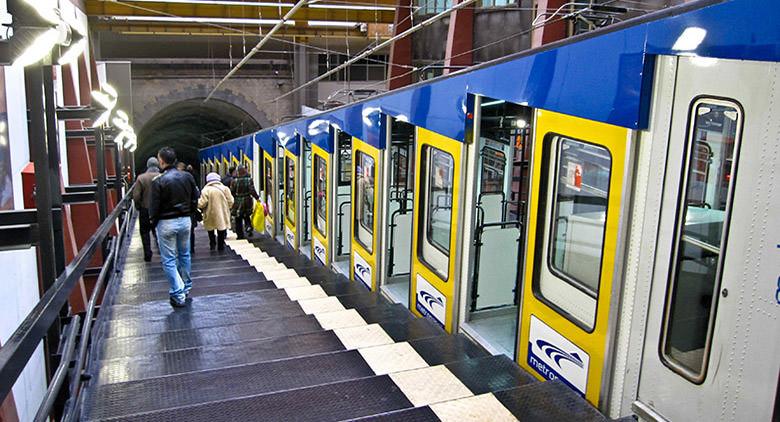
Though to have any high-capacity system that isn't just for novelty, I think we'd truly have to design a system unique on Earth. Where else is there a city our size bisected by a 30 storey cliff? Of course, we can't forget about disabled accessibility as well, like there weren't enough problems...
Quote:
|
I'm currently at the University of Waterloo in the School of Planning. It's unique as a planning undergrad degree, whereas most are postgrad/graduate degrees afaik. The good news is the curriculums should be the same at a University level regardless of which level you choose to start since University-level planning is actually a relatively new phenomenon for Canadian schools. Overall Its a good program; they made it difficult for me to transfer, but direct application is much easier. I can't speak to all the classes yet of course, but it mostly seeks to touch on the various aspects of planning and the fields that accompany planning decisions. So, you will end up learning a lot about Ecology, Economics, and the history of planning, and some popular urban philosophies for the first while.
|
I don't believe it. Waterloo is my top school!

all according to plan, I'll be in the same classes next September. Good to know I'm not the only one who's interested in the classes they offer.

If you don't mind, how long have you been at Waterloo? I might have some questions you could answer later on.
Quote:
|
One thing I have been able to tell, not just from myself but from professors and various academic sources, is that Planning as a true Discipline is very much in its infancy. Its academic 'base' is very broad, but it is mostly a field concerned with synthesizing knowledge from other fields and applying it effectively- and that's with more abstract definitions. We are still very much transitioning away from the very policy-first fill-in-the-blank type planners of the past, and so there's little innovation happening as much as we just look at what works and what does not. The good thing about this is that every time you think "I wonder if someone has thought of this?" the answer is that they probably haven't, or at least not for a long time.
|
The scale in which we build and regulate our cities has never been as high in history as it is now. It's interesting to see the extent in which planned communities have changed in the past centuries. Savannah, GA was a planned community, here's the original design called the Oglethorpe Plan circa 1730 -

...this is what counted as a planned community 300 years ago
it was a cellular system, centred on a public square, surrounded by houses and shops. No mention of what the streets would look like, be it how wide or narrow, the sizes of the sidewalks, which vehicles are allowed, nothing of the sort. This plan is successful and would create Savannah's town centre, probably the only part of the city worth visiting. It's interesting how our best parts of cities are the ones that weren't planned at all - Places like old Quebec City come to mind - things that in the post-industrial age sadly can't be replicated naturally, as it now needs quite the opposite - careful, meticulous intervention. Something that, like you said, isn't common for a discipline only now coming out of it's infancy of importance, as well as popularity.
Quote:
|
Using true academic resources and expertise is also a bit of a rarity; sure I learn economics, but I am not adapting economics for planning (yet). I personally want to see planning flesh out its academic side, creating concrete, empirical and quantifiable measures, and analysis along with access to academic research to create a rigorous science of human habitat and systems.
|
Imagine a time when town planners and experts in the field are almost as respected as their medicinal counterparts

town planning is a profusely complex study, since it incorporates all facets of our lives and society. It concerns economics, history, botany, zoology, and even psychology - there's a reason we find Norilsk depressing after all.
Quote:
|
Because this hasn't happened yet, I encourage you to pursue planning as best you can. People who actually care about urban planning, believe it or not, are rare; most people don't even understand what it is or are not in tune with planning trends for lack of a better term.
|
Can I get this on a mug?
I swear, the amount of Armchair Urban Planners out there probably outnumber the real planners by a startling margin. Its incredible just how much people out in the suburbs appear to know about something that, in truth, they
really really don't. I'm sure you've seen this on perfect display with the utterly asinine things people who live south of the Linc have to say against the LRT.

Quote:
|
The vast majority of students in my program seem to have a more general interest in its facets rather than the goals of planning. Think 'I like economics and the environment; planning offers students that while also producing something bigger than just those two things. What this means though is that a sizable portion of planning students will end up fitting a mold whether we mean to put them in one or not. That DOES however leave a lot of room for people who actually care, like you or me. In many ways, the best way to do anything in urban planning might be to just get directly involved like you said, perhaps with an academic basis being secondary or not required at all. Call it a knack of mine, but anyone who is at least somewhat understanding of modern planning principles and what works/does not work can easily criticize a city's practices or even their Master Plan with obvious oversights coming from a lack of rigorous inquiry. This doesn't mean we are geniuses; rather it further illustrates the lack of care and bureaucracy of the field, which screams opportunity for those who want real change in their communities.
|
There it is. That's why I'm so firmly committed to this career path - the opportunity and potential at our disposal to create simple, enjoyable living spaces, both in general and living in a city so rich to the town planner as Hamilton. In a strange sort of way, I can almost appreciate how asinine some of the city's planning decisions have been, because they can act as a beginning point for study. It's very easy to look at what doesn't work in a city. It's a different thing to figure out the
why. We know Main being 5 lanes one-way is a horrible idea. But the reasons why might begin at the simple answers of it being horribly dangerous to the pedestrian, and eventually extend to complex notions of inviting streetscapes and noise pollution. These sorts of analyses fascinate me.
Quote:
|
Politics will slow down our ability to perform proper planning across all of its concerns, but nothing is stopping a planning-conscious person from running for a position in the city. Hell, a lot of our problems stem from the fact that a lot of our elected officials don't know much of anything; they were elected by the people based on campaigns and political motivations, not by a team of academic evaluators, after all.
|
This is the hell in which the town planner lives every day. The people who make the decisions aren't qualified to do them, and their priorities are never on the right side. It feels like a medical professional during times of COVID

Despite having dreams of bringing a wrecking ball to a few of his legacy projects, I deeply admire Victor Copps. Without him, downtown Hamilton would not be the beast it is today, for better or (usually) for worse. I can't dislike his ideas in a contemporary sense, because what he and his council built 50 years ago were in line with the segregatory ideals of the time. What I admire about both him and Lloyd Jackson was their ability to not only dream, but
do. For Christ's sake, in order to alleviate congestion on Burlington St., they just built a
second street on top of the original! That would be an unthinkable idea today, but the Burlington St. overpass is one of the more minor of the public works projects of the time!! Imagine instead of a council ripping itself apart over something as (to the city's coffers) trivial as the Aviary's 50,000$ budget, there was one who actually
wanted to get the flock out of it's temporary home in Westdale of 26 years.
Though, I already know this would end in me red in the face at our incompetent politicians, so I better bite my tongue.
Quote:
|
This is a bit of an unrelated tangent so I will cut it off there, but the main takeaway is that entering planning has a lot of superficial barriers that are quite easy to see through. Planning as a true discipline, at least in NA, is in its infancy, and that means there are a lot fewer barriers to entry for passionate individuals.
|
Good idea. It's already taking me an hour to type these replies.
Not that I don't want to, I very much enjoy being able to go into this much detail over something I'm so very interested in - I'm putting the rest of my life into this discipline after all
Urban planning in NA might not have as many academic requirements or precedents as in Europe, but it's problems stem from handling of the public - people just don't seem to know what they should want.

Quote:
NJB's video is nice as it's a reminder that GO Isn't a miracle system. However, his videos have started to bug me as there is a little too much pretentious Europe pandering and too little empirical assessment of the network as a whole. Before getting too off-topic again, NJB is just pretentiously comparing Toronto/GTA/GTHA to the pinnacles of urban planning (him and his dutch cities  ) when he should be empirically assessing system effectiveness, perhaps compared to other systems of similar scope and scale. Think of all the economic planning that has taken place around the GO network; urban designated growth zones, rapid densification, cars off the road (even if they're parked, they didn't drive to Toronto; only to their GO station), and more. Like, he's not even remotely aware of how dramatically the GO system has already improved, and how monumental some other changes are. This leads to a disingenuous portrayal that makes GO feel like the same as other American heavy rail systems, which is untrue because like so much else, Toronto/GTA is actually quite innovative on the planning front. GO sees consistently high ridership, and it makes money. Sure lateral connections could too, but that is a recent change in demand. It's just a pointless thing to focus on when such a large urban region is connected by rail and continues to improve the economies across it. There were perhaps many years when Hamilton's GO trains were all that kept our population from leaving for somewhere better and sending us past the point of no return. ) when he should be empirically assessing system effectiveness, perhaps compared to other systems of similar scope and scale. Think of all the economic planning that has taken place around the GO network; urban designated growth zones, rapid densification, cars off the road (even if they're parked, they didn't drive to Toronto; only to their GO station), and more. Like, he's not even remotely aware of how dramatically the GO system has already improved, and how monumental some other changes are. This leads to a disingenuous portrayal that makes GO feel like the same as other American heavy rail systems, which is untrue because like so much else, Toronto/GTA is actually quite innovative on the planning front. GO sees consistently high ridership, and it makes money. Sure lateral connections could too, but that is a recent change in demand. It's just a pointless thing to focus on when such a large urban region is connected by rail and continues to improve the economies across it. There were perhaps many years when Hamilton's GO trains were all that kept our population from leaving for somewhere better and sending us past the point of no return.
|
NJB makes some quality content, but for somebody born in London and so enthusiastic about this field of study, you're so right in that he doesn't properly weigh the good and the bad of the system. Each suburban GO station, in a vacuum, sucks. That's plain to see. But when out of the vacuum and back to the real world does it turn out to not be so horrible - every summer for nearly 20 years my family has gone to the CNE. Without the GO trains we would have to drive all the way to the exhibition grounds, clogging up the Gardiner, and likely having to fight for a spot in the hypothetical massive parkade that would have to exist on the grounds. In the past, all we've had to do is drive to Burlington and take the train straight to the action. Now, with GO trains reliably to West Harbour, when the CNE is (hopefully) on again in 2022, we won't even need to drive to reliably get to the station. NJB also didn't go into the future of the system, apart from the Garage-Mahal in Bloomington, which would serve as a nice change to the otherwise constant flow of apparent distaste for the system.
Think about the stations that in the future will have just as frequent of service as the suburban seas of parking - namely Hunter St, West Harbour, Guelph, and Kitchener. These stations are all in urban centres, minimal (or none at all) parking facilities, and once electrified (eventually) will be just as good as any mid-sized town's station on the Deutsche Bahn.
Quote:
|
Now about those stations. They're perfect! In fact, we could probably 'splurge' a little more considering how inflated transit costs become when your typical GO station has an ocean of parking. Stations like those (a platform, shelter, maybe some occupiable space above/below) are space and cost-efficient, and I am glad you knew what is needed. A lot of the costs in such projects are artificially raised by regulations and requirements that are often arbitrary (parking mins of course come to mind). For that reason, European stations (and networks as a whole) are a great model to follow going forward. There must be cities comparable in size to Hamilton that have multiple rail lines. Searching for such systems is also easy because reference cities don't even have to be the same size; just the same density and a similarly sized area of focus.
|
There is something to be said about the arbitrary inflation of costs for higher-order transportation on the continent. Remember when the province tried to feed us the utter crock that the LRT would cost 5,500,000,000$ to build? or that the 2nd Ave. Subway in New York costs about 3,800,000,000$
per mile. Arbitrary hoops and utterly unnecessary regulations like parking mins and setback rules only jack up the cost of construction, not to mention the price of all that red tape. Cutting all of that away, we would actually be able to build more enjoyable stations with greater amenities, likely a little station building for buying tickets and keeping out of the rain. Perhaps something not unlike the size and scale Port Hope's VIA station, though with amenities befitting this century

Quote:
|
While we probably can't cut costs to ludicrously cheap levels, there is a case to be made that if stations run a certain % over budget, it is because of institution XYZ and they should take on some of that cost as a result. There's a lot to be said for the economic/financial aspect of planning; I want to believe that at least one reason it is so expensive to build new rail systems is that tracks must be laid on land already owned, which is a ridiculous requirement in urban areas with high land costs. Now I am absolutely not suggesting market intervention or abandoning the market system; quite the opposite. For one reason or another, there has been no foray into innovative economic/financial policy around land use to make infrastructure building easier, at least not on a large and easily replicable scale. IF such a solution is ever found, then ideally the cost of building new systems would be 90% materials and construction/labour, and only a small remainder being land-related. I do not know what such a system could look like so I'll keep it on the shelf for now.
|
I won't pretend to be an economist or land-speculator, so forgive my ideas if they end up wrong - I think part of the reason why costs are so impossibly high is due to how much land you're required to own, and how little you're required to alter in order to build anything. Perhaps this is just anecdotal, but one of the most pertinent examples of this phenomenon is how many properties Metrolinx was
required to purchase entirely, when a lot of which they could have just bought a portion. Take the dearly departed Atlantic Subs, on King St. and Sherman Ave. -
https://goo.gl/maps/MGM6CcgAJkpgVukVA - There is absolutely no way this building would interfere in construction. But, because buying portions of land cannot be done, the business had to go. I'm convinced this sort of land management in regards to public works projects is a recent thing, because of how storefronts along Queenston Rd. have been build suspiciously 1 car-width away from the sidewalk, as if to accommodate a hypothetical widened road. Though, I don't have anything concrete to back those up, so just theories they remain.
Quote:
|
I now know its only a matter of time before I become a train geek. Not only is this interesting, but it is also directly applicable and relevant to our goals and the goals of the fantasy network.
|
Welcome to the heart-wrenching world of North American train enthusiasm, where the 90's were worse than the depression. In fact, I'm
in a depression whenever I see the before and after of the VIA network from the '95/'98 service cuts.

Quote:
|
I was initially worried we would have to find some way to adapt true heavy rail for metro use, which is probably as terrible as it sounds. If that was where we were at, then it would be no surprise Hamilton doesn't have this metro. However, you posted some really fantastic-sized rolling stock that occupies the niche perfectly. Keeping individual trains small also presumably helps with fuel/track demands as well; smaller trains mean less energy expenditure, less track manipulation, and shorter platforms. Purely on a visual level, I love the Sudbury train and the Princeton Dinky, and while I'd personally modify them for a modern context, they have the 'bones' and the visual proportions I'd associate with this scale.
|
I'm sure if I ventured over to a railway enthusiast's forum in France or Germany, they'd point me towards some modern versions of the examples I sent. Alas, our railways haven't been good since the 60's, so they're the first that come to mind. I'm sure if you just type in Railbus and scroll through the photos, there's bound to be the perfect rolling stock out there, probably in Japan. A great benefit to using these shorter trains primarily is you can still run enormous intercity trains on the shorter platforms on occasion, you just have to tell passengers that they're only boarding from XY&Z carriages.
Quote:
|
This project does seem more than doable now. Not all transit is to be built to demand; sometimes you have to induce it. There are two ways I see that working.
|
At this point I should just have "if you build it, they will come" bound to a hotkey somehow for the amount of times I've had to repeat something to that effect to others online who dismiss transport projects for everything not on systems bursting at the seams.
Quote:
|
First, you can shift even more HSR ridership off busses and onto these trains (perhaps more so my orange/pink/cyan lines than Blue) primarily because they serve different corridors than the LRT. I was thinking about the demand-side of this alot in the last day, and I think we underestimate how dense and 'big city'-like Hamilton is. As we mentioned, the railroads crisscross our downtown, and the lower city as a whole extends quite far East. To me, that indicates lots of historical growth, which translates to 'good bones'. A good baseline of density is thus already established in Hamilton, and we are already familiar with that. Remember, the reason Hamilton isn't such a sprawling mess is that we are bisected by a f*cking cliff. We are in a ridiculously good geographic position for trade and industry, and the lower city very rapidly expanded about as far as it could in either direction before looking to the mountain. Therefore, the idea of densifying the lower city as a whole more should be logical for any urban planner in Hamilton. Everything short of the airport is down there, and the mountain is hard to get to anyway. While some might argue that this is over intensification for the lower city while neglecting the mountain, we don't necessarily have the financial means to just build rail wherever we want. It is simply easiest to build new infrastructure where land is flat, and (unique to Hamilton) that means both points A and B need to be flat.
|
One of the beauties of Hamilton's geography is how constricting it is to sprawl. On the one side you have the big damn cliff, and on the other side is one of the largest lakes on Earth
Despite what the opposition might bemoan, everything there is to do in Hamilton is down the mountain, so like you said it's only logical to intensify this area first. Additionally, it provides easier access to the surrounding towns as well - somebody from Dundas or lower Stoney Creek is in for a long ride if they want to go to Lime Ridge. We can increase ridership on this hypothetical metro by stealing part of what the BLAST network aims to do - to connect the communities on the periphery with the city centre. Through significant investment, this network if built tomorrow would offer the greatest connectivity between downtown Hamilton and Stoney Creek... well, ever, and with downtown Dundas, something not enjoyed since the interurban went out of business 95 years ago - and in a fraction of the time.
Quote:
|
Second is the 'induced' demand component, which is in some ways a crux of the Orange/Blue lines if they are ever built. because the most obvious corridor will have an LRT, the other two trains should serve specific regions of the lower city. The orange line is better for East end and Stoney Creek Waterfront residents seeking to get to West harbour or just the industrial zones for work. This line is still quite industrial, so a mix of encouraging nearby neighborhoods and upzoning would help in fleshing out demand for the areas between West Harbour and Confederation GO. I certainly think it is present, but the neglect of the area will just require some work. Now for the Blue line, ignoring any N/S modifications it would mostly serve residents near the escarpment. This is actually mostly low-rise housing, but is closer to Hamilton's population median line per se, if such a line exists. The Blue line would also go right to center GO, so it features better access to people employed in downtown Hamilton than West harbour. I imagine some properties in the Stinson/St. Clair area is quite desirable already, and so I will concede temporarily to NIMBYs here (not to get preferential, I do think that these more desirable neighborhoods would put up more a fight in upzoning though and that is not something we need on top of the other challenges of the fantasy line). The real benefits would come towards Blakely/Delta West, where people would now be able to easily commute downtown from places like Gage Park or King st E. I am not terribly well versed in the demographics of this area, but using transit as a vessel to improve the local economics/circumstances would help integrate normally NIMBY residents and share the economic benefits with them for generations to come. Of course, this also means densification and the questions of gentrification, but since this is all theoretical I won't get caught up in that now. The line continues eastward into Stoney Creek, and while I don't end up there very often I do know that driving from the West side of downtown to say King/centennial isn't particularly easy or enjoyable. Making it a transit corridor instead might not be improving commutes as much as it will encourage people to commute at all; now, one could turn a 20-minute drive into a 10-minute train ride.
|
Downtown or indeed cross-city access from the areas surrounding the blue line are difficult. I have a friend who lives in Rosedale, and he has to take a half hour walk from his house to mine, and that's before we even set out to our actual destination. With the blue line, meeting downtown or indeed any of the other areas of the city that are now easily accessible is incredibly different for us two, as well as getting home at the end of the day as well. What for him was once a long ride on the length of the 5A/B/C/D/E is now a quick train ride, that doesn't have to make so many turns through residential streets. The area surrounding the blue line at present is desirable for upzoning and intensification, and that's by sheer proximity to the LRT. Add this metro network, and King St south of the delta could turn out to be it's own commercial destination, not unlike the size and scale of James or Ottawa. Think of the potential!
Quote:
|
Because Hamilton is relatively compact, the line does quite quickly run into new-ish suburbs ripe for intensification. Inner-city neighborhoods are one thing, but I have little qualms about upzoning empty lots amidst sprawling suburbia. We are particularly lucky for that, and we are also lucky to have a pristine urban model like the GTA to steal notes from. While 20 years of intensification has rendered the corridors and centers approach outdated (and almost dystopic) in the GTA, Hamilton still has plenty of room to use that philosophy before heights begin to get squeezed by the zoning limits. Toronto is proof that we can densify while preserving existing communities at least in the short-medium term, but it is not a long-term solution.
|
What we are most fortunate for, especially living in the lower city, is having the foundation for intensification already built and sitting there for the better part of 120 years
Commercial avenues like Ottawa and Kenilworth don't need significant changes in the zoning map to triple the heights of their buildings and increase foot traffic. To accommodate the increased demand for living space, one need only to increase the density of residential lots adjacent to the Kenilworth or Ottawa corridors. imagine side-streets like Grosvenor or or Croswaithe with low-rise apartment blocks, not unlike those you see in surplus in Montreal or even Shawinigan. In fact, this sort of planning works throughout the lower city, because in part to the existing infrastructure, as well as the uniform grid. It would be a much taller order to do this in Stoney Creek or along Upper Wentworth, though not impossible...
Quote:
|
My favorite part about this is that I can get the stamp of approval from others like yourself! It's one thing for me to come and suggest an off-kilter idea, but we have proved, at least in a forum space, that transit planning can get alot more creative than we are led to believe. We aren't approaching this with hubris or ignorance; like most forum members here, it is a plan grounded in reality to a reasonable extent. That to me illustrates the status of planning best; good ideas are far from exhausted, and the people in charge don't even have them most of the time. This post I mostly got into the surrounding factors about such a system and deviated a bit from rail and trains in some spots, but I chalk that up to moving on from the 'engineering of the project to the utility and demand of it. I personally believe that Hamilton should be trying to invest in fringe infrastructure as much as possible, mostly because of all the unique factors you and I have discussed that separate it from alot of cities. We have lost ground to make up for, and I am quite confident our housing market is about to see a ridiculous squeeze and a subsequent skyscraper boom in the coming decades due to Toronto's zoning being pushed to its absolute limits. That is a topic for another time, but it affirms that when our leaders won't plan for the future, we will have to take up the mantle.
|
I can't tell you how many times I've complained about something of this nature and ended it with "just give me 30 years, I'll fix it." I'm sure somebody would find it admirable how perspicacious you or I are into this topic, something most people don't give frequent thought about. We're living in the beginning of a construction boom in the city not seen since the 1970's, and this time we have the opportunity to use that to create a city for it's people, rather than their cars.
The ideas you've put forth are possible. They have a lot of potential for something so cheap to build and with pre-existing infrastructure, I'm somewhat embarrassed that I've never looked at it this way myself
The only thing somebody can reasonably say is in the way are those who make these decisions in the first place.
Just give me 30 years
Quote:
|
Also, pardon the long response times- I am still in school and unfortunately, they haven't given me a grant to research this project's viability, so I can't get paid to post-Yet. LOL. I'll try to find some pictures/drawings of what our monorail was supposed to be and post them as a separate entry here sometime soon.
|
Oh don't worry about it at all, It takes me literally hours to write these replies, and I don't mind the infrequency if it means we can go this in-depth. Besides, there's a lot of time between now and next September, so I've got work to go to as well. I must say, I am thoroughly enjoying this






 Prev
Prev





 [/IMG]


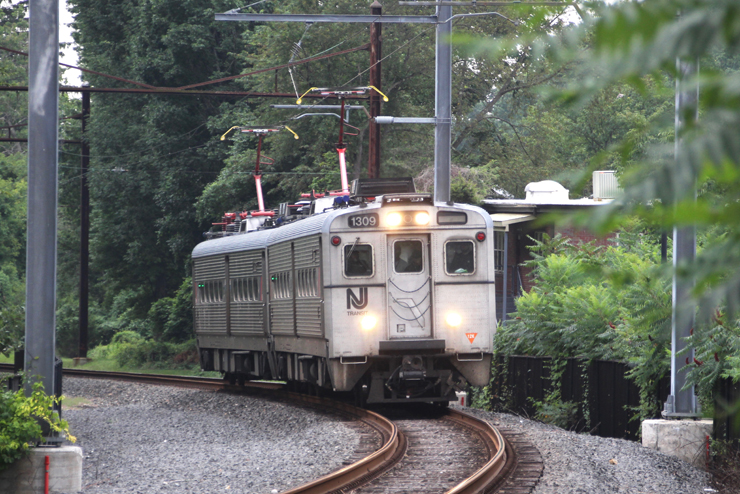

 That requires alot more research however. This conversation has moved so far beyond the feasibility on track now, which is actually fantastic. Most of what's being discussed is the use cases and demand, but as you say...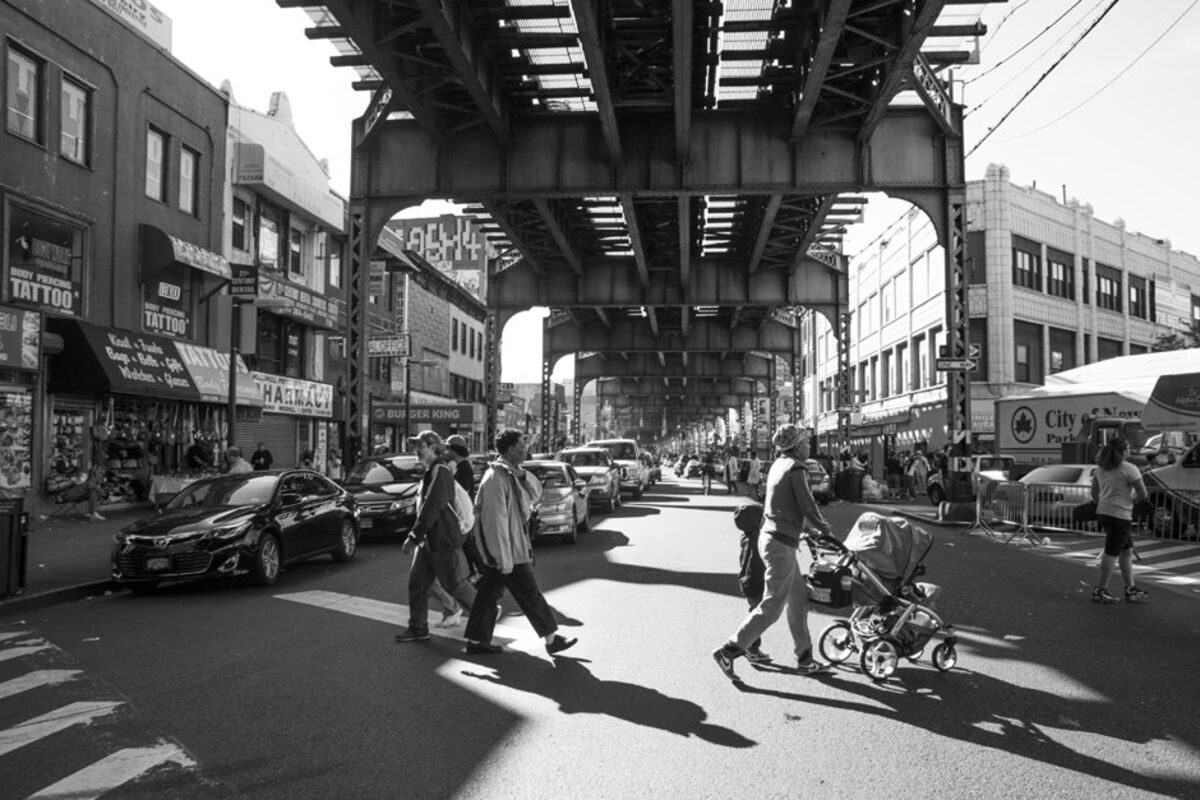
 I take it you've seen NJB's video on the streetcar suburb, which while not exactly abundant in the lower city, had influence on how it was built. Indeed, there's a parallel between how the surveys in the lower city were built 120 years ago, and how surveys up the mountain are being built - a large rectangular parcel of land with housing in the centre, usually a couple schools & the odd church, surrounded by a perimeter of commercial lots. Of course, what in the 20's resulted in attractive urban strips like Ottawa St. today and Barton/Kenilworth yesterday has since been warped to end up with little more than a strip mall at the principal intersections.

 Linear Mode
