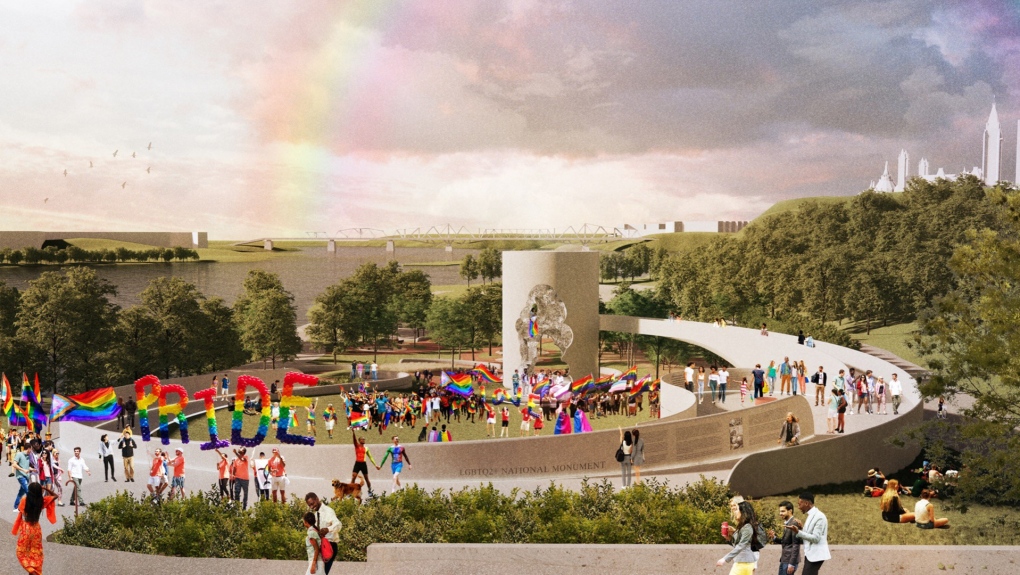
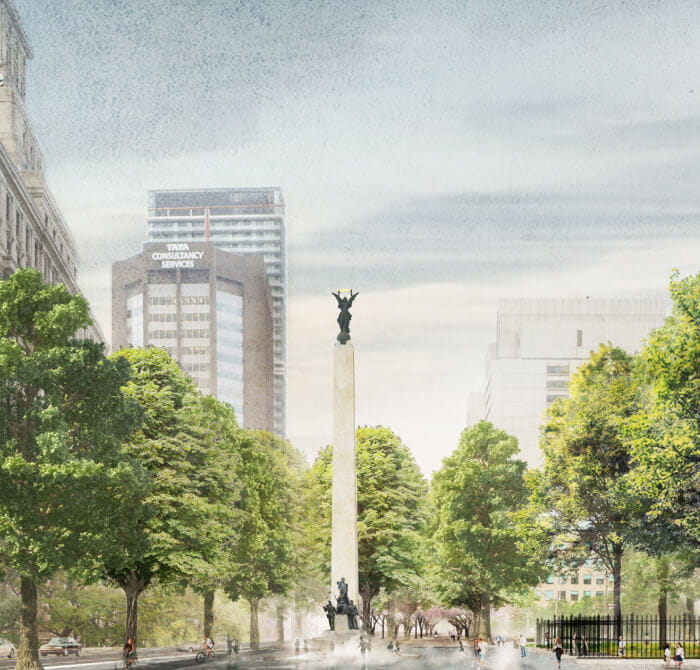
It really just comes down to space being at a greater premium as more people occupy the same urban area so space needs to be used more efficiently. General traffic road lanes are among the least efficient uses of urban space (when there's no congestion pricing) since they get clogged by so many private vehicles that require much more room than their occupants. Expanding public space, green or otherwise, tends to be one of the more beneficial things a city can do to improve the quality of life for residents as crowding increases. Whether or not public space is officially called a "park" doesn't really factor into it.
Also, reducing the area dedicated to vehicular traffic and impermeable surfaces can be an improvement in and of itself even without the new public space created. Wide multi-lane roads are both harder to cross and noisier. People in residential nabes often talk about how even the subtlest things can affect (aka "destroy") the character of the area. A building a bit too tall, a touch too dense, a shadow here and there, etc. A lot of those people would have a heart-attack and die if you increased the traffic on their two-lane local street by 25%. But in downtown where far more people live and spend time, something that has a major affect on the area character like a huge traffic filled mini-freeway running through it just gets shrugged off. Some of it's just a status quo thing in that if the street had existing public space and there was a proposal to remove much of it to add traffic lanes in the name of traffic capacity there would be an outcry. But when the lanes already exist, it's fine.






 Prev
Prev






 Linear Mode
