HomeDiagramsDatabaseMapsForum About
     

Go Back   SkyscraperPage Forum > Regional Sections > United States > Midwest


Reply

 
Thread Tools Display Modes
     
     
  #5041  
Old Posted Jun 14, 2023, 7:10 PM
ebitdadada ebitdadada is offline
Registered User
 
Join Date: Apr 2007
Posts: 20
Quote:
Originally Posted by moorhosj1 View Post
Crain's has an article with data about home values in the city vs suburbs. Prices have been lower than 1-year-ago for the past six months. Of course, they waited until after hitting on crime and remote work to say this:

Not great news, I wonder if people are actually switching to rentals because of high interest rates, makes sense when we have record low inventory for sale.

They really can't help themselves.
Lol funny timing on the Crains article in relation to my post and maybe a good counterpoint / something I could have missed. I guess my main point was more around: "If the rental market is super hot and buy prices are not imploding vs. other cities (which I don't think this suggests they are and some here also seem to be a bit skeptical of the data) or the total supply of housing is somehow dropping, it does seem to go in the face of the the narrative that "Chicago is emptying out"

I will happily say I got a win around the prediction of "Chicago being on pace to pass Dallas" in return to office for the full week:

Kastle Systems Week of June 5th

Total Weekly Headcount vs Pre-Pandemic:
1. Houston: 61.6%
2. Austin: 58.6%
3. Chicago: 54.3%
4. Dallas: 54.1%
5. NY: 50.5%
Average: 50.3%
6. LA: 50.1%
7. DC: 47.8%
8. San Fran: 44.7%
9. Phili: 42.4%
10. San Jose: 38.9%

Peak Day Occupancy:
1. Houston: 70.5%
2. Austin: 68.9%
3. Chicago: 68.6%
Big gap
4. NYC: 63.7%
5. Dallas: 61.3%
Average 59.6%
6. DC: 57.4%
7. LA: 56.5%
8. SF: 54.7%
9. Phili: 49.2%
10. San Jose: 46.6%

Last edited by ebitdadada; Jun 14, 2023 at 7:24 PM.
Reply With Quote
     
     
  #5042  
Old Posted Jun 14, 2023, 11:37 PM
moorhosj1 moorhosj1 is offline
Registered User
 
Join Date: Jan 2020
Posts: 513
Quote:
Originally Posted by ebitdadada View Post
Peak Day Occupancy:
1. Houston: 70.5%
2. Austin: 68.9%
3. Chicago: 68.6%
Big gap
4. NYC: 63.7%
5. Dallas: 61.3%
Average 59.6%
6. DC: 57.4%
7. LA: 56.5%
8. SF: 54.7%
9. Phili: 49.2%
10. San Jose: 46.6%
Thanks for sharing. Is the peak day based on each week’s data or is it the peak day since March 2020?
Reply With Quote
     
     
  #5043  
Old Posted Jun 15, 2023, 1:41 AM
marothisu marothisu is offline
Registered User
 
Join Date: Dec 2012
Location: Chicago
Posts: 6,931
Quote:
Originally Posted by moorhosj1 View Post
Thanks for sharing. Is the peak day based on each week’s data or is it the peak day since March 2020?
It is the peak of that particular week. By the way, Chicago area shot up 3.4 percentage points from the week before for the weekly average.

All metros had pretty big increases but Chicago's was 4th highest out of 10. Back in 2019 there was around 613,000 jobs downtown. Let's say today that's 500,000 for the sake of argument. A jump of 3.4 percentage points means an increase of 17,000 workers downtown from the previous week. A year ago it was 41.4% vs. 54.3% now - which could mean 64,500 more workers on average downtown on a given day than a year ago. And compared to 2 years ago? +134,000

Of course, this is average numbers. Mondays and Fridays are half of the average so the numbers on a Tuesday thru Wednesday compared to a year ago are probably more like closer to +100,000.
__________________
Chicago Maps:
* New Construction https://www.google.com/maps/d/viewer...B0&usp=sharing
Reply With Quote
     
     
  #5044  
Old Posted Jun 15, 2023, 1:53 AM
moorhosj1 moorhosj1 is offline
Registered User
 
Join Date: Jan 2020
Posts: 513
Right on queue, an NPR reporter who closely follows the Census has this:

Quote:
The Census Bureau’s internal watchdog, the Commerce Department’s Office of Inspector General, is launching an audit of how the bureau produced over- and undercounting rates for the 2020 census through the Post-Enumeration Survey
Reply With Quote
     
     
  #5045  
Old Posted Jun 15, 2023, 2:12 AM
marothisu marothisu is offline
Registered User
 
Join Date: Dec 2012
Location: Chicago
Posts: 6,931
Quote:
Originally Posted by moorhosj1 View Post
Right on queue, an NPR reporter who closely follows the Census has this:
COVID has made counting people correctly a mess. Although the Census was estimating Chicago a little wrong for multiple years before.

This audit is about the PES though. The one that claimed that many states had statistically significant under and overcounts (i.e. Illinois may have been undercounted by a quarter million people). I would have enjoyed this more if they would have launched an audit into the estimates vs. the actual pre-PES numbers for Chicago/Illinois, NYC, etc. Although if the audit proves to be pretty valid then it's going to call into question a lot of things..
__________________
Chicago Maps:
* New Construction https://www.google.com/maps/d/viewer...B0&usp=sharing
Reply With Quote
     
     
  #5046  
Old Posted Jun 15, 2023, 5:27 AM
marothisu marothisu is offline
Registered User
 
Join Date: Dec 2012
Location: Chicago
Posts: 6,931
Here's some preliminary numbers I have by community area of construction from Jan 1, 2012 til June 13, 2023 for number of units permitted new construction in multi and mixed use buildings. It counts senior housing and townhomes but not dorms or homeless/transitional shelters

Near North Side: 15,670 units
Near West Side: 12,478
The Loop: 9128
West Town: 5573
Lake View: 3240
Near South Side: 3140
Logan Square: 3076
Lincoln Park: 2480
Uptown: 2430
Lincoln Square: 1376
Hyde Park: 1001
Lower West Side: 920
Grand Boulevard: 917
North Center: 781
Woodlawn: 753
Irving Park: 729
Edgewater: 543
Douglas: 466
Avondale: 456
Rogers Park: 313
Bridgeport: 306
Albany Park: 248
Washington Park: 200
Oakland: 180
McKinley Park: 176
Kenwood: 120

By the way - Near North, South, West and the Loop had 3000+ more units permitted construction than all of San Francisco in this time period despite having 3.6X smaller population. South Lakefront had 3637 units in those permitted, more than Lakeview. From a per 1000 resident perspective, that's 26.47 units per 1000 for that South Lakefront area versus 31.4 for Lakeview. Not a ton different. The 4 areas that make up greater downtown was 165.33 per 100K which is about 4X greater than that of San Francisco in the same time period for the record.

And here's some numbers for SFH new construction permitted:

North Center: 540 SFH
Logan Square: 492
West Town: 470
Lake View: 339
Bridgeport: 332
Irving Park: 317
Lincoln Park: 315
Grand Boulevard: 217
Lincoln Square: 169
Avondale: 149
McKinley Park: 115
Near West Side: 98
Woodlawn: 57
Lower West Side: 49
Albany Park: 48
Edgewater: 47
Uptown: 33
Douglas: 28
Near North Side: 19
Kenwood: 7
Rogers Park: 4
Hyde Park: 3
Oakland: 3
Washington Park: 1

These numbers aren't complete but they are just to give you an idea.
__________________
Chicago Maps:
* New Construction https://www.google.com/maps/d/viewer...B0&usp=sharing

Last edited by marothisu; Jun 15, 2023 at 5:52 AM.
Reply With Quote
     
     
  #5047  
Old Posted Jun 15, 2023, 4:54 PM
sentinel's Avatar
sentinel sentinel is offline
Plenary pleasures.
 
Join Date: Oct 2004
Location: CHI/MRY
Posts: 4,680
Not Chicago-specific, but Chicago is primarily the reason why behind the listing...Illinois is the 5th 'Most Fun' State in the Union

2023's Most Fun States in America

https://wallethub.com/edu/most-fun-states/34665
__________________
Don't be shy. Step into the light.
Reply With Quote
     
     
  #5048  
Old Posted Jun 15, 2023, 6:18 PM
galleyfox galleyfox is offline
Registered User
 
Join Date: Dec 2018
Posts: 1,149
Quote:
Originally Posted by sentinel View Post
Dumb question because I'm not that bright: can municipalities sue the US Census Bureau for not providing accurate population numbers (or even better approximations), especially when it can affect federal funding that is based on population numbers?
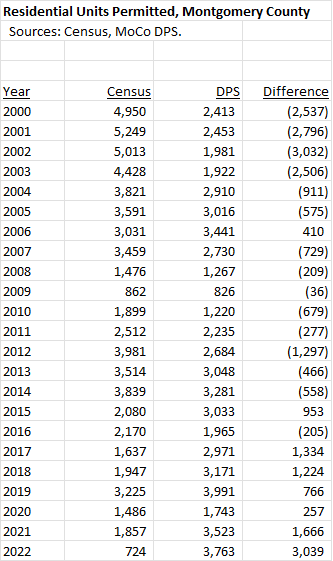
I’m reading an article out of Maryland today, and I’m wondering if there are similar problems elsewhere in the country. Montgomery County claims that the census did not count the number of units inside of new multifamily developments in 2022 and perhaps previous years as well.


County Government: Census Building Permit Data is Wrong

Quote:
Two days ago, I wrote a post about the fact that building permit data published by the U.S. Census Bureau showed that Montgomery County permitted the lowest number of housing units since at least 1990. The county government has responded that Census is wrong and has released its own estimates of county building permits.
Quote:
First, DPS believes that Census’s reported unit count for 2022 is actually a building count. The two numbers are often different because multi-unit buildings of course include multiple units. The county commented:

The most recent Census data shows the number of building permits issued by DPS, not the number of individual units. Although the data description mentions housing units, the term “building permits”, from a DPS perspective, refers to the main permits and not the number of units within each one—and the most recent number is very close to the total number of permits issued by DPS in 2022, not individual units.
Quote:
Then there is this bombshell. The county said, “DPS was not able to determine how the Census obtained the data. Our residential team manager is not the one sharing the data with the Census.”


https://montgomeryperspective.com/20...data-is-wrong/
Reply With Quote
     
     
  #5049  
Old Posted Jun 15, 2023, 8:02 PM
marothisu marothisu is offline
Registered User
 
Join Date: Dec 2012
Location: Chicago
Posts: 6,931
That's a big thing actually. If the Census doesn't know about an address bring a residence then it won't reach out and count it/potentially include it in their sample for ACS. There was a lot of work done in NYC and Chicago on this because there were tons of addresses unknown to the Census and thus not counted. It's an issue with new residential developments if things aren't done properly and/or in time.

Counting anything is actually not easy and the Census has a tough job. There's a lot of things that can potentially be missed even in the estimates. The Census relies on yearly IRS return data but depending on when someone moves, the data could be inaccurate. You have 5000 ppl move from a city in May but thr return shows the previous address from Jan thru April. Then the Census will count them all in the city they were in and not where they are truly right now. The mass movement during covid made this very hard to get a hold of. And also many people would move to Miami for 3 months claiming they're residents of Miami when they aren't and only to move on somewhere else a few months later.
__________________
Chicago Maps:
* New Construction https://www.google.com/maps/d/viewer...B0&usp=sharing
Reply With Quote
     
     
  #5050  
Old Posted Jun 18, 2023, 3:12 AM
BrinChi BrinChi is offline
Registered User
 
Join Date: Jun 2013
Location: Chicago, IL
Posts: 471
Good news, but I guess my question is: if the Census is consistently undercounting so many places, including Chicago, why is it consistently showing strong population growth in the sunbelt. Could this mean they are growing even faster? Or is the Census better at counting suburban-scale development than urban?
Reply With Quote
     
     
  #5051  
Old Posted Jun 18, 2023, 3:21 AM
galleyfox galleyfox is offline
Registered User
 
Join Date: Dec 2018
Posts: 1,149
Quote:
Originally Posted by BrinChi View Post
Good news, but I guess my question is: if the Census is consistently undercounting so many places, including Chicago, why is it consistently showing strong population growth in the sunbelt. Could this mean they are growing even faster? Or is the Census better at counting suburban-scale development than urban?
I think the census can manage SFH, homeowner occupied properties fine, and that growth is real in the sunbelt.

But apartments and other multifamily have trouble with turnover, few public paper trails, young and immigrant populations, and so on.

Also there’s some question if older cities get penalized with a housing decay model that is too aggressive.

The sunbelt has fewer multifamily so it seems to be straightforward on the metro level.
Reply With Quote
     
     
  #5052  
Old Posted Jun 18, 2023, 6:03 PM
marothisu marothisu is offline
Registered User
 
Join Date: Dec 2012
Location: Chicago
Posts: 6,931
Quote:
Originally Posted by galleyfox View Post
I think the census can manage SFH, homeowner occupied properties fine, and that growth is real in the sunbelt.

But apartments and other multifamily have trouble with turnover, few public paper trails, young and immigrant populations, and so on.

Also there’s some question if older cities get penalized with a housing decay model that is too aggressive.

The sunbelt has fewer multifamily so it seems to be straightforward on the metro level.
The thing is that you miss 10 SFH you are impacting a few dozen people only. You miss 10 medium to large sized new multi unit buildings then you are impacting potentially hundreds not being counted. I know that NYC did huge outreach to get a ton of addresses to the Census that they didn't know about somehow. Chicago did similar IIRC.

Some of the successful challenges so far are usually only adding a few thousand people, but they've all been group quarter settings not counted somehow like drug rehab centers, some dorms, etc. Census not knowing addresses was pretty big though for 2010 vs. 2020.
__________________
Chicago Maps:
* New Construction https://www.google.com/maps/d/viewer...B0&usp=sharing
Reply With Quote
     
     
  #5053  
Old Posted Jun 19, 2023, 5:27 PM
Steely Dan's Avatar
Steely Dan Steely Dan is offline
devout Pizzatarian
 
Join Date: Jul 2001
Location: Lincoln Square, Chicago
Posts: 29,968
Quote:
Originally Posted by galleyfox View Post
I think the census can manage SFH, homeowner occupied properties fine, and that growth is real in the sunbelt.

But apartments and other multifamily have trouble with turnover, few public paper trails, young and immigrant populations, and so on.

Also there’s some question if older cities get penalized with a housing decay model that is too aggressive.

The sunbelt has fewer multifamily so it seems to be straightforward on the metro level.
I'm also guessing that newer sunbelt cities have FAR fewer "illegal" basement & attic housing units than older, messier urban cities like Chicago have.

Those are the kinds of households that can be very tricky to pin down because they very specifically don't want to be "found".
__________________
"Missing middle" housing can be a marvelous middle ground for many middle class families.
Reply With Quote
     
     
  #5054  
Old Posted Jun 21, 2023, 6:59 PM
twister244 twister244 is offline
Registered User
 
Join Date: Aug 2016
Location: Chicago
Posts: 5,101
Reply With Quote
     
     
  #5055  
Old Posted Jun 21, 2023, 7:50 PM
marothisu marothisu is offline
Registered User
 
Join Date: Dec 2012
Location: Chicago
Posts: 6,931
Chicago area just overtook Houston area last week for top metro area for percentage of workers in office on its peak day, of 10 large business office areas. The average for the week went above Dallas too. The Chicago area is a full 10 pct points above San Francisco area and 15 points above the San Jose area. 6+ points above NYC area.
__________________
Chicago Maps:
* New Construction https://www.google.com/maps/d/viewer...B0&usp=sharing
Reply With Quote
     
     
  #5056  
Old Posted Jun 21, 2023, 8:30 PM
urbanpln urbanpln is offline
urbanpln
 
Join Date: Jul 2007
Location: chicago
Posts: 321
Quote:
Originally Posted by marothisu View Post
Chicago area just overtook Houston area last week for top metro area for percentage of workers in office on its peak day, of 10 large business office areas. The average for the week went above Dallas too. The Chicago area is a full 10 pct points above San Francisco area and 15 points above the San Jose area. 6+ points above NYC area.
This just came from Market Watch yesterday.
"Chicago, Philadelphia and Houston have some of the highest percentages of problem office loans when looking at delinquency rates and other early warnings signs of trouble, according to a new report by Barclays.
That might come as a surprise, given that San Francisco has been making headlines for its broader commercial real estate woes, technology sector layoffs, and struggles to get workers back to the office.

But so far, it’s other cities like Philadelphia with a 14% rate of office loans at least 30 days delinquent, or Chicago where 21.2% of its office loans face imminent default, triggering a transfer of their debt to a “special” loan servicer."

See full story.

Reply With Quote
     
     
  #5057  
Old Posted Jun 21, 2023, 10:06 PM
sentinel's Avatar
sentinel sentinel is offline
Plenary pleasures.
 
Join Date: Oct 2004
Location: CHI/MRY
Posts: 4,680
Quote:
Originally Posted by urbanpln View Post
This just came from Market Watch yesterday.
"Chicago, Philadelphia and Houston have some of the highest percentages of problem office loans when looking at delinquency rates and other early warnings signs of trouble, according to a new report by Barclays.
That might come as a surprise, given that San Francisco has been making headlines for its broader commercial real estate woes, technology sector layoffs, and struggles to get workers back to the office.

But so far, it’s other cities like Philadelphia with a 14% rate of office loans at least 30 days delinquent, or Chicago where 21.2% of its office loans face imminent default, triggering a transfer of their debt to a “special” loan servicer."

See full story.

Link, please?
__________________
Don't be shy. Step into the light.
Reply With Quote
     
     
  #5058  
Old Posted Jun 22, 2023, 12:42 AM
VKChaz VKChaz is offline
Registered User
 
Join Date: Jun 2015
Location: California
Posts: 652
Quote:
Originally Posted by sentinel View Post
Link, please?
https://www.marketwatch.com/story/pr...?mod=home-page
Reply With Quote
     
     
  #5059  
Old Posted Jun 22, 2023, 1:06 AM
marothisu marothisu is offline
Registered User
 
Join Date: Dec 2012
Location: Chicago
Posts: 6,931
I wonder if some of the increase of rates in cities like Chicago are a reaction to some landlords being in trouble and getting their tenants to somehow convince employees to return to the office. There's a lot going on but some companies in Chicago (and other cities) didn't increase square footage, but hired a lot during the pandemic. They're way over capacity and need space but for whatever reason haven't signed leases yet. My own company fits that description in town.
__________________
Chicago Maps:
* New Construction https://www.google.com/maps/d/viewer...B0&usp=sharing
Reply With Quote
     
     
  #5060  
Old Posted Jun 22, 2023, 1:29 PM
tintinex's Avatar
tintinex tintinex is offline
Registered User
 
Join Date: Jan 2007
Location: Chicago
Posts: 290
Quote:
Originally Posted by marothisu View Post
I wonder if some of the increase of rates in cities like Chicago are a reaction to some landlords being in trouble and getting their tenants to somehow convince employees to return to the office. There's a lot going on but some companies in Chicago (and other cities) didn't increase square footage, but hired a lot during the pandemic. They're way over capacity and need space but for whatever reason haven't signed leases yet. My own company fits that description in town.
My company grew a lot during the pandemic and we currently have way more people than desks but have been managing the space with hybrid work, however we are finally looking into new space in our building to expand. I bet several financial firms are in a similar situation
Reply With Quote
     
     
This discussion thread continues

Use the page links to the lower-right to go to the next page for additional posts
 
 
Reply

Go Back   SkyscraperPage Forum > Regional Sections > United States > Midwest
Forum Jump


Forum Jump


All times are GMT. The time now is 10:27 AM.

     
SkyscraperPage.com - Privacy Statement - Top

Powered by vBulletin® Version 3.8.7
Copyright ©2000 - 2026, vBulletin Solutions, Inc.