Quote:
Originally Posted by suburbanite

I don't know that it's really anything secret or sketchy.
|
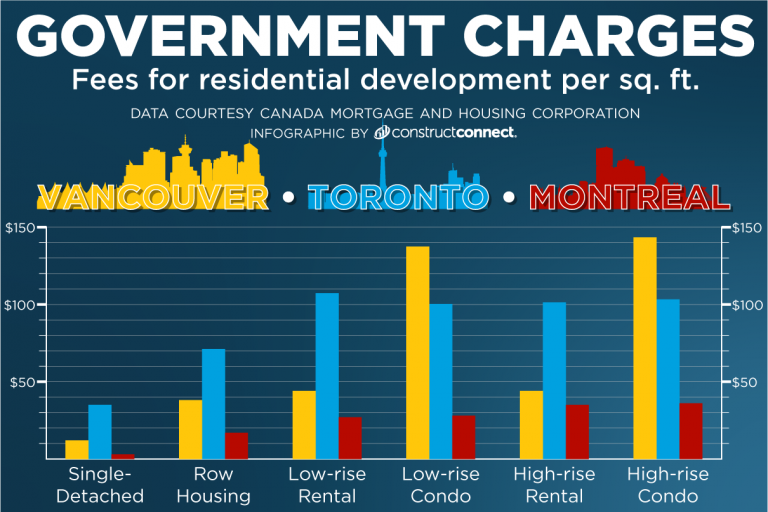
As a side point, I wasn't trying to suggest this. I am just pointing out that taxes tend exacerbate affordability problems, plus there are some political factors at play.
As far as municipalities go, property taxes are one of the top things that councillors get pressured on from their constituents while development fees are noticed by a small portion of the population who in some cases can't or don't vote when the rate is being set (you might not even live in the city yet when purchasing).
Beyond this, there is a tendency in government for scale to cause inefficiency. Once you have a $10B budget or whatever a lot of stuff is "peanuts" in comparison and there tends to be a greater magnitude of miscellaneous spending (maybe a greater percent as well). If this is built off of some kind of ballooning price at its root then it can increase the cost burden a lot.
Let's say we put a 3% "eco fee" on clothing and then we had some kind of cost disease (the clothing safety board is established to protect us and decides that Canada will only be supplied by 4 fully accredited clothing factories) and t-shirts went up to $3,000 each. It's likelier in that case that you'd see a massive clothing eco fee bureaucracy than a drop in the fee to 0.03%. And you'd have a bunch of people saying it's only 3%, or only $90 per t-shirt which isn't too bad in the scheme of things as we're talking about a big ticket item and we have a lot of major ecological problems in the world like climate change.





 Prev
Prev




 Linear Mode
