Quote:
Originally Posted by niwell

NO IT DIDN'T.
Multiple people on this site (including myself) have shown endless stats and figures proving that this isn't the primary driver. At this point I honestly don't know if you're being intentionally obtuse or your reading comprehension is that bad. Because you keep spouting the same nonsense over and over again regardless of the evidence presented contrary.
|
It's definitely a driver of SFH price increases, not necessarily the rest.
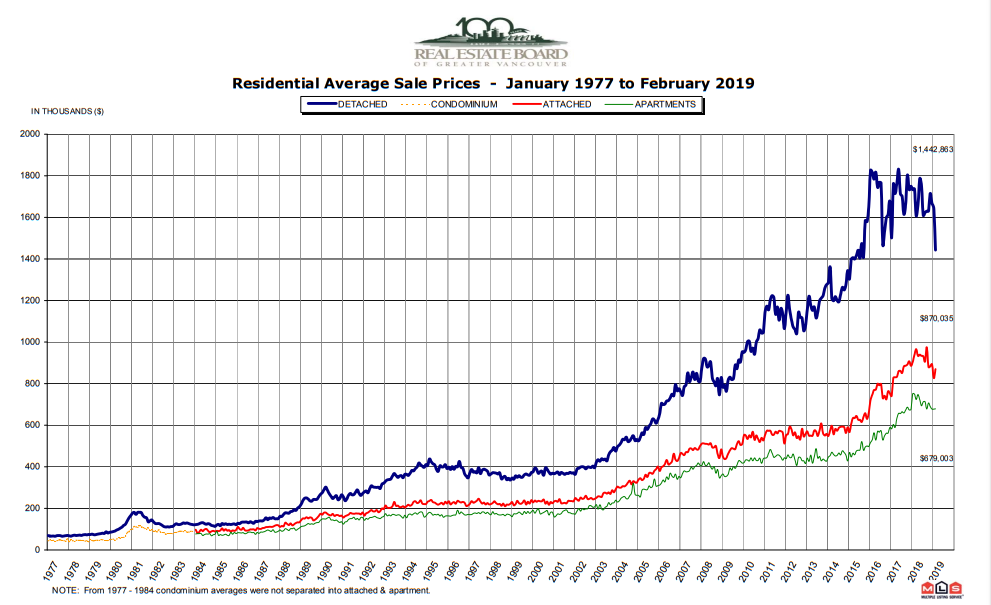
Up until a few years ago Condo prices had been inflation adjusted quite stagnant, even as demand increased dramatically for them, as enough supply could enter the market.
SFHs have significantly declined in market share over the last 18 years as a result of provincial policy changes, and this has understandably lead to price increases in those market segments as they are artificially limited in supply.
Given shrinking households and other factors, the supply gap is smaller than the market shift may otherwise imply (apartment construction has increased in the US in the last decade as well, unrestricted by growth policies), but it's there and it's influencing the price of SFHs and other low-rise housing stock.
Trudeau's twisting of the growth dial is what has caused the last few years of wild increases across all market segments. Demand has shot through the roof and supply has barely even ticked upwards in response.
If you minus off the Growth Plan, you get a more sprawling GTA with more affordable low-rise stock, more easily attained by middle class households, but similar overall supply constraints that can't meet the incredible housing demand which has been thrown on the market overnight with record immigration levels.
There are also a whole lot of other factors going on, including increased liquidity in homebuyers from the pandemic, a rapid shift of market demand from rental to ownership through the same time frame and an equally rapid shift back, the advent of WFH opening up massive outlying markets that were previously in low demand, shrinking households placing even more demand on housing demand than just population growth would imply, supply being throttled by increased construction costs, etc.
The Growth Plan is far from being able to be blamed for the entire housing crisis. Like most complex problems, there isn't a single easy cause. It's definitely a contributing factor however, especially in critical submarkets.





 Prev
Prev











 Linear Mode
